Sellout by Ebony Joy Wilkins

The set-up: After a horrifying onstage experience, NaTasha, the only African American in her suburban school, decides to spend a few weeks with her grandmother in Harlem, where she’ll volunteer at a crisis center for girls her age.

Main character’s goals: I don’t think NaTasha’s goal was entirely clear, at least not in her mind. At the beginning, she wants to escape her humilation. Throughout the middle I couldn’t find much of a goal except evading humiliation and bullying from girls at the crisis center. It’s at the end that NaTasha finally grows a backbone and sense of self-determination when her goal becomes clear (and now I can’t tell you what it is without giving you a big spoiler).

My reaction: The bullying was cringe-inducing. I could identify with NaTasha’s desire to be left alone, so every time she’s the center of attention and the object of hurtful words (or hands), I really felt for her. Then I was later thrilled with how she grew as a person and as a character.

Also, and I’m not saying this just because it’s Martin Luther King Jr. Day – I am white, and have not considered myself a minority (in most situations). Seeing NaTasha in her suburban town, trying to fit in with her peers, was eye-opening and took me to that place where you walk through the world in someone else’s shoes. No, this isn’t the first book I’ve read where the main character is not white. Far from it. It’s just refreshing sometimes, to get another perspective.

Of interest to writers: There are some big moments in the plot that Wilkins handles exceptionally well. The inciting incident is one of these, with NaTasha’s onstage embarrassment. Other big moments include a volleyball match, and a date at the end (can’t say more here, you know, spoilers. Sorry). If you want some solid examples of big turning points, study these.

Bottom Line: There’s a lot to be learned from this book, not just about writing, but about life.
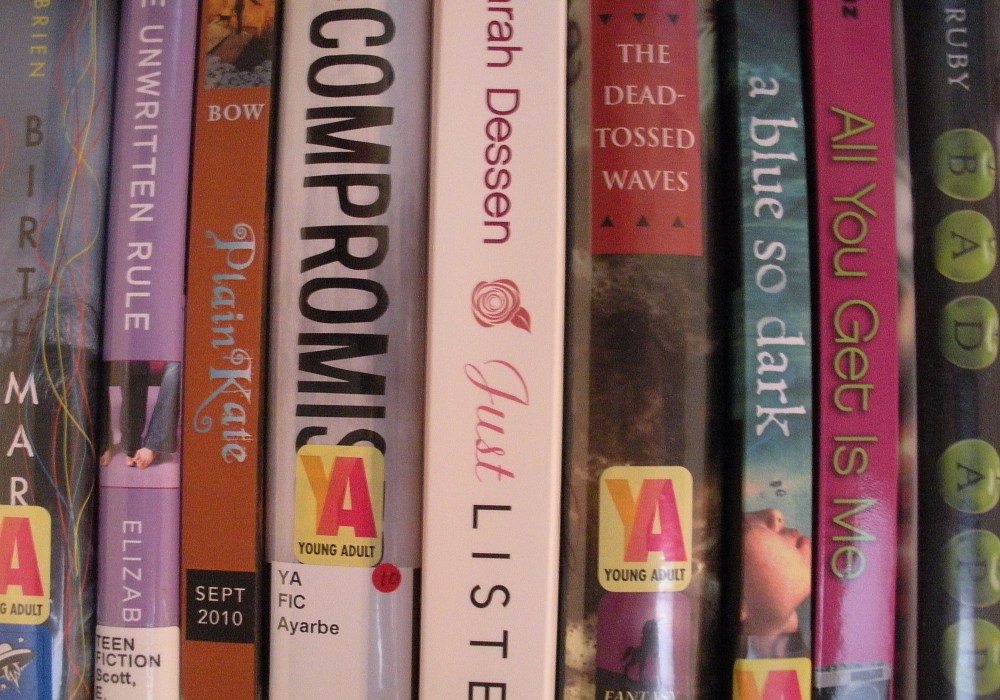
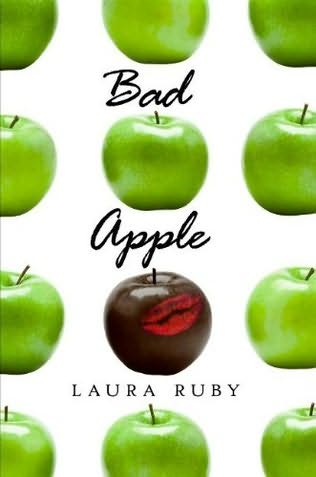
Bad Apple by Laura Ruby

The set-up: Tola is a high school student, and she’s been named the victim of an affair with her favorite teacher. She insists nothing happened, but from the start of the novel she’s established as a storyteller (ahem, liar), so can we, the readers, or they, her family, friends, and the authorities, really believe her?

Main character’s goal: All Tola really wants to do is clear her teacher’s name so he can come back to his job. She’s got some other goals, though, one involving a hottie named Seven (who is so cool he needs his own book!).

My reaction: This was a light story, feel-good at the end. I’d probably sub-categorize it as “chick-lit” (what a stupid sub-genre name), but at the same time I really liked it. I got indignant on behalf of Tola, which is a pretty good sign that I liked her. Also, I should clarify that it felt really fluffy at the beginning, but as I got further into the book, I became more invested in the story, and it felt deeper somehow.

Of interest to writers: The unreliable narrator thing must be hard – at least, it sounds like a daunting writing task to me. But Ruby pulls it off, so consider this a shining example if you ever need one.

Also: at the end of each chapter there’s a little mini-chapter of “(comments),” quotes from various characters who give their own ideas about the affair. These little quips serve to shed some light on Tola’s situation and personality. They also serve to develop some of these side characters’ personalities.

Bottom line: It’s a fast read, satisfying, and has a compelling hook. The web of stories, lies, and hearsay kept me intrigued throughout.

To visit Laura Ruby’s very pretty website, click here.

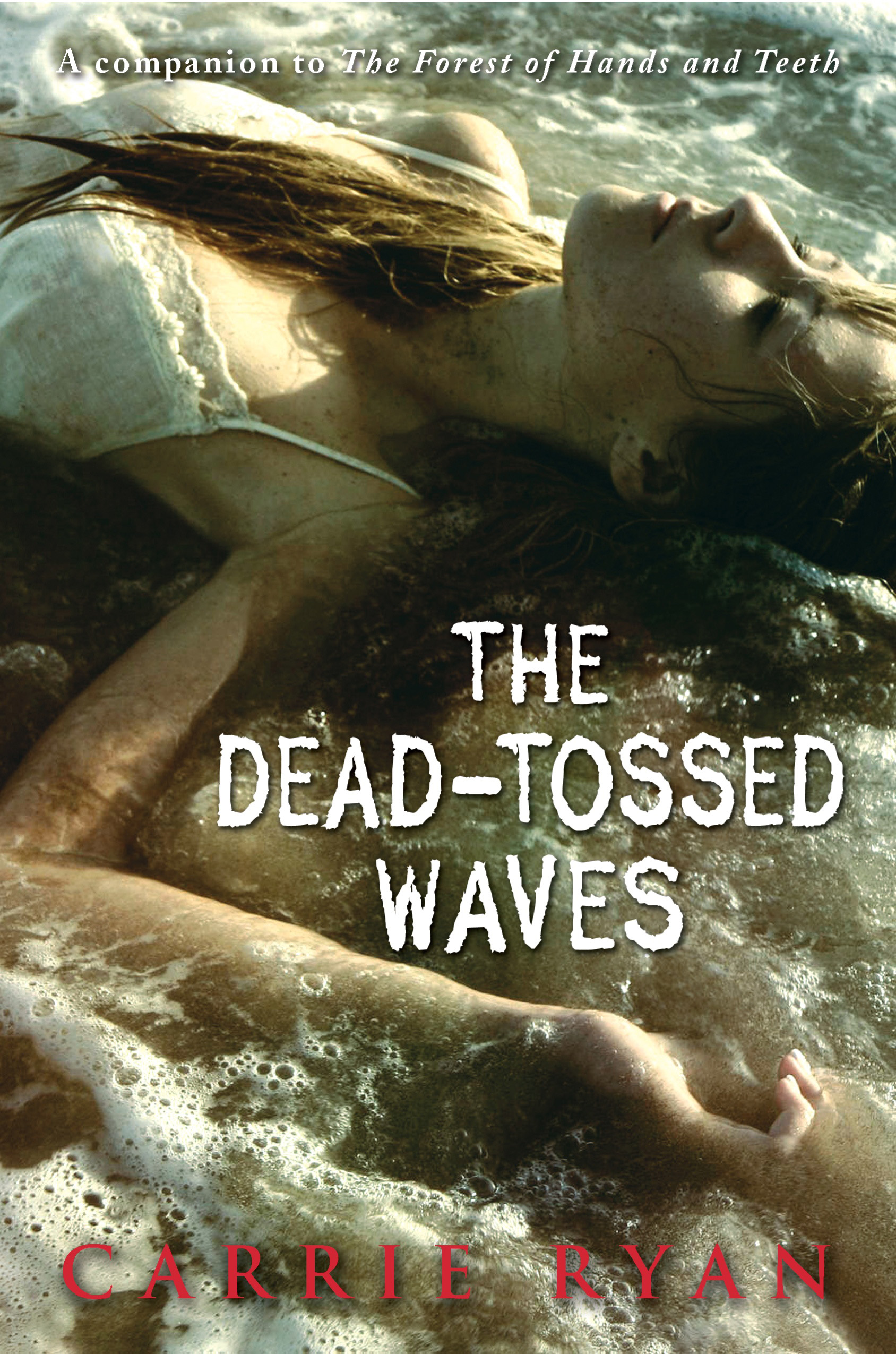
The Dead-Tossed Waves by Carrie Ryan

Happy New Year!

Okay, now on to book review business.

The set-up: This is less a sequel and more a companion novel to Ryan’s first book, The Forest of Hands and Teeth (which I reviewed here). The story takes place many years in the future (it is post-apocalyptic, after all) in a society haunted by Mudo, aka ZOMBIES. (Sorry, I was excited. All-caps necessary on that one.) This novel follows Gabrielle, the daughter of the main character from The Forest of Hands and Teeth.

Main character’s goals: Gabrielle (Gabry) doesn’t have one goal throughout the story; her goal changes as story events give her different options. If I listed her main goals, I’d be giving away some major story points. So I won’t. But the annoying thing about this book was Gabry’s desire: she wanted everything to go back to how it was before she and her friends made this horrible mistake.

My reaction, and more on Gabry’s regret/desire: Now, I understand where Gabry’s coming from on this desire to go back in time and change things.  But she repeated some form of this desire many, many times throughout the story. Even at the end. Ugh. It does suit Gabry’s personality exactly, even though it got a little old.

Of interest to writers: I freakin’ LOVE Carrie Ryan’s style. It kept me going even when I was annoyed with Gabry. Kick-ass zombie fights and lyrical prose work really well together. But I already raved about Ryan’s writing style in my other review.

Other items of interest: how Gabry’s main goal adapts to story circumstances (I’ve never tried that before), and how some unfinished business from The Forest of Hands and Teeth is resolved. Ironically, some business from this story is left unfinished, paving the way for another book in the story.

Bottom Line: I won’t lie and say The Dead-Tossed Waves is as good as Ryan’s first. It’s not. But if you can get through Gabry’s occasional whining, it’s still a good story.

A Blue So Dark by Holly Schindler

Set-up: Aura’s an artist, and artistic talent runs in her family. When her mom’s schizophrenic episodes start to peak and Aura is alone in caring for her, Aura begins to worry that schizophrenia runs in her family too. Believing art and mental illness to be linked, she starts to alienate herself from the one escape she has: her art.

Main character’s goals: Aura’s goals are quite different from your average teen’s: keep mom alive, contain mom, prevent mom from burning the house down. Her approach to these goals changes throughout the story.

My reaction: Ah. Big sigh of happiness. I’m really digging my sabbatical from series books, because the finished endings in my latest reads are so satisfying. The ending in A Blue So Dark was absolutely perfect. I wouldn’t have changed a word.

Of interest to writers: Literary fiction does not have to be slow or boring! The beauty of this novel is that although the prose is poetic and there are no werewolves ripping people to shreds, the tension is high throughout the book. Also, the epigrams at the beginning of each chapter were often quietly hilarious.

Bottom line: I don’t know how much attention this book has gotten (it was another random library shelf pull), but it deserves to be read. Spread the word!

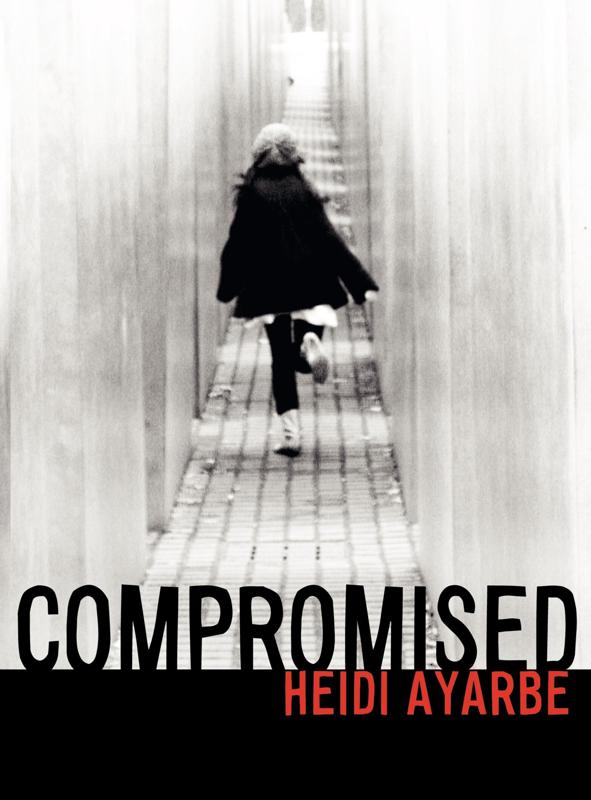
Compromised by Heidi Ayarbe

Set-up: Everything Maya holds dear – her house, her belongings, her designer clothes, and her con-artist dad – are taken away when her dad’s crimes finally catch up with him. Maya is sent to Kids Place, an institution where children and teens wait for foster parents to take them in.

Main character’s goals: This is pretty straightforward. Find long-lost aunt. While this is a great goal in and of itself, the stakes are raised when a creep-nasty couple of foster parents plan to take Maya in. The couple is outwardly religious, but the man seems to only worship one thing: teenage girls. If that isn’t shudder-inducing enough, add the complex power struggles among the other children and teens in Kids Place.

My reaction: You know I hate stories that make me cry, and this one did. Grr. But it also had a very satisfying ending, and not in a sunshiny, “girl gets boy and lives happily ever after” sort of way. I mean, I love Disney fairy tale endings, I really do. But this felt real, and plausible, and even better.

Of interest to writers: Maya’s got a scientific and, actually, a very paranoid way of looking at the world. For every decision she makes, she creates a scientific-procedure to go with it. Here’s an example:

Purpose: Find Aunt Sarah.

Hypothesis: If I can find Aunt Sarah, I can avoid being sent to the Holy Rollers’ house.

Materials: Mom’s box, a backpack…

Procedure:

1) Get a Citifare Bus schedule… (p. 89)

These scientific procedures serve to underline Maya’s voice. They also reinforce her character as a scientific, logical smartypants. And – even better – they clue the reader in to her ever-plummeting situation (as if the various crises in the story are not enough…trust me, they are).

Bottom line: This is a well-crafted novel, with believable characters who will win you over and quite possibly break your heart.