All You Get Is Me by Yvonne Prinz

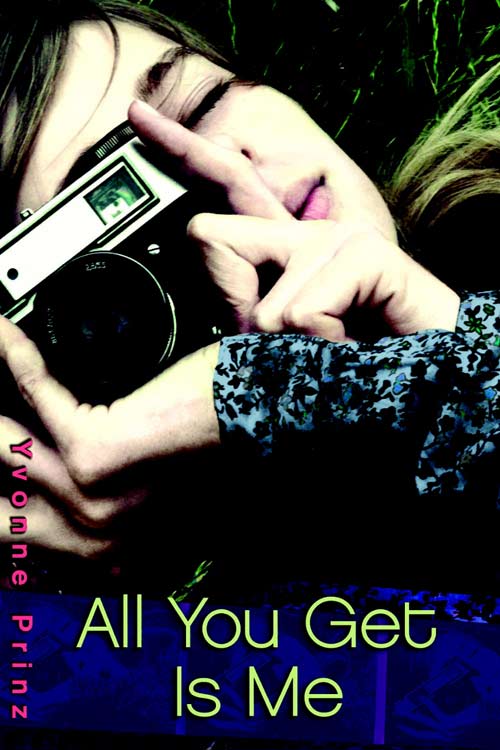
Set-up: Aurora (“Roar”) lives on an organic farm in a small town with her father. She misses city life and misses her mother, but she finds solace in her photography, snapping photos and developing them in her own garden shed-turned darkroom.

Main character’s goal: Roar’s goal isn’t simple like “run away to find missing aunt” or “defeat the scariest wizard of all time and save the world.” This is more of a coming-of-age story. Roar just wants to take photographs and be happy, at first. Then she witnesses a car accident that sets off a chain of events threatening not only her way of life, but the entire practice of hiring immigrant farmworkers in California. Roar also meets a boy named Forest, and her goals start to change.

My reaction: Something has gotta be said for reading a summer-set romance in November. I may have thawed out a little. Get this: “The first apricot I pluck off the tree smells of roses and sits heavy in my hand” (p 34). Ahhh.

Also, I can’t help but be in awe of an author who moved from a record-obsessed girl in Berkeley, to an organic farmer’s daughter who is watching – and participating – in a setting that involves and revolves around contemporary immigration issues. Talk about high stakes, with the balance of farming practices, the justice system, and the scorching anger of some small-town, small-minded farmers (Note: small-town and small-minded are not always the same thing!).

Of interest to writers: (With very mild spoiler!) The romance angle was handled in a way that surprised me – namely, there wasn’t a lot of conflict. I kept waiting for a fight, or a shameful secret, or some kind of revelation that put everything into question, and…no. Yet there is still tension, even without that conflict. How is it done? I’ll leave that for you to discover, as I’m worried I gave away too much as it is.

As with The Vinyl Princess, this one has a rather lengthy resolution. I was not bothered in the slightest because it was such a pleasant world to be in! Sometimes we’re rushed through resolutions, when maybe we could slow down a little and enjoy them, like fine desserts.

Mmm. Dessert.

Back to the book review!

Bottom line: This book was a great place to hang out in, and Roar’s point of view was engaging. I feel like I made some friends in this book. It’s definitely worth a visit.

Note: the scheduled release is December 21st, so you’ve got something to look forward to – put it on your wish lists!

For Prinz’s site on All You Get Is Me, click here.

You can also visit Yvonne Prinz’s Vinyl Princess website by clicking here.

This World We Live In by Susan Beth Pfeffer

Another random library shelf selection! Another success!

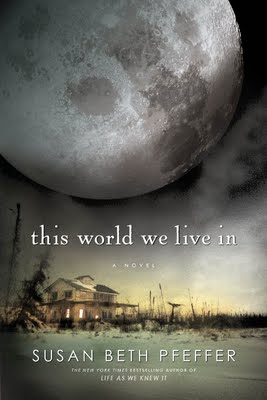
Set-up: This story takes place almost one year after an asteroid hits the moon, knocking it closer to earth, which causes all kinds of messes: earthquakes, volcanic eruptions, and a layer of ash that blocks the sun from view. Miranda’s family is just getting by, living in the sunroom of their home, with barely-there sustenance in the form of canned goods doled out by a city official.

Main character’s goals: Miranda’s biggest wish is for everything to go back to the way it was before the asteroid hit the moon. She wants a normal life. If she can’t have that, she at least relishes privacy whenever she can get it.

My reaction: I liked this book, although I wasn’t entirely happy with the ending. That’s more of a personal preference thing rather than a failing in the writing. I wanted something a little more concrete. Without giving anything more away, I will say that the ending fit well with the setting – the future is an uncertain place, especially in the world Miranda lives in.

I was totally into the raids they make on abandoned houses, scavenging for food, medicine, and toilet paper. Maybe because I’m always curious about what’s inside all the houses I pass on the street, maybe because I’m a scavenger by nature. Who knows. But it was fun to vicariously break in along with Miranda.

Also, I’m a little disappointed to find that post-apocalyptic fiction for young adults seems to be the new trend, now that sparkly vampires have fallen out of favor. That said, I really like post-apocalyptic stories, and I’ve liked them ever since reading George Stewart’s Earth Abides. So I guess I’m in luck with the wealth of post-apocalyptic fiction. Except that’s the genre I’m writing in right now, and I’d rather be creating a trend than trying to publish in an already-established one. But that is a rant for another time.

Of interest to writers: The diary format isn’t something I’ve seen in awhile…I haven’t even read an epistolary novel in a long time. Pfeffer does a good job of catching Miranda’s voice and making the diary believable.

I got total creepy vibes from one of the new additions to the family, and I felt Pfeffer could have developed that tension and conflict a little more than she did. This would have taken the story in a completely different direction, which is probably why she didn’t expand on that. If it had been my story….

Bottom line: This World We Live In is the third book in a series. (One of the downsides to random library selections is you sometimes jump into the middle – or end – of things.) I have already requested the first book from the library, because I want more from this author! I especially want to see how she handles the “beginning” of the end of the world.

Into the Wild Nerd Yonder by Julie Halpern

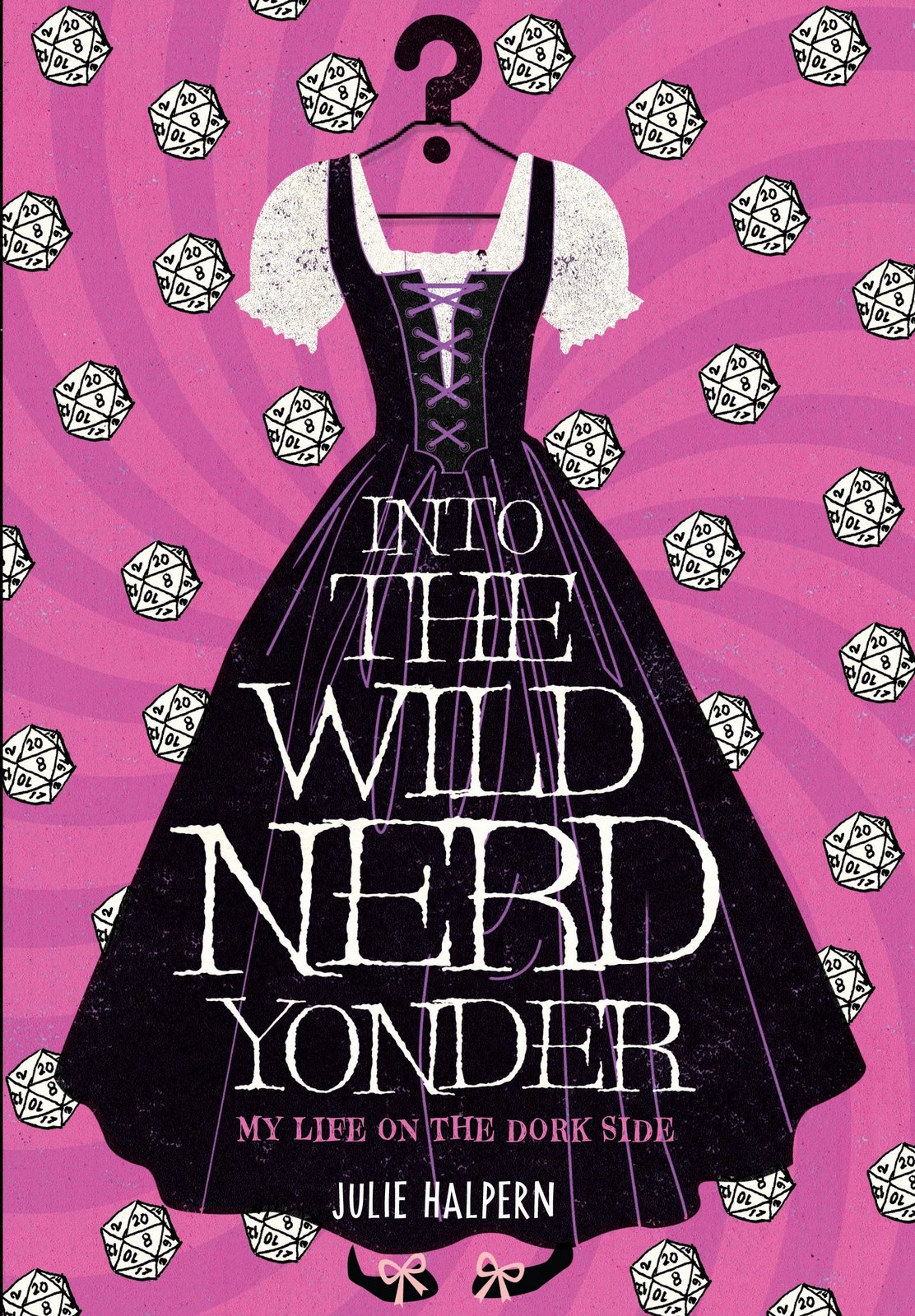
You gotta love the title of this book. I did, and that’s why I picked it up. Those little flowery-looking things in the background? Those are 20-sided dice.

Yes, my nerdy friends, this is the book for YOU. (And you know who you are, although I shan’t name names.) (Yes I just wrote “shan’t.”)

Oh yes, the book review!

Set-Up: Contemporary middle-America (not Middle Earth, although Lord of the Rings references abound). Jessie’s so-called friends are using her, and it isn’t long into the story before they commit the cardinal sin: thou shalt not steal the crush of your BFF (or support said crush-thief). The so-called friends are also turning into punk poseurs, and they’re obnoxious.

Main character’s goals: Find new friends. Keep on making skirts. Stay away from the nerds, and stop crushing on hunky nerd boy.

My reaction: With her strange skirts, her math flashcards, and her love of audio books, I thought Jessie was already kind of a nerd (and she also admits this from the beginning), so why is she so worried about joining the uber-nerds?  But soon I recognized the subtle differences of her habits and the habits of the species Totallus Ren-fair-ius World-of-Warcraftiae. Oops, that’s not WoW, it’s Dungeons and Dragons. I guess they’re different somehow.

Anyway, I still loved Jessie, and she’s funny, which makes the book funny, which makes me like it even if there are subtle shades of dork explored here.

Of interest to writers: The family is lovable, both parents are present, and Jessie gets unending support from these folks. I wonder if this book (along with Flash Burnout by L. K Madigan) is some sort of response to recent talk about parents always being absent or losers in young adult literature.

I think a couple of things were too easy for Jessie, like the ending with her old crush. That’s all I’m going to say, because I don’t want to give anything away.

Oh, and she does some wonderful “larger-than-life” things, like how she resolves things with Bizza, and with the old crush.

Bottom Line: Totally worth a read, even if you aren’t a Renaissance Fair-attending, 20-sided dice-rolling, skirt-making nerd. Even a cool person would want to be this cool nerd’s friend.

To learn more about Julie Halpern and her books, you can visit her website  by clicking here.

And! Winner of a signed copy of Vintage Veronica….

is…

wait for it…

Megan!

I’ll be in touch to talk about the details of getting you your very own, autographed copy of Vintage Veronica by Erica Perl!

(It’s a contest. An overabundance of exclamation points is totally warranted.) !!!!!!

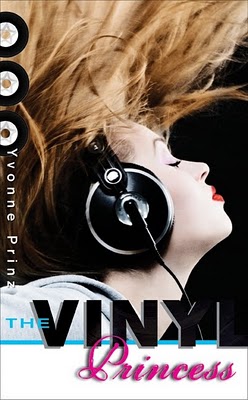
The Vinyl Princess by Yvonne Prinz

There are a few excellent books I’ve read recently, but I have to write about this one immediately. It was just that good.

Set-Up: Allie, the “Vinyl Princess” as she dubs herself for her blog, works at Bob & Bob Records, a place that her mom says smells “like an octogenarian’s attic” (p. 10), but to Allie is heaven on earth. She is obsessed with LPs. LP: an abbreviation for those ancient things called (long-playing) records that collect dust in your mother’s attic…or, to Allie, the truly righteous and best way of listening to music.

Main character’s goals: to lead a revolution against “corporate rock and downloading and digitizing and Clear Channel” (p. 12). She also wants some romance in her life.  She sets about accomplishing the first goal by starting up a blog and a zine, and she sets about finding romance by fantasizing about a Bob & Bob shopper she calls M (for “mystery guy”).

My reaction: Throughout the book I had a weird feeling. I kept struggling to recognize a name, any name, of a band or musician that I recognized. I often couldn’t, which made me feel sixteen shades of uncool. Then I realized: I wanted to impress Allie. That’s how cool she is – she made me want to impress a fictional character. Name-dropping usually doesn’t put a person on my good side, but it worked for Allie. When she listened to Dark Side of the Moon I might have cheered out loud because for once I knew what she was talking about.

Of interest to writers: the climactic action happens almost 100 pages before the end of the book. This premature climax (I’m sorry, I couldn’t help it) works, and I’m impressed. I’m impressed whenever a book goes slightly against the grain. It works for The Vinyl Princess, as there are still some unresolved issues (namely, the revolution and the romance) after the Big Action. Nobody could put it down at that point.

The goals are sort of mixed in with character introduction, background, all that stuff that everyone says shouldn’t happen in the beginning of a novel…well, Prinz makes it work because Allie’s voice is full of awesome attitude (not sarcastic, just cool).

Bottom Line: As soon as I can find a sucker to take care of my kid, I’m heading to the local INDEPENDENT record store to buy one of the albums Allie loves. I’m not sure which one yet. I can be sure of this: I’m not buying it as a record, as I have no turntable. But I’m not downloading it.

Also, I’m so so sorry, but I can’t resist: This book rocks. He he.

For more information on the book and the author, visit Prinz’s website by clicking here.

NiFtY Author: Katie Pickard Fawcett

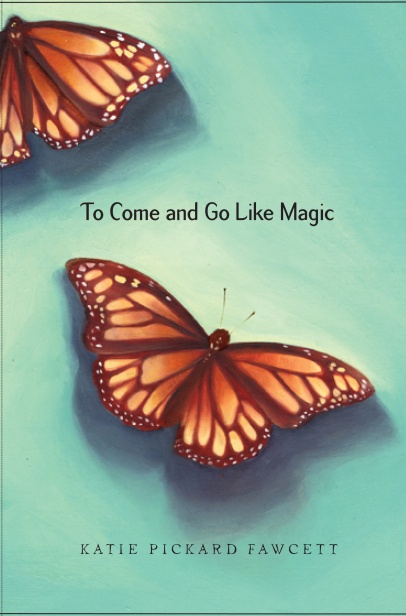
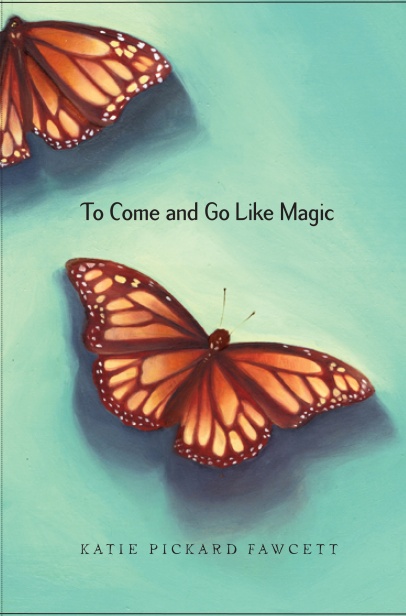
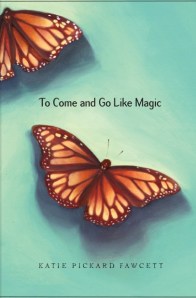
A few months ago I reviewed Katie Pickard Fawcett’s book To Come and Go Like Magic (click here for the review), and I was delighted when she agreed to an interview on my blog. So without further blather on my part…here’s a truly inspiring interview!

BH: I could be wrong, but To Come and Go Like Magic seems like one of those books that the author just had to write…like you couldn’t not write it. What inspired the story?

KF: My own childhood growing up in Appalachia was the inspiration for the setting, characters, and experiences.  Some years back I read The House on Mango Street by Sandra Cisneros and loved the way she told the story in vignettes.  I was excited to write a book about Appalachia in this style with glimpses into the lives of many different characters.

BH: Chili, the main character, longs to see the world. Then she befriends her teacher Miss Matlock, who has traveled extensively. Did you ever have a Miss Matlock in your life?

KF: No.  I didn’t have a teacher who had traveled the world and came back with stories to tell.  I did, however, have several wonderful teachers who read great books to us, encouraged me to write stories, and offered interesting classroom activities.  The trip to Mexico chapter in To Come and Go Like Magic was very similar to a geography activity we did in fifth grade.  Miss Matlock’s travels, her interest in the Monarch butterflies, in hiking in the Andes, and in the rainforests of Central America come from my own experiences.

BH: Another fantastic element of To Come and Go Like Magic is the setting. How much of the story’s setting is based on your imagination, and how much is based on your actual experiences in Appalachia?

KF:  I grew up in Eastern Kentucky so the setting is based entirely on the actual area and the environment, activities, problems, and concerns of the 1970s.  The characters, story, and most of the place names are fictitious.  I kept the name (Cumberland) of the real river.

BH: Your book is told in vignettes, and in some places these vignettes have such flowing language I think of them as prose poems. Was this your intent from the beginning, or did the format emerge as you told the story?

KF:  I love poetry and I enjoy writing “snapshot” pieces, so my writing tends toward the poetic.

BH: Can you tell us about your experience publishing To Come and Go Like Magic?
KF: I sent To Come and Go Like Magic to Random House and got a call and a contract within the month.  Sound too good to be true?  The complete story is a bit longer.  I worked for ten years in the publishing department of an international organization writing pieces for the house journal, summaries of development projects, and publicity pieces, and didn’t have much time to write fiction.  I was also a social worker in Kentucky, worked for a consulting firm in Washington, DC, and spent three years at various jobs at a university.  I majored in psychology, sociology, and education in college.  I also tutor and teach writing workshops and SAT prep on occasion.  I wrote a young adult book several years ago and sent it to Dutton.  They had me do two rewrites and then rejected it.  Ditto for Scholastic.  Then off to Random House.  After the second rewrite, my editor said she was willing to read it one more time.  I figured it wouldn’t fly.  So I asked if I could send her another manuscript I had lying around and she agreed.  That was To Come and Go Like Magic.  I spent about 6 years researching, writing, and revising the first book that got rejected by three big publishers over a period of 3 or 4 years.  I spent about 6 weeks writing To Come and Go. Just goes to show that “write what you know” makes sense.  Research was limited primarily to fact checking the dates for songs and foods and movies mentioned in the book.

BH: That is amazing, and heartening at the same time. I’m not surprised, though – I really get that “inspired” feeling from To Come and Go.
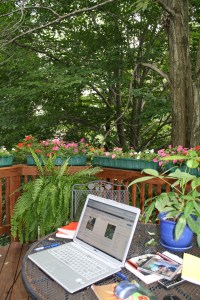
What does your workspace look like?

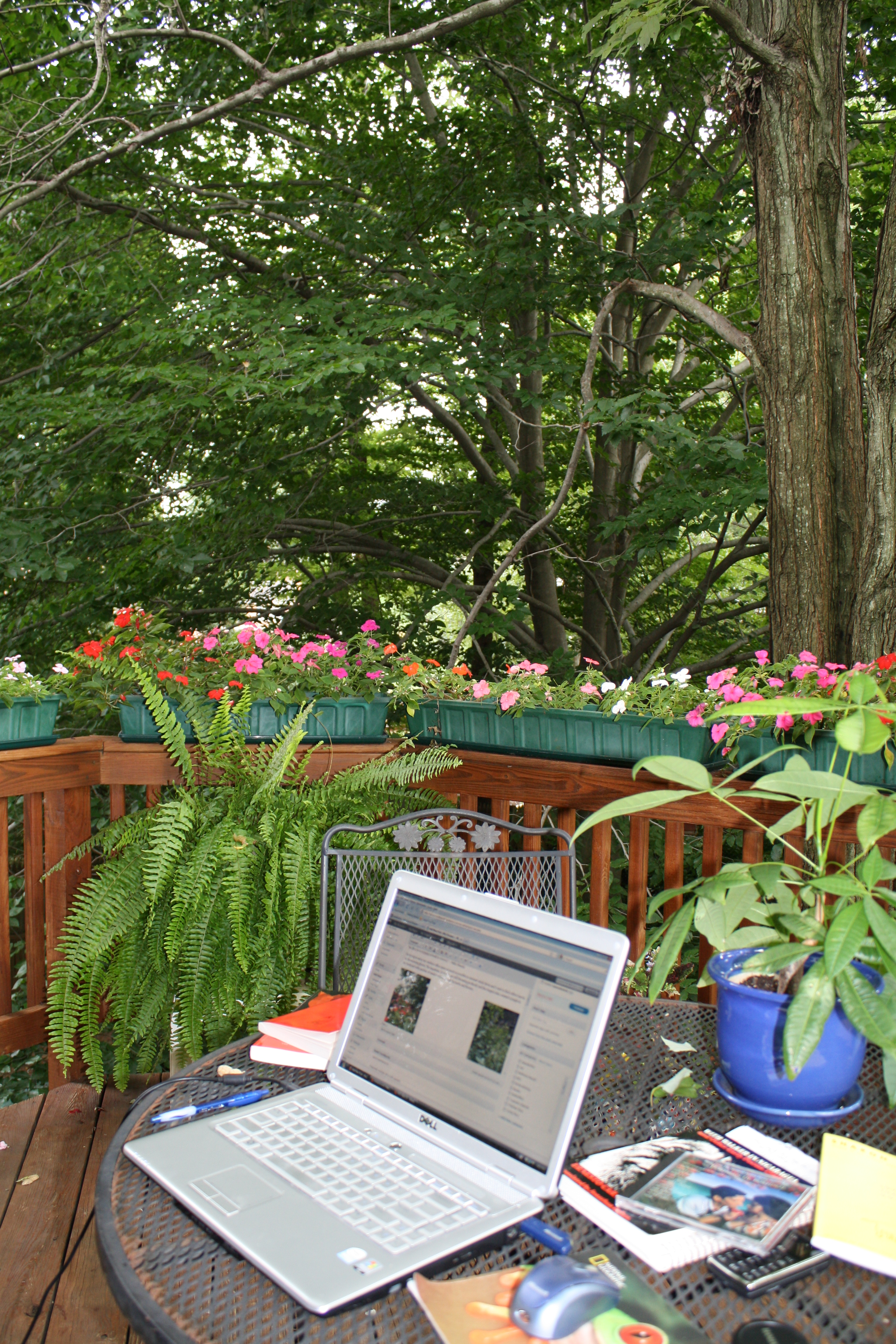
KF: My preference by far is to work outside and I love my laptop.  I enjoy the flowers and birds and furry critters that visit.  When it’s raining or too cold to be outside I work in my study.  I have a window that looks down to the front garden and three bird feeders – two for the squirrels and one that’s squirrel-proof.  A family of blue jays comes by almost every morning for peanuts.  They often respond to my whistle if they’re in the vicinity.  My study is filled with books and doo dads.  I have a hummingbird mobile above my desk, starfish on the window sill, green plants, and a CD player because I like music in the background while I’m working.

BH: What is your favorite book on the craft of writing?

KF: I have three books that I enjoy opening and reading a chapter or two when the mood strikes.  Reading Like a Writer: A Guide for People Who Love Books and for Those Who Want to Write Them by Francine Prose is entertaining and filled with great humor and wisdom and excerpts from some of the best writers past and present.  On Writing Well: The Classic Guide to Writing Nonfiction by William Zinsser has been around since the late 1970s and is still an excellent guide.  Many of these fundamental principles can be applied to fiction as well as nonfiction.   If I had to choose a favorite, however, it would be a little book published in 1996 titled Poemcrazy: Freeing Your Life With Words by Susan Goldsmith Wooldridge.  This is a marvelous little book filled with many inspiring exercises for getting the creative juices stirring.

BH: Any words on advice to aspiring writers for keeping the hope alive?

KF: I have been writing stories for almost as long as I can remember.  I passed stories around in elementary school and in high school study hall.  It seems that I have always needed to write and, although it can be physically tiring and mentally exhausting at times and rejection is always disappointing, it has never truly felt like work.  Publication is a big plus, but has never been a necessity for me.  The old saying that “it’s only work if you’d rather be doing something else” applies.  I love to write and it’s the passion, I believe, that keeps the hope alive.

BH: Thank you, Katie, for the great interview. I learned from this, and I appreciate your responses, insights, and inspiration.

Studio Audience! For more of Katie Fawcett, and where to order her book, check out the links below.

Links:

http://katiepickardfawcett.wordpress.com/ (On my blog I write about Kentucky, DC, Mexico, Costa Rica, Ecuador, the Caribbean, books, food, flowers, squirrels, and anything else that strikes me.)

Order from Amazon –

http://www.amazon.com/Come-Go-Like-Magic/dp/0375858466/ref=sr_1_1?ie=UTF8&s=books&qid=1287454169&sr=1-1

Order from Random House — http://www.randomhouse.com/kids/catalog/results.pperl?keyword=to+come+and+go+like+magic&submit.x=17&submit.y=10&submit=submit

To Come and Go Like Magic was a Parents’ Choice Award Winner in the fiction category for Spring 2010   http://www.parents-choice.org/award.cfm?thePage=books&p_code=p_boo&c_code=c_fic&orderby=award

Also nominated on October 9 for the Amelia Bloomer Project Award – an annual booklist of the best feminist books for young readers chosen by the Social Responsibilities Roundtable of the American Library Association  http://ameliabloomer.wordpress.com/