NiFtY Author: Velda Brotherton

This is a first in my NiFtY (Not Famous…Yet) Author Interview series – a nonfiction author! Gasp! Cheer! Amazement! However, nonfiction is just the most recent tip of the iceberg for Velda Brotherton, who has also published historical fiction: Images in Scarlet, and Fly With the Mourning Dove. Her most recent works of nonfiction include The Boston Mountains: Lost in the Ozarks, and Arkansas Meals and Memories: Lift Your Eyes to the Mountains.

BH: Welcome, Velda! Please tell us a little about your latest books.

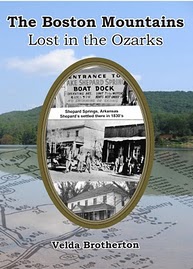
VB:  I’d be happy to. The Boston Mountains: Lost in the Ozarks is a product of about 20 years of work. During that time I wrote a historical page for the Washington County Observer, a rural weekly newspaper. I gathered interviews, visited with folks and began a keen interest in Boston Mountain history. I wanted to know more about the settlers who moved in from 1828 into the early 1900s. My files grew over the years, and I began to put together an idea for the book. A compilation of stories told by the descendants of those early settlers, stories of the towns that no longer exist. The lost communities. Alas, no publisher was interested. Some of these stories would break your heart, others are of such joyful content as to bring laughter and awe. The book covers the stories from these communities in four counties that lie in the heart of the Boston Mountains. It also contains 137 photos, some very old, some as new as last summer when we traveled those back roads to bring the book together after I found a publisher. While doing that I decided to include directions and mileage as well as road conditions to many of these remote sites. So many people want to visit the place where Grandpa or Grandma attended school or grew up, and I decided to make that easy.

Arkansas Meals and Memories: Lift Your Eyes to the Mountains is a recipe book that contains 150 recipes from my mother’s collection of 80 years, plus quite a few gathered from some of the best cooks living in the Boston Mountains today. There are stories of growing up in these Ozarks during the Great Depression from my own memories and many sayings and beliefs of this area as well.

BH: I’ve heard that nonfiction books often include writing a proposal, but that’s the extent of my nonfiction publishing knowledge. Could you tell us a little about your path to publishing these books?

VB: You’re right that nonfiction books often include writing a proposal, however, this didn’t happen with either of these books.

I’m a great believer in networking, and that’s what I’ve done for the past 25 years. Every book I’ve had published during that time is the direct result of that networking. My six historical romances came about because of an editor I approached at a Western Writers of America Conference. The nonfiction books, beginning with Wandering In The Shadows of Time, were also the result of networking.

When I traveled to San Antonio to pick up a WILLA  finalist award for my book, Fly With The Mourning Dove, I pitched my idea for The Boston Mountain book to an editor there. He had attended the awards banquet at which I accepted my award. He was immediately interested in publishing the book, didn’t even ask for a proposal or an outline.

That same year I attended a conference in Eureka Springs, Arkansas and was approached by an editor to do the cook book. He was looking for someone to do one from the Arkansas Ozarks and had no notion that I possessed all of my mother’s collection. I’d never considered writing such a book, but when I learned he also wanted stories from the area, I couldn’t turn him down. The books both came out within two months of each other, making it easier for me to include both in all my promotion efforts.

BH: Your nonfiction works definitely will appeal to a niche market – the people who live or have history in the Boston Mountains. Can you explain the wider appeal these books may have?
VB:  When World War II came along, people living in the Arkansas Ozarks scattered to the winds. There was no money, no jobs to be had, and so they all headed out for places that offered more opportunity. I have people from California, Texas, Oklahoma, Missouri and Kansas requesting books because they want to learn more about their roots. Their parents or grandparents talk about this place all the time, and share their memories. Our area has been booming for the past ten years and we have a lot of “implants” who are very curious about our way of life prior to these modern times, so they too are interested in my books.

BH: Because you’ve written both fiction and nonfiction, I’d love to hear your take on the distinct challenges and joys of each one.

VB: Because most of my fiction is also historical, writing it poses much the same challenges as far as research goes. I struggle to get everything absolutely true to history while weaving my fictional characters through the story. However, writing fiction is a much more free form of writing than writing nonfiction. I really enjoy immersing myself in a fictional world where I’m in control, more or less. Often though, the characters take over and I’m merely channeling.

Creative nonfiction has given writers a bit more freedom to create dialogue and internalization, but it requires that we study the morals and beliefs of the time closely so that we have our characters spot on. In the Boston Mountain book I’m careful to explain that the stories there are modern folk tales. They are told the way they were told to me. The only thing I strive to do is make sure that the dates, historical occurrences and places are presented correctly. We all know that everyone perceives what’s going on around them differently, and so we make allowances for that. But I can’t allow myself to treat these stories as I would if they were fictional.

I enjoy both genres as long as I can do both and not be tied down to one. Recently I’ve moved into contemporary women’s fiction and am working on getting those published.

BH: So how much time, really, do you spend in a library or on the internet doing research?

VB: You wouldn’t believe how much time research can eat up. I began my historical romances before the Internet came on the scene for the common folk, and I spent a ton of time in the library doing research. Luckily, my husband fell in love with computers when the Internet came along, and he did a lot of my research for me giving me more time to write. Actual time, I’d say a historical fiction or nonfiction book can take as much as six months to a year of research. I usually begin to write long before my research is complete, though because I don’t often know everything I’ll need until I get into the book.

BH: I have to know: have you tried making each of the 150 recipes in your cookbook? Which is your favorite?

VB: Oh, goodness no. My mother cooked them and that was good enough for me. Growing up I didn’t want to learn to cook at all, though she struggled to teach me. My mother began cooking when she was 8 years old, standing on a crate in front of a wood burning cook stove. Her mother preferred outdoor work and they always lived on a farm. Mother was raised in the Ozarks, coming here with her family from Montana when she was 8.

I have tried many of the recipes. I took the Cheesy Squash recipe (doubled) to a pot luck picnic a couple months ago and everyone was clamoring for the recipe. I want to try a lot more of them, and have a copy the cook book in my kitchen now. My daughter has also tried some of the recipes and she doesn’t even like to cook.

BH: Can you share a simple recipe here?

VB: I’d be happy to. Here’s something for your sweet tooth. This is Grandmother’s Caramel Pie

1 c dark brown sugar

1 1/4 c boiling water with small lump of butter added

1 whole egg plus 1 yellow (save the white for top)

2 rounded T flour

½ t vanilla

Mix flour and sugar and add water. Place mixture in a double boiler and stir until thick. Drop in a whole egg and the yellow. Beat vigorously. Cook a few minutes, remove and add flavoring. Stir and pour into a crust (already cooked). Cover with beaten white of egg, put in oven and brown lightly.

This recipe was written in my grandmother’s hand exactly as it is reproduced here (I added the already cooked notation) and she notes that it came from Grace Shunk, probably a neighbor or church friend. We all lived in the country and had no close neighbors.

BH: Thank you for sharing that recipe. Do you have another project in the works? Can you tell us about it?

VB: As always, I have several. I think working on only one thing at a time would get boring, and so I usually have two or three going, whether I have a publisher or not. Fortunately, my publisher of the Boston Mountain book has already said he’d take a biography I’m working on about a woman in our small town who, in the 1920s, defied all the rules in place for women of that era. She was one of the first women in the state to become a pharmacist, she was elected mayor two years running and presided over a “petticoat government.” Finally, she took over the ownership of the local newspaper owned by her husband when he died of Influenza during World War I. Her personal life is rather tragic. The story will make good reading written in the creative nonfiction style.

Another project is a novel about a woman who learns that to forgive is not always enough after a young man driving while intoxicated is responsible for the death of her 16 year old son. This is based on a true story, but is purely fiction. That book is finished and with an editor in New York who seems to be very interested. I’m working on another women’s fiction while I wait to hear.

BH: What do you consider your greatest weakness as a writer, and what do you do to overcome that?

VB:  You would ask that. Now I have to reveal my secret. I’m way too serious with my writing. No matter how hard I try, humor evades me. I have a great sense of humor and laugh easily, but I just can’t seem to create characters who are funny.

I’m also very slow in completing a work. I just plod along, writing myself into corners, backing up, starting over. But I can’t seem to write any other way. I’ve tried outlining but that stifles my creativity. Once I’ve outlined the book, I’m no longer interested in writing it. The creation has been completed. Silly, I know, but I guess we all have hang ups, and those are mine. At my age, there’s probably nothing much I can do to overcome these weaknesses. Guess I’ll just keep on keeping on.

BH: Ha, that’s what I tell myself to do all the time: “Keep on keeping on.” What is your writing schedule like?

VB: For 25 years, I’ve gone to my office right after we eat our noonday meal, which we call dinner around here. That’s about 1 p.m. and I write till five or six. I do this six days a week. I do have a strict schedule for tasks each day. On Monday I work on the Internet, writing blogs, posting on Facebook, putting information on all the other sites where my book is listed, including my website which I keep up myself. On Tuesday I write a historical column and any other short things I’m working on. I submit short stories to anthologies on a regular basis and have 14 published so far. From Wednesday through Saturday I write on my works in progress. Whichever one is in need of my time or a little of each.

When I’m promoting a book, or currently both books this schedule is interrupted by book signings, workshops, and speaking engagements.

BH: What does your workspace look like?

VB: Eeeek! Put it this way, the last person who saw my office was struck speechless for a minute or so, then she murmured, “Well, I suppose you know where everything is.”

I work on a laptop. One wall is lined with file cabinets and bank boxes of old newspapers that contain heaps of historical information. My six historical romance covers are framed and hang there. There are two windows at my back that look out on a mountain incline that is wild and wooly and borders on the Ozark National Forest.

I sit at a large computer desk my son-in-law built to order for me. Above my head is a small white bear holding a bouquet of roses, a hand carving done by my husband and a protective dragon. The other wall has a floor to ceiling book case storage unit that is crammed to overflowing. A key to the city of Ft. Smith hangs beside my WILLA award. On top of the unit are my other awards from various sources. I’m surrounded by my work on all sides and when I retire to this room I feel totally at ease.
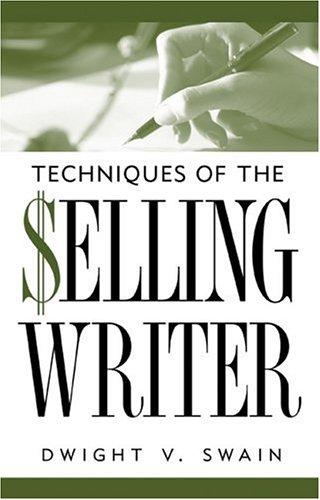
BH: What is your favorite book on the craft of writing?

VB: Hands down, Dwight Swain’s Techniques of the Selling Writer.

BH: What is the best writing advice anyone has given you?

VB:  “The road to success is littered with quitters.” Persevere no matter what.

BH: Any words on advice to aspiring writers for keeping the hope alive?

VB:  See above first, then hone your craft, never think you know everything about writing, study as if you were going to be a surgeon or a lawyer. Then find your niche. Despite all the bad news from the publishing industry, you can reach your goals. Come up with something different. In today’s market, story comes first. That’s not to say you can ignore good writing, but think out of the box, as they say. Try new things, and definitely take a look at E publishing. It’s on fire now and a good place to start your writing career.

BH: Thank you, Velda, for the interview, the insights, and the recipe!

For more information about Velda and her books (including where you can purchase them!), check out the following websites:

Click here for Velda’s website, which has links to publishers’ sites. You can also view her writing journal, as well as her writing advice.

Publishers site for purchasing The Boston Mountain Book

Velda’s Facebook page, with events and photos

You may also order books through Velda by emailing her. In addition, she generously said that writers may feel free to email her with questions. Here is her email address: vebrotherton (at) gmail (dot) com
NiFtY Author: Matt Coonfield

I have a very special NiFtY Author Interview for you today, featuring one of my favorite people in the world: my little brother. He hasn’t always been my favorite person. There was this time once when we were playing Legos and he was obviously wrong about something, and we weren’t very good friends right then…but I digress.

Here’s his interview. You’ll laugh, you’ll cry, you’ll throw tomatoes and have to clean off your computer screen. Good luck with that.

BH: What’s your one-paragraph pitch for your work-in-progress?

MC: I don’t want to give away too much. I am actually quite paranoid. The short version is a young man named Ray starts a civil war in the ghost world in an odd and adventurous way.

BH: What was the biggest challenge in finishing your first draft?

MC: Honestly my biggest challenge has always been me. I am a big lazy hurdle that I just can’t jump. I don’t like to write when it is hard, when I have to grind it out. Generally I only like to write when it is flowing. Anyone who writes knows what I am talking about. When you can churn out twenty pages a day and the only reason you stop is fear of carpal tunnel. When your thoughts are practically jumping on to the paper for you. That is when I like to write. When this doesn’t happen I start a new book. Oddly I have never finished one until now.

BH: Can you compare Ray, the main character in your work-in-progress, to anyone you know in real life?

MC: I guess parts of him are me of course or parts of me if that makes sense. I’m not schizo or anything but I like to pretend I am Jared from The Pretender. I have hidden Matt compartments that I draw from and one of them happens to be a teenage ghost-hunting ghost, conveniently enough.

BH: I understand you’re working closely with somebody else on this project. What is his role in your project?

MC: As I mentioned earlier I am notoriously lazy when it comes to writing. My partner’s name is Don and he is basically my dentist. That is to say he pulls teeth. We have only been working together a short time and I am considering buying another cell phone and not giving him the number. Other than that he does all the things I hate: paperwork, typing, forms, queries. Once he offered to paint my garage if I promised to write more.

BH: What is your experience like, working with another person? What are the pros and cons of this arrangement?

MC: Well Don can be quite persistent sometimes calling me four or five times a day. I had to get used to it at first but we’ve come to an understanding now. He has given me 100 percent artistic say so, which was a condition when we first started, but even then sometimes he feels adamant about something and I hate to put my foot down too much. There is one scene in particular in the book that he wrote and it makes me leery but I have let it go so far.

BH: One of the things about your writing that impresses me is all the crazy ideas you come up with—ideas that you can make work. Where do you get your ideas and inspiration?

MC: Well… My faith is definitely an inspiration to me. Really I don’t think I could write without the Bible. Not that my stories are Christian but the right and wrongs for me come straight from the source. After that I steal them. I guess it sounds weird to say that right after my Jesus plug but it is honestly what happens. I always read things, good and bad, and I can see the improvements that need to happen. I see a tweak that if the author had seen could have changed his whole piece for the better. When I find those tweaks early enough in a book or combine them with other tweaks I get really excited about what I can do with it and when I get excited….

BH: What is your writing schedule like?

MC:  I try to fit it in between reading and Pokemon but too often I am forced to combine two of the three to make up for time.

BH: How has your writing changed—either the scheduling or the experience itself—after becoming a father?

MC: My scheduling has definitely become more intense. The very reason I had agreed to work with my coauthor in the first place is money. I need it. I can’t sell a book if I don’t finish one so I brought on Don to help me finish my books. The experience hasn’t changed in the least, I just have a deeper well to draw from.

BH: What does your writing workspace look like?

MC: My writing workspace looks suspiciously like the cab of a Nissan Frontier. Much to the chagrin of my typist most of my good ideas come when I should be paying attention to the road. This makes for some very peculiar handwriting and possibly the next unfinished series. We all know how well it worked out for the Canterbury Tales. Don’t judge me.

BH: Just remind me to avoid the road when inspiration hits. What is your favorite book on the craft of writing?

MC: A notebook.

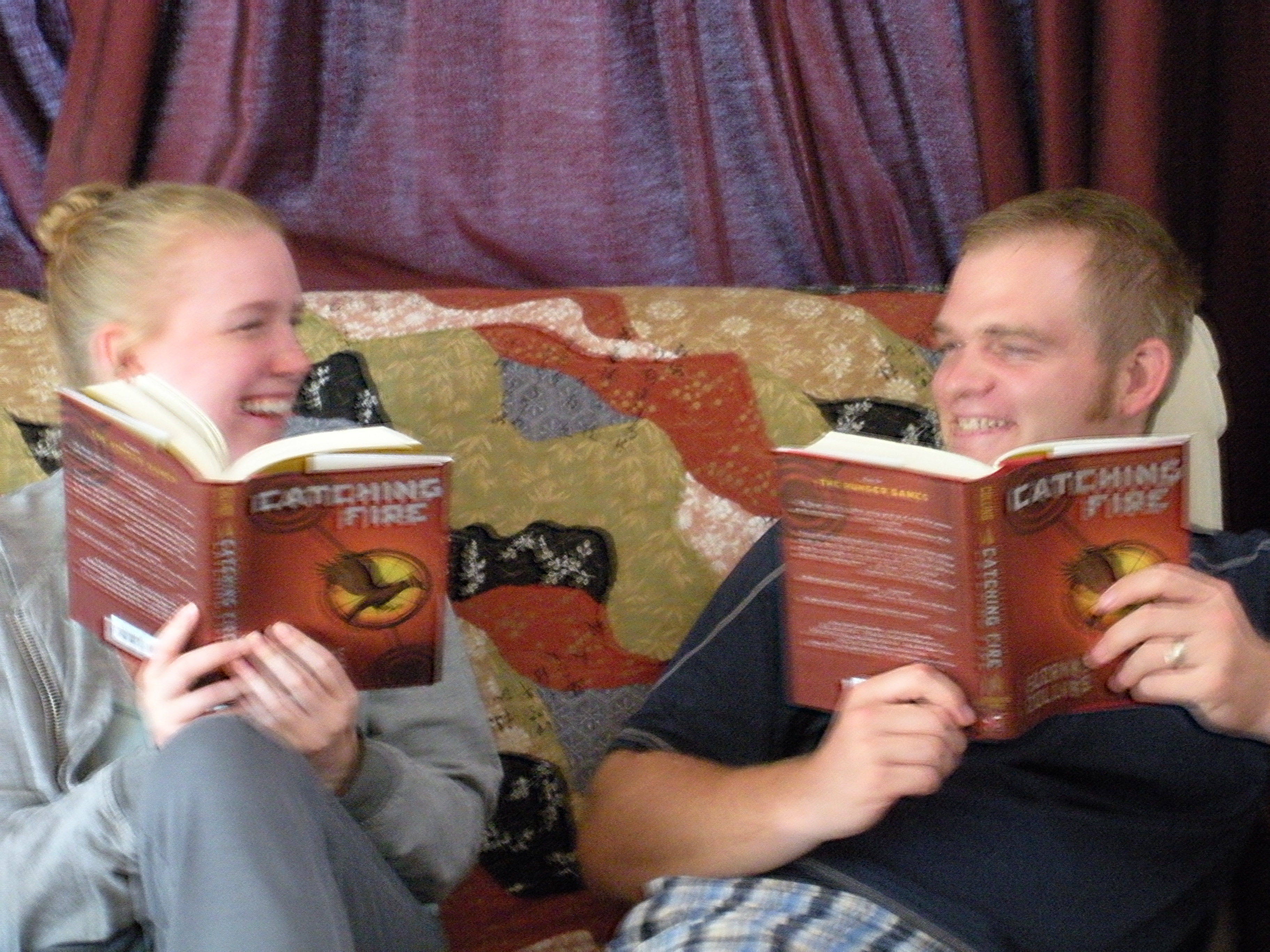
Beth and Matt Read Catching Fire

BH: You told me recently that Suzanne Collins’s The Hunger Games is not your favorite book, but it made it into your “top ten.” What is your Top Ten?

MC: The Bible, X-Men, Dracula, Death in the Long Grass, The Night the Bear Ate Goomba, Yvain, Harry Potter, Hunger Games, The Great Divorce, God’s Grandeur.

BH: Twilight didn’t make it into your Top Ten, but we both admit we enjoyed it. What, exactly, is so compelling about that Twilight series? Why are these books so popular, in your opinion?

MC: Stephenie did something real special and it took her like a whole month. She tapped into something that was important to young women and made it interesting to young men. She took elements of comic books (which is why it translated so well to graphic novel), Fabio, and Mythology and made it her own. She didn’t follow rules, and she didn’t heed the pressure to omit her beliefs, i.e. her morals. I don’t think it was the best writing in the world but I loved it and I respect what she did… except for the huge let down in the end. That pissed me off but since the plot was ripped off another story what can you say?

BH: What is the best writing advice anyone has given you?

MC: Write down what you are feeling now matter how silly it sounds. It will make sense to everyone.

BH: Why do you want to be published?

MC: I would like to be superficial and say it is to finance my laziness but the truth is I want to be able to talk about it with someone, someone who liked what I wrote and who wants to talk with me about it.

BH: Who is your real-life writing role model? [Hint: the answer should be someone you grew up with. Who maybe lived down the hall from you. She had a pink room for a few years. And a cat named Apricot.]

MC: C.S. Lewis, Stan Lee, and Patrick F. McManus. I hate to admit but my sister’s love for all things academic never made sense to me as a child. I get it now and all those years may have rubbed off on me a bit.

BH: Eh, that’s practically saying that your sister taught you everything you know. Any words or advice to other writers for keeping the hope alive?

MC: Give up. The market is closed. You can’t do it.

BH: Hmm. Yep, that’s my brother.

Thanks, Matt, for the fun interview!

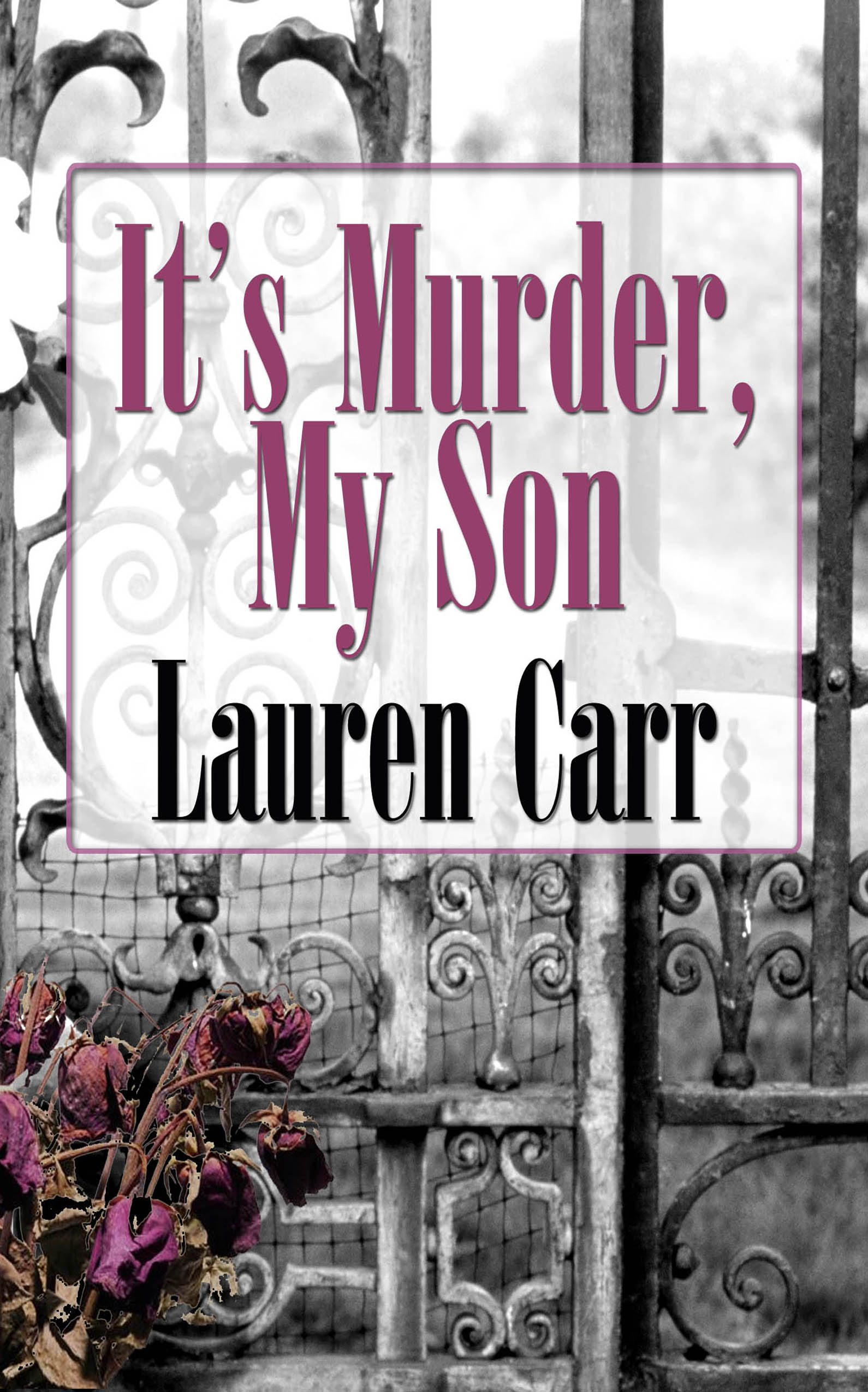
NiFtY Interview with Lauren Carr

Lauren Carr is the author of three mysteries. Before she moved to novel-writing, she wrote mysteries for television and the stage. Let’s welcome Lauren Carr for my latest NiFtY (Not Famous…Yet) Author Interview!

BH: What’s your one-paragraph pitch for It’s Murder, My Son?

LC: What started out as the worst day of Mac Faraday’s life would end up being a new beginning.  After a messy divorce hearing, the last person that Mac wanted to see was another lawyer. Yet, this lawyer wore the expression of a child bursting to tell his secret. This covert would reveal Mac as heir to undreamed of fortunes, and lead him to the birthplace of America’s Queen of Mystery and an investigation that will unfold like one of her famous mystery novels.

BH: Tell us a little about your path to publication.

LC: My first book, A Small Case of Murder, was self-published and named a finalist for the Independent Publisher Book Awards in 2005. After being picked up by Five Star Mystery for my second book, A Reunion to Die For, I decided walked away from an offer from another traditional publisher to return to self-publishing for It’s Murder, My Son.

I turned down the traditional publisher to independently publish through CreateSpace for a variety of reasons. Mainly, I had all the same responsibilities and had to make the same investments of time and yes, money, toward making my book a success when I was traditionally published as I did when I self-published. I came to realize that with all of my education and experiences, I was more than capable of successfully publishing my books independently. So far I have been right. It’s Murder, My Son has received only positive reviews.

BH: Do you plan to write a sequel to It’s Murder, My Son, or have you embarked on a completely new project?

LC: I’m already working on it. In Old Loves Die Hard, Mac Faraday returns to Georgetown to clear his ex-wife’s name when she is accused of killing the assistant DA she had left Mac for.

BH: This book isn’t your first published novel, though; you’ve published two other mysteries. Are they part of a series? Can you tell us a little about them?

LC: A Small Case of Murder and A Reunion to Die For are the Joshua Thornton Mysteries. Joshua Thornton was a JAG lawyer who leaves the Navy after his wife dies, leaving him to raise five children alone. In A Small Case of Murder, Joshua returns back to Chester, West Virginia; his, and my, childhood home, where his children discover a letter that implicates a local pastor in an unreported murder.

In A Reunion to Die For, Joshua Thornton becomes the county prosecuting attorney and investigates the murder of an investigative journalist investigating the death of a high school classmate. The classmate died during their senior year in high school. Her death was classified as a suicide. Joshua begins to question if it really was.

BH: Where did you get the idea for your first novel?

LC: In 1998, my family was vacationing in Copper Harbor, Michigan. One rainy day, we decided to go antiquing. We had gone into this one shop and I found a beautiful silver tea set. The shop owner was very chatty and told me how he had acquired it. He had purchased all of the contents of an old house in which an elderly woman lived at an estate sale. While packing everything up, he was up in the master bedroom talking to the daughter of the homeowner when he turned over the box springs and found a brown cardboard box underneath. The daughter asked, “What’s that?” He replied, “Whatever it is, it’s mine.” The box contained the silver tea set, never used, completely in it’s original packaging, along with cards and letters all dating back to 1968. When he told me that story, I thought, “Suppose one of those letters implicated someone in a murder?” By the time we returned home from vacation, I had the plot for A Small Case of Murder outlined in my mind.

BH: On your website I learned that you gave up writing for television and stage to become a full-time mom, and you wrote your first book after that. How long did it take you to write the book?

LC: My “retirement” lasted about six months. Then I was back at the keyboard writing A Small Case of Murder. That was my escape. When I started writing it, I was writing only for myself. I had given up my literary agent, who never did anything for me anyway and didn’t handle novels. It took me about six months to finish the first draft. When I dug it out and dusted it off a year later, I read through it and thought I had something. So I started editing and working on it again. I spent another couple of years playing with it before I started to look into having it published.

BH: What was that like, balancing writing and motherhood?

LC: Tough.

BH: I’m listening to “Hear, hear!”s throughout our studio audience. Do you have any tips to share with other writing moms?

LC: Maybe this isn’t so much a tip about writing moms, but about life, as I see it having turned fifty this year. “When Mom’s unhappy, everybody is unhappy.” So, don’t be unhappy.

After a year of writer’s block and unhappiness, I decided last year to “give up” my career. I love the writing, not the frustration of dealing with literary agents and publishers and trying to please them, etc. So I decided to write my little mysteries and self-publish through CreateSpace and if they sold, and people liked them, great. If not, so what?

Well, when I made that decision, I was happy, and then everybody was happy. It became about the writing again. As luck would have it, I was offered a contract from a traditional publisher but turned them down in favor of self-publishing with CreateSpace. I’m sticking to my plan.

As long as it’s not self-destructive, do what makes you happy. If it makes you unhappy, stop it. Life is too short to be miserable.

BH: It seems to me that writing a mystery necessitates knowing just how much information to give, how much to hold back, and how much extra is needed to hide the important clues. Did the sense of knowing how much to include and when come naturally to you, or did it take some time developing?

LC: Both. I found that I had a sense of it, but had to develop it. It is comparable to having a natural talent like singing or throwing a football. Sure, when you first open your mouth to sing a song or get out onto the field to throw a ball, you may be really good, but you need to sing or throw that football everyday to develop it.

I write every day. I’ve written stuff that no one will ever read, until I’m long dead, if I’m lucky. But just the exercise of doing it has improved my skills at being able to write a scene and finely plant clues without giving away too much or holding back too much. I have found that by my third book I was better laying out the clues than I was with my first book.

BH: If you’re in a writing slump, what sort of things do you do to feed your inspiration?

LC: Mope a lot. During that year that I had writers block I kept trying to work it out by sitting at the laptop and staring at the screen. I would spend a day surfing the internet between sentences and find that I only wrote one paragraph at the end of the day. Finally, I decided to hang that up and started reading old mysteries that I hadn’t read in twenty years or so. I also read some inspirational books and got involved in more volunteer work at our church. Once I started meeting more people and having more experiences, I snapped out of it. I guess that was the key. I took my focus off myself and put it on the world around me.

BH: What is your writing schedule like?

LC:  Today? What it is today is different from what it will be tomorrow.

Now that I have a book out, I spend the day nine-to-five promoting it: doing interviews, making phone calls, printing up marketing materials and doing mailings.

I wake up early in the morning, six o’clock, to let the dogs out, brew coffee, and work on the next book until it is time to “go to work” doing the business end of writing. Now I am not necessarily writing that whole time. I take time out to drag my son out of bed, cook him breakfast, clean up the kitchen, etc. At five in the evening, I’ll stop “work” and cook dinner. After dinner and cleaning up the kitchen, then I will return to my writing until I go to bed. I reserve the weekends for writing, unless I have a book event.

BH: What does your workspace look like?

LC: I am blessed in that I have an actual writer’s studio. It is on the top floor of our house and has a fabulous view. This is my space. My husband is a neat freak. Everything has to be in it’s place and I am the opposite. This is my space, where I can be myself.

BH: [Battling jealousy over your writer’s studio….] What is your favorite book on the craft of writing?

LC: Stephen King’s On Writing. I don’t like much of Stephen King’s books. Sorry, he’s a wonderful writer, but they scare me so much. But On Writing was fabulous. He tells a lot of truths about writing techniques.

BH: Stephen King’s stories scare me too. He gives great writing advice, though. What is the best writing advice you ever received?

LC: Keep on writing. I heard it on TV once, and have no idea who said it. Reviewers, literary agents, publishers, their opinions are subjective. If you really want to be a writer and you really believe you have talent, then keep on writing and don’t give up. If you give up, then you don’t have the commitment and love for writing to succeed.

BH: Any words on advice to aspiring writers for keeping the hope alive?

LC: There is a scene in Whoopi Goldberg’s movie, Sister Act 2: Back in the Habit where she is talking to one of her students. This girl has a lovely singing voice and really wants to be a singer, but her mother has nagged her into squelching her dream. Whoopi corners this girl and tells her that either you are a singer or you aren’t. If you are a singer, then you are born a singer and you are going to sing even if you become a truck driver. You wake up singing. You sing in the shower. You sing even when you aren’t singing.

That struck me because that is what it is to be a writer. I gave up my career, what there was of it, to be a mom but in the middle of the night while holding my baby who is now one hundred and ten pounds, I was thinking up plotlines for murder the way other mothers are thinking up lullabies. I had books running through my head until after six months I had to sit down at the computer and make it into a book.

Now is the best time to be a writer because advances in both technology and the publishing world (CreateSpace, Smashwords, and other companies) have opened doors so that any writer who is serious about writing books and getting them out there to readers can do it.

BH: Thank you, Lauren, for the interview and the insights into your writing!

To visit Lauren’s website, click here. Lauren also has a fantastic blog devoted to mystery writing, named, funnily enough, “Lauren’s World of Mystery Writing.”

She’s also got a book trailer for It’s Murder, My Son, and if that whets your appetite for the book (I bet it will!), you can click here to buy the print edition on Amazon. It’s Murder, My Son is also available on Kindle and audio. You can find a pdf of the media release here, and a pdf of deserved praise for the book here.

NiFtY Author: Cindy Sample

Cindy Sample doesn’t quite fit the mold for my typical, Not-Famous-Yet author interview. For one, she’s jumped ahead of the rest of us and actually published her book, and two, she’s a romance/mystery writer. She’s also funny – much funnier than I am – so without further blather, here’s the interview!

BH: So, published! How does it feel?

CS:  It feels wonderful.  Sort of like giving birth to my children.  It just took longer.

BH: Tell us a little about your book, Dying for a Date.

CS:  Dying for a Date is a humorous romantic mystery about a single mom who gets talked into joining a matchmaking service called “The Love Club,” the safe alternative to on-line dating. I discuss the trials of dating as a single mom, and throw in a few dead bodies just to keep it entertaining.

BH: Laurel McKay, the heroine in Dying for a Date, sounds funny, charming, and feisty. Is she based on anyone you know in real life?

CS:  There is a slight possibility that my protagonist is based on me twenty years ago.  I was 39 and a newly single working Mom as well.

BH: What was the greatest challenge in finishing Dying for a Date and getting it ready for publication?

CS:   The hardest part was letting it go and knowing I could never revise one more word again.

BH: Can you tell us a little about your path to publication? Did you get an agent first, or did you go directly to a publisher?

CS:  I did get an agent and we had great responses from NY publishers but February 2009 was not a great time to sell a mystery series from a debut author.  I ended up receiving offers from two smaller publishers.  I liked the feedback that I received from the other authors published with L&L Dreamspell and chose to go with them. It’s been a great experience working with my publisher. They did a great job of editing and I love the cover they designed.

BH: Where do you get most of your ideas and inspiration?

CS:  I seem to have an incredibly fertile imagination. Right now I have more plot concepts than I would ever have time to complete in this lifetime. An example would be one time when I was in a spa and they asked if I was allergic to shellfish.  Minutes later I had concocted a plot where I killed someone allergic to shellfish with a seaweed wrap.  Yes, I know I’m kind of strange but they say mystery authors are very well balanced because we just off the people who annoy us on paper.


BH: Are you currently working on another project, or are you focusing more on publicity for Dying for a Date, or something else entirely?

CS:  Right now I’m marketing and writing.  I’ve been planning events all over the 4 county area.  I’ll be visiting several local libraries in the area and giving presentations along with several other authors from Capitol Crimes, the Sacramento chapter of Sisters in Crime.  We’re a group of mystery writers (published and pre-published) as well as mystery fans. I’m also attempting to squeeze in time to complete the sequel, Dying for a Dance, a murder mystery that takes place in the glamorous world of competition ballroom dancing.

BH: Do you have a set writing schedule, or are you more of a “when the mood hits” kind of girl?

CS:  I am a very social person so the most difficult part of writing for me is to sit my butt down in my chair.  What I’ve discovered works best is to block out an entire week and just write.  On those weeks I can start at 8 AM and work until midnight almost every day.  One of my friends refers to my rather unusual technique as binge writing.

BH: Binge writing – I love it. What does your writing workspace look like?

CS:  I have a beautiful office overlooking Folsom Lake.  The walls are crammed with books and photos.  But where I write is usually in the kitchen just because it’s cozy.  Plus it’s closer to my coffeepot.

BH: You’re the first mystery writer I’ve interviewed. Can you share anything that’s unique to the mystery-writing process?

CS:  A friend of mine who has authored over 40 non-fiction books and is working on her first novel says mysteries are by far the most complex books to write. You have to ensure that your clues are subtle yet give the reader the ability to guess who the villain is, along with red herrings to lead them astray.

BH: Who is your favorite author?

CS:   Too many to choose from.  Of the greats I think Leon Uris and James Clavell.  In the mystery/thriller spectrum, I enjoy Michael Connolly, Lisa Scottoline, and Robert Crais. In Women’s fiction Jennifer Crusie, Claire Cook and Jennifer Weiner are my favorites.

BH: How about your favorite book on the writing craft?

CS:   I have two full shelves of books on the craft of writing, particularly mysteries.  I think my favorite is Writing the Breakout Novel by Donald Maass.

BH: I’m already drawing comparisons between your novel and Janet Evanovich’s writing. Have you read her books? What do you think of them?

CS:  I love her Stephanie Plum series, at least most of the books. When I was pitching my book I used the pitch that my protagonist, Laurel McKay, was like Stephanie Plum as a soccer mom.

BH: One of your strengths as a writer is your sense of humor. Do you have any tips for other writers on how to develop humor in their writing?

CS:  For some reason whatever can go wrong normally does go wrong in my life and I learned years ago that the most annoying mishaps can usually be turned into a wonderfully funny anecdote. It’s rare for anything to bother me because I know that it will become an entertaining story down the road. Many writers keep daily journals. If you’re interested in incorporating humor in your work, jot down those things that strike you as funny during the course of a normal day.  You’ll be surprised how much material you end up with.

BH: What is the best advice anyone has given you with regards to your writing?

CS:   The three P’s which are persistence, persistence, persistence. My first version of Dying for a Date was at best, mediocre.  But after taking classes and attending mystery conferences, reading every recommended book on fiction, reading and analyzing the work of my favorite authors, and being persistent with my own numerous revisions, I’m thrilled with the published version.  It is an enormous amount of work to publish a novel but the joy it brings is unparalleled. Follow your passion, be patient, and definitely be persistent.

It sounds like there are two alternate P’s there: passion and patience.

Thank you so much, Cindy, for joining me for an interview. Free t-shirts to the studio audience! (Um, there is no studio audience. And no t-shirts.)

For more information on Cindy and her writing, as well as Where To Buy Her Book (so cool!), you can visit her website.

NiFtY Interview with Darryl Varner

Darryl Varner, organizer of the Sacramento Writers Group, is prolific,  funny, and…published. After a negative experience with the “traditional” publishing route (i.e. literary agent and publishing company), Darryl started self-publishing his books.

I met Darryl when I joined the Sacramento Writers Group last year, and have been impressed with not only his writing and his ideas, but his persistence in keeping the group going. Without further blah blah, I give you…Darryl!

BH: Tell me a little about your writing. How many books have you written?

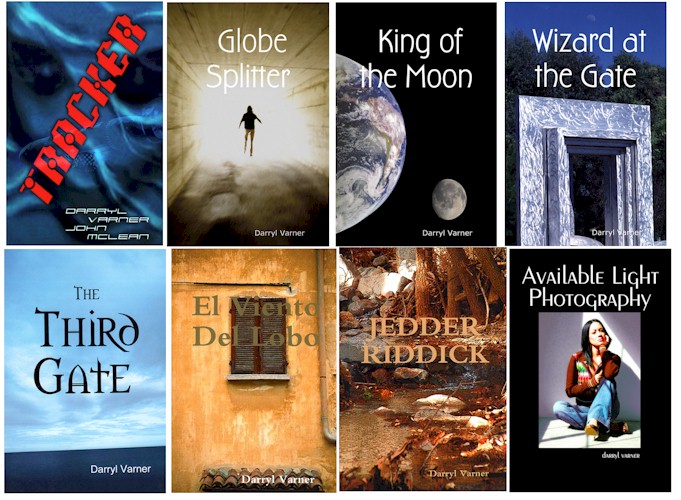
DV:  Officially, I’ve done five novels. Unofficially, I couldn’t even hazard a guess as to how many books I’ve written over the years. The first published book, Tracker, was co-written with a buddy, John McLean. It was a lot of fun having someone to share ideas and work out plot twists, but, due to our schedules, it actually took us over five years to finish it. I won’t go that route again. We did a couple of book signings and speaking appearances, which, again, was a lot of fun. John and I have personalities that naturally “clicked” in front of a group. We were kind of the Abbot and Costellos of bookdom.

BH: What did you learn from Tracker?

DV: The finished novel won a “best book” award when it came out in 2003 and was picked up for the permanent collection of the San Diego City Library. So, on one hand, it really was a shame we weren’t able to work things out to do a sequel. On the flipside, though, there were compromises which I still regret. I think it’s much better in the long run for a writer to work alone or, if you have the resources, to work with a paid staff where you can call the shots and have others do some of the heavy lifting. There’s a lot to be said for that approach for anyone who’s trying to develop a franchise in this business.

BH: After Tracker, you wrote the Methridia Chronicles, right?

DV: Yes. It was about five years later that I started writing a book entitled Globesplitter. I really enjoyed this one. It was a story that pretty much wrote itself. All I had to do was find time to sit down at the computer and whack it out. It’s set in the 1890s with a main character ala the Jules Verne/Edgar Rice Burroughs mold. A wealthy British “tinker”, Jonas Christianson, builds a machine that drills deep into the earth’s crust, breaking through to an ancient underground civilization. I just let my imagination run with it. Lots of action. It was fun inventing a hidden culture. That book took me, maybe, six weeks at the max to finish. Almost immediately, I did a sequel, King of the Moon in about the same length of time. A couple of months after that, I wrote a third novel which is entitled Wizard at the Gate. So, in essence, within a few months I’d done a complete trilogy. Not quite a year after wrapping up Wizard I woke up one morning with an idea for a fourth book and about a month and a half later, I’d finished The Third Gate. I decided to wrap them all under a blanket title of The Methridia Chronicles, named for the underground kingdom where they took place. One thing that I found especially satisfying was that these stories could be read by any age group. I’m certainly no prude, but this confirmed my opinion that it’s quite possible to write a LOT without including a single four-letter word or gratuitous sex scene.

BH: Do you think you will ever publish an e-book? Or have you already, and I just don’t know about it?

DV: I have put all publication on hold for the moment. Right now, I’m working out the “best” way for me to market my stuff and I’m not in any hurry to jump the gun. I will say, though, that there’s a lot to be appreciated by going the e-book route, not the least is the ratio of royalties to publishing expenses. Through electronic publishing it’s quite possible for an author to bring in a very respectable profit without having to have his audience spend an arm and a leg to purchase the book.

BH: What benefits do you see in self-publishing?

DV: In a word: control. Simple as that. Providing that an author is able to work out distribution – which is always an issue, regardless of how a book’s published – it can be a very good way to go. Before the Internet, “self-published” was pretty much synonymous with “vanity press”. That’s not necessarily the case today.

BH: Can you share a little bit with us about your current work-in-progress?

DV: At present, I have so many stories started that I don’t really know which one to develop. I “like” them all, but it’s similar to dating several women at the same time. Making the commitment to one is the hard part. Sooner or later, something will strike my fancy and I’ll do it. Likely as not, it will end up being a complete surprise to me when it comes along.

BH: When did you realize that you were a writer?

DV: In ninth grade. I “forgot” about a poetry assignment until I walked into my 3rd period English class on the morning when it was due.

“Wow, I completely forgot to bring it. Is it okay if I go back home and get it?”

Well, apparently the request didn’t sound unreasonable, so my teacher said it was okay and, as long as I got back before the class ended, she’d accept it. So, I wrote a poem in my head on the walk home, typed it out as soon as I got there, and was back at school in time to turn it in. Ain’t I a stinker?

BH: Where do you get most of your ideas and inspiration?

DV: I plagiarize Stephen King and Tom Clancy. 🙂 Not really. Dreams are a very frequent resource. Also, I’m constantly tuning into snatches of random conversations when I’m out and about. I write Sherlock Holmes stories because I read everything Doyle wrote and I wanted more. Doyle certainly wasn’t up to putting anything new out, so I decided I’d have to take it on as a do-it-yourself project. Ideas are never a problem. Finding time to get them on paper’s another issue, unfortunately.

BH: Do you have a set writing schedule, or do you wait for inspiration?

DV: I write 1) when I’m in the mood and 2) when I have time. The “set” part of my schedule is that I write a minimum of at least one complete scene – generally a chapter – whenever I write. If I start a second or a third chapter, I’ll almost always finish it before I call it quits. I do a little spot revision as I’m working, but generally most of my stuff ends up pretty much as I wrote it in draft form.

BH: Which of your characters do you think is most like you?

DV: I don’t write about boring characters. Can’t say any of them are much like me.

BH: Aww. Not true. What does your writing workspace look like?

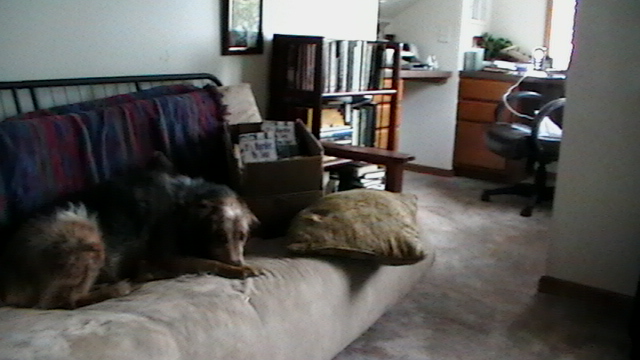
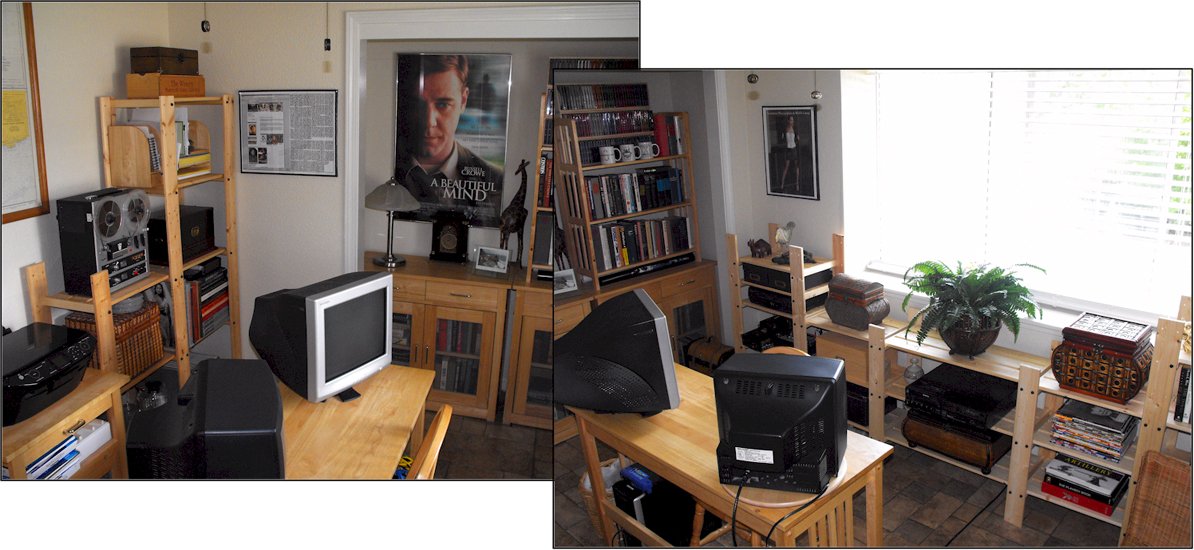
Darryl's Office

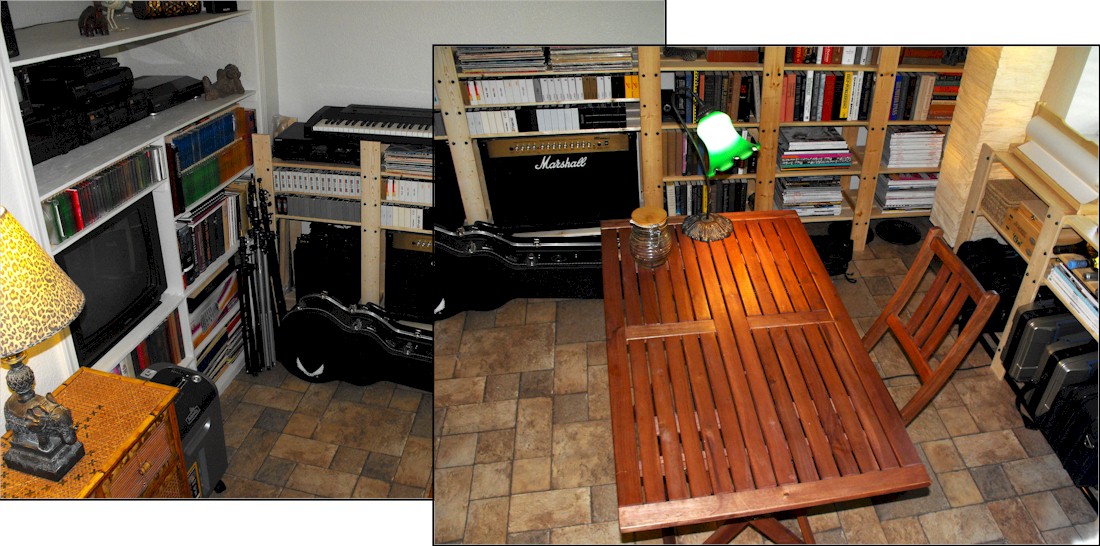
DV: Here are a few snapshots of where I write when I’m home. I wander between my library/AV room and my office. I think it’s important to have everything I need within reach, so my printer’s close at hand in the office and “the world’s best critic”, a heavy duty shredder, is a few steps away in the library. I have a great sound system, too. For me, I find that I often work best when I have music playing in the background. Generally, I listen to light classical stuff. I love rock, of course, but I can get sidetracked by listening to the lyrics, so I almost never play it while I’m writing.

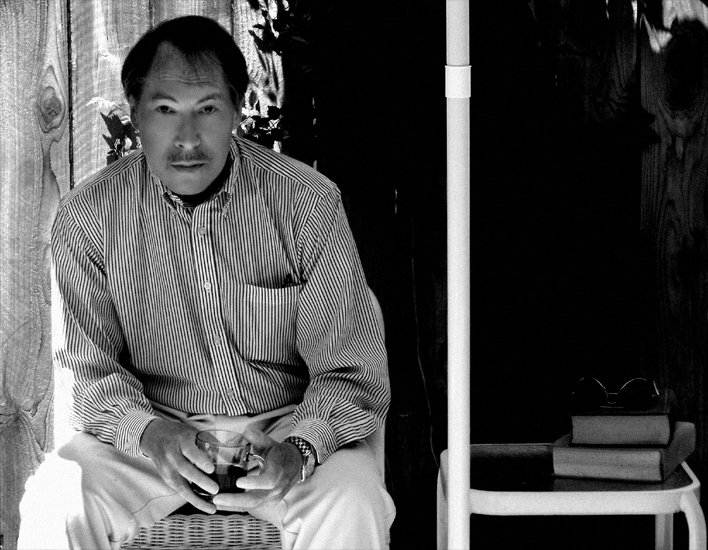
When I want to get out of the house, I tend to head to either Barnes & Noble or Panera Bread. Lately, I’ve been favoring Panera because they have more variety on the menu. Now, if I could only get them to take my Barnes & Noble membership card, I’d really be a happy camper. When the weather’s nice I’ll often drag my laptop out to my deck. That’s where my photo was taken, as a matter of fact.

BH: You started the Sacramento Writers Group in 2009, right? Where do you see the group going in the future?

DV: Super Bowl. No question about it. We just gotta get our defensive squad in shape.

Actually, that’s a difficult question to answer. I’ve been disappointed that it’s been pretty much impossible to develop a core group of writers who will turn up faithfully month after month. That sort of on-going input is what’s really helpful for a writer who’s seeking meaningful help with a project. I hope it will eventually happen, but, honestly, I don’t have a clue how to make sure that it will ever come about. I find that odd, too, since I had a group in southern California that worked for years with the same group of writers showing up like clockwork.

BH: What are some of the problems or issues that go with being a group organizer?

DV: Developing a true membership is at the top of the list. Too many “joiners” and not enough “show-uppers”. I’ve gotten very jaded as to the intros of people who are joining via the Internet, too. As soon as I see the word “passionate” in someone’s bio (as in “I’m very passionate about blah-blah-blah) I figure I’ll maybe see that person at one meeting and that will be the end of it. Maybe it’s like relationships in general. Passion will carry things along only for so long. I suspect a lot of people would prefer to find a new source of inspiration rather than put out the time and effort it takes to actually develop a talent to the point where it’s actually worth something. Then again, there are a lot of “groups” in the area. Maybe a lot of people are just looking for cheap entertainment. Who knows?

BH: What is your favorite book on the writing craft?

DV: The Elements of Style.

Darryl's Library

BH: You mentioned writing Sherlock Holmes stories. I read one that I would love to see published. Do you ever submit your shorter pieces to journals or magazines?

DV: To be truthful, Beth, I’ve never submitted anything to magazines. There’s just not enough of me to go around. I’ve thought about getting an assistant to help me with that sort of thing but so far I haven’t been able to justify the expense. Maybe one of these days, though.

BH: Not only do you run the Sacramento Writers Group, but you’re the organizer for at least two others, is that correct? Where do you find the time for all these pursuits, in addition to your own photography and writing?

DV: I don’t sleep and I strap a feedbag to my face so I can eat while I’m on the run.

BH: What is the best advice anyone has given you with regards to your writing?

DV: Don’t quit your day job.

BH: At first I wanted to write off that advice as totally useless. But then I realized: this writing thing isn’t easy. If you’re filthy rich, go ahead and quit, live off your saved money in a sweet villa on the Mediterranean, and write your little heart out. But if you’re like the rest of us? Work, and then write. Go to sleep. Get up. Repeat.

Darryl, thank you so much for the interview. It was a pleasure!

Blog business note: no post on Monday, as I’ll be in the beautiful eastern Sierras, editing Savage Autumn and critiquing other fabulous pieces of writing for my writer’s groups. Oh, and relaxing with family, hiking, and trying not to get attacked by crazy insects. 🙂