NiFtY Author Heidi Ayarbe AND GIVEAWAY!
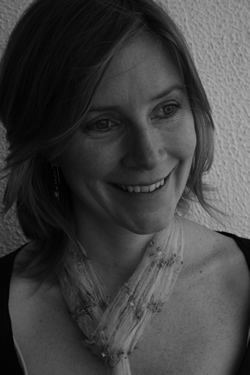
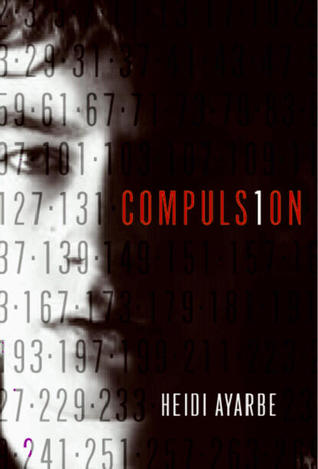
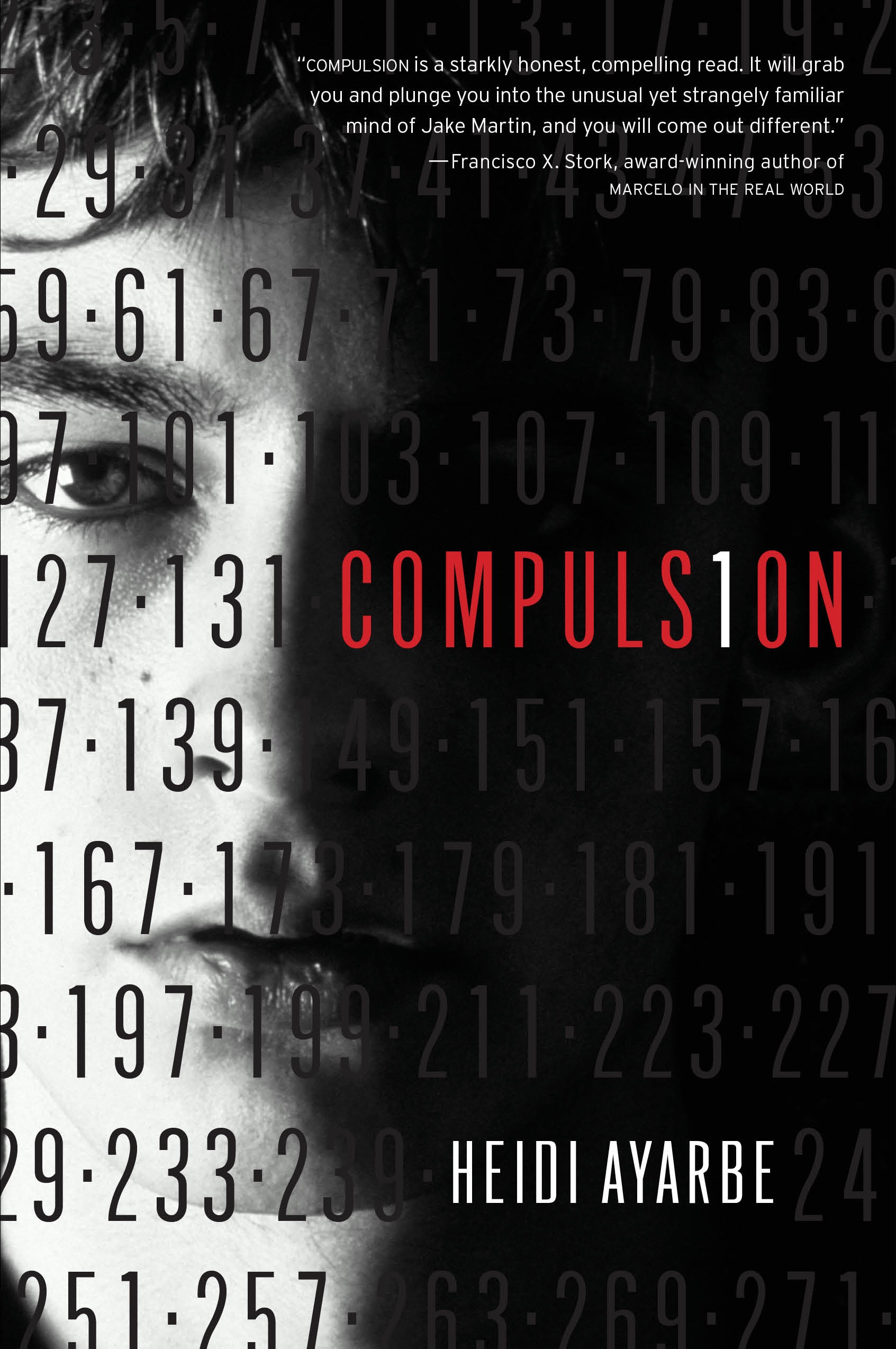
Heidi Ayarbe is the author of three young adult novels: Freeze Frame, Compromised, and Compulsion. I can say with authority that Compromised and Compulsion are both awesome, and Freeze Frame is on my To Read list. Compulsion just came out on Tuesday, and it’s freaking great, and at the end of this interview you can comment for a chance to win an advance reader’s copy of Compulsion.

BH: What’s your one-paragraph pitch for Compulsion?

HA: Compulsion happens over a period of five days in the life of Jake Martin. Jake’s the star of the soccer team, ready to lead his high school team to their third state championship in a row this Saturday. This Saturday means everything because this Saturday, if he plays perfect, he will be released him from the spiders – the numbers – and the other obsessions that rule his life. Saturday, the primes converge and Jake believes that if he does everything right, Saturday will be the day Jake gets to be normal. He’s tired of hiding, tired of living with OCD.

BH: What compelled you (haha) to write Compulsion?

HA: I had a few panic attacks a few years ago. I don’t know why – out of the blue – I became literally panicked over small spaces and being closed in. I figured out how to keep from panicking in elevators and on airplanes, buses and closed-in spaces – some tricks to keep me okay. Each attack lasted just a few minutes but felt like an eternity. I got to thinking about people who live with anxiety – the real deal – every day and how that feeling never goes away. I wanted to write that story because I’m aware that over 40 million people are diagnosed with some kind of anxiety disorder … But I can bet that so many of those 40 million feel pretty alone. I hope Compulsion, somehow, can reach out to those who suffer – give them a voice.
BH: I read Compromised, loved it, and reviewed it awhile back. (HA: Thank you!) How was your experience different when writing the two different books? How was it the same?

HA: Every book is so different. But, I think, there’s nothing as daunting and terrifying as a second novel. (Compromised was my second novel). Once I wrote Freeze Frame, my first novel, revised it, and gone through the grueling process from getting an agent through to copy edits, it felt so … done. And then I was given the chance to write a second novel, Compromised, and everything changed. There were expectations and deadlines – different ones – and reviews to compare to FF reviews. And THE DREADED FIRST DRAFT. I’d totally forgotten how abysmal my first drafts ARE (and continue to be). So seeing Compromised through the published-eye lens was ghastly! All I saw was drivel, having forgotten that I’d get a chance to make it work. I didn’t really enjoy the process as much because I was horrified. So Compulsion was pure joy. I knew I could do it. I made it through novel #2 (which I happen to love, but it was really tough) and Compulsion’s first draft, as expected, was a mess, but I got the structure down and a chance to make it into a novel I love. So, BIG difference in perspective. Same process.

BH: Is it hard to write from a male perspective? Do you have any tips for authors who wish to write from the perspective of the opposite sex?

HA: I think it’s the same tip for writing anything: OBSERVATION. Take the time to watch how people act in public, at restaurants. Watch out for clichés! Writing is about creating believable characters. So watch how males talk compared to females. Listen to them. Think of a male reacting to something and how would a female react to it (typically), then switch it up and give the male the “cliché” female reaction but make it a real guy thing. It’s mostly about creating wonderful, believable people and making them people we can relate to.

BH: What does your workspace look like?

HA: Cramped, overflowing with papers, books, receipts from milk I purchased years ago and other useless things … MESSY!

BH: What is your favorite book on the craft of writing?

HA: I LOVE Anne Lamott’s Bird by Bird. It makes me feel reassured that I’m not alone in my neurosis and insecurities and fear of failure and more. What I LOVE most is how she says, SPILL IT OUT ON THE PAGE, EVERY PAGE, EVERY NOVEL. I love that advice.  See below!

BH: What is the best writing advice anyone has given you?

HA: See above … though technically she didn’t give it to me personally. But GREAT advice.

BH: Thank you for the interview, Heidi, and thanks for the great reads!

And didn’t I say something about a contest? A big thank you to Heidi for making it possible. So, the rules are simple. The giveaway is limited to the continental United States (sorry, overseas people…unless you have an address here you’d like the book shipped to!). To enter, leave a comment at the end of this post. (Email address required to comment, but your email address isn’t published or shared with anyone, ever!)

If you tweet about the contest & share this link, you can get an extra entry (limit one extra). Just comment with the link to your tweet so I can verify that everything’s on the up & up.

The winner will be picked out of a hat at random. Well, his or her name will be picked out of a hat…not the winner in person, which would be too strange.

Deadline: Next Thursday, 5/12/2011, 11:59 p.m. PST. Winner announced sometime on Friday.

For more on Heidi and her books, check out the sites below:

Heidi’s Website:  www.heidiayarbe.com

HarperCollins Website: www.harperteen.com

Heidi’s blog: http://heidiayarbe.blogspot.com/

IndieBound Link to COMPULSION: http://www.indiebound.org/hybrid?filter0=compulsion+by+heidi+ayarbe&x=0&y=0

Compulsion by Heidi Ayarbe

The set-up: The set-up: High school soccer star Jake has to use his magic numbers to get through the week before the final soccer game of the year – the state championship.

Main character’s goals: Jake wants, no needs to win Saturday’s soccer game, because he believes if he does, he won’t need “the numbers” anymore.

My reaction: The whole time I was reading, I was worried. Would Jake help his team win the match? Would he beat the numbers? Would his secret come roaring out at the worst possible moment?

My other reaction: I used to make up equations (usually very simple) ones, for the numbers on digital clocks. Example: 11:24. 1 + 1 + 2 = 4. It would bother me if I couldn’t get them to work, and I’d toy with them, trying to square things if there was a 2, or do division or combine digits…luckily, my being “bothered” if it didn’t work didn’t translate into freaking out.

Of interest to writers: Study this for keeping the tension up in your writing. Look at how sections and chapters are ended, how there’s always something to worry about. I’m feeling tense just remembering Jake’s story. Study the first pages – that right there was tense. Even if I’d wanted to put the book aside to do something else, I couldn’t have.

Bottom line: Clear a day to read this one, you won’t want to put it down. You’ve gotta wait until tomorrow, May 3rd, though – that’s when it’s available for sale.

INTERVIEW WITH HEIDI AYARBE AND COMPULSION GIVE-AWAY COMING UP!!! This Friday or next! Stay tuned! Exciting! Lots of exclamation points!!!

To visit Heidi Ayarbe’s website, click here. To read my review of her previous book, Compromised, click here.

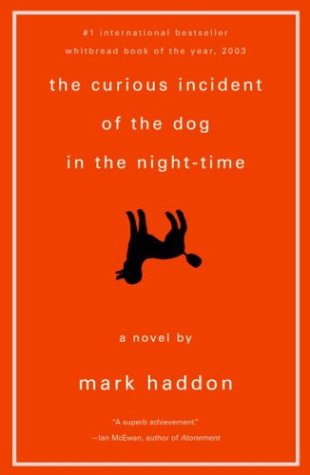
Reminds me of: The Curious Incident of the Dog in the Night-time by Mark Haddon. I’m going for the obvious connection, here. Boy protagonist, a little numbers-obsessed.


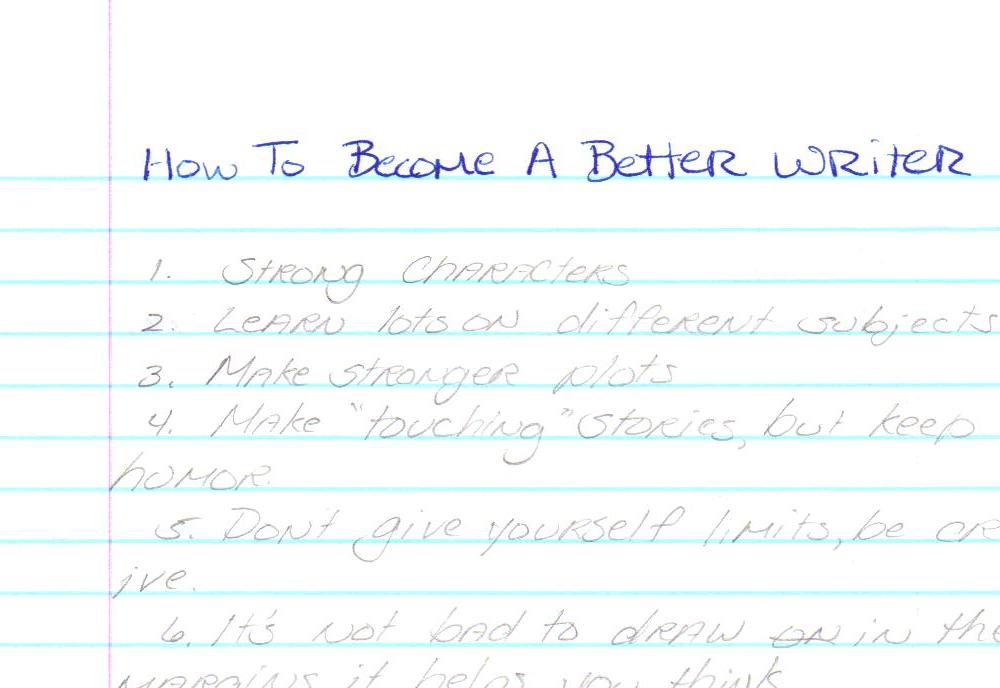
How to Become a Better Writer

Because I knew everything when I was 13. Possibly 12 or 14. Carbon dating is not currently in my skill set, so we’re going by the tiny circles dotting the i’s (it’s faint, but maybe you can see it a tiny bit? Yeah, barely, sorry, couldn’t find a “darken” feature on my scanner).

But first. When people say “from the archives” in BlogLand, I think they usually mean a past blog post. Not so in this case. “The archives” are an old filing cabinet, a gift from my BFF B-Dawg. Covered in stickers (the file cabinet, not the friend):

I can't wait to tear apart the vampire and werewolf stories I found! This file cabinet is almost better than the New Kids On the Block pillowcase I found in my old doll closet. The wonders of exploring our garage/time capsule.

Here’s the list!

1. Strong characters

2. Learn lots on different subjects

3. Make stronger plots

4. Make “touching” stories, but keep humor

5. Don’t give yourself limits, be creative

6. It’s not bad to draw in the margins, it helps you think

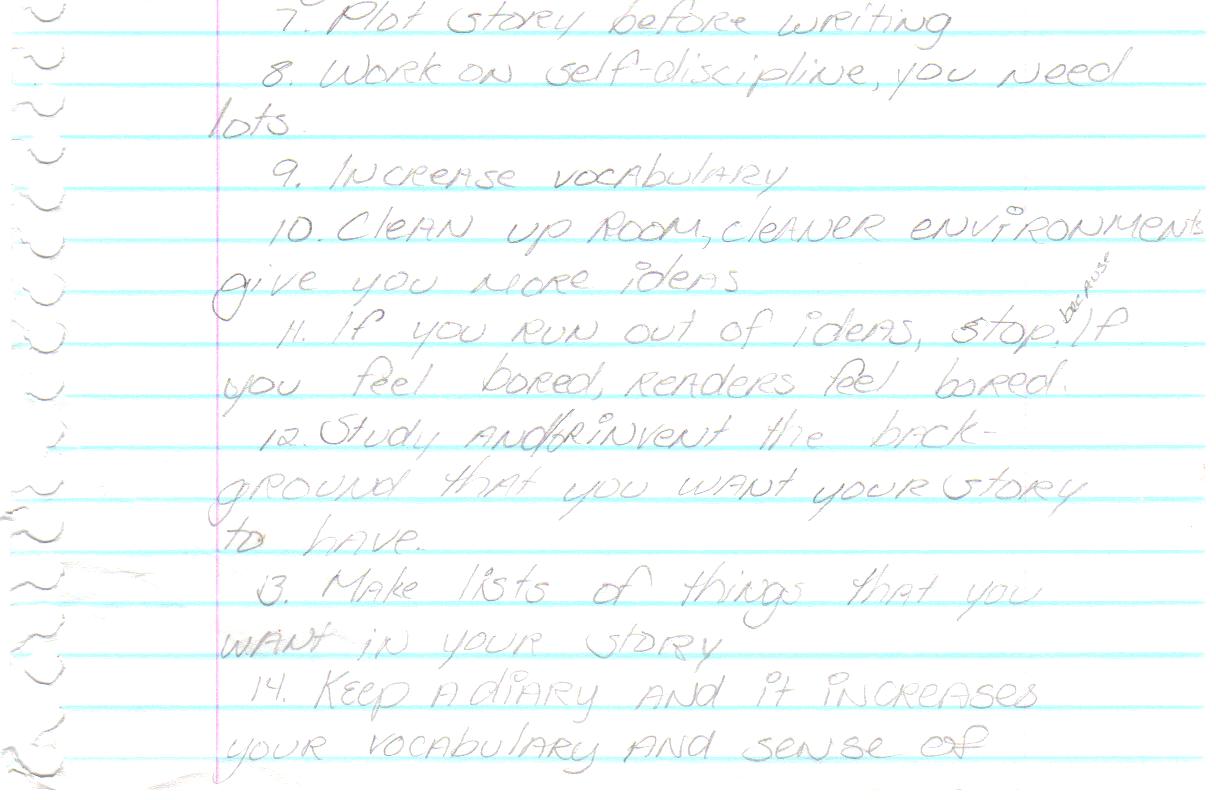
7. Plot story before writing. [Okay, I’ve been refraining from commenting on my juvenile “advice,” but I have to interject here. I LOVE plotting. I could plot all day. But after finishing one set of revisions on The Black City, I’ve been writing fiction without plotting, and it’s great fun. Scary, but fun. And most people will advise you to do the opposite, to just write & let the characters lead you wherever their little hearts desire, but I just wanna say: do what works best for YOU.]

8. Work on self-discipline, you need lots [You may also want to explore punctuation options because your ignorance of the semi-colon is driving me crazy.]

9. Increase vocabulary

10. Clean up room, cleaner environments give you more ideas [See, this has been a problem for me since childhood.]

11. If you run out of ideas, stop because if you feel bored, readers will feel bored [Again, IGNORE this advice. If you run out of ideas, keep going. Something will come, maybe something you’re not expecting. Or maybe total crap. But see #8 above.]

12. Study and/or invent the background that you want your story to have [Do I mean setting here? We’d have to send a message in a time-travel capsule to ask my younger self.]

13. Make lists of things that you want in your story [I’ve always been a fan of lists.]

14. Keep a diary and it increases your vocabulary and sense of feelings

15. Make stupid lists like this when you’re bored

Tidbits: Friday Free-for-All

Idea adapted from my friend’s blog In the Land of Ridd. She calls hers “Ridd Quicks,” and I’ve been sitting here, burning my eyeballs out on the computer screen and trying to come up with something clever. The closest I’ve gotten is “Bethie Bits,” but that smacks too much of “Bacon Bits” (smacks, get it?) so we’ll just not call it anything. This is in the true spirit of a Friday Free-for-All post. I had some other topics, like my vacuum cleaner, but I’ll save them for another Friday. (I know, there are so many great things to look forward to.)

1. Ethiopian Restaurant: There’s one nearby, and my friend D-Chan and I went there today. Sadly, I’d already eaten lunch, but I pecked at some of D-Chan’s food, and it was DELICIOUS. My first Ethiopian cuisine experience was a success, and D-Chan was even generous enough to give me her leftover Chicken Tibbs and a bit of the injera bread, so I can enjoy it again for lunch tomorrow. We went for gelato afterward. I think I am surprising no one by saying I enjoyed mine.

2. My current work-in-progress is being reviewed by eight critique partners. I’ve heard back from four so far, and am really excited about their feedback…even when it’s hard to hear that your novel isn’t, like, totally completely magnificent don’t-change-a-word-perfect. As excited as I am to make the changes they’re suggesting, I’m going to give the manuscript a full month to breathe so I’m not hovering over her like an insecure boyfriend. Give her a little space, let some other people listen to her and hear what she has to say.

3. I’m super-excited about Easter this year, because we have both sets of parents, as well as my younger brother’s family, coming to the house. We’ve been working hard to clean things up, but the yard is still wild-looking. I blame the weather, not laziness.

4. Husband and I are in Season 3 of Prison Break, and even though it is not everything Season 1 was, we’re still hooked. For me it’s always a battle to not read each episode’s mini-synopsis on Netflix before we hit the play button. So many episodes are spoiled because I’m a fast reader. Sometimes I pretend I didn’t read them, because Husband and I have a game of trying to predict the weirdest things in episodes. Then I’m like, “Dude, I predict he is really a woman and he used to date the lion-tamer slash tightrope-walker back when they were in juvie.” And then it happens, and Husband is amazed at my clairvoyant skills. Actually he uses his Super Powers of Deduction and says, “Dude, you read the mini-synopsis.” (Okay, he doesn’t really say “dude.”)

5. Finally, a shout out to my amazing critique partners – even if you haven’t yet finished my manuscript. Thank you to (in alphabetical order by first name)…Danica, Jeri, Kary, Margaret, Melissa, Pam, Pat, and Seven! How cool it would be if someday The Black City is actually published, like, in a BOOK, and I can put you on the acknowledgements page. (Just discovered, there is a book called The Black City, or maybe The Black Town. It’s in Hungarian, so the translation leaves a little room for interpretation. This, coupled with another series coming out next month, The Dark City, has me re-evaluating the title of my novel.) But back to my amazing critique partners: until TBC is published (with whatever title works), you get part of a blog post. You deserve so much more.

NiFtY Author Ebony Joy Wilkins

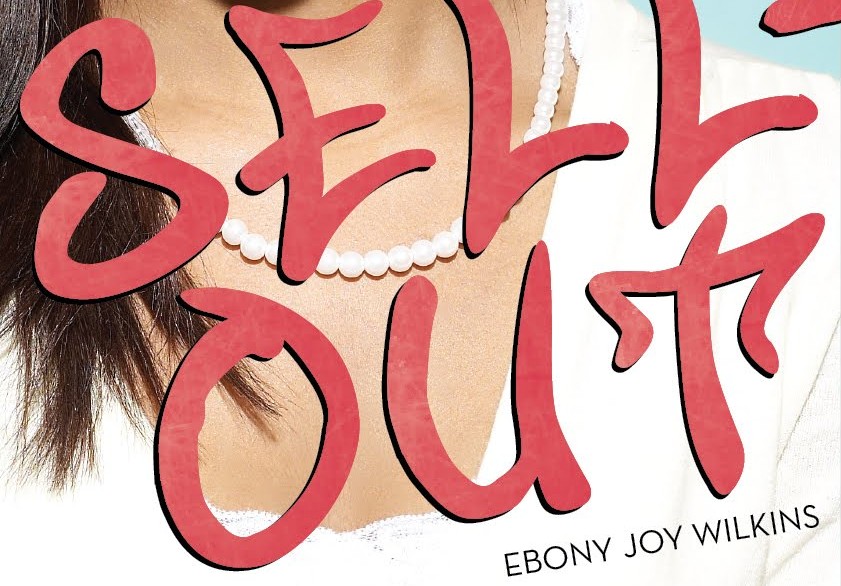
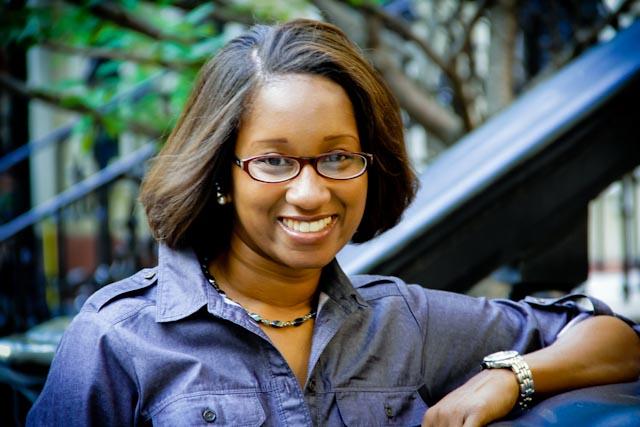
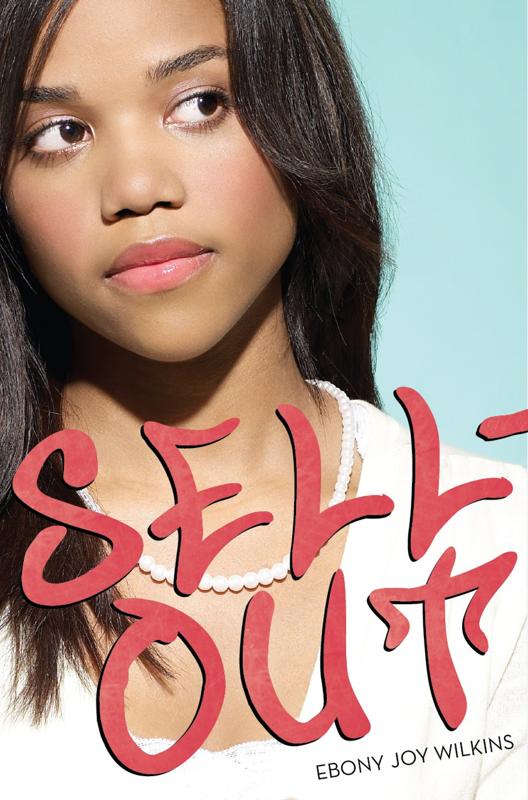
Ebony Joy Wilkins is the author of Sellout, a young adult novel featuring an African American girl who undergoes the aching process of finding herself. It’s fantastic. You should go read it. In the meantime, learn a little bit more about Ebony and her writing.

March 9, 2011

BH: For those in our studio audience who have not read my review of your book, can you tell us a little bit about Sellout?

EJW: Sellout is the story of an African American teenage girl, NaTasha Jennings, who gets caught between two worlds: the white world she’s grown up in and the black world her grandmother wants her to embrace and experience for her own good. NaTasha gets herself into an embarrassing situation at home and flees to Harlem with her Grandmother Tilly for a few weeks to hide from her problems. Unfortunately for NaTasha there is a whole new set of problems waiting for her when she starts life with Tilly. Sellout is the story of a summer that will change the way NaTasha views her world forever.

BH: NaTasha endures some pretty intense bullying from her peers when she goes to Harlem . I thought this was horrible, naturally, but then started thinking about what NaTasha essentially puts herself through by trying to blend in with her all-white community in the suburbs. Which was the most difficult for you to write about from an emotional standpoint, and from a writing craft standpoint?

EJW: NaTasha is almost living a lie, by trying to fit into her world rather than leaving her stamp on it, like so many others feel they have to do. It was difficult for me to take a step back and allow NaTasha to navigate her own experience as an outsider, both at home and in an unfamiliar setting, without stepping in to rescue her. It was important for her to carve her own paths and I tried to remove myself in order for her to do so. This story is loosely based on my own experience, combined with stories of friends’ experiences, but reliving the feelings through NaTasha’s eyes was at times painful.

BH: Your next book is told from the point-of-view of a teenage boy. Is it hard to write from a male perspective? Do you have any tips for authors who wish to write from the perspective of the opposite sex?

EJW: I have three brothers and a host of male cousins and friends whose personalities I have stolen bits and pieces from to combine into one character, Jamal, who I love writing about so far. I started by developing a character plot at the suggestion of a former professor of mine, Sarah Weeks, and wrote down as much about Jamal as I could. At this point, I feel like I know him personally, what he thinks about and how he will react in most situations. When I sit down at my writing space, usually a comfy chair in my living room instead of my office desk, I put myself into his head as much as possible. At times it is a struggle to remove myself from his interactions with the other characters, but I feel it is going well so far. I guess we’ll see once I am ready to submit the story for publication.

BH: Tell us a little about your path to publication.

EJW: I completed an MFA in creative writing for children from New School University and Sellout started as my thesis project in the program. I worked and re-worked the story over many times, with great feedback from authors like Daphne Grab, Lisa Greenwald, Lara Saguisag, and Siobhan Vivian, who were in class with me. When I felt ready to submit, I sent the manuscript to David Levithan at Scholastic, who was a former professor of mine, and he expressed an interest in Sellout and said it was ready. In class we learned about the importance of having agent representation, and at the referral of Daphne, I found my agent Alyssa Eisner Henkin, and the rest is history!

BH: What does your workspace look like?

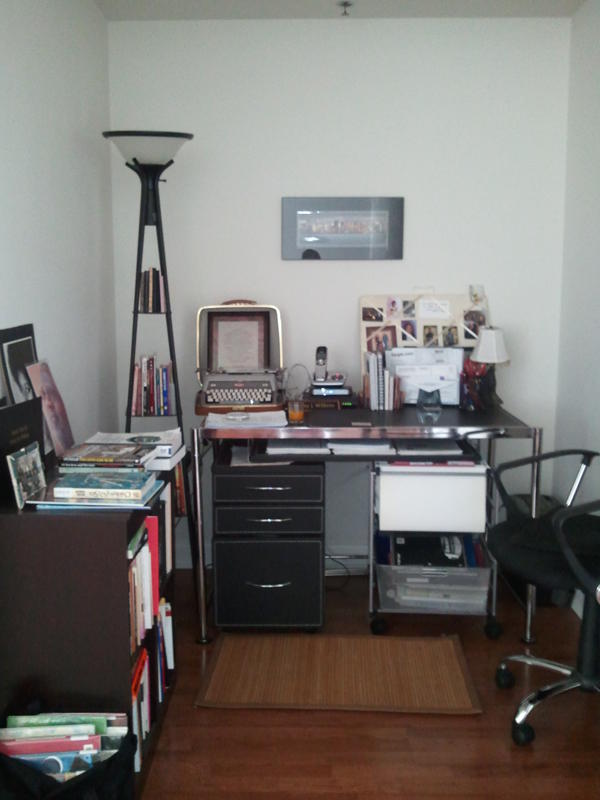
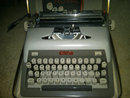
EJW: This is a photo of my official writing space, but I find I get more writing done in a comfy chair or lounging on a pile of pillows in my living room with the TV on mute in the background. At my desk space I have two bookcases filled with books on my to-read list, inspirational quotes, photos of family and friends who are super supportive of me, a 1960s-something typewriter that was gifted to me by my friend Claire, and all of my files that I probably don’t need to file anymore. The photo on the wall is of the NYC skyline, a.k.a. the concrete jungle where dreams are made of (Jay-Z).

BH: What are you reading now?

EJW: I read more YA lit than anything and recently finished The Hunger Games series, which honestly makes me want to bury my head in the sand –amazing storytelling! I also read my first graphic novel, Children of the Sea, which was a really interesting introduction into those types of stories. I just started The Neighborhood: Tiptoeing into poverty and finding hope by my friend, and former colleague, Leslie Alig Collins. I also am juggling many research texts, like The Handbook of Research on children’s and young adult literature, since I am back in school working on a PhD in education. My dream is to be teaching writing courses and writing full-time some day soon.

Ebony's 1960 Futura Typewriter

EJW: 1. Words don’t appear on the page on their own –WRITE! 2. There is no writer’s block, just excuses we put in the way of our own path 3. Write about what you know.

BH: Any words of advice to aspiring writers for keeping the hope alive?

EJW: 1. Completing a manuscript is the hardest part. Most writers come up with a lot of ideas, but ‘finishing’ and following through with a story is the key. You will have to revise a lot during and after, but if you don’t have anything to revise…keep going! 2. Put your work out there (contests, submissions, critique groups, etc.) for others to see. You can get feedback that will help push you along in the right direction. 3. Everyone has an opinion and you can’t please everyone. So, spend your time wisely and make sure you love your work first. 4. Get connected with other writers!

BH: Thank you so much, Ebony, for sharing your books and your advice on writing. I look forward to reading your next book!

For hands-down one of the best author websites I’ve seen, visit Ebony’s by clicking here.

Also, Ebony welcomes emails! – ebony@ebonyjoywilkins.com