The Unthinkable

Three bits of randomness, and a challenge.

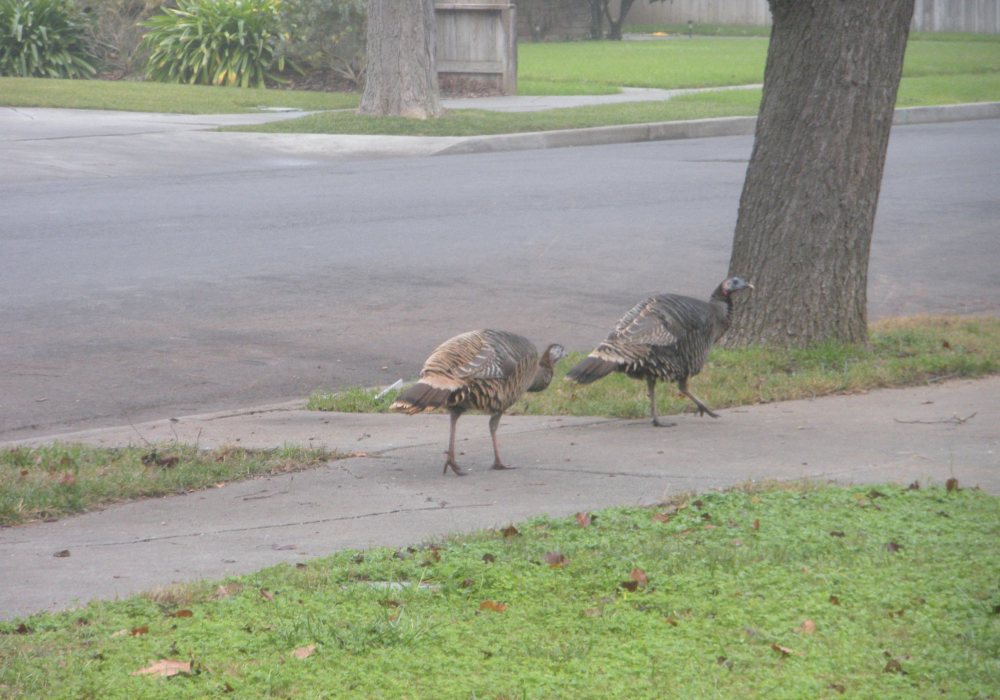
1. Yesterday, two wild turkeys wandered along the sidewalk past our house. Just out for a stroll in the fog. No big deal.

2. Today, I pretended fixing breakfast took a lot longer than it did, because I was reading.
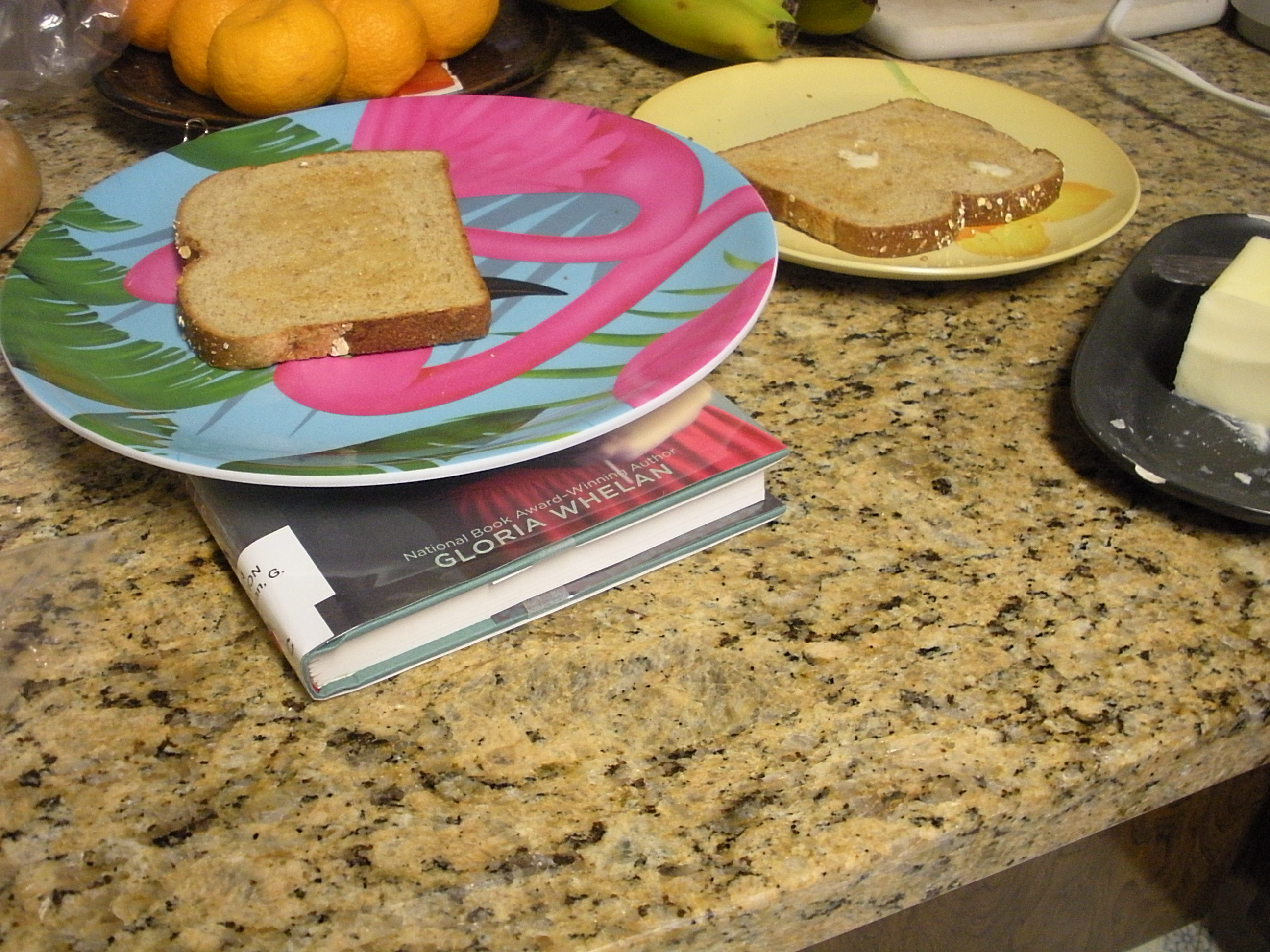
Yeah, that sort of sneaky behavior only works on the shorter set. Anyone tall enough to see over the edge of the counter (and she’s just about there, believe me, I’m raising an Amazon’s child) wouldn’t be fooled. [Yeah, that’s my crowded counter and chipped butter dish. So what?]

3. And finally, today I made Mommy Surprise. I named it that; it’s really a modified “Fruit Crisp” recipe from a Better Homes and Gardens cookbook (modified: tweaked because we didn’t have “rolled” oats, only other oaty stuff; no human needs 4 tablespoons of sugar in a fruit crisp, and I mean Z when I say no one; and I got tired of cutting up apples so added two cups of blueberries instead):
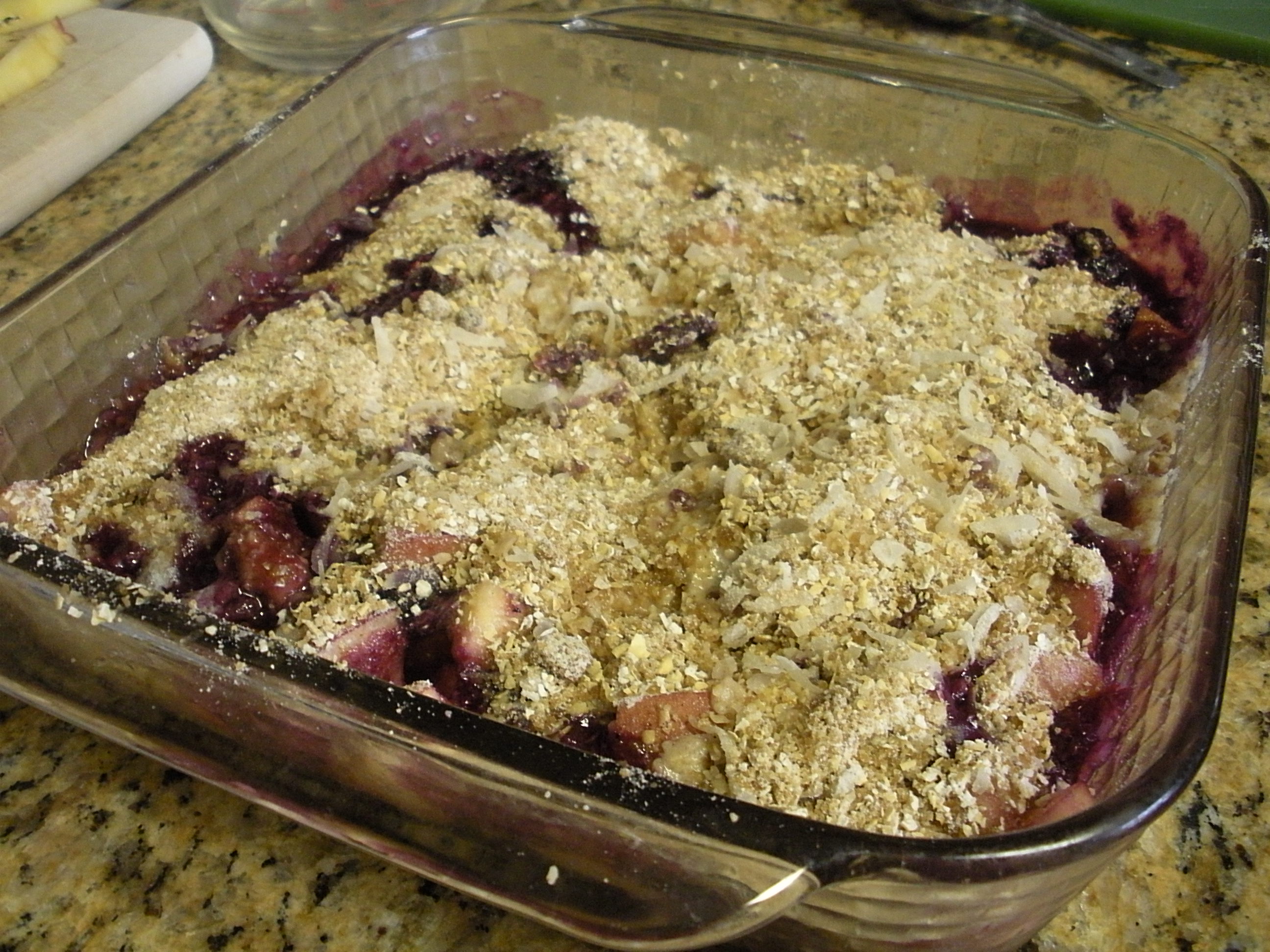
Surprise! Mommy really loves you!

Prepare to be impressed: I microwaved it. Really, I’m not that afraid of the oven, but (sappy voice here) I wanted it to be ready before Z’s nap. She doesn’t know I’m calling it Mommy Surprise because it’s “Surprise! Mommy can actually make stuff in the kitchen! And she put her book down long enough to do it!”

Okay, here’s the real post, now that that other stuff is out of the way.

The challenge: Severely limit the amount of time I spend using the internet

The reason: Other than the fact my eyeballs hurt…my husband (sort of) jokingly said that I love my laptop more than I love him. Youch! Which got me thinking, am I online too much? Could I be the half-step between a regular person, and a person with the Feed? (That’s an M. T. Anderson Feed reference, there, and if you haven’t read that creepy-sad book, I suggest you do.)

The limits:

  • I will allow myself three sessions to read and respond to emails next week. No session may exceed an hour. I’d give up email entirely, except I have promises to critique writing and post writing for critique for one of my writers groups. And a week’s worth of Freecycle posts would probably get my email account shut down.
  • If I can keep each of those email sessions to half an hour, I get a prize. Now accepting ideas what that prize can be.
  • I will not post anything on my blog, nor will I check the stats, nor will I fiddle with any of the widgets or anything blog related.
  • I will also not – gasp! – read the blogs of anyone else. (Will WordPress, my blog host, even allow me to post a blog like this? If I don’t participate in the blog world, their site traffic will be decreased dramatically.)
  • No Facebook or Twitter, which, as fun as they are, won’t be such a hard loss.

The benefits: I calculate there will be many. I’m looking forward to some chunks of time being freed up for work on my manuscript, for one thing (no internet does not mean no laptop). Maybe Husband and I will watch a show together, or play a round of Killer Bunnies, or even, I don’t know, talk. The house might be a little cleaner. Z might remember what her mother looks like without depending on the clicking sounds coming from the little black box to recognize me. My time on the computer will be devoted to working on my manuscript, which will feel refreshing and invigorating and will give me that extra inspirational push I need to get through revising this pesky fight scene. I’ll also lose ten pounds and develop magical beauty skills, influence people, make friends, and convince Husband it is him I love, not this (beautiful, fabulous, convenient, perfect) laptop.

The question: Has anyone else tried this before? How did it work out? If there’s something else I need to consider, let me know soon, because it’s Internet Black Out starting at 11:59 p.m. Pacific Standard Time.

The other question: The world won’t stop, will it?
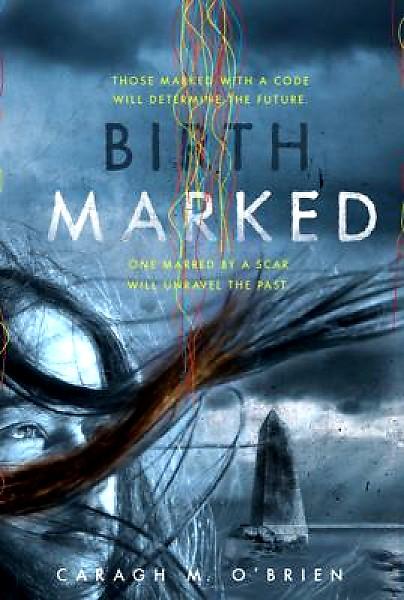
Birthmarked by Caragh M. O’Brien

The set-up: Many years in the future, sixteen-year-old Gaia is a midwife to mothers in the sectors outside the Enclave, which is a city of privileged people. The first three babies delivered each month must be given to the Enclave, families of which adopt the babies.

Main character’s goals: Gaia’s parents are arrested by authorities in the Enclave. When they aren’t returned home, Gaia decides to rescue them.

My reaction: Do you really want to know? Probably not. This is a very personal reaction. Within the first few pages, I was quite upset. Sick feeling in my stomach, the whole works. Here’s what happened: O’Brien’s book begins with a birth. “Bummer,” I thought. “My manuscript begins with a birth. Not a big deal, though.” I kept reading. Then, the birth mother’s name is Agnes. “WTF?” I said. “My birth mother’s name is Agnes.” Seriously, what are the chances? And then, the baby gets taken away. SAME THING IN MY NEW MANUSCRIPT. Which is also a post-apocalyptic dystopian story. At this point I was beyond speech. The whole mood, along with those details, reminded me so strongly of my manuscript that I had to put the book down.

But only for an hour or so. Because the writing is excellent, and the story is too. On the bright side, the similarities between O’Brien’s and my stories end after the points I saw in the beginning, and hers is science fiction and mine’s fantasy. But for awhile there I was upset, and, I’ll admit it, pissed off. And I kinda needed to throw up.

Of interest to writers: Mood and tone! The beginning of this has so much mood you could siphon some off and distribute it to five other books, and it would still have this great mood. I mean, wow. If I hadn’t been so upset over my own issues with the beginning, I might have enjoyed it even more.

There’s a way-obvious sequel-begetting ending, BUT this is a complete novel. Writers everywhere, take note: you can end a book in a way that allows for sequels and keeps readers interested, without dangling your hero off a cliff.

Bottom Line: Fabulous book. You’ll enjoy it even more if you aren’t writing about a woman named Agnes giving birth and needing to say goodbye to her baby right away. (Or you could cut your prologue…which you should do anyway.) (Yes I’m talking to myself. I’ll stop now.)

If you want to find out more about Birthmarked, you can visit Caragh O’Brien’s page here.

NiFtY Author: Dorothy Bodoin

Today’s Free-for-All Friday brings us an interview with NiFtY Author Dorothy Bodoin. Dorothy has written numerous novels and is the author of the Foxglove Corner mystery series. Join me in learning more about Dorothy and her writing!

BH: Hi Dorothy! From what I read on your website, your Foxglove Corner mystery series is eleven books strong. Can you tell us a little about the series?

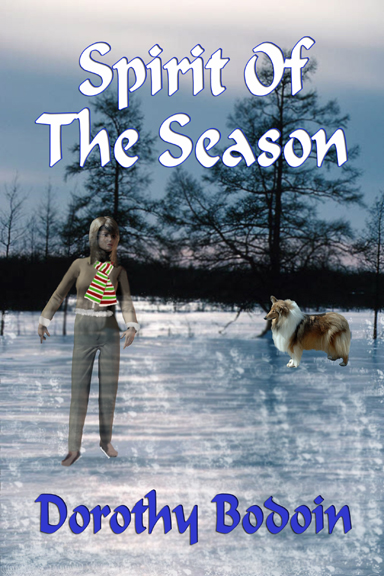
DB:  In the first book of the series, Darkness At Foxglove Corners, my heroine, Jennet Greenway, and her collie move to Foxglove Corners after a tornado damages her previous house.  She hopes to find country peace and quiet.  Instead she finds a mystery in the old yellow Victorian across the lane and romance with a handsome, enigmatic deputy sheriff named Crane Ferguson.

I never intended to write a series, but one idea led to another and another.  At present I find myself writing the twelfth book about Jennet Greenway and her collies.

BH: Which of the Foxglove Corner mysteries is your favorite?

DB:   It’s difficult to choose one, but The Collie Connection has a special place in my heart.  I wrote it after an accident threw my life into a tailspin.  During this time, I lost my beloved collie, Holly, who served as the model for Jennet’s Halley.  I didn’t think I’d be able to write that book because, according to my plan, Jennet was supposed to lose Halley just before her wedding, but I did; and it received my publisher’s Golden Wings award.

BH: What are some of the joys of writing a series character?

DB:  By now, I know my series characters better than I know my friends.  I know how they’re going to act and what they’re going to say, and I look forward to seeing them again.  I also have fun playing matchmaker.  When I bring one of my characters into my current book, it’s like greeting an old friend.

BH: Do you have any tips to share on how to keep a main character growing and learning throughout a series?

DB:  Each one of my books is set in a different season.  At this point, for example, I have three books that take place during Christmas.  My characters, like real people, change.  They get married, survive disappointing love affairs, and deal with life’s problems—Jennet’s encounters with unruly students, for example, and her conflict with Principal Grimsly.

My setting is also real.  I live about an hour’s drive from the fictional Foxglove Corners.  Places change, too.  People react to change.  Readers, I’m happy to say, often refer to Jennet and Crane as if they’re real people rather than characters in a book.  They’ve been known to react to the collies this way too.

BH: Tell us a little about your path to publication.

DB: When I was fifteen, I wrote a science-fiction novel on a portable typewriter.  I thought it was quite good and submitted it to all the big publishers I could find and collected several kind rejection letters.  It was a different publishing world then.  I didn’t sell my book, of course, but I learned an early lesson about perseverance.

A decade or so later, I wrote a western Gothic novel.  Once again, I thought it was good and tried to find a publisher.  There were different markets available to writers now.  The publishing world was changing.  Some editors were still kind, but no one wanted to publish my book.  From time to time I revised it and tried again.  I didn’t realize it at the time, but I had a lot to learn about writing.  My manuscript spent many years in a box on my closet shelf.

Finally—I won’t say how much later—I left my job teaching high school English and started writing full time.  Once again I had faith in my book, Darkness At Foxglove Corners.  This time, I was determined to be published.  I had my manuscript professionally critiqued not once but twice, and kept learning.  After twenty-eight submissions, I found a publisher for it.

Unfortunately, I still had a lesson to learn.  One acceptance doesn’t add up to success everlasting.  My publisher rejected my second book, Cry For The Fox.  I was disappointed but also by this time a professional.  I submitted it to other publishers and, while waiting for replies, wrote a third book, Winter’s Tale.  Wings ePress accepted Winter’s Tale and Cry For The Fox.  And I kept writing.

Finding Hilliard and Harris on the Sinc-ic website was a lucky break for me.  They published my stand-alone novels of romantic suspense, all of which have been selected by Harlequin Worldwide Mystery BookClub.

BH: What does your workspace look like?

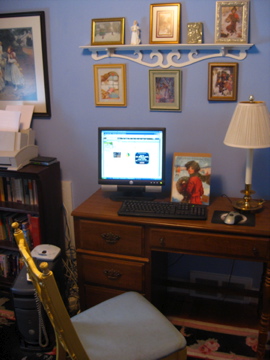
DB:  I have two workspaces: two desks, one in the living room, one in a bedroom converted into a home office and library.  I do the majority of my planning and rough draft writing in the living room and fine tune my chapters on the computer.

In both rooms, I have oil paintings and prints, mostly of collies, and photographs all around me.  The dictionary and thesaurus are never far away.  Both spaces look neat in the pictures because I’m between chapters today.

BH: What is your favorite book on the craft of writing?

DB:  Phyllis A. Whitney’s Guide To Fiction Writing is my all-time favorite.  I read an earlier version of her book with a different title when I was in my teens.  In those earlier years, I often returned to it for enlightenment and encouragement.  Every time I read it, I seemed to read her message between the lines: “You can do it!”

BH: Any words on advice to aspiring writers for keeping the hope alive?

DB:  My advice is simple.  Keep writing and keep submitting and, in your leisure time, read the kinds of books you’d like to write.  I learned from writers like Velda Johnston and other favorites, and I’m still learning.

Find a group like Sisters in Crime and become as active as you can.  Find the right critique partner or critique group.  At one point, the Internet Chapter of Sisters in Crime had a wonderful Workshop.  I posted the entire draft of Winter’s Tale in the Workshop before submitting it to Wings.

Also, it’s important to write every day if possible, even during life’s bad times.  Even three or four pages will eventually turn into a book.

Write about something that’s important to you.  I’ve always loved collies and like to think of myself as the Albert Payson Terhune of the mystery world.  Moving ahead to promotion, I advertise in collie magazines and have met many wonderful people who first saw my name in The Cassette or Collie Expressions.

BH: If you want more of Dorothy (and oh, I bet you do!), check out the links below!

http://www.dorothybodoin.com is my website.  Here in my Photo Album you’ll find pictures of beautiful collies like the ones who romp through the pages of my books.

http://www.wings-press.com is the publisher of my Foxglove Corners series.

http://www.hilliardandharris.com is the publisher of my novels of romantic suspense.

http://www.amazon.com Here you’ll find my books; the Hilliard and Harris books are also in bookstores.

http://www.sistersincrime.org I recommend joining this organization, along with Sinc-ic, (the Internet Chapter) and the Guppies.  The last group is slanted toward the unpublished, but many of us remain members after we’re published.

No Talking.

In which I can’t decide what to write about so traipse off into tangents.

I have this print by artist Juli Adams. It’s got this girl with a blanket in her lap, a cat on the blanket. In one hand she’s holding a cup of tea (or possibly coffee, I suppose, if you like that sort of thing). In the other hand she’s holding a book. The title: No Talking. (If you’d like to see the print, click here.)

That’s how I get when I’m reading a book. Just give me some quiet space and let me do my thing.

[Imagine a photo of Colin Firth as Mr. Darcy. I’m taking down all images not created By Me because I read something about copyright and am now paranoid.]

People who don’t read for pleasure confuse me a little, I’ll admit. These are the people with whom I have no idea what to talk about if we try to embark on a conversation. It takes a little work to find talking points with a person I’ve just met who doesn’t read, especially because I have never had the happy talent of (how does Mr. Darcy phrase it?)  “conversing easily with people I have never met before.” My topics usually include, “What do you like to read?” or “What have you read lately?” Now that I’m a mother, I often ask if the person has children. It’s just easier. Even if they don’t have kids, they usually have pets (not to be confused as the same thing). Conversations about jobs or work are a very last resort, because the truth is, I’m rarely interested. Sorry. I’m self-absorbed. I tried to change that for awhile, but decided to embrace it and start a blog.

This is not to say that I don’t enjoy the company of people who do not read for pleasure, because I certainly do enjoy their company – after we have flailed around for some common ground on which to base conversation.

It’s something I need to work on.

Oh! Speaking of things I need to work on (there are many, but go with me for a second while I talk about ONE)… My Turning 30 Challenge! Have I made any progress? Well, yes, actually. Husband taught me how to build a fire in a fireplace. And…that’s about all the progress I’ve made. It just hit me that the 30 thing is really happening this year, as three of my friends turn 30 this month (Happy Birthday(s) N, B, and B!). I have only a few weeks to meet my challenge, so um, I better get on top of this.

NiFtY Author: Marilyn Meredith

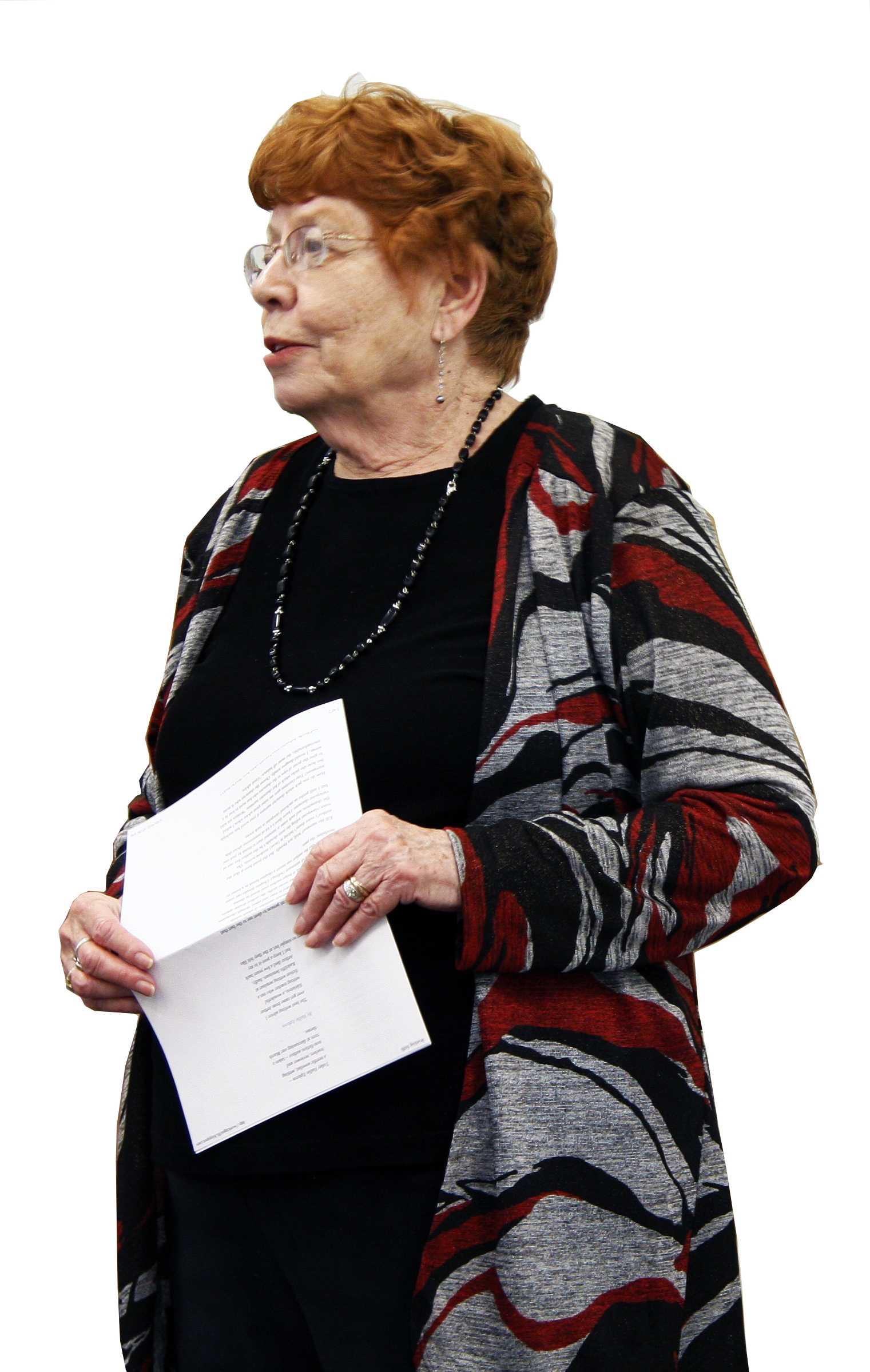
Whoo-hoo! First NiFtY (Not Famous…Yet) Author Interview of 2011! Meet Marilyn Meredith, author of the Deputy Tempe Crabtree mysteries and the Rocky Bluff P.D. crime series.

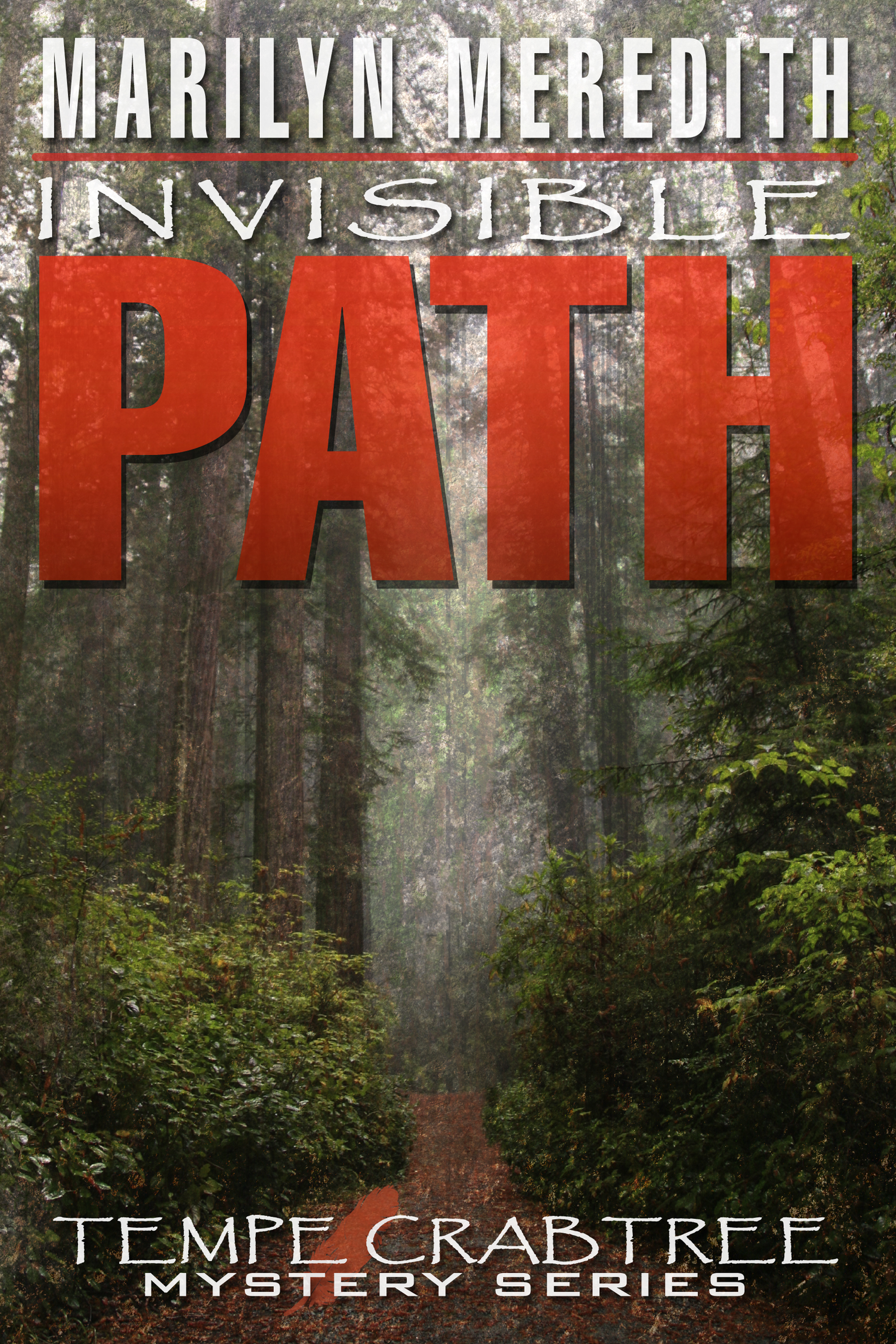
BH: Tell us a little about your latest book, Invisible Path.

MM: The official blurb is: The only suspect in the murder of a popular Native American is another Indian with the unlikely name of Jesus Running Bear. Once again, because of her own Indian heritage, Deputy Tempe Crabtree helps with the investigation which also leads to the discovery of hidden militia group’s camp deep in the forest. Following the killer’s trail, puts Tempe and Jesus in jeopardy. Besides being a mystery it is also about many forms of prejudice.

BH:  You write  two mystery series – are both series current, and if so, is it ever a challenge to keep the characters straight as you’re writing?

MM: In the Tempe Crabtree series, most of the story is told in close third person though the eyes, thoughts and feeling of Tempe, though in Invisible Path, the first chapter is told through Jesus Running Bear’s point-of view.

In the Rocky Bluff P.D. crimes series, though the story focuses on one or two members of the RBPD, we learn what’s going on through many others.

A new book in the RBPD series comes out in the beginning of the year and a new book in the Tempe series always comes out in the fall.

The settings for both are quite different. Tempe lives and works in the mountains, Rocky Bluff is situated in a beach community in Southern California.

BH: Tempe Crabtree sounds like a fascinating personality. Where did you get the inspiration for her character?

MM: Tempe came from three women I met over a short period of time. The first was a resident deputy working the area where I live. I interviewed her for a personality piece for the newspaper. A female police officer I did a ride-along with was the second. She was a single mom and the only woman on that department. From about 3 a.m. until 6 a.m. she had no calls and she poured her heart out to me. The third was a beautiful Indian woman I spent a couple of hours with who had grown up on the nearby reservation. Together, these women became Tempe Crabtree.

BH: Which of your characters would you say is the most like you?

MM: Since I’m a great-grandmother and never been in law enforcement none are really like me. About the only personality traits of my main female characters I can claim is independence, loyalty and a certain amount of stubbornness.

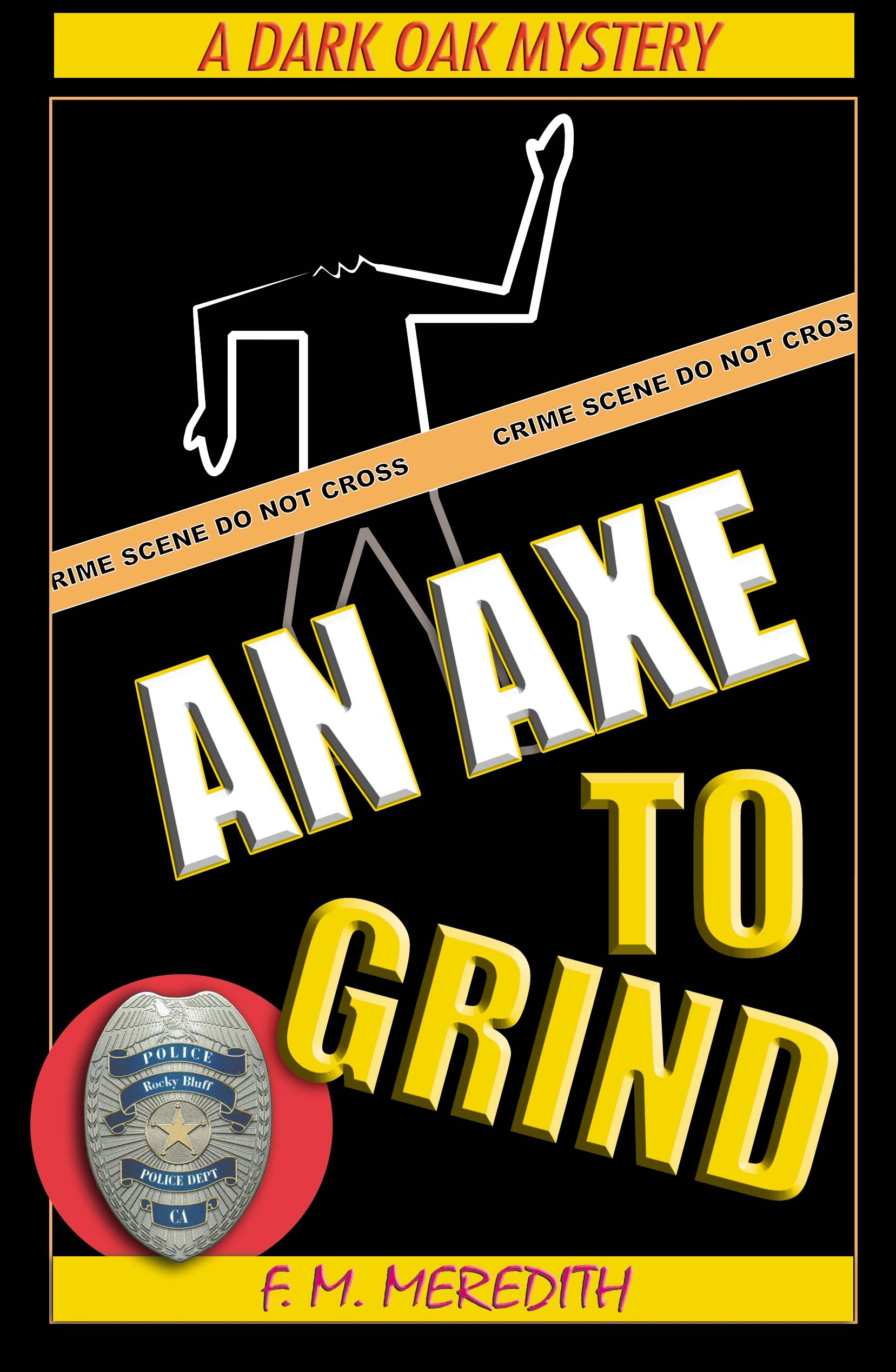
BH: This might seem like a silly question, but I’m honestly curious: why are your Deputy Tempe books written under the name Marilyn Meredith, and your Rocky Bluff books written as F. M. Meredith?

MM: Of course Marilyn Meredith is my real name. When I first started writing the Rocky Bluff series which is often from a male point-of-view, I thought using my first initials might make male readers read the books more readily. However, the first publisher of the series put my photo on the back of the book and ruined the illusion. Since I began that way, I’ve just kept it up.

BH: Tell us about your path to publication.

MM:  It was a rocky path full of pit holes and blocked by boulders. My first book, an historical family saga, was rejected nearly thirty times before it was accepted. (Believe me, I rewrote it several times between rejections.) From there it was one thing after another. To make a long story shorter, I’ve dealt with a couple of crooked publishers, had two publishers die, one decided not to be in the business any longer, five different agents who were unable to sell my books, and finally I started looking for publishers on my own.

BH: That is a rocky path! Do you have a set writing schedule?

MM: I write in the morning, that’s when my brain works the best. I think about whatever I’m writing off and on during the day. I usually do editing and promoting in the afternoon and evenings.

BH: What is your favorite book on the craft of writing?

MM: I’ve had many over the years, but the one that I enjoyed the most was Stephen King’s On Writing.

BH: Any words on advice to aspiring writers for keeping the hope alive?

MM: Don’t ever give up. Go to writing conferences, read books on writing, join a critique group, and most of all write, write, write.

BH: Thank you, Marilyn, for answering our questions and giving us some insights into your writing life!

If you’d like more information on Marilyn Meredith and her books, you can visit her website here, and her blog here. Here’s a link for her latest book, Invisible Path.