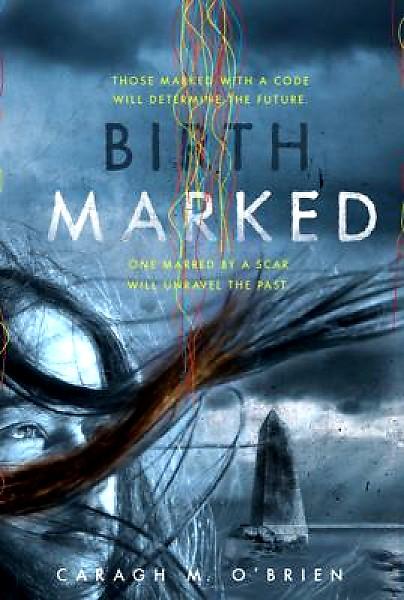
Birthmarked by Caragh M. O’Brien

The set-up: Many years in the future, sixteen-year-old Gaia is a midwife to mothers in the sectors outside the Enclave, which is a city of privileged people. The first three babies delivered each month must be given to the Enclave, families of which adopt the babies.

Main character’s goals: Gaia’s parents are arrested by authorities in the Enclave. When they aren’t returned home, Gaia decides to rescue them.

My reaction: Do you really want to know? Probably not. This is a very personal reaction. Within the first few pages, I was quite upset. Sick feeling in my stomach, the whole works. Here’s what happened: O’Brien’s book begins with a birth. “Bummer,” I thought. “My manuscript begins with a birth. Not a big deal, though.” I kept reading. Then, the birth mother’s name is Agnes. “WTF?” I said. “My birth mother’s name is Agnes.” Seriously, what are the chances? And then, the baby gets taken away. SAME THING IN MY NEW MANUSCRIPT. Which is also a post-apocalyptic dystopian story. At this point I was beyond speech. The whole mood, along with those details, reminded me so strongly of my manuscript that I had to put the book down.

But only for an hour or so. Because the writing is excellent, and the story is too. On the bright side, the similarities between O’Brien’s and my stories end after the points I saw in the beginning, and hers is science fiction and mine’s fantasy. But for awhile there I was upset, and, I’ll admit it, pissed off. And I kinda needed to throw up.

Of interest to writers: Mood and tone! The beginning of this has so much mood you could siphon some off and distribute it to five other books, and it would still have this great mood. I mean, wow. If I hadn’t been so upset over my own issues with the beginning, I might have enjoyed it even more.

There’s a way-obvious sequel-begetting ending, BUT this is a complete novel. Writers everywhere, take note: you can end a book in a way that allows for sequels and keeps readers interested, without dangling your hero off a cliff.

Bottom Line: Fabulous book. You’ll enjoy it even more if you aren’t writing about a woman named Agnes giving birth and needing to say goodbye to her baby right away. (Or you could cut your prologue…which you should do anyway.) (Yes I’m talking to myself. I’ll stop now.)

If you want to find out more about Birthmarked, you can visit Caragh O’Brien’s page here.

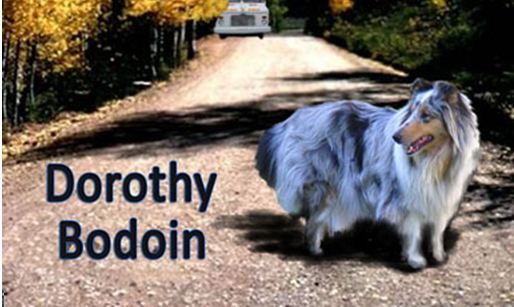
NiFtY Author: Dorothy Bodoin

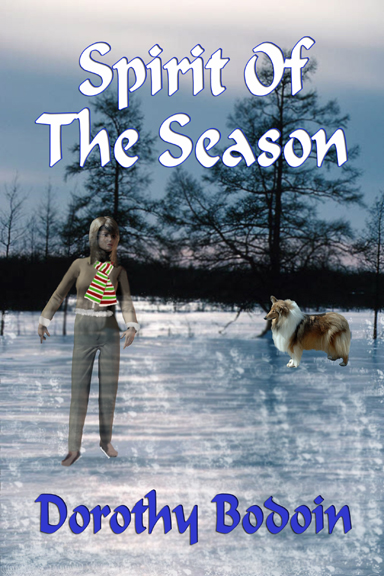
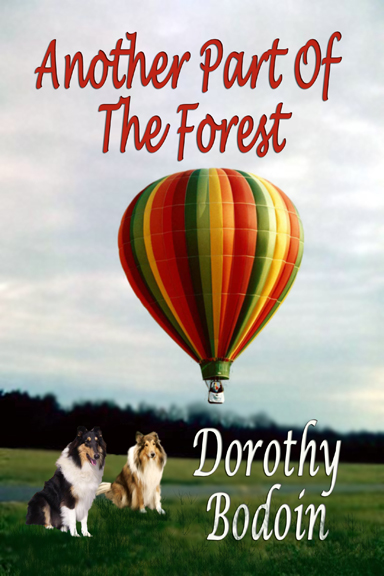
Today’s Free-for-All Friday brings us an interview with NiFtY Author Dorothy Bodoin. Dorothy has written numerous novels and is the author of the Foxglove Corner mystery series. Join me in learning more about Dorothy and her writing!

BH: Hi Dorothy! From what I read on your website, your Foxglove Corner mystery series is eleven books strong. Can you tell us a little about the series?

DB:  In the first book of the series, Darkness At Foxglove Corners, my heroine, Jennet Greenway, and her collie move to Foxglove Corners after a tornado damages her previous house.  She hopes to find country peace and quiet.  Instead she finds a mystery in the old yellow Victorian across the lane and romance with a handsome, enigmatic deputy sheriff named Crane Ferguson.

I never intended to write a series, but one idea led to another and another.  At present I find myself writing the twelfth book about Jennet Greenway and her collies.

BH: Which of the Foxglove Corner mysteries is your favorite?

DB:   It’s difficult to choose one, but The Collie Connection has a special place in my heart.  I wrote it after an accident threw my life into a tailspin.  During this time, I lost my beloved collie, Holly, who served as the model for Jennet’s Halley.  I didn’t think I’d be able to write that book because, according to my plan, Jennet was supposed to lose Halley just before her wedding, but I did; and it received my publisher’s Golden Wings award.

BH: What are some of the joys of writing a series character?

DB:  By now, I know my series characters better than I know my friends.  I know how they’re going to act and what they’re going to say, and I look forward to seeing them again.  I also have fun playing matchmaker.  When I bring one of my characters into my current book, it’s like greeting an old friend.
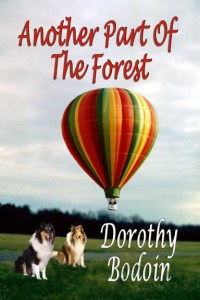
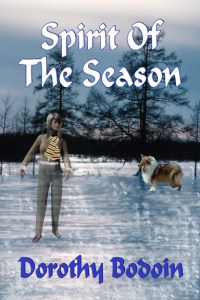
BH: Do you have any tips to share on how to keep a main character growing and learning throughout a series?

DB:  Each one of my books is set in a different season.  At this point, for example, I have three books that take place during Christmas.  My characters, like real people, change.  They get married, survive disappointing love affairs, and deal with life’s problems—Jennet’s encounters with unruly students, for example, and her conflict with Principal Grimsly.

My setting is also real.  I live about an hour’s drive from the fictional Foxglove Corners.  Places change, too.  People react to change.  Readers, I’m happy to say, often refer to Jennet and Crane as if they’re real people rather than characters in a book.  They’ve been known to react to the collies this way too.

BH: Tell us a little about your path to publication.

DB: When I was fifteen, I wrote a science-fiction novel on a portable typewriter.  I thought it was quite good and submitted it to all the big publishers I could find and collected several kind rejection letters.  It was a different publishing world then.  I didn’t sell my book, of course, but I learned an early lesson about perseverance.

A decade or so later, I wrote a western Gothic novel.  Once again, I thought it was good and tried to find a publisher.  There were different markets available to writers now.  The publishing world was changing.  Some editors were still kind, but no one wanted to publish my book.  From time to time I revised it and tried again.  I didn’t realize it at the time, but I had a lot to learn about writing.  My manuscript spent many years in a box on my closet shelf.

Finally—I won’t say how much later—I left my job teaching high school English and started writing full time.  Once again I had faith in my book, Darkness At Foxglove Corners.  This time, I was determined to be published.  I had my manuscript professionally critiqued not once but twice, and kept learning.  After twenty-eight submissions, I found a publisher for it.

Unfortunately, I still had a lesson to learn.  One acceptance doesn’t add up to success everlasting.  My publisher rejected my second book, Cry For The Fox.  I was disappointed but also by this time a professional.  I submitted it to other publishers and, while waiting for replies, wrote a third book, Winter’s Tale.  Wings ePress accepted Winter’s Tale and Cry For The Fox.  And I kept writing.

Finding Hilliard and Harris on the Sinc-ic website was a lucky break for me.  They published my stand-alone novels of romantic suspense, all of which have been selected by Harlequin Worldwide Mystery BookClub.

BH: What does your workspace look like?

DB:  I have two workspaces: two desks, one in the living room, one in a bedroom converted into a home office and library.  I do the majority of my planning and rough draft writing in the living room and fine tune my chapters on the computer.
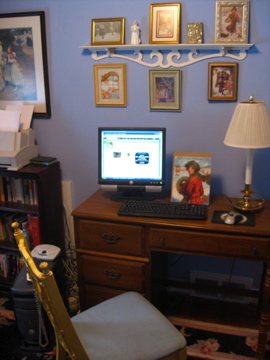
In both rooms, I have oil paintings and prints, mostly of collies, and photographs all around me.  The dictionary and thesaurus are never far away.  Both spaces look neat in the pictures because I’m between chapters today.

BH: What is your favorite book on the craft of writing?

DB:  Phyllis A. Whitney’s Guide To Fiction Writing is my all-time favorite.  I read an earlier version of her book with a different title when I was in my teens.  In those earlier years, I often returned to it for enlightenment and encouragement.  Every time I read it, I seemed to read her message between the lines: “You can do it!”

BH: Any words on advice to aspiring writers for keeping the hope alive?

DB:  My advice is simple.  Keep writing and keep submitting and, in your leisure time, read the kinds of books you’d like to write.  I learned from writers like Velda Johnston and other favorites, and I’m still learning.

Find a group like Sisters in Crime and become as active as you can.  Find the right critique partner or critique group.  At one point, the Internet Chapter of Sisters in Crime had a wonderful Workshop.  I posted the entire draft of Winter’s Tale in the Workshop before submitting it to Wings.

Also, it’s important to write every day if possible, even during life’s bad times.  Even three or four pages will eventually turn into a book.

Write about something that’s important to you.  I’ve always loved collies and like to think of myself as the Albert Payson Terhune of the mystery world.  Moving ahead to promotion, I advertise in collie magazines and have met many wonderful people who first saw my name in The Cassette or Collie Expressions.

BH: If you want more of Dorothy (and oh, I bet you do!), check out the links below!

http://www.dorothybodoin.com is my website.  Here in my Photo Album you’ll find pictures of beautiful collies like the ones who romp through the pages of my books.

http://www.wings-press.com is the publisher of my Foxglove Corners series.

http://www.hilliardandharris.com is the publisher of my novels of romantic suspense.

http://www.amazon.com Here you’ll find my books; the Hilliard and Harris books are also in bookstores.

http://www.sistersincrime.org I recommend joining this organization, along with Sinc-ic, (the Internet Chapter) and the Guppies.  The last group is slanted toward the unpublished, but many of us remain members after we’re published.
No Talking.

In which I can’t decide what to write about so traipse off into tangents.

I have this print by artist Juli Adams. It’s got this girl with a blanket in her lap, a cat on the blanket. In one hand she’s holding a cup of tea (or possibly coffee, I suppose, if you like that sort of thing). In the other hand she’s holding a book. The title: No Talking. (If you’d like to see the print, click here.)

That’s how I get when I’m reading a book. Just give me some quiet space and let me do my thing.

[Imagine a photo of Colin Firth as Mr. Darcy. I’m taking down all images not created By Me because I read something about copyright and am now paranoid.]

People who don’t read for pleasure confuse me a little, I’ll admit. These are the people with whom I have no idea what to talk about if we try to embark on a conversation. It takes a little work to find talking points with a person I’ve just met who doesn’t read, especially because I have never had the happy talent of (how does Mr. Darcy phrase it?)  “conversing easily with people I have never met before.” My topics usually include, “What do you like to read?” or “What have you read lately?” Now that I’m a mother, I often ask if the person has children. It’s just easier. Even if they don’t have kids, they usually have pets (not to be confused as the same thing). Conversations about jobs or work are a very last resort, because the truth is, I’m rarely interested. Sorry. I’m self-absorbed. I tried to change that for awhile, but decided to embrace it and start a blog.

This is not to say that I don’t enjoy the company of people who do not read for pleasure, because I certainly do enjoy their company – after we have flailed around for some common ground on which to base conversation.

It’s something I need to work on.

Oh! Speaking of things I need to work on (there are many, but go with me for a second while I talk about ONE)… My Turning 30 Challenge! Have I made any progress? Well, yes, actually. Husband taught me how to build a fire in a fireplace. And…that’s about all the progress I’ve made. It just hit me that the 30 thing is really happening this year, as three of my friends turn 30 this month (Happy Birthday(s) N, B, and B!). I have only a few weeks to meet my challenge, so um, I better get on top of this.

Make Room for Margaret Atwood!

We didn’t get that many books for Christmas, considering who we are (who we are: people who sit on their butts for lots of hours, reading…and this description includes my two-year-old). I got one novel, and three books on the craft of writing. Husband got three (four?) Terry Pratchett novels. Z got…I have no idea. A BUNCH of picture books. At least five, possibly more. (And that’s after I held one back as soon as I realized that, given the number of gifts she would receive, she’d be opening presents until Valentine’s Day.)

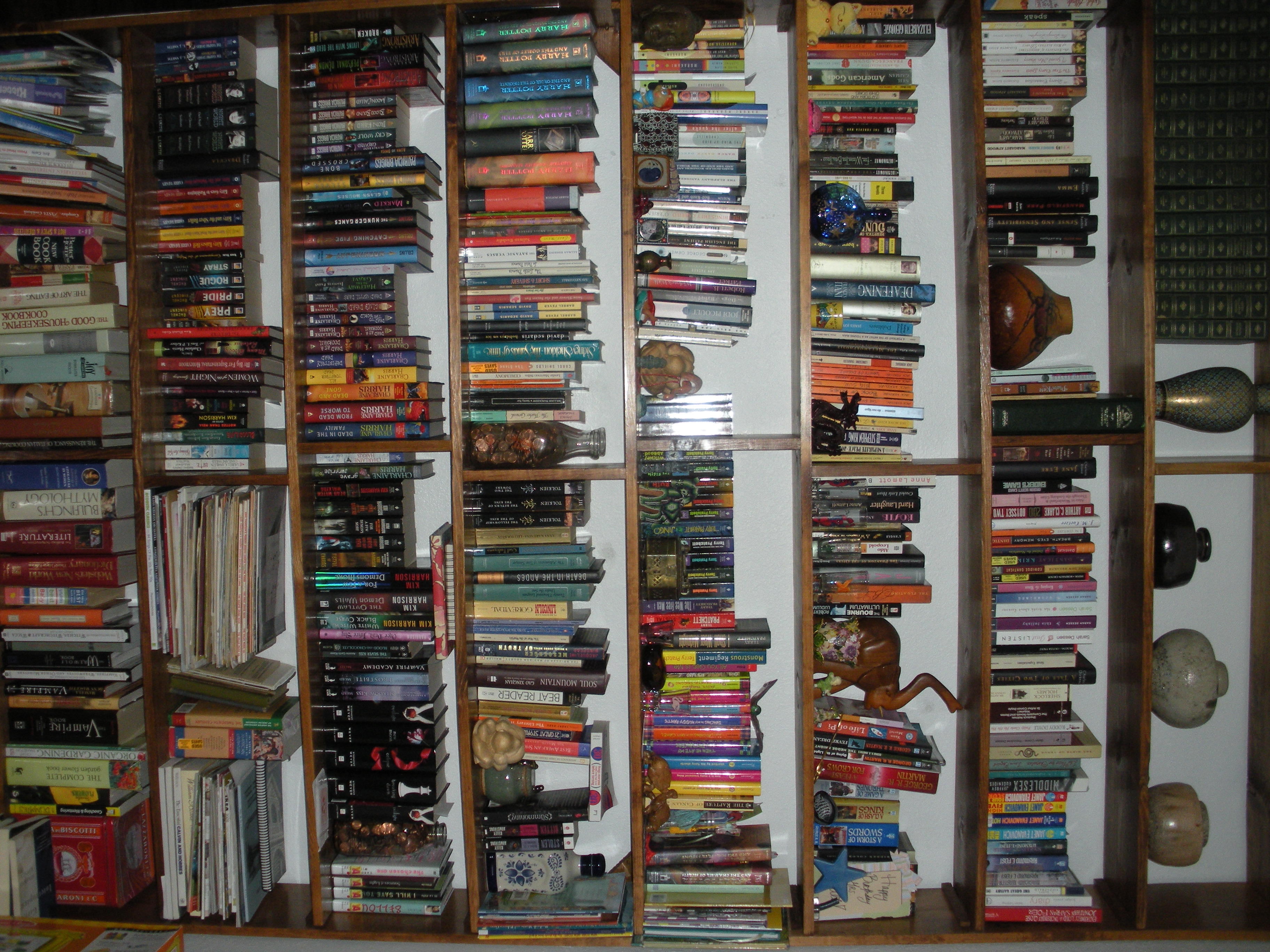
Anyway, I had to do a little bookshelf organization. First, it had to be alphabetized. It irritates me to NO END that Shakespeare is up at the top, shelved between Richard Brautigan’s Trout Fishing in America and Libba Bray’s A Great and Terrible Beauty. (His Highness’s Complete Works won’t fit anywhere else except that one shelf.)

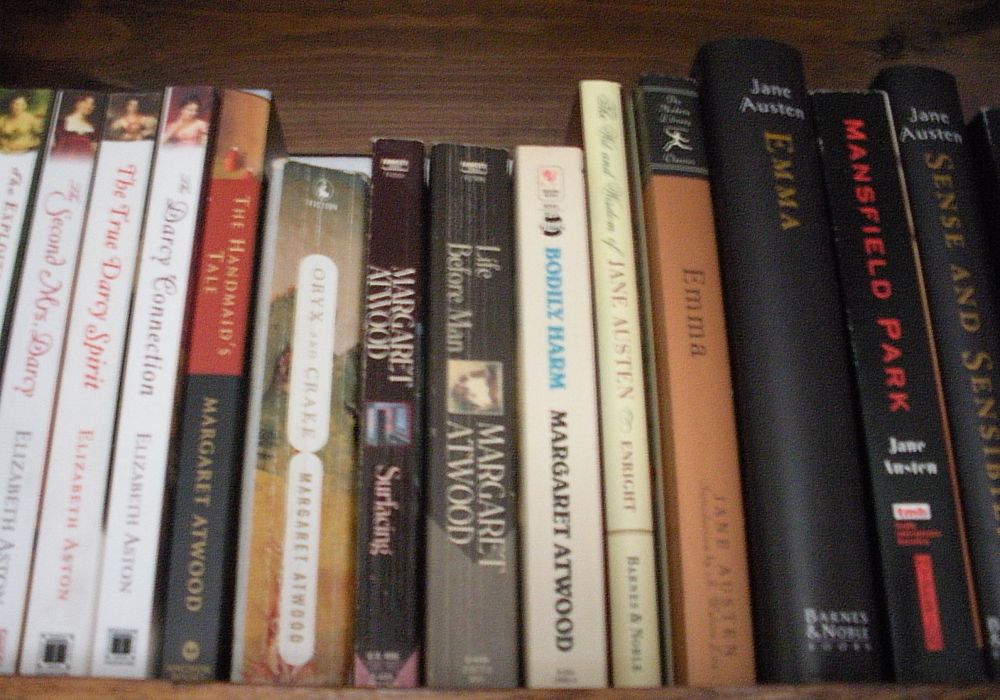
This is the "after" shot.

Because the available space for library expansion was at the bottom of the shelf, and because I am short, I started at the bottom. First I cleared out the poetry books that did NOT belong in fiction. (The poetry shelves are full, however, so what happens to this small pile of poetry remains a mystery.) Next, I condensed Z’s overflow library to one small corner. Then I began the Perilous Book Shuffle of Doom. The many knick-knacks I had to work around raised the stakes (and time needed to complete my task) to astronomical levels.

By the time I’d reached the top shelf (skirting around the Complete Works of Shakespeare), I had no room for the pile of Margaret Atwood paperbacks I’d found in the basement last month. This would not do. For a few years I was obsessed with her writing. Poetry, fiction, essays, whatever. I wanted to be Margaret Atwood. No matter that I can barely recall the plots of the five paperbacks staring accusingly up at me from the floor. No matter that I still haven’t gotten around to reading Oryx and Crake. I had to fit these books on the shelf.

So the Perilous Book Shuffle of Doom began all over again, starting from the bottom.

This time I culled.

This time, I weeded.

And do you know what I found?

DUPES!

We have:

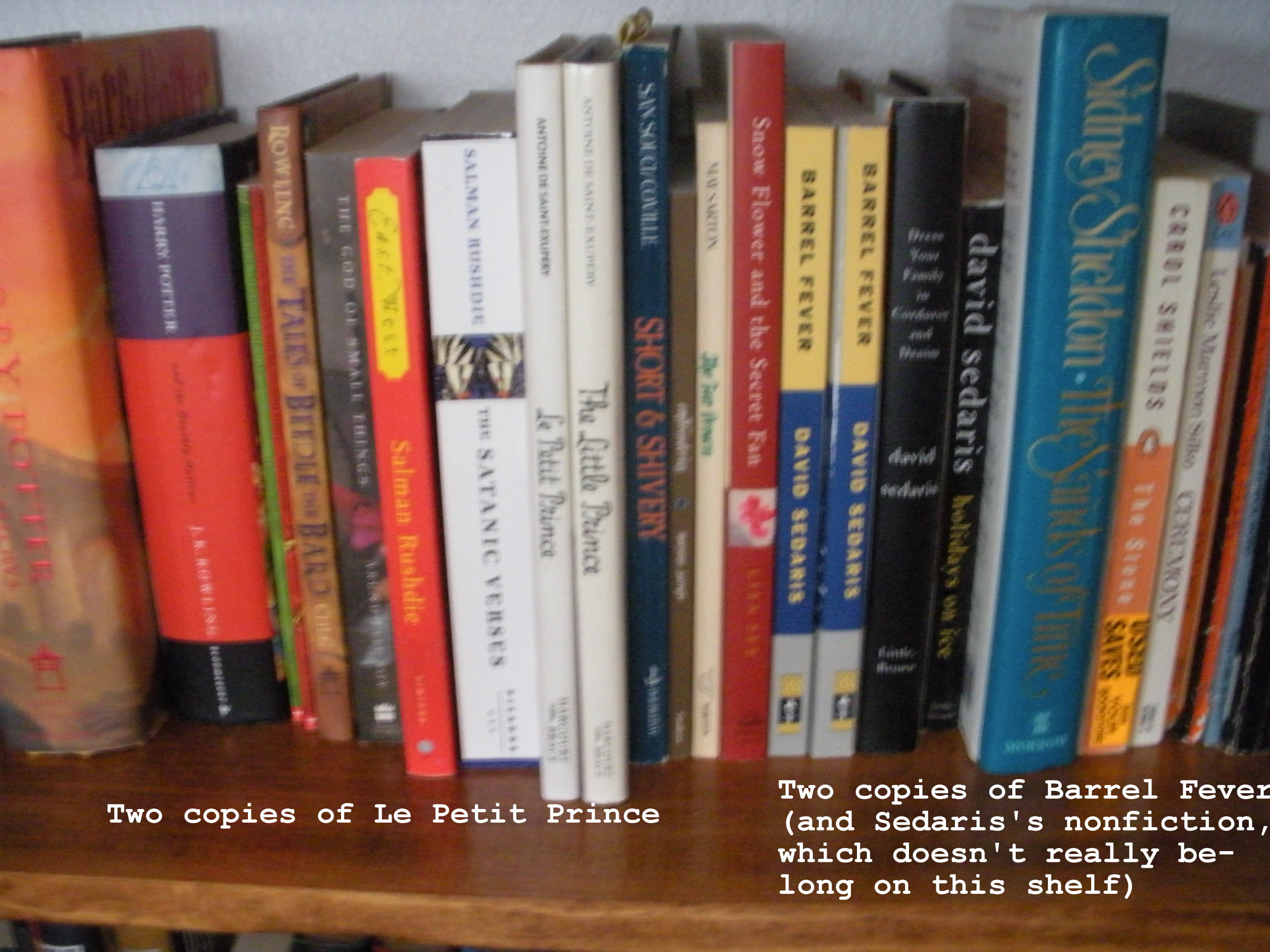
  • 2 copies of Barrel Fever by David Sedaris
  • 2 copies of South of the Border, West of the Sun by Haruki Murakami
  • 2 copies of Sula by Toni Morrison
  • 2 copies of Harry Potter and the Half-Blood Prince by you-know-who (one Scholastic, one Bloomsbury)
  • 2 copies of Harry Potter and the Deathly Hallows (one Scholastic, one Bloomsbury)
  • 2 copies of Harry Potter and the Chamber of Secrets (one in Spanish)
  • 2 copies of The Little Prince by Antoine de St. Exupery (one in French)
  • 2 copies of Emma by Jane Austen
  • 2 copies of Twilight by what’s-her-face
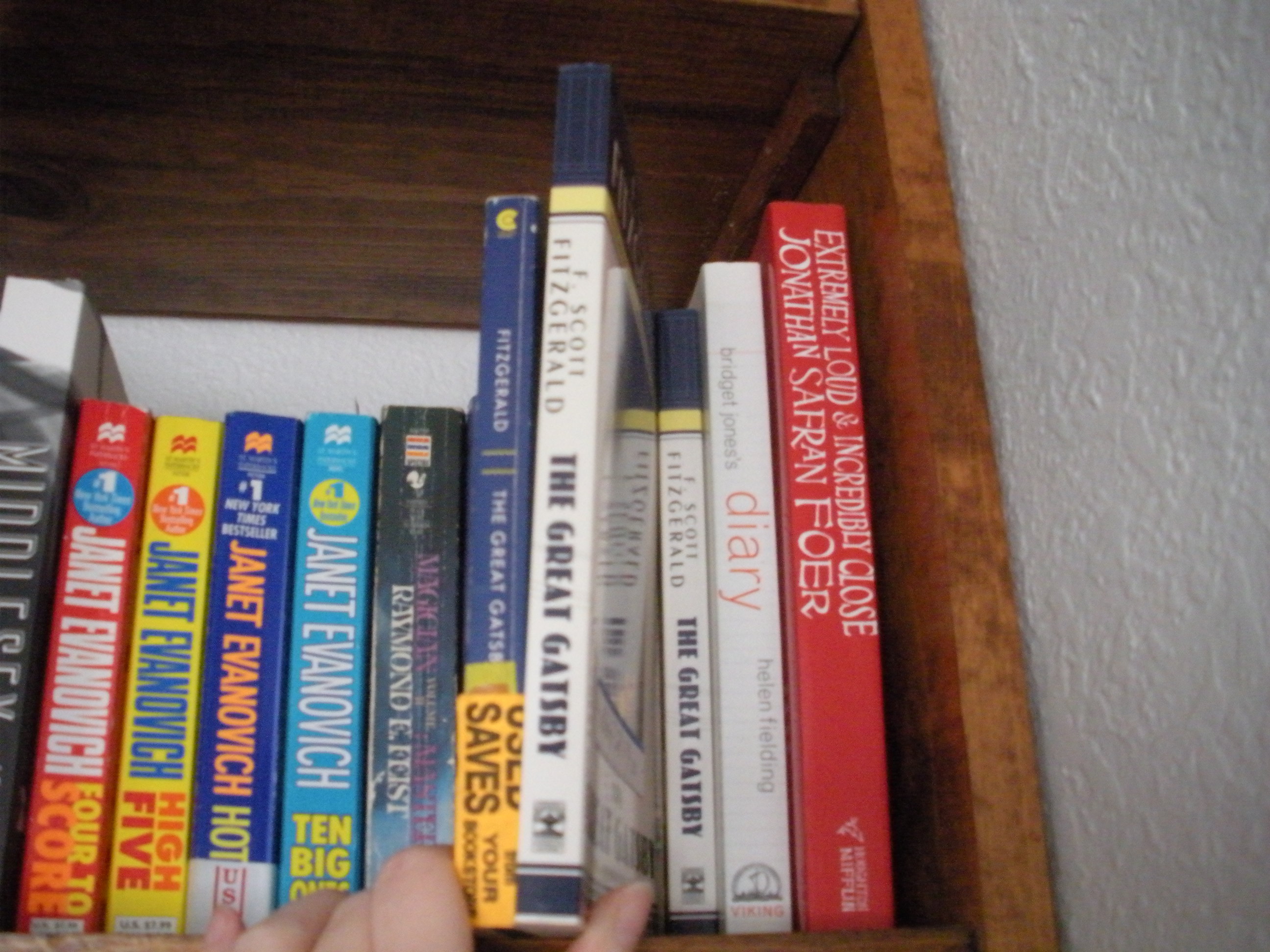
  • and 3 (THREE!) copies of The Great Gatsby by F. Scott Fitzgerald

The Great Gatsby x3

It’s this last one that bothered me the most. I know The Great Gatsby is like, considered by pretty much everyone to be super fabulous, Great American Novel and so on, but I had to critique it in Sister Aaron’s Critical Theory Class at least three times, not to mention read about it being critiqued ten different ways in my textbook. By the end of that semester, I was ready to ship my copy of the book to the West Egg. Or is that the East Egg. Does it matter?

You’d think the Twilight duplicate would bother me most. I mean, I’m definitely getting rid of one of them, just like I’m tossing the two extra copies of His Holiness the F. Scott Fitzgerald’s touted tome.

The whole exercise got me thinking, though: if I don’t plan on reading a book again, why do I hang on to it? Why does anyone?

Don’t get me started on what happened when Husband and I watched an episode of “Hoarders.” Quite a few of the knick knacks pictured above have gone missing.

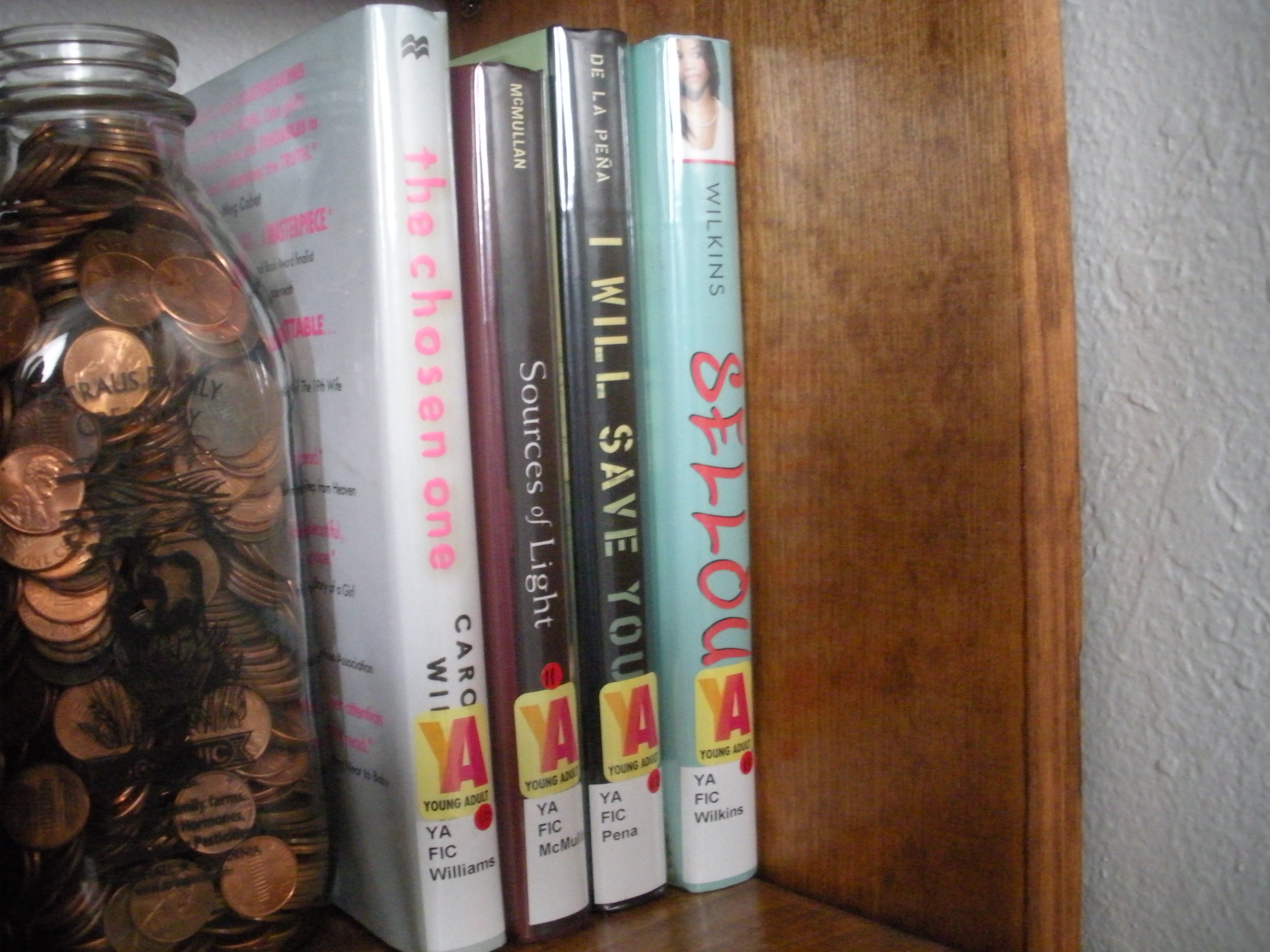
On the bright side, I made more room than I needed, and now I’ve got a special place for my library books:

And on a totally unrelated, random note (if you’ve made it through this long of a blog post, I salute you)… I made my first lolcat thingie, which you can view by clicking here. I think I’ve found a new way to procrastinate on typing up my manuscript.

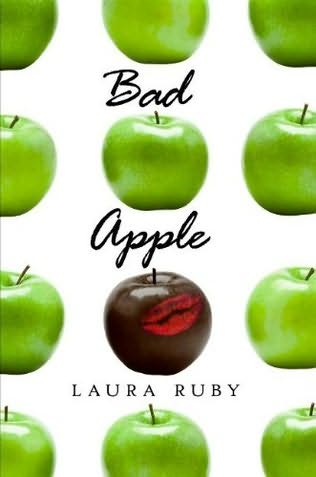
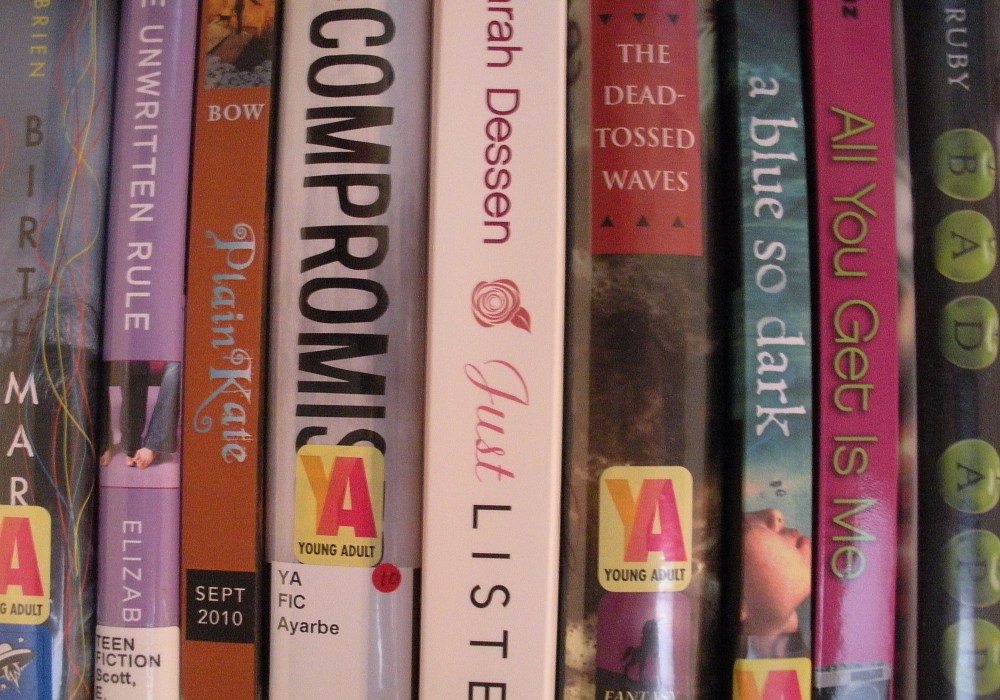
Bad Apple by Laura Ruby

The set-up: Tola is a high school student, and she’s been named the victim of an affair with her favorite teacher. She insists nothing happened, but from the start of the novel she’s established as a storyteller (ahem, liar), so can we, the readers, or they, her family, friends, and the authorities, really believe her?

Main character’s goal: All Tola really wants to do is clear her teacher’s name so he can come back to his job. She’s got some other goals, though, one involving a hottie named Seven (who is so cool he needs his own book!).

My reaction: This was a light story, feel-good at the end. I’d probably sub-categorize it as “chick-lit” (what a stupid sub-genre name), but at the same time I really liked it. I got indignant on behalf of Tola, which is a pretty good sign that I liked her. Also, I should clarify that it felt really fluffy at the beginning, but as I got further into the book, I became more invested in the story, and it felt deeper somehow.

Of interest to writers: The unreliable narrator thing must be hard – at least, it sounds like a daunting writing task to me. But Ruby pulls it off, so consider this a shining example if you ever need one.

Also: at the end of each chapter there’s a little mini-chapter of “(comments),” quotes from various characters who give their own ideas about the affair. These little quips serve to shed some light on Tola’s situation and personality. They also serve to develop some of these side characters’ personalities.

Bottom line: It’s a fast read, satisfying, and has a compelling hook. The web of stories, lies, and hearsay kept me intrigued throughout.

To visit Laura Ruby’s very pretty website, click here.