NiFtY Author: Elaine Cantrell

Today’s NiFtY (Not Famous…Yet) Author is Elaine Cantrell, an award-winning romance novelist. Join us as we learn a little about her life and her writing.
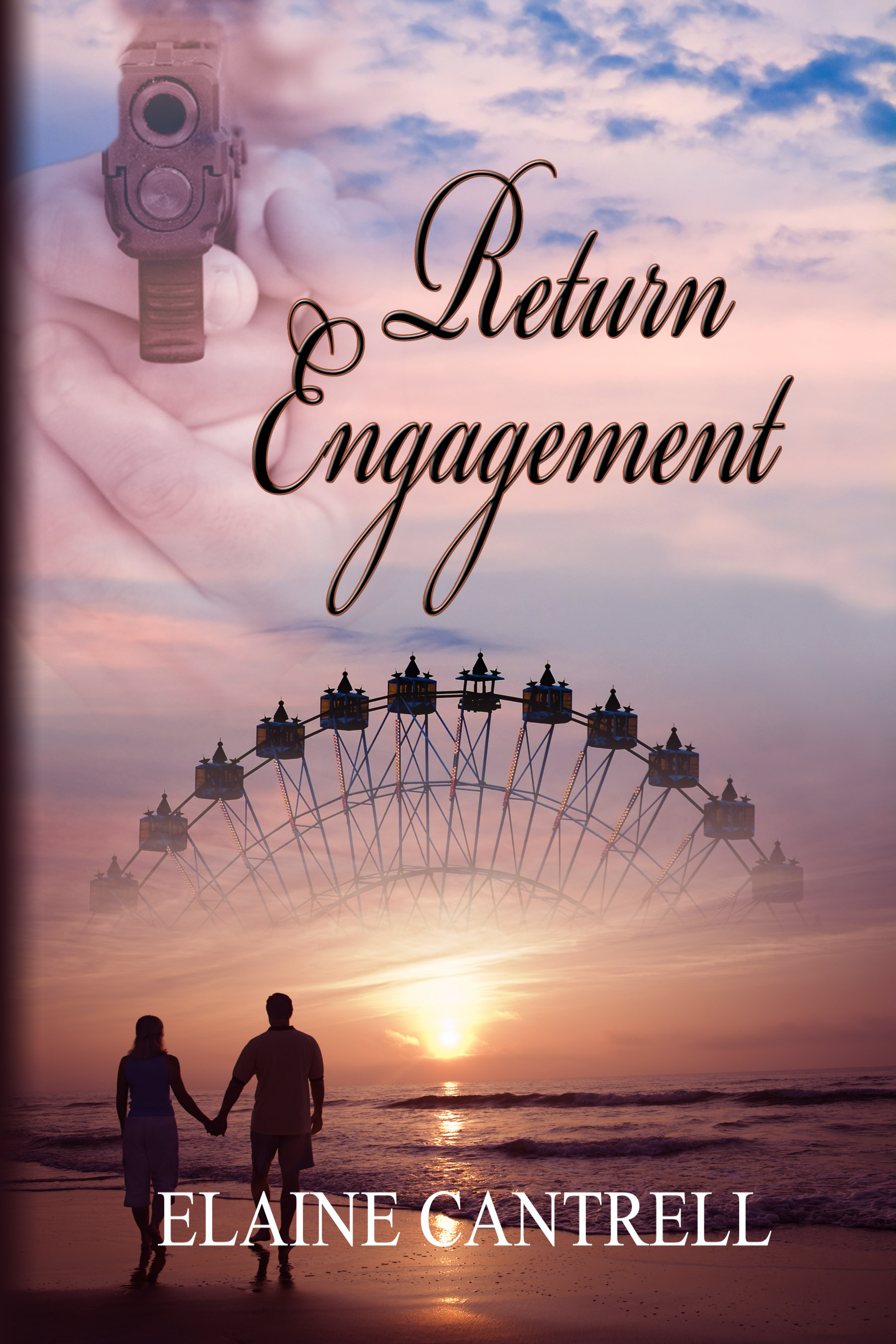
BH: Tell us a little about your latest book, Return Engagement.

EC: I’d love to!  Return Engagement is the book I wanted to write for a long time before I actually sat down at the computer to do it.  I thought about my characters so long and so hard that I once called my husband Richard (the hero in Return Engagement) which he didn’t like too much.

The book is centered around the idea ‘what might have been.”  I think most people have looked back in their lives and wondered how things would be different if they had made different choices; I know I have.  Richard and Elizabeth met when he was seventeen and she was twenty two.  They fell in love, but Richard’s father the powerful senator Henry Lovinggood broke them up.  He didn’t think Elizabeth was good enough for Richard whom the senator plans to make the president one day.

Ten years after their breakup Richard and Elizabeth meet by accident on a California beach and find that their feelings for each other haven’t changed.  When they decide to rekindle their relationship, they find that Senator Lovinggood isn’t their only problem.  There are others who wish them deadly harm.

BH:  Ooh. Sounds good! You’ve published six books, am I right? Are they all romances? Which one is your favorite?

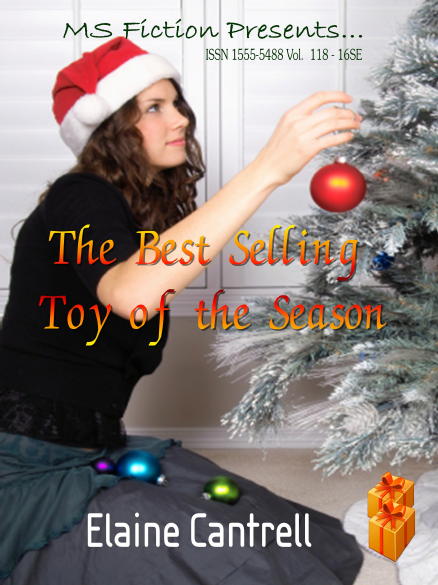
EC: Yes, they’re all romances, and my favorite one is always the one I’m working on at the moment.  If I had to pick just one I’d pick Return Engagement, mostly because I love that Richard so much.  I also like the book about Elizabeth Lane’s cousin Nikki.  That book The Best Selling Toy Of The Season is set at Christmas time and is available at http://www.midnightshowcase.com.
That’s an interesting thing too.  My husband couldn’t stand Richard, and I’ve gotten some reviews where the reviewer praised the book and called it a page turner, saying how filled with conflict and clever plot twists it was.  The reviewer then went on to say that she didn’t like the characters.  I guess I don’t understand that.  If she couldn’t put the book down because she had to know what happened next, why didn’t she like my characters?

Romantic Times Magazine liked the book just fine, though.  They gave the book a 4.5 which means it’s a keeper, and they said, “This touching story is beautifully written and explores the emotions involved when two people who love each other are influenced by outside forces and their own doubts.  Each character is fully developed, and the plot is filled with interesting twists.”

BH: You’re the first romance writer I’ve interviewed. What are some of the joys of writing romance? Are there any aspects of the genre that you don’t like?

EC: The joys are the same as for any other genre I think.  Authors get to create worlds of their own choosing, and things always turn out the way you think they should.  The negative part is that sometimes the characters are stereotypical and flat.  Hmm.  That’s probably why that reviewer didn’t like my characters.  I made them into real people who have warts and make mistakes.  They’re anything but stereotypical.

BH: Which of your characters would you say is the most like you?

EC: I give most of my characters the personality traits I’d like to have myself, so none of them are necessarily like me.  The one I’m most like is Betsy McLaughlin my heroine in A New Leaf.  A New Leaf was the winner of the 2003 Timeless Love contest which thrilled my heart more than you can imagine.  Betsy’s an ordinary girl who makes some life-changing mistakes, but instead of whining about things she does the best she can with the hand she’s been dealt.  I’d like to think that describes me too.

BH: What other literary projects do you have in the works? Can you tell us about a work-in-progress?

EC: My work-in-progress is a sci fi/ fantasy novel which is untitled at the moment.  I’ve had to lay it aside for the moment because I’d doing edits for a new book that’s coming out in June of 2011.  The book is tentatively titled Jilted!, and it’ll be published by Lachesis Publishing.

BH: Tell us a little about your path to publication.

EC:  It all started when my son wrote a book.  I was so overwhelmed with pride!  I’d always wanted to write a book, but I didn’t think I could.  I decided to give it a try when he told me that he had always made up stories in his head to amuse himself, and he thought he might as well write them down.  Glory be!  I had always done that too.  I wrote that book in record time, but nobody liked it.  My husband didn’t want the hero to be crippled, and my friend said that my heroine who was a good girl wasn’t as interesting as a bad girl would be.

So, I started another book, A New Leaf.  At the last minute I submitted the book to a small publisher who sponsored the Timeless Love contest.  The prize was publication of your book.  To my great and utter surprise, I won the contest, and A New Leaf was published the following year.

BH: Sounds like a dream come true! What does your workspace look like?

EC: Right now I’m sitting in my living room and writing on my laptop because the computer in my study crashed and died.  My husband bought me a new computer for Christmas so we’re going to redo the study and put in a glass table that stretches from one end of the room to the other.  Then my husband and I will both put our computers on the desk and sit side by side.  We’ll cover the wall behind us in bookshelves and leave space for a TV.

BH: What is your favorite book on the craft of writing?

EC: I’m ashamed to say that I don’t have one.  I could use the help as much as anyone, but there aren’t enough hours in the day as it is.  If I do read one, Stephen King has something out which my son says is very good.

BH: Any words on advice to aspiring writers for keeping the hope alive?

EC: Don’t give up.  I think the major difference between published and unpublished authors is that the published authors didn’t give up.

BH: Thank you, Elaine, for answering my questions and sharing your thoughts and your books with us!

Want more of Elaine Cantrell? Visit her website here, and her blog here. Also, here’s her Facebook page, and a link to buy Return Engagement.
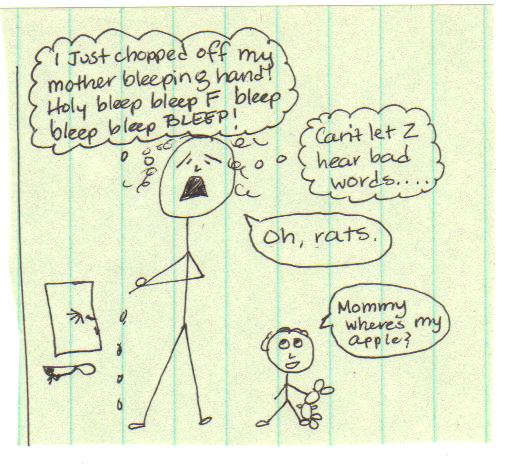
Restraint

From my diary:

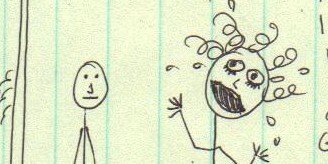
Sometimes I am the picture of restraint.

Situation exaggerated to illustrate point.

Other times, not so much.

Situation exaggerated not so much.

That’s all! See you on Friday with NiFtY author Elaine Cantrell!

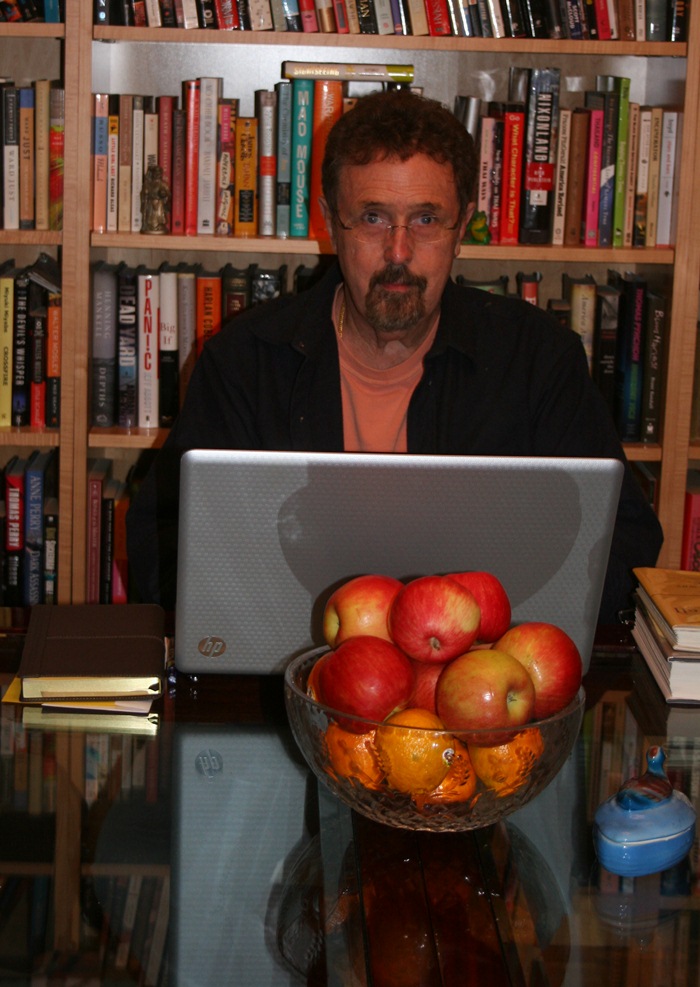
NiFtY Author: Timothy Hallinan

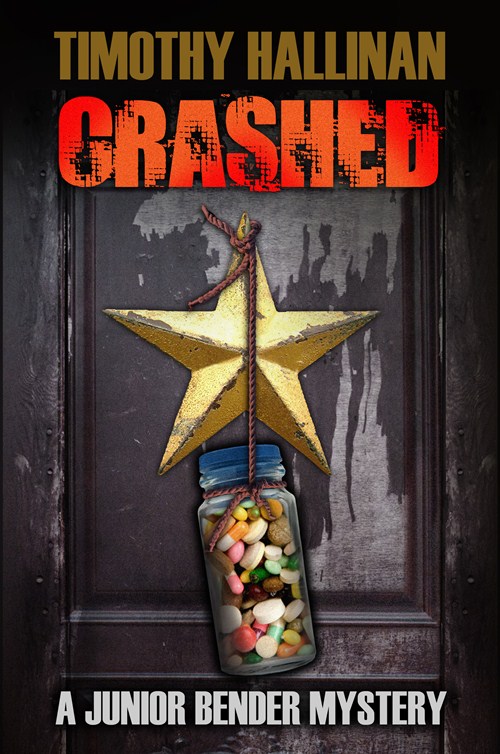
Timothy Hallinan is the other of sixteen published novels (eleven under his own name). His latest Poke Rafferty Bangkok thriller, The Queen of Patpong, was published in August, and his newest book, Crashed, is available for the Kindle (I’ve read the beginning, and didn’t want to put it down!). Timothy also maintains a website with an awesome “Finish Your Novel” page – several authors have published books after using the material. I really like the installment “What’s a Scene? (And What’s a Chapter?),” but there are other gems to be found there as well.

BH: What’s your one-paragraph pitch for Crashed?

TH: Junior Bender is a San Fernando burglar who moonlights as a private eye for crooks. In his first outing, CRASHED, Junior finds himself on the wrong side of his own already paper-thin moral code, being forced to prevent sabotage against a multi-million dollar porn film starring exactly the kind of person he’d normally want to protect. At the age of 23, Thistle Downing is broke and strung out – but between the ages of eight and fifteen, she was the biggest television star in the world. Now desperate, she’s facing the ultimate humiliation . . . and she’s so wasted she doesn’t even know that someone’s trying to kill her. And in between her and all that, there’s no one – except Junior.

BH:  Which book in the Poke Rafferty series would you encourage new fans to begin with? Should they start with the first book, or can they pick up somewhere in the middle?

TH: The first book, A NAIL THROUGH THE HEART, is the roughest in the series in terms of subject matter, but it’s probably the best place to start.  The thriller elements are self-contained from book to book, but the heart of the series is the ongoing story of the American travel writer Poke Rafferty and the little family he’s assembled in Bangkok with his wife, Rose, a farmer bar worker who now helps other women leave that life, and their adopted 9-year-old daughter, Miaow, who spend most of her childhood on the street. (She’s nine in NAIL and eleven in the fourth book, THE QUEEN OF PATPONG.)

BH: The Poke Rafferty series is your second series, is that right? How do you feel that your writing has changed throughout your career so far?

TH:  Well, I hope I’ve gotten better, but who knows?  One thing that strikes me is that back in the 1990s, when I was doing the Simeon Grist mysteries, I wrote a pretty male world.  I was not at all confident about writing women.  That changed in part because Miaow, Poke’s daughter in the Bangkok books, is for some reason the easiest character in the whole series – she comes to me as fast as I can write her.  After nine novels without a single scene between women when there wasn’t a man present, in THE QUEEN OF PATPONG, I wrote a 45,000-word section – practically a novella – about Rose’s road from being an unworldly village girl to the “queen” of the bars of Patpong.  It’s all women, and it’s the part of the book most reviewers (and all female reviewers) paid special attention to.  And women are vital characters in the new series, the Junior Bender books, too.

BH: Tell us a little about your path to publication.

TH: I wrote two really awful books that I showed to no one and then a third, SKIN DEEP, that introduced Simeon Grist.  I took it to a Hollywood agent and she sent it to a New York agent, and ten days later I had a three-book contract with William Morrow.  Not much drama there.  Then I wrote three more Simeons for a total of six, took about six years off to make money so I could write full-time, and then wrote the first of the four Pokes, which sold in an auction between two big houses.

What’s most interesting to me is the e-book revolution.  I’ve been very fortunate in my relationships with major publishers, but I’ve always had to write what they thought they could sell or what they thought readers wanted from me.  CRASHED is an edgy thriller with a laugh track, and two publishers said, in essence, “Nobody wants to read funny thrillers.”  But I wanted to WRITE funny thrillers, so I wrote two and a half Junior books and put CRASHED up for the Kindle, and it’s doing very well,  Seven reviews so far, and all five-stars, and they’re not people I know, AND there’s some serious TV interest.  The second Junior book, LITTLE ELVISES, will go online in about three months, and I’m writing the third.  I’m also writing the first Simeon Grist book in fifteen years – just because I want to.  This is a new world for writers.  (I’m also writing the fifth Poke.)

BH: The scope of the “Finish Your Novel” on your author site is simply amazing – it’s as if you made an entire book on the craft of writing available for free. What motivated you to create it?

TH: I needed a lot of help when I started trying to write, and I didn’t know where to go for it.  After the Simeon books came out, I decided to teach a college-level class on finishing.  Anybody can start a novel (or any other large-scale project) but most people don’t finish.  So I focused on what I knew about finishing, and along the way I had to talk about story and character and setting and writing habits and all of that.  A LOT of people who took the class over the years finished their books.  So when I did my site, I expanded the class notes into a series of relatively short interactive essays and put them up.  And I’m happy to say they’ve helped a lot of writers, including some who sell better than I do, to finish their first novel  Helen Simonson, who wrote MAJOR PETTIGREW’S LAST STAND is one of them.  I love that book, and it knocks me out that I was to some degree helpful to her in finishing it.

BH: You mentioned that you aim for 1500 words a day. I remember when I was drafting my latest work-in-progress, shooting for 1200. It was tough. Do you always get your 1500? What is your writing schedule like?

TH:  Seven days a week, as many hours as it takes.  I shoot for 1500 but will quit at 1000 if they’re a good 1000.  But then I try to make it up later in the week.  I start every writing session by editing the last 3-4 days’ worth, so about half of those words get cut or rewritten before I finally move on.

BH: What does your workspace look like?

TH: In Asia, where I write the Poke Rafferty books, I work in coffee shops, mostly in Bangkok and Phnom Penh, Cambodia.  I have apartments in both cities.  The Poke books are set in Bangkok, but Bangkok is very distracting, while Phnom Penh is much sleepier. So I tend to spend a couple of weeks in Bangkok, getting ideas and jotting down descriptions, and then I go to Phnom Penh for four or five months to draft the book.

In Los Angeles, I tend to work at home, on a big table because I’m disorganized.

BH: What is your favorite book on the craft of writing?

TH:  Anne Lamott’s Bird By Bird. I think it’s very important that it was written by someone who actually writes novels (and good ones), as opposed to someone who writes books about writing novels.  It’s an indispensable book, and Lamott is great company.

BH: What is the best writing advice anyone has given you?

TH: I’ve had several great pieces of advice, and I follow all of them.  First, write the book you would most like to read.  Second, create a shrine to your writing – not so much in space as in time; time that is set aside each day for writing and nothing else.  Third, write on tiptoe – the only way to get better is to try to do things you don’t know how to do. Fourth, remember that in the end, it’s only a book, not a bad chest x-ray or a truck barreling toward you on the wrong side of the street; in other words, the day’s failures are never fatal and might just lead you toward something more interesting.

Flaubert said, “Talent is a long patience.”  I love that line.

BH: Thank you, Tim, for sharing your books and your inspiration!

Link from Tim: www.timothyhallinan.com/blog I’m currently engaged in The Stupid 365 Project, which is a commitment to put up a blog of not less than 300 words every single day for a year.  It’s been very interesting so far – I’m just into the third month – and I have no idea whether I’ll be able to finish.

More Kitchen Capades

So. I have long held the belief that I have no value in the kitchen whatsoever, except perhaps as a dishwasher. Not only do I subscribe to this belief, but I gladly admit it to others.

Despite this belief, nay, this truth, that this woman’s place is definitely NOT in the kitchen, I continue to adventure into its depths in the hopes of concocting something worthy and edible that is NOT chocolate chip cookies.*

Part of my ineptitude is, I believe, a direct result of my belief that I am a failure of domestic culinary achievement. Another part of my ineptitude is the result of fear.

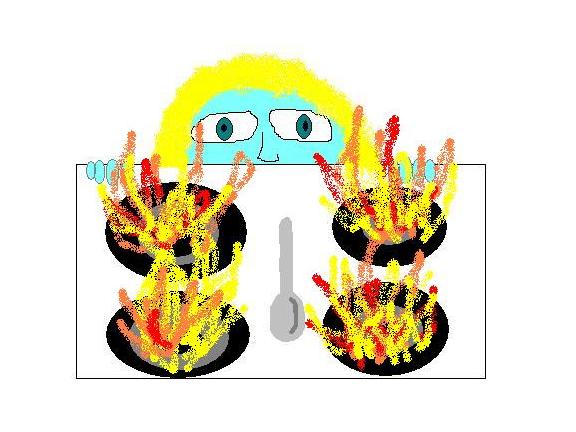
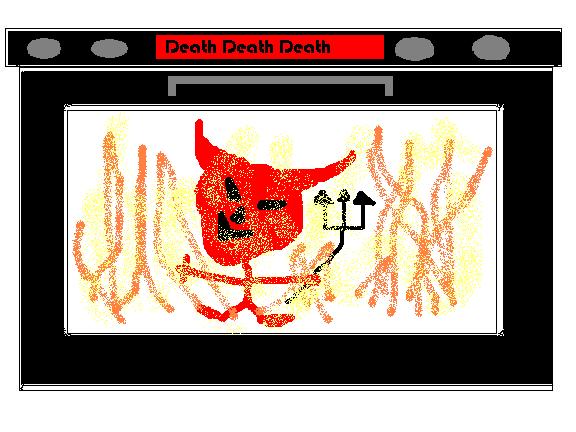
I fear the stove.**

I fear the oven.

And no matter what I’m making, on those rare occasions I am able to swallow my fear (and overcome my crippling laziness) something bad always happens.

Sometimes my misadventures are as minor as filling the kitchen with death-smoke resulting from drops of a leaky cheesecake (my one-time contribution to Thanksgiving dinner…which was in actuality contributed on the day following, as I’d forgotten the cake needed to hang out in the refrigerator overnight).

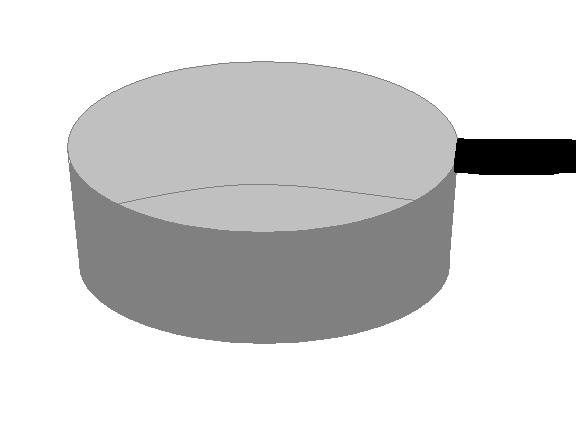
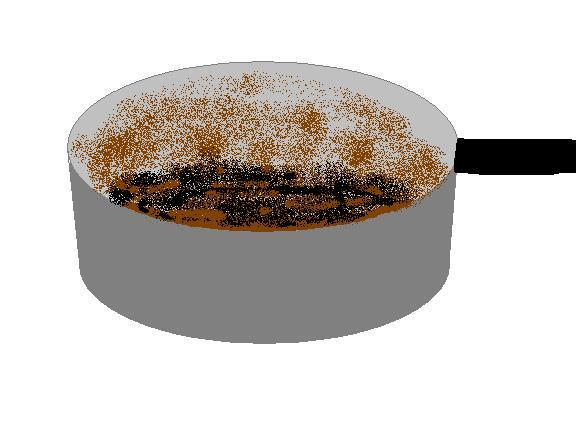
Other misadventures call for a disposal of the creation or, in the case with rice last spring, disposal of the pot.

Before

After. Note: this is after repeated washings.

Husband will never again ask me to get rice started for him.

I once had to throw away an entire double batch of pumpkin bread, misreading the “teaspoon” as “tablespoon” for both salt and baking powder. In my defense, the recipe was handwritten by someone else.

I’m thrown by recipes that refer to “bouquet garnis” and “cheese cloth,” and do not even ask me to fry something because if egads that grease splatters onto my bare skin I think I am dying. I put on more protective gear for cooking than I do for cleaning toilets, or visiting nuclear power plants.***

This has been great fun creating childish drawings for you, but I’ve got something in the crock pot and I think I smell smoke.

_______

Here’s Kitchen Capades I, if you’re interested. No drawings, but maybe that’s better.

*Chocolate chip cookies are a relatively safe assignment for my (un)skill level. I have been baking them with my mother since before I can remember, and worked out the hazardous kinks with BDawg, my BFF since 3rd grade. Our hazards were 1) neglecting to remove foil wrapper from margarine before microwaving, and 2) attempting to make cookie-sheet sized cookies, one for each of us, and ending up with twin liquid dough puddles. Fairly harmless, as hazards go.

**I made myself blue. Creative license. I like purple better, but the purple in Paint is kind of garish. And this blue is…not? Well, it’s less garish.

***No, I have not actually visited a nuclear power plant. Creative license.

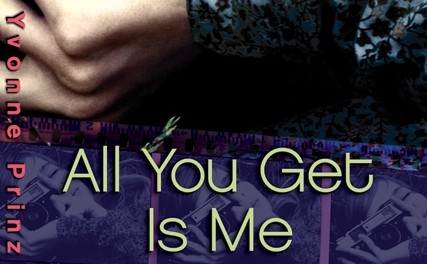
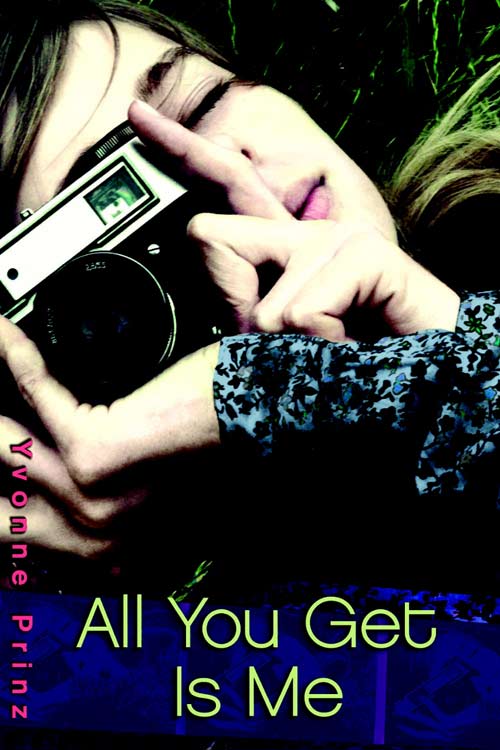
All You Get Is Me by Yvonne Prinz

Set-up: Aurora (“Roar”) lives on an organic farm in a small town with her father. She misses city life and misses her mother, but she finds solace in her photography, snapping photos and developing them in her own garden shed-turned darkroom.

Main character’s goal: Roar’s goal isn’t simple like “run away to find missing aunt” or “defeat the scariest wizard of all time and save the world.” This is more of a coming-of-age story. Roar just wants to take photographs and be happy, at first. Then she witnesses a car accident that sets off a chain of events threatening not only her way of life, but the entire practice of hiring immigrant farmworkers in California. Roar also meets a boy named Forest, and her goals start to change.

My reaction: Something has gotta be said for reading a summer-set romance in November. I may have thawed out a little. Get this: “The first apricot I pluck off the tree smells of roses and sits heavy in my hand” (p 34). Ahhh.

Also, I can’t help but be in awe of an author who moved from a record-obsessed girl in Berkeley, to an organic farmer’s daughter who is watching – and participating – in a setting that involves and revolves around contemporary immigration issues. Talk about high stakes, with the balance of farming practices, the justice system, and the scorching anger of some small-town, small-minded farmers (Note: small-town and small-minded are not always the same thing!).

Of interest to writers: (With very mild spoiler!) The romance angle was handled in a way that surprised me – namely, there wasn’t a lot of conflict. I kept waiting for a fight, or a shameful secret, or some kind of revelation that put everything into question, and…no. Yet there is still tension, even without that conflict. How is it done? I’ll leave that for you to discover, as I’m worried I gave away too much as it is.

As with The Vinyl Princess, this one has a rather lengthy resolution. I was not bothered in the slightest because it was such a pleasant world to be in! Sometimes we’re rushed through resolutions, when maybe we could slow down a little and enjoy them, like fine desserts.

Mmm. Dessert.

Back to the book review!

Bottom line: This book was a great place to hang out in, and Roar’s point of view was engaging. I feel like I made some friends in this book. It’s definitely worth a visit.

Note: the scheduled release is December 21st, so you’ve got something to look forward to – put it on your wish lists!

For Prinz’s site on All You Get Is Me, click here.

You can also visit Yvonne Prinz’s Vinyl Princess website by clicking here.