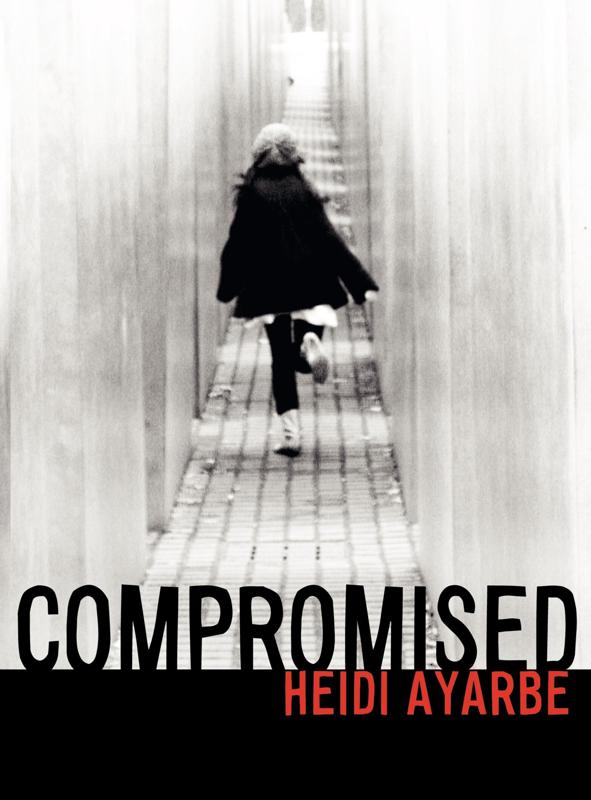
Compromised by Heidi Ayarbe

Set-up: Everything Maya holds dear – her house, her belongings, her designer clothes, and her con-artist dad – are taken away when her dad’s crimes finally catch up with him. Maya is sent to Kids Place, an institution where children and teens wait for foster parents to take them in.

Main character’s goals: This is pretty straightforward. Find long-lost aunt. While this is a great goal in and of itself, the stakes are raised when a creep-nasty couple of foster parents plan to take Maya in. The couple is outwardly religious, but the man seems to only worship one thing: teenage girls. If that isn’t shudder-inducing enough, add the complex power struggles among the other children and teens in Kids Place.

My reaction: You know I hate stories that make me cry, and this one did. Grr. But it also had a very satisfying ending, and not in a sunshiny, “girl gets boy and lives happily ever after” sort of way. I mean, I love Disney fairy tale endings, I really do. But this felt real, and plausible, and even better.

Of interest to writers: Maya’s got a scientific and, actually, a very paranoid way of looking at the world. For every decision she makes, she creates a scientific-procedure to go with it. Here’s an example:

Purpose: Find Aunt Sarah.

Hypothesis: If I can find Aunt Sarah, I can avoid being sent to the Holy Rollers’ house.

Materials: Mom’s box, a backpack…

Procedure:

1) Get a Citifare Bus schedule… (p. 89)

These scientific procedures serve to underline Maya’s voice. They also reinforce her character as a scientific, logical smartypants. And – even better – they clue the reader in to her ever-plummeting situation (as if the various crises in the story are not enough…trust me, they are).

Bottom line: This is a well-crafted novel, with believable characters who will win you over and quite possibly break your heart.

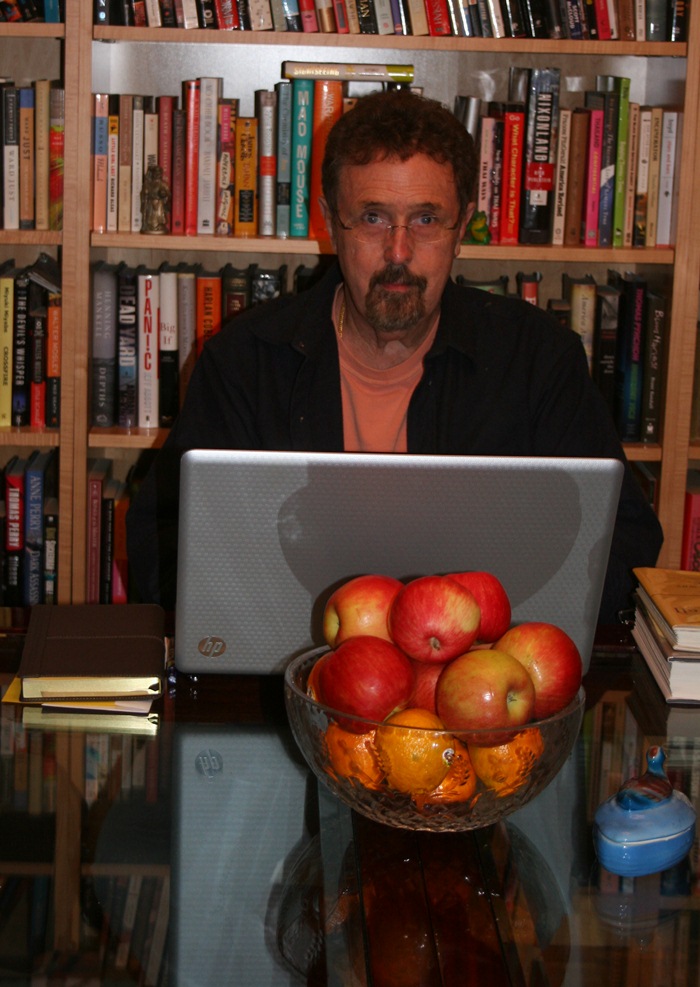
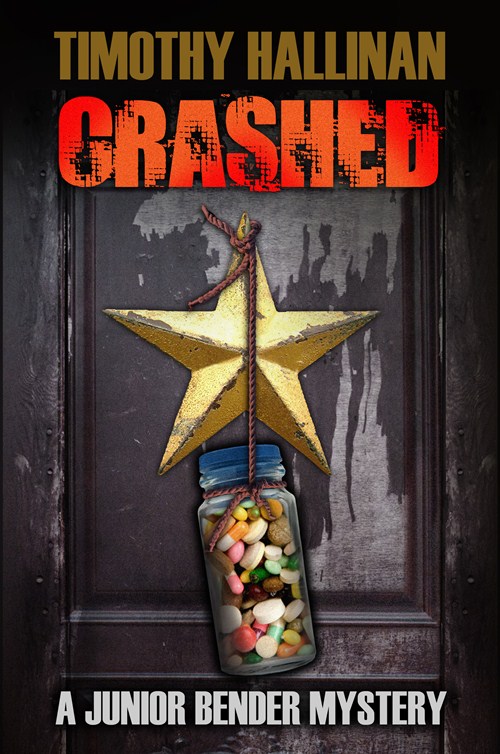
NiFtY Author: Timothy Hallinan

Timothy Hallinan is the other of sixteen published novels (eleven under his own name). His latest Poke Rafferty Bangkok thriller, The Queen of Patpong, was published in August, and his newest book, Crashed, is available for the Kindle (I’ve read the beginning, and didn’t want to put it down!). Timothy also maintains a website with an awesome “Finish Your Novel” page – several authors have published books after using the material. I really like the installment “What’s a Scene? (And What’s a Chapter?),” but there are other gems to be found there as well.

BH: What’s your one-paragraph pitch for Crashed?

TH: Junior Bender is a San Fernando burglar who moonlights as a private eye for crooks. In his first outing, CRASHED, Junior finds himself on the wrong side of his own already paper-thin moral code, being forced to prevent sabotage against a multi-million dollar porn film starring exactly the kind of person he’d normally want to protect. At the age of 23, Thistle Downing is broke and strung out – but between the ages of eight and fifteen, she was the biggest television star in the world. Now desperate, she’s facing the ultimate humiliation . . . and she’s so wasted she doesn’t even know that someone’s trying to kill her. And in between her and all that, there’s no one – except Junior.

BH:  Which book in the Poke Rafferty series would you encourage new fans to begin with? Should they start with the first book, or can they pick up somewhere in the middle?

TH: The first book, A NAIL THROUGH THE HEART, is the roughest in the series in terms of subject matter, but it’s probably the best place to start.  The thriller elements are self-contained from book to book, but the heart of the series is the ongoing story of the American travel writer Poke Rafferty and the little family he’s assembled in Bangkok with his wife, Rose, a farmer bar worker who now helps other women leave that life, and their adopted 9-year-old daughter, Miaow, who spend most of her childhood on the street. (She’s nine in NAIL and eleven in the fourth book, THE QUEEN OF PATPONG.)

BH: The Poke Rafferty series is your second series, is that right? How do you feel that your writing has changed throughout your career so far?

TH:  Well, I hope I’ve gotten better, but who knows?  One thing that strikes me is that back in the 1990s, when I was doing the Simeon Grist mysteries, I wrote a pretty male world.  I was not at all confident about writing women.  That changed in part because Miaow, Poke’s daughter in the Bangkok books, is for some reason the easiest character in the whole series – she comes to me as fast as I can write her.  After nine novels without a single scene between women when there wasn’t a man present, in THE QUEEN OF PATPONG, I wrote a 45,000-word section – practically a novella – about Rose’s road from being an unworldly village girl to the “queen” of the bars of Patpong.  It’s all women, and it’s the part of the book most reviewers (and all female reviewers) paid special attention to.  And women are vital characters in the new series, the Junior Bender books, too.

BH: Tell us a little about your path to publication.

TH: I wrote two really awful books that I showed to no one and then a third, SKIN DEEP, that introduced Simeon Grist.  I took it to a Hollywood agent and she sent it to a New York agent, and ten days later I had a three-book contract with William Morrow.  Not much drama there.  Then I wrote three more Simeons for a total of six, took about six years off to make money so I could write full-time, and then wrote the first of the four Pokes, which sold in an auction between two big houses.

What’s most interesting to me is the e-book revolution.  I’ve been very fortunate in my relationships with major publishers, but I’ve always had to write what they thought they could sell or what they thought readers wanted from me.  CRASHED is an edgy thriller with a laugh track, and two publishers said, in essence, “Nobody wants to read funny thrillers.”  But I wanted to WRITE funny thrillers, so I wrote two and a half Junior books and put CRASHED up for the Kindle, and it’s doing very well,  Seven reviews so far, and all five-stars, and they’re not people I know, AND there’s some serious TV interest.  The second Junior book, LITTLE ELVISES, will go online in about three months, and I’m writing the third.  I’m also writing the first Simeon Grist book in fifteen years – just because I want to.  This is a new world for writers.  (I’m also writing the fifth Poke.)

BH: The scope of the “Finish Your Novel” on your author site is simply amazing – it’s as if you made an entire book on the craft of writing available for free. What motivated you to create it?

TH: I needed a lot of help when I started trying to write, and I didn’t know where to go for it.  After the Simeon books came out, I decided to teach a college-level class on finishing.  Anybody can start a novel (or any other large-scale project) but most people don’t finish.  So I focused on what I knew about finishing, and along the way I had to talk about story and character and setting and writing habits and all of that.  A LOT of people who took the class over the years finished their books.  So when I did my site, I expanded the class notes into a series of relatively short interactive essays and put them up.  And I’m happy to say they’ve helped a lot of writers, including some who sell better than I do, to finish their first novel  Helen Simonson, who wrote MAJOR PETTIGREW’S LAST STAND is one of them.  I love that book, and it knocks me out that I was to some degree helpful to her in finishing it.

BH: You mentioned that you aim for 1500 words a day. I remember when I was drafting my latest work-in-progress, shooting for 1200. It was tough. Do you always get your 1500? What is your writing schedule like?

TH:  Seven days a week, as many hours as it takes.  I shoot for 1500 but will quit at 1000 if they’re a good 1000.  But then I try to make it up later in the week.  I start every writing session by editing the last 3-4 days’ worth, so about half of those words get cut or rewritten before I finally move on.

BH: What does your workspace look like?

TH: In Asia, where I write the Poke Rafferty books, I work in coffee shops, mostly in Bangkok and Phnom Penh, Cambodia.  I have apartments in both cities.  The Poke books are set in Bangkok, but Bangkok is very distracting, while Phnom Penh is much sleepier. So I tend to spend a couple of weeks in Bangkok, getting ideas and jotting down descriptions, and then I go to Phnom Penh for four or five months to draft the book.

In Los Angeles, I tend to work at home, on a big table because I’m disorganized.

BH: What is your favorite book on the craft of writing?

TH:  Anne Lamott’s Bird By Bird. I think it’s very important that it was written by someone who actually writes novels (and good ones), as opposed to someone who writes books about writing novels.  It’s an indispensable book, and Lamott is great company.

BH: What is the best writing advice anyone has given you?

TH: I’ve had several great pieces of advice, and I follow all of them.  First, write the book you would most like to read.  Second, create a shrine to your writing – not so much in space as in time; time that is set aside each day for writing and nothing else.  Third, write on tiptoe – the only way to get better is to try to do things you don’t know how to do. Fourth, remember that in the end, it’s only a book, not a bad chest x-ray or a truck barreling toward you on the wrong side of the street; in other words, the day’s failures are never fatal and might just lead you toward something more interesting.

Flaubert said, “Talent is a long patience.”  I love that line.

BH: Thank you, Tim, for sharing your books and your inspiration!

Link from Tim: www.timothyhallinan.com/blog I’m currently engaged in The Stupid 365 Project, which is a commitment to put up a blog of not less than 300 words every single day for a year.  It’s been very interesting so far – I’m just into the third month – and I have no idea whether I’ll be able to finish.

More Kitchen Capades

So. I have long held the belief that I have no value in the kitchen whatsoever, except perhaps as a dishwasher. Not only do I subscribe to this belief, but I gladly admit it to others.

Despite this belief, nay, this truth, that this woman’s place is definitely NOT in the kitchen, I continue to adventure into its depths in the hopes of concocting something worthy and edible that is NOT chocolate chip cookies.*

Part of my ineptitude is, I believe, a direct result of my belief that I am a failure of domestic culinary achievement. Another part of my ineptitude is the result of fear.

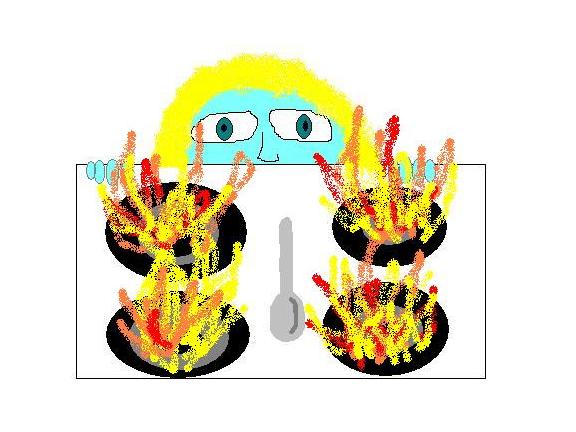
I fear the stove.**

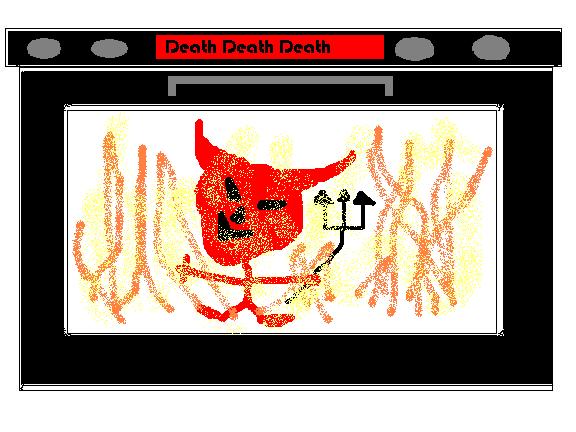
I fear the oven.

And no matter what I’m making, on those rare occasions I am able to swallow my fear (and overcome my crippling laziness) something bad always happens.

Sometimes my misadventures are as minor as filling the kitchen with death-smoke resulting from drops of a leaky cheesecake (my one-time contribution to Thanksgiving dinner…which was in actuality contributed on the day following, as I’d forgotten the cake needed to hang out in the refrigerator overnight).

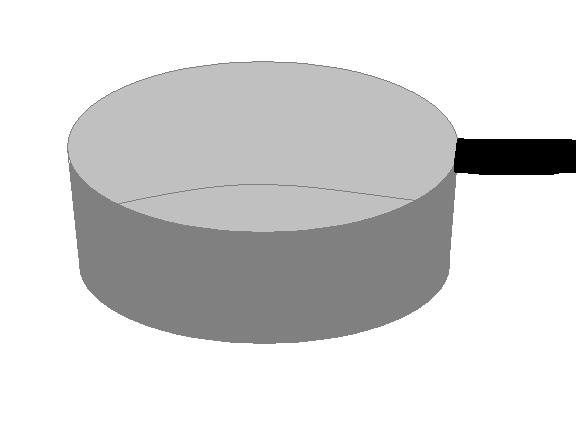
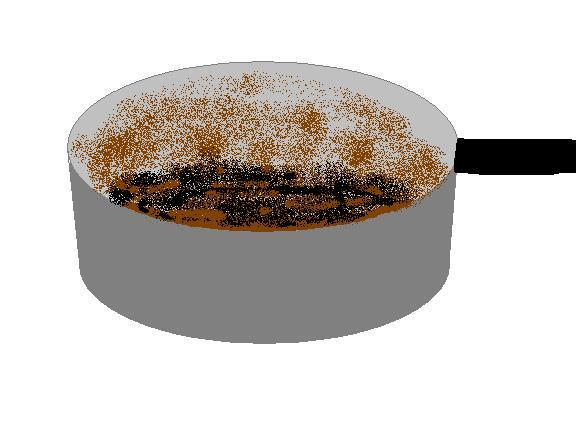
Other misadventures call for a disposal of the creation or, in the case with rice last spring, disposal of the pot.

Before

After. Note: this is after repeated washings.

Husband will never again ask me to get rice started for him.

I once had to throw away an entire double batch of pumpkin bread, misreading the “teaspoon” as “tablespoon” for both salt and baking powder. In my defense, the recipe was handwritten by someone else.

I’m thrown by recipes that refer to “bouquet garnis” and “cheese cloth,” and do not even ask me to fry something because if egads that grease splatters onto my bare skin I think I am dying. I put on more protective gear for cooking than I do for cleaning toilets, or visiting nuclear power plants.***

This has been great fun creating childish drawings for you, but I’ve got something in the crock pot and I think I smell smoke.

_______

Here’s Kitchen Capades I, if you’re interested. No drawings, but maybe that’s better.

*Chocolate chip cookies are a relatively safe assignment for my (un)skill level. I have been baking them with my mother since before I can remember, and worked out the hazardous kinks with BDawg, my BFF since 3rd grade. Our hazards were 1) neglecting to remove foil wrapper from margarine before microwaving, and 2) attempting to make cookie-sheet sized cookies, one for each of us, and ending up with twin liquid dough puddles. Fairly harmless, as hazards go.

**I made myself blue. Creative license. I like purple better, but the purple in Paint is kind of garish. And this blue is…not? Well, it’s less garish.

***No, I have not actually visited a nuclear power plant. Creative license.

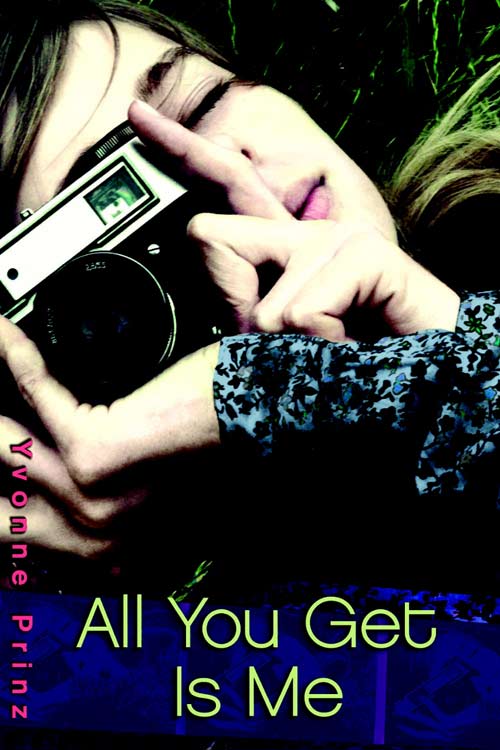
All You Get Is Me by Yvonne Prinz

Set-up: Aurora (“Roar”) lives on an organic farm in a small town with her father. She misses city life and misses her mother, but she finds solace in her photography, snapping photos and developing them in her own garden shed-turned darkroom.

Main character’s goal: Roar’s goal isn’t simple like “run away to find missing aunt” or “defeat the scariest wizard of all time and save the world.” This is more of a coming-of-age story. Roar just wants to take photographs and be happy, at first. Then she witnesses a car accident that sets off a chain of events threatening not only her way of life, but the entire practice of hiring immigrant farmworkers in California. Roar also meets a boy named Forest, and her goals start to change.

My reaction: Something has gotta be said for reading a summer-set romance in November. I may have thawed out a little. Get this: “The first apricot I pluck off the tree smells of roses and sits heavy in my hand” (p 34). Ahhh.

Also, I can’t help but be in awe of an author who moved from a record-obsessed girl in Berkeley, to an organic farmer’s daughter who is watching – and participating – in a setting that involves and revolves around contemporary immigration issues. Talk about high stakes, with the balance of farming practices, the justice system, and the scorching anger of some small-town, small-minded farmers (Note: small-town and small-minded are not always the same thing!).

Of interest to writers: (With very mild spoiler!) The romance angle was handled in a way that surprised me – namely, there wasn’t a lot of conflict. I kept waiting for a fight, or a shameful secret, or some kind of revelation that put everything into question, and…no. Yet there is still tension, even without that conflict. How is it done? I’ll leave that for you to discover, as I’m worried I gave away too much as it is.

As with The Vinyl Princess, this one has a rather lengthy resolution. I was not bothered in the slightest because it was such a pleasant world to be in! Sometimes we’re rushed through resolutions, when maybe we could slow down a little and enjoy them, like fine desserts.

Mmm. Dessert.

Back to the book review!

Bottom line: This book was a great place to hang out in, and Roar’s point of view was engaging. I feel like I made some friends in this book. It’s definitely worth a visit.

Note: the scheduled release is December 21st, so you’ve got something to look forward to – put it on your wish lists!

For Prinz’s site on All You Get Is Me, click here.

You can also visit Yvonne Prinz’s Vinyl Princess website by clicking here.

NiFtY Author: Geraldine Evans

Geraldine Evans is the author of seventeen books, thirteen of which belong to her popular Rafferty & Llewellyn mystery series. Below she shares her books and her thoughts on writing.
BH: Dead Before Morning is your first book in your Rafferty & Llewellyn series. Could you tell us a little about it?

GE: It was published in hb the US in 1994 by St Martin’s Press. It’s almost ready for publishing as an ebook on kindle, iPad, iPhone, nook, kibo, android, etc. It introduces DI Joseph Aloysius Rafferty, some of his rumbustious family and DS Dafyd Llewellyn, his straightlaced sidekick. In this book, a naked girl is found murdered in a private psychiatric hospital, her face horribly mutilated. Rafferty has to solve the crime as well as get one of his many cousins out of jail. And it is only when he does his good deed for the day with regard to the latter, that the fates help him solve the murder.

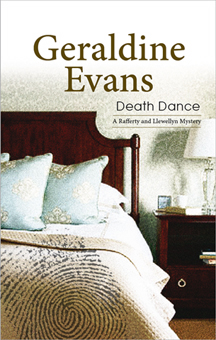
BH: How about your most recent installment in the series, Death Dance?
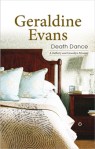
GE: Detective Inspector Joseph Rafferty is getting married; the last thing he needs is another murder that puts his plans in jeopardy. Adrienne Staveley was strangled, and is soon revealed as a woman with several lovers, a stepson who hated her and a husband who tramped the streets rather than spend time in her company. Altogether, there are a number of suspects who could have reason to kill her. Another possible disruption to Rafferty’s plans and his heart occur when some of the fingerprints in the Staveleys’ home are revealed to be those of his fiancee, Abra. She’d never mentioned knowing the dead woman, moreover, her prints had been found in John Staveley’s bedroom. Was Abra cheating on him even before they married? Or was she a possible murderer? His mind in turmoil, he wasn’t sure which option he preferred. But, somehow, he must put his problems aside and find the murderer.

BH: Which character do you feel is most like you? Did the similarities make it easier or more difficult to write the character?

GE: Definitely Joe Rafferty. He is me – the me I would be if I were a man and a cop. The similarities made it a lot easier to write about him. He’s a bit more of a rule-breaker than I am, but our sense of humour is the same. There’s something of my mother in Ma Rafferty, as well as a bit pinched from the various ladies I used to know when we went to Dublin for the summer holidays when I was a kid. But having said that, there’s a little of me in Llewellyn as well, as I’m quite a studious type.

BH: Which book in the series would you encourage new fans to begin with? Should they start with the first book, or can they pick up somewhere in the middle?

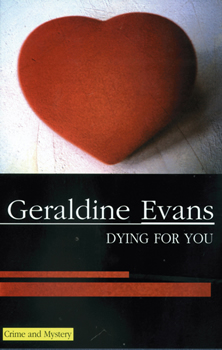
GE: It’s not necessary to start at book one as each book can be read as a standalone. But I suppose all authors prefer readers to start from the beginning and learn about the characters gradually. But if they would like to start with my favourite book, I still think I like Dying For You best as it’s the one where I get my poor old Rafferty deep inthe mire. It’s number six in the series and came out in, I think, 2005 in the US.

BH: Is it hard to write from a male perspective? Do you have any tips for authors who wish to write from the perspective of the opposite sex?

GE: I don’t find it hard, but then I’m not a very girly woman; I  was never very fond of pink, for instance, even when I was a little girl. Tips. Hmm. I would say try not to make them too tough. All men have their feminine side, even the most macho types. I’m not saying have them spend hours prinking and preening, but make them rounded, rather than a stereotype. Think about the men in your own life – they will all have their weaknesses and emotional times; maybe use them to help you build your characters.

BH: Tell us a little about your path to publication.

GE: It was a long one! I started writing in my early twenties, but I never finished anything. It was only when I hit the milestone age of thirty that I really got down to it. I wrote a novel a year for six years, only the last of which was published. That was Land of Dreams, a romance set in the Canadian Arctic (don’t ask!). When my next romance was also rejected, I turned to crime and – apart from one historical novel Reluctant Queen, about Henry VIII’s little sister, which was written under the name Geraldine Hartnett – I have written crime novels ever since. All during the years I was rejected, I had also written articles on subjects like historical biography, writing and New Age and these were published, not just in the UK, but in foreign magazines also.

BH: What is your writing schedule like?

GE:  I’m not an early riser. I generally start writing around 10.00 a m and carry on till around 6.30 or 7.00 p m. I’ll often continue to write later in the evening as well, though nowadays, I tend to give myself the weekends off (if I don’t, my husband moans! Quite rightly, really. He married me because he likes my company, after all).

Of course, as with other writers, I have other calls on my time. I’ve just finished proofreading my latest Rafferty novel, Deadly Reunion, which is out in the UK at the end of February 2011 (out in the US a few months later). Next, I have to do the final proofread of the ebook version of Dead Before Morning, after which I’ll have to get myself in gear to get the next out of print Rafferty novel, Death Line, ready for epubbing. I give talks and interviews. I do all my own marketing and produce flyers, bookmarks, news releases and postcards.. I also interview other writers for my blog, which I started recently. I use facebook, I tweet and belong to various Author websites, where I post and which I regularly update. So altogether, I keep quite busy.

BH: What does your workspace look like?
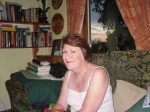
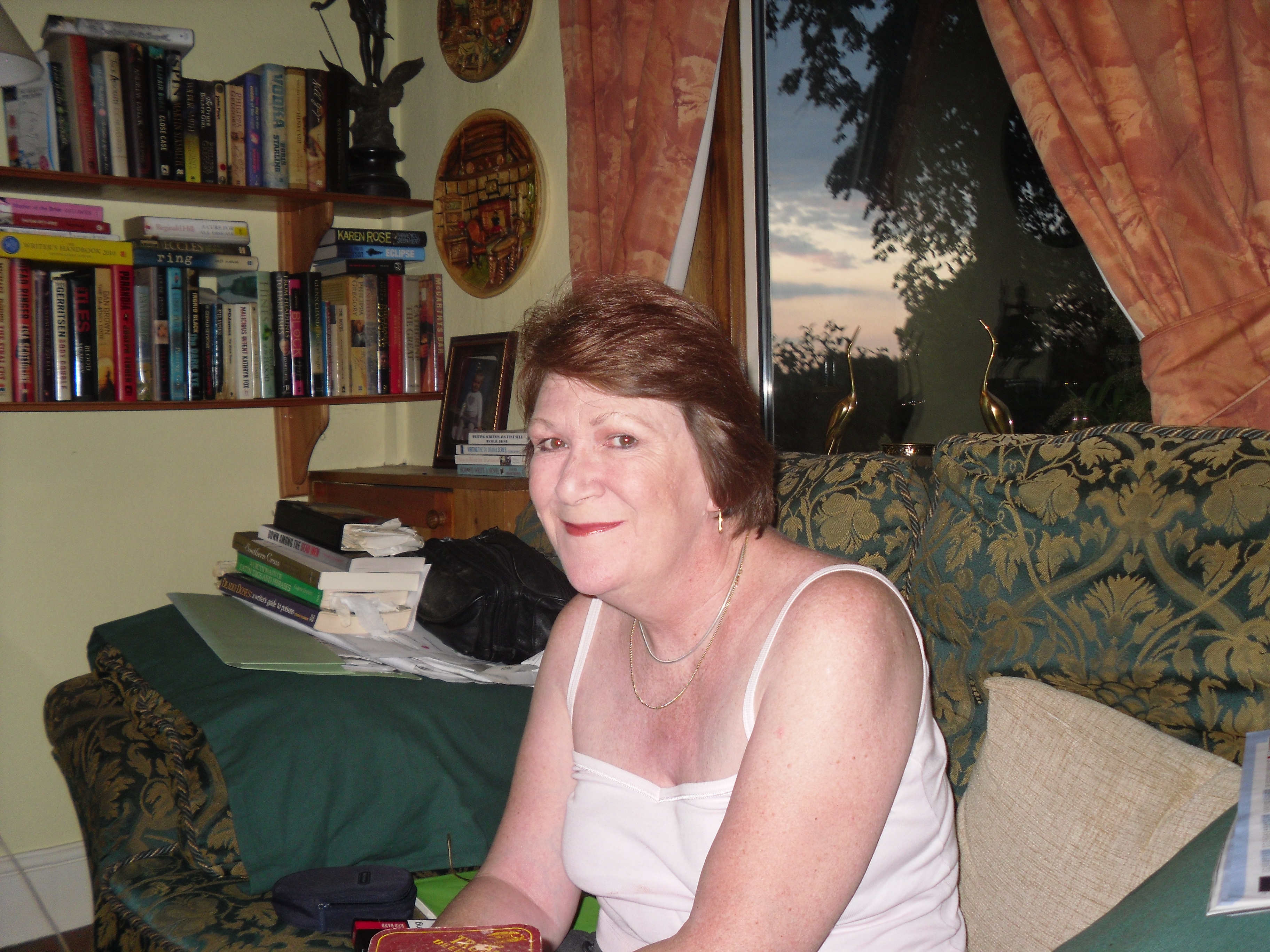
GE: I do most of my work downstairs in the living room by the fire (nearer the kettle for tea!). It’s quite a small room and is not very tidy (no Domestic Goddess, me!). I used to work all the time in my study upstairs, a small boxroom as we call them in the UK, but since Mark, my stepson, gave me one of his spare laptops, it’s been wonderful to have the freedom to work anywhere. I’ll get my husband to take a picture. The living room’s a bit of a shambles at the moment because I was busy yesterday evening wrapping Christmas presents for my family (nearly done. Only four more to get, though we also have four December birthdays and three in January L). Wish my lot went in for a bit of family planning!

BH: What is your favorite book on the craft of writing?

GE: I like the one by Lawrence Block. I can’t find it at the moment and I can’t quite remember the title (From Plot to Print?), but I’ve read that from cover to cover many times. I love his humour. Some writers who try to teach about writing get a bit too precious, but I’d definitely recommend his book.

BH: Any words on advice to aspiring writers for keeping the hope alive?

GE: I know it’s difficult. I’ve been rejected many times. Have a cry, then dry your eyes, grit your teeth and say: ‘I’ll show ‘em’! Try something different and shorter, like an article, something you don’t need to put your heart and soul into Anyone can research facts for a non-fiction piece and put them in order with a bit of flair. Don’t forget to do your research on your intended market, too, regarding what their requirements are (word length, subject matters covered, etc). As I mention on the Advice Page on my website (www.geraldineevans.com), this will, hopefully, give you something, maybe several somethings, to put on your writer’s CV, which should lead editors to at least consider you a professional. Getting non-fiction published is a lot easier than trying to place a novel. But with regard to your novel, please don’t follow the herd with the latest hot ticket. All would-be writers do that. Do your own thing and write what matters to you: that way, you’ll stand out from the crowd.

BH: Thank you, Geraldine, for the interview and for your thoughts on writing and publishing! For more of Geraldine, you can visit her in various places on the internet:

Website: http://www.geraldineevans.com Here you can visit Geraldine’s blog, find links to her books on Amazon, and read all sorts of writerly advice.

Blog: http://wwwgeraldineevanscom.blogspot.com (If this link doesn’t work, try going from Geraldine’s website.)

Twitter: Geraldine_Evans

Facebook Fan Page:
http://www.facebook.com/search.php?q=www.blogger.com&type=users#!/pages/Geraldine-Evans-Crime-Author/134541119922978

Crimespace: http://crimespace.ning.com/profile/GeraldineEvans