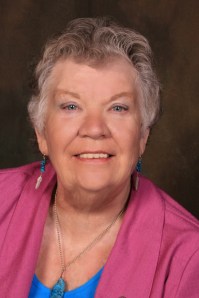
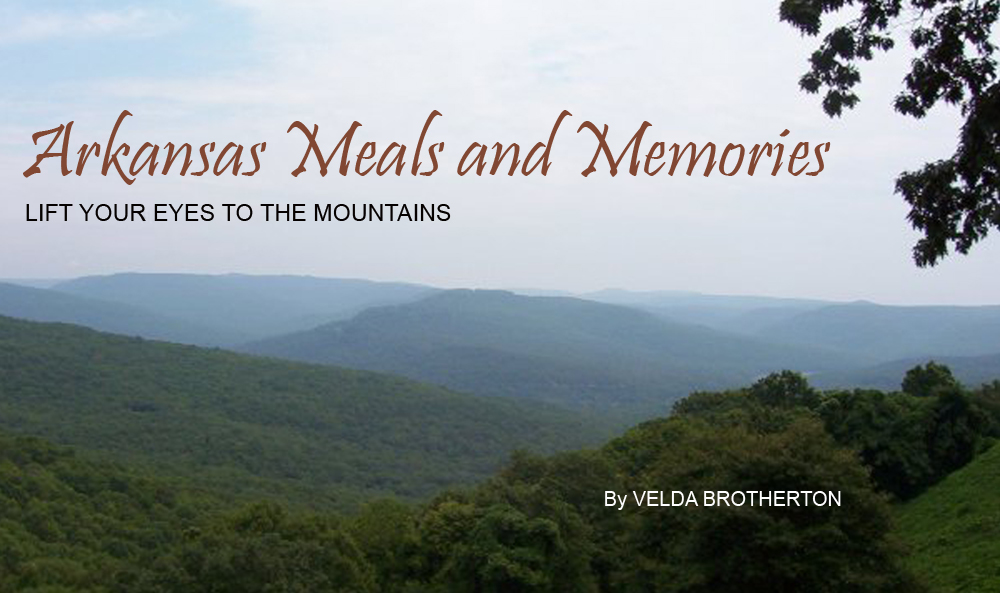
 This is a first in my NiFtY (Not Famous…Yet) Author Interview series – a nonfiction author! Gasp! Cheer! Amazement! However, nonfiction is just the most recent tip of the iceberg for Velda Brotherton, who has also published historical fiction: Images in Scarlet, and Fly With the Mourning Dove. Her most recent works of nonfiction include The Boston Mountains: Lost in the Ozarks, and Arkansas Meals and Memories: Lift Your Eyes to the Mountains.
BH: Welcome, Velda! Please tell us a little about your latest books.
VB: I’d be happy to. The Boston Mountains: Lost in the Ozarks is a product of about 20 years of work. During that time I wrote a historical page for the Washington County Observer, a rural weekly newspaper. I gathered interviews, visited with folks and began a keen interest in Boston Mountain history. I wanted to know more about the settlers who moved in from 1828 into the early 1900s. My files grew over the years, and I began to put together an idea for the book. A compilation of stories told by the descendants of those early settlers, stories of the towns that no longer exist. The lost communities. Alas, no publisher was interested. Some of these stories would break your heart, others are of such joyful content as to bring laughter and awe. The book covers the stories from these communities in four counties that lie in the heart of the Boston Mountains. It also contains 137 photos, some very old, some as new as last summer when we traveled those back roads to bring the book together after I found a publisher. While doing that I decided to include directions and mileage as well as road conditions to many of these remote sites. So many people want to visit the place where Grandpa or Grandma attended school or grew up, and I decided to make that easy.
Arkansas Meals and Memories: Lift Your Eyes to the Mountains is a recipe book that contains 150 recipes from my mother’s collection of 80 years, plus quite a few gathered from some of the best cooks living in the Boston Mountains today. There are stories of growing up in these Ozarks during the Great Depression from my own memories and many sayings and beliefs of this area as well.
BH: I’ve heard that nonfiction books often include writing a proposal, but that’s the extent of my nonfiction publishing knowledge. Could you tell us a little about your path to publishing these books?
VB: You’re right that nonfiction books often include writing a proposal, however, this didn’t happen with either of these books.
I’m a great believer in networking, and that’s what I’ve done for the past 25 years. Every book I’ve had published during that time is the direct result of that networking. My six historical romances came about because of an editor I approached at a Western Writers of America Conference. The nonfiction books, beginning with Wandering In The Shadows of Time, were also the result of networking.
When I traveled to San Antonio to pick up a WILLA finalist award for my book, Fly With The Mourning Dove, I pitched my idea for The Boston Mountain book to an editor there. He had attended the awards banquet at which I accepted my award. He was immediately interested in publishing the book, didn’t even ask for a proposal or an outline.
That same year I attended a conference in Eureka Springs, Arkansas and was approached by an editor to do the cook book. He was looking for someone to do one from the Arkansas Ozarks and had no notion that I possessed all of my mother’s collection. I’d never considered writing such a book, but when I learned he also wanted stories from the area, I couldn’t turn him down. The books both came out within two months of each other, making it easier for me to include both in all my promotion efforts.
BH: Your nonfiction works definitely will appeal to a niche market – the people who live or have history in the Boston 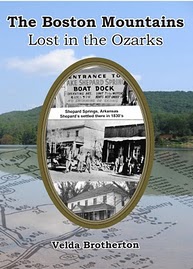 Mountains. Can you explain the wider appeal these books may have?
VB: When World War II came along, people living in the Arkansas Ozarks scattered to the winds. There was no money, no jobs to be had, and so they all headed out for places that offered more opportunity. I have people from California, Texas, Oklahoma, Missouri and Kansas requesting books because they want to learn more about their roots. Their parents or grandparents talk about this place all the time, and share their memories. Our area has been booming for the past ten years and we have a lot of “implants” who are very curious about our way of life prior to these modern times, so they too are interested in my books.
BH: Because you’ve written both fiction and nonfiction, I’d love to hear your take on the distinct challenges and joys of each one.
VB: Because most of my fiction is also historical, writing it poses much the same challenges as far as research goes. I struggle to get everything absolutely true to history while weaving my fictional characters through the story. However, writing fiction is a much more free form of writing than writing nonfiction. I really enjoy immersing myself in a fictional world where I’m in control, more or less. Often though, the characters take over and I’m merely channeling.
Creative nonfiction has given writers a bit more freedom to create dialogue and internalization, but it requires that we study the morals and beliefs of the time closely so that we have our characters spot on. In the Boston Mountain book I’m careful to explain that the stories there are modern folk tales. They are told the way they were told to me. The only thing I strive to do is make sure that the dates, historical occurrences and places are presented correctly. We all know that everyone perceives what’s going on around them differently, and so we make allowances for that. But I can’t allow myself to treat these stories as I would if they were fictional.
I enjoy both genres as long as I can do both and not be tied down to one. Recently I’ve moved into contemporary women’s fiction and am working on getting those published.
BH: So how much time, really, do you spend in a library or on the internet doing research?
VB: You wouldn’t believe how much time research can eat up. I began my historical romances before the Internet came on the scene for the common folk, and I spent a ton of time in the library doing research. Luckily, my husband fell in love with computers when the Internet came along, and he did a lot of my research for me giving me more time to write. Actual time, I’d say a historical fiction or nonfiction book can take as much as six months to a year of research. I usually begin to write long before my research is complete, though because I don’t often know everything I’ll need until I get into the book.
BH: I have to know: have you tried making each of the 150 recipes in your cookbook? Which is your favorite?
VB: Oh, goodness no. My mother cooked them and that was good enough for me. Growing up I didn’t want to learn to cook at all, though she struggled to teach me. My mother began cooking when she was 8 years old, standing on a crate in front of a wood burning cook stove. Her mother preferred outdoor work and they always lived on a farm. Mother was raised in the Ozarks, coming here with her family from Montana when she was 8.
I have tried many of the recipes. I took the Cheesy Squash recipe (doubled) to a pot luck picnic a couple months ago and everyone was clamoring for the recipe. I want to try a lot more of them, and have a copy the cook book in my kitchen now. My daughter has also tried some of the recipes and she doesn’t even like to cook.
BH: Can you share a simple recipe here?
VB: I’d be happy to. Here’s something for your sweet tooth. This is Grandmother’s Caramel Pie
1 c dark brown sugar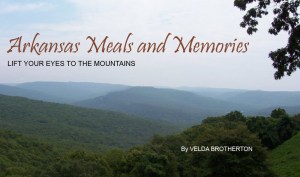
1 1/4 c boiling water with small lump of butter added
1 whole egg plus 1 yellow (save the white for top)
2 rounded T flour
½ t vanilla
Mix flour and sugar and add water. Place mixture in a double boiler and stir until thick. Drop in a whole egg and the yellow. Beat vigorously. Cook a few minutes, remove and add flavoring. Stir and pour into a crust (already cooked). Cover with beaten white of egg, put in oven and brown lightly.
This recipe was written in my grandmother’s hand exactly as it is reproduced here (I added the already cooked notation) and she notes that it came from Grace Shunk, probably a neighbor or church friend. We all lived in the country and had no close neighbors.
BH: Thank you for sharing that recipe. Do you have another project in the works? Can you tell us about it?
VB: As always, I have several. I think working on only one thing at a time would get boring, and so I usually have two or three going, whether I have a publisher or not. Fortunately, my publisher of the Boston Mountain book has already said he’d take a biography I’m working on about a woman in our small town who, in the 1920s, defied all the rules in place for women of that era. She was one of the first women in the state to become a pharmacist, she was elected mayor two years running and presided over a “petticoat government.” Finally, she took over the ownership of the local newspaper owned by her husband when he died of Influenza during World War I. Her personal life is rather tragic. The story will make good reading written in the creative nonfiction style.
Another project is a novel about a woman who learns that to forgive is not always enough after a young man driving while intoxicated is responsible for the death of her 16 year old son. This is based on a true story, but is purely fiction. That book is finished and with an editor in New York who seems to be very interested. I’m working on another women’s fiction while I wait to hear.
BH: What do you consider your greatest weakness as a writer, and what do you do to overcome that?
VB: You would ask that. Now I have to reveal my secret. I’m way too serious with my writing. No matter how hard I try, humor evades me. I have a great sense of humor and laugh easily, but I just can’t seem to create characters who are funny.
I’m also very slow in completing a work. I just plod along, writing myself into corners, backing up, starting over. But I can’t seem to write any other way. I’ve tried outlining but that stifles my creativity. Once I’ve outlined the book, I’m no longer interested in writing it. The creation has been completed. Silly, I know, but I guess we all have hang ups, and those are mine. At my age, there’s probably nothing much I can do to overcome these weaknesses. Guess I’ll just keep on keeping on.
BH: Ha, that’s what I tell myself to do all the time: “Keep on keeping on.” What is your writing schedule like?
VB: For 25 years, I’ve gone to my office right after we eat our noonday meal, which we call dinner around here. That’s about 1 p.m. and I write till five or six. I do this six days a week. I do have a strict schedule for tasks each day. On Monday I work on the Internet, writing blogs, posting on Facebook, putting information on all the other sites where my book is listed, including my website which I keep up myself. On Tuesday I write a historical column and any other short things I’m working on. I submit short stories to anthologies on a regular basis and have 14 published so far. From Wednesday through Saturday I write on my works in progress. Whichever one is in need of my time or a little of each.
When I’m promoting a book, or currently both books this schedule is interrupted by book signings, workshops, and speaking engagements.
BH: What does your workspace look like?
VB: Eeeek! Put it this way, the last person who saw my office was struck speechless for a minute or so, then she murmured, “Well, I suppose you know where everything is.”
I work on a laptop. One wall is lined with file cabinets and bank boxes of old newspapers that contain heaps of historical information. My six historical romance covers are framed and hang there. There are two windows at my back that look out on a mountain incline that is wild and wooly and borders on the Ozark National Forest.
I sit at a large computer desk my son-in-law built to order for me. Above my head is a small white bear holding a bouquet of roses, a hand carving done by my husband and a protective dragon. The other wall has a floor to ceiling book case storage unit that is crammed to overflowing. A key to the city of Ft. Smith hangs beside my WILLA award. On top of the unit are my other awards from various sources. I’m surrounded by my work on all sides and when I retire to this room I feel totally at ease.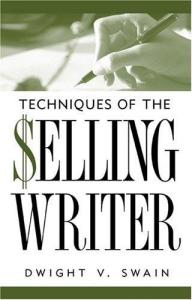
BH: What is your favorite book on the craft of writing?
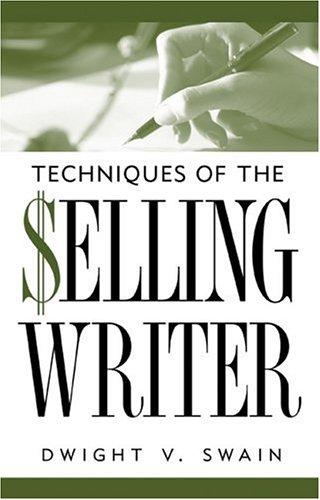
VB: Hands down, Dwight Swain’s Techniques of the Selling Writer.
BH: What is the best writing advice anyone has given you?
VB: “The road to success is littered with quitters.” Persevere no matter what.
BH: Any words on advice to aspiring writers for keeping the hope alive?
VB: See above first, then hone your craft, never think you know everything about writing, study as if you were going to be a surgeon or a lawyer. Then find your niche. Despite all the bad news from the publishing industry, you can reach your goals. Come up with something different. In today’s market, story comes first. That’s not to say you can ignore good writing, but think out of the box, as they say. Try new things, and definitely take a look at E publishing. It’s on fire now and a good place to start your writing career.
BH: Thank you, Velda, for the interview, the insights, and the recipe!
For more information about Velda and her books (including where you can purchase them!), check out the following websites:
Click here for Velda’s website, which has links to publishers’ sites. You can also view her writing journal, as well as her writing advice.
Publishers site for purchasing The Boston Mountain Book
Velda’s Facebook page, with events and photos
You may also order books through Velda by emailing her. In addition, she generously said that writers may feel free to email her with questions. Here is her email address: vebrotherton (at) gmail (dot) com



 Beth Hull