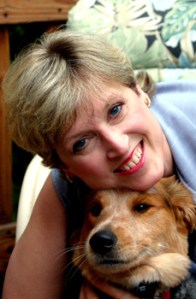
 Lauren Carr is the author of three mysteries. Before she moved to novel-writing, she wrote mysteries for television and the stage. Let’s welcome Lauren Carr for my latest NiFtY (Not Famous…Yet) Author Interview!
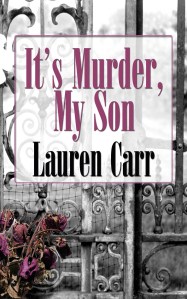
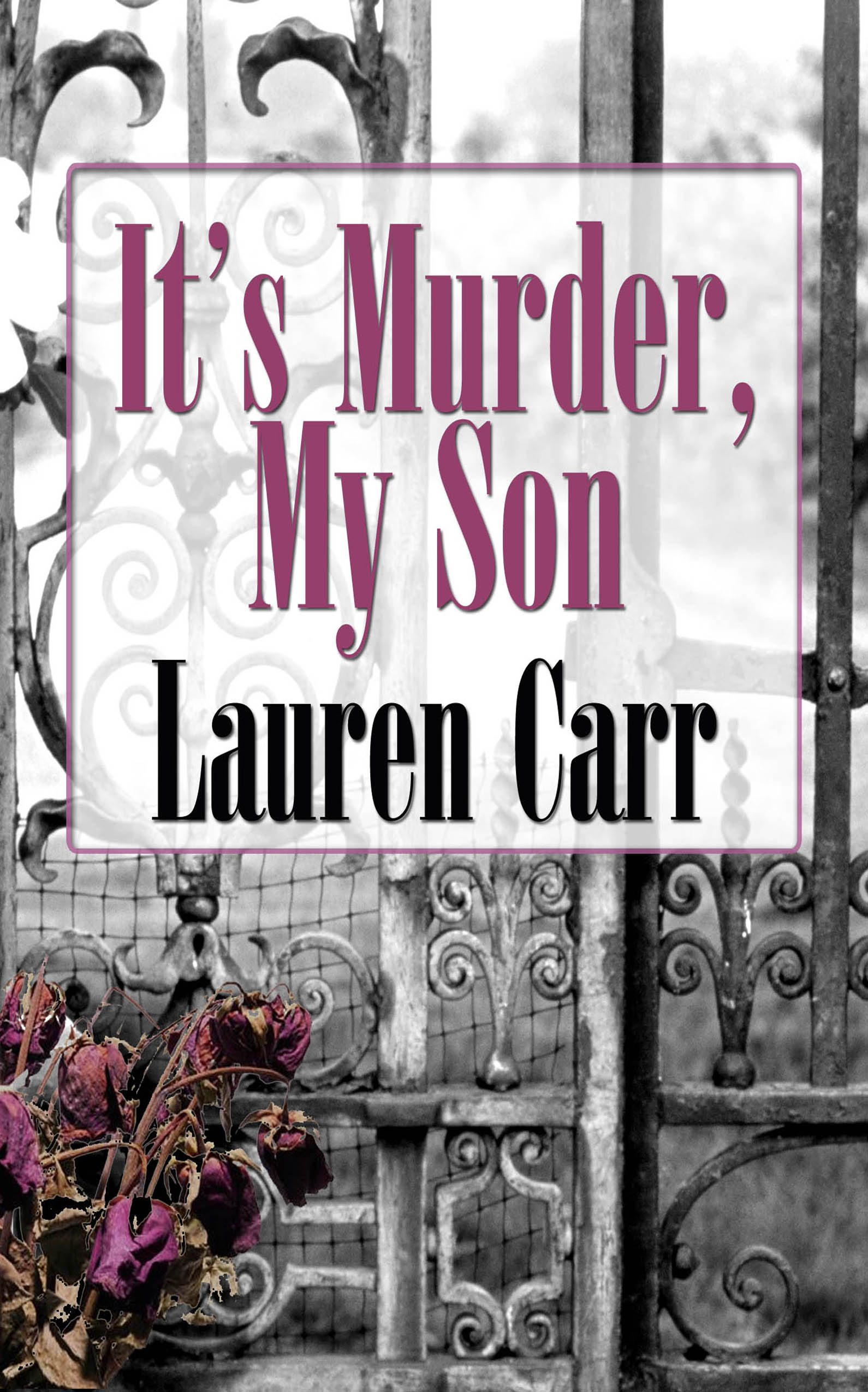
BH: What’s your one-paragraph pitch for It’s Murder, My Son?
LC: What started out as the worst day of Mac Faraday’s life would end up being a new beginning. After a messy divorce hearing, the last person that Mac wanted to see was another lawyer. Yet, this lawyer wore the expression of a child bursting to tell his secret. This covert would reveal Mac as heir to undreamed of fortunes, and lead him to the birthplace of America’s Queen of Mystery and an investigation that will unfold like one of her famous mystery novels.
BH: Tell us a little about your path to publication.
LC: My first book, A Small Case of Murder, was self-published and named a finalist for the Independent Publisher Book Awards in 2005. After being picked up by Five Star Mystery for my second book, A Reunion to Die For, I decided walked away from an offer from another traditional publisher to return to self-publishing for It’s Murder, My Son.
I turned down the traditional publisher to independently publish through CreateSpace for a variety of reasons. Mainly, I had all the same responsibilities and had to make the same investments of time and yes, money, toward making my book a success when I was traditionally published as I did when I self-published. I came to realize that with all of my education and experiences, I was more than capable of successfully publishing my books independently. So far I have been right. It’s Murder, My Son has received only positive reviews.
BH: Do you plan to write a sequel to It’s Murder, My Son, or have you embarked on a completely new project?
LC: I’m already working on it. In Old Loves Die Hard, Mac Faraday returns to Georgetown to clear his ex-wife’s name when she is accused of killing the assistant DA she had left Mac for.
BH: This book isn’t your first published novel, though; you’ve published two other mysteries. Are they part of a series? Can you tell us a little about them?
LC: A Small Case of Murder and A Reunion to Die For are the Joshua Thornton Mysteries. Joshua Thornton was a JAG lawyer who leaves the Navy after his wife dies, leaving him to raise five children alone. In A Small Case of Murder, Joshua returns back to Chester, West Virginia; his, and my, childhood home, where his children discover a letter that implicates a local pastor in an unreported murder.
In A Reunion to Die For, Joshua Thornton becomes the county prosecuting attorney and investigates the murder of an investigative journalist investigating the death of a high school classmate. The classmate died during their senior year in high school. Her death was classified as a suicide. Joshua begins to question if it really was.
BH: Where did you get the idea for your first novel?
 LC: In 1998, my family was vacationing in Copper Harbor, Michigan. One rainy day, we decided to go antiquing. We had gone into this one shop and I found a beautiful silver tea set. The shop owner was very chatty and told me how he had acquired it. He had purchased all of the contents of an old house in which an elderly woman lived at an estate sale. While packing everything up, he was up in the master bedroom talking to the daughter of the homeowner when he turned over the box springs and found a brown cardboard box underneath. The daughter asked, “What’s that?” He replied, “Whatever it is, it’s mine.” The box contained the silver tea set, never used, completely in it’s original packaging, along with cards and letters all dating back to 1968. When he told me that story, I thought, “Suppose one of those letters implicated someone in a murder?” By the time we returned home from vacation, I had the plot for A Small Case of Murder outlined in my mind.
BH: On your website I learned that you gave up writing for television and stage to become a full-time mom, and you wrote your first book after that. How long did it take you to write the book?
LC: My “retirement” lasted about six months. Then I was back at the keyboard writing A Small Case of Murder. That was my escape. When I started writing it, I was writing only for myself. I had given up my literary agent, who never did anything for me anyway and didn’t handle novels. It took me about six months to finish the first draft. When I dug it out and dusted it off a year later, I read through it and thought I had something. So I started editing and working on it again. I spent another couple of years playing with it before I started to look into having it published.
BH: What was that like, balancing writing and motherhood?
LC: Tough.
BH: I’m listening to “Hear, hear!”s throughout our studio audience. Do you have any tips to share with other writing moms?
LC: Maybe this isn’t so much a tip about writing moms, but about life, as I see it having turned fifty this year. “When Mom’s unhappy, everybody is unhappy.” So, don’t be unhappy.
After a year of writer’s block and unhappiness, I decided last year to “give up” my career. I love the writing, not the frustration of dealing with literary agents and publishers and trying to please them, etc. So I decided to write my little mysteries and self-publish through CreateSpace and if they sold, and people liked them, great. If not, so what?
Well, when I made that decision, I was happy, and then everybody was happy. It became about the writing again. As luck would have it, I was offered a contract from a traditional publisher but turned them down in favor of self-publishing with CreateSpace. I’m sticking to my plan.
As long as it’s not self-destructive, do what makes you happy. If it makes you unhappy, stop it. Life is too short to be miserable.
BH: It seems to me that writing a mystery necessitates knowing just how much information to give, how much to hold back, and how much extra is needed to hide the important clues. Did the sense of knowing how much to include and when come naturally to you, or did it take some time developing?
LC: Both. I found that I had a sense of it, but had to develop it. It is comparable to having a natural talent like singing or throwing a football. Sure, when you first open your mouth to sing a song or get out onto the field to throw a ball, you may be really good, but you need to sing or throw that football everyday to develop it.
I write every day. I’ve written stuff that no one will ever read, until I’m long dead, if I’m lucky. But just the exercise of doing it has improved my skills at being able to write a scene and finely plant clues without giving away too much or holding back too much. I have found that by my third book I was better laying out the clues than I was with my first book.
BH: If you’re in a writing slump, what sort of things do you do to feed your inspiration?
LC: Mope a lot. During that year that I had writers block I kept trying to work it out by sitting at the laptop and staring at the screen. I would spend a day surfing the internet between sentences and find that I only wrote one paragraph at the end of the day. Finally, I decided to hang that up and started reading old mysteries that I hadn’t read in twenty years or so. I also read some inspirational books and got involved in more volunteer work at our church. Once I started meeting more people and having more experiences, I snapped out of it. I guess that was the key. I took my focus off myself and put it on the world around me.
BH: What is your writing schedule like?
LC: Today? What it is today is different from what it will be tomorrow.
Now that I have a book out, I spend the day nine-to-five promoting it: doing interviews, making phone calls, printing up marketing materials and doing mailings.
I wake up early in the morning, six o’clock, to let the dogs out, brew coffee, and work on the next book until it is time to “go to work” doing the business end of writing. Now I am not necessarily writing that whole time. I take time out to drag my son out of bed, cook him breakfast, clean up the kitchen, etc. At five in the evening, I’ll stop “work” and cook dinner. After dinner and cleaning up the kitchen, then I will return to my writing until I go to bed. I reserve the weekends for writing, unless I have a book event.
BH: What does your workspace look like?
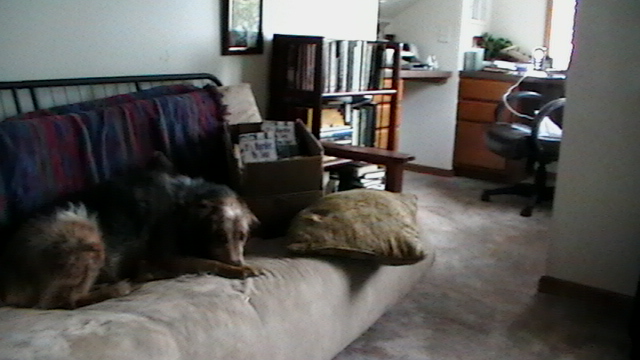
LC: I am blessed in that I have an actual writer’s studio. It is on the top floor of our house and has a fabulous view. This is my space. My husband is a neat freak. Everything has to be in it’s place and I am the opposite. This is my space, where I can be myself.

BH: [Battling jealousy over your writer’s studio….] What is your favorite book on the craft of writing?
LC: Stephen King’s On Writing. I don’t like much of Stephen King’s books. Sorry, he’s a wonderful writer, but they scare me so much. But On Writing was fabulous. He tells a lot of truths about writing techniques.
BH: Stephen King’s stories scare me too. He gives great writing advice, though. What is the best writing advice you ever received?
LC: Keep on writing. I heard it on TV once, and have no idea who said it. Reviewers, literary agents, publishers, their opinions are subjective. If you really want to be a writer and you really believe you have talent, then keep on writing and don’t give up. If you give up, then you don’t have the commitment and love for writing to succeed.
BH: Any words on advice to aspiring writers for keeping the hope alive?
LC: There is a scene in Whoopi Goldberg’s movie, Sister Act 2: Back in the Habit where she is talking to one of her students. This girl has a lovely singing voice and really wants to be a singer, but her mother has nagged her into squelching her dream. Whoopi corners this girl and tells her that either you are a singer or you aren’t. If you are a singer, then you are born a singer and you are going to sing even if you become a truck driver. You wake up singing. You sing in the shower. You sing even when you aren’t singing.
That struck me because that is what it is to be a writer. I gave up my career, what there was of it, to be a mom but in the middle of the night while holding my baby who is now one hundred and ten pounds, I was thinking up plotlines for murder the way other mothers are thinking up lullabies. I had books running through my head until after six months I had to sit down at the computer and make it into a book.
Now is the best time to be a writer because advances in both technology and the publishing world (CreateSpace, Smashwords, and other companies) have opened doors so that any writer who is serious about writing books and getting them out there to readers can do it.
BH: Thank you, Lauren, for the interview and the insights into your writing!
To visit Lauren’s website, click here. Lauren also has a fantastic blog devoted to mystery writing, named, funnily enough, “Lauren’s World of Mystery Writing.”
She’s also got a book trailer for It’s Murder, My Son, and if that whets your appetite for the book (I bet it will!), you can click here to buy the print edition on Amazon. It’s Murder, My Son is also available on Kindle and audio. You can find a pdf of the media release here, and a pdf of deserved praise for the book here.
 Every now and then it’s healthy to go to the library and grab a random book off the shelf.
 Beth Hull