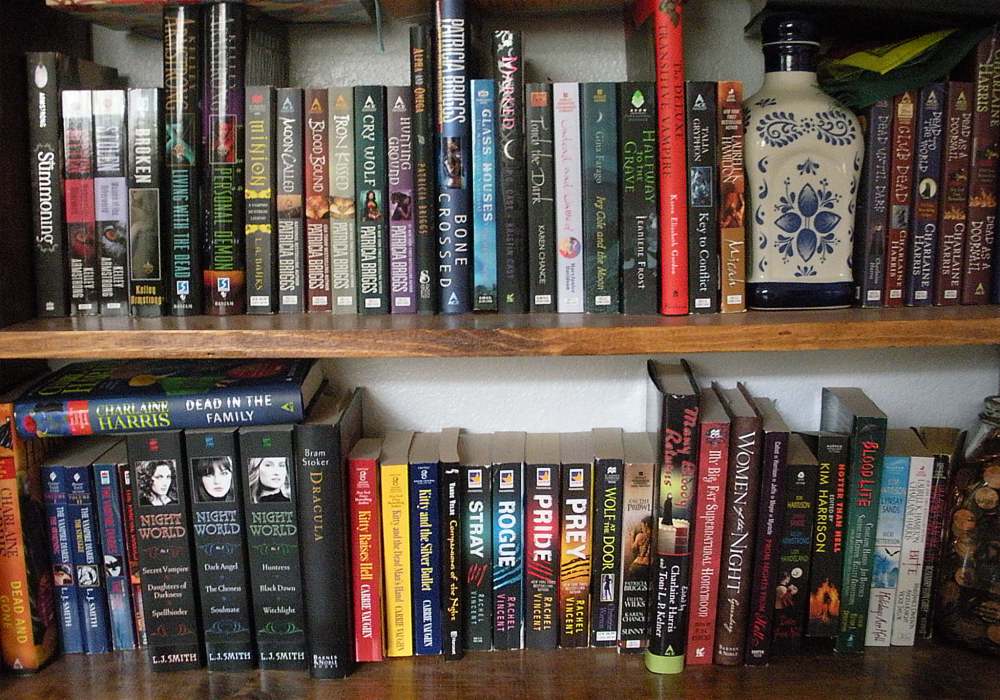
Keeping Ahead of Trends in YA Lit

Weekend Writing Special

You’ve finished the first draft of your young adult manuscript. It’s new! It’s got a great hook! Nobody has done anything like this before! It’s a reality-television-show-to-the-death featuring vampire-esque aliens. You imagine literary agents begging, no, clamoring, for your manuscript. Your idea is The Newest Thing.

Until, a few weeks later as you’re hard at work on revisions, all of a sudden everyone has done this. And their books are being published Right Now. That author of Twilight (whose name I keep forgetting) does a horror reality television show novel. Suzanne Collins has something with alien-vampires. J. K. Rowling creates a Harry Potter spin-off featuring vampires who run a television series about aliens.

My personal experience with this is not nearly as extreme or ridiculous. I had this idea for a future, post-apocalyptic setting for a novel, and I dove (dived?) right in. Minutes later, I read The Hunger Games. Then The Forest of Hands and Teeth. Then, while reading Publishers Lunch from Publishers Marketplace, I found two other post-apocalyptic YA trilogies due out in a year. How can I compete with that?

I can’t. Not as far as the general idea goes. No one can. In a lot of ways, we are all tuned into the collective unconscious. We read many of the same books, watch the same movies and television shows, hear the same news stories, and on and on. My hook has to be more than “post-apocalyptic” etcetera and so forth. An intriguing story idea can do a lot…

…but an awesome character does so much more.

An author friend of mine was worried about this a few months ago, as was I. We’d just finished revisions on our manuscripts (we thought) and we were ready to embark on our new projects. “I’m thinking vampires,” she said. “But it’s been done, you know?”

I did know. I wrote one. And then I told her something I should pay attention to myself: if the characters are memorable and compelling, it doesn’t matter what the setting is, or what creatures they are. Vampires, werewolves, telepathic fairy-kin, selkies, were-amoebas. After all, we’ve read contemporary fiction featuring regular old humans for…hmmm…just about forever. Humans? Regular people? In a regular setting? How boring…not. Most of Sarah Dessen’s books feature teenage girls in the same little town in North Carolina. I’ve read every single one of them because her characters are fabulous.

So it’s not just another vampire book, or another post-apocalyptic zombie book, or another (sigh) werewolf book. It’s a real story featuring a compelling character who deals with an intriguing, gripping conflict. You don’t need to keep ahead of trends, or even worry about them, if you’re writing what you love and focusing on your own unique characters.
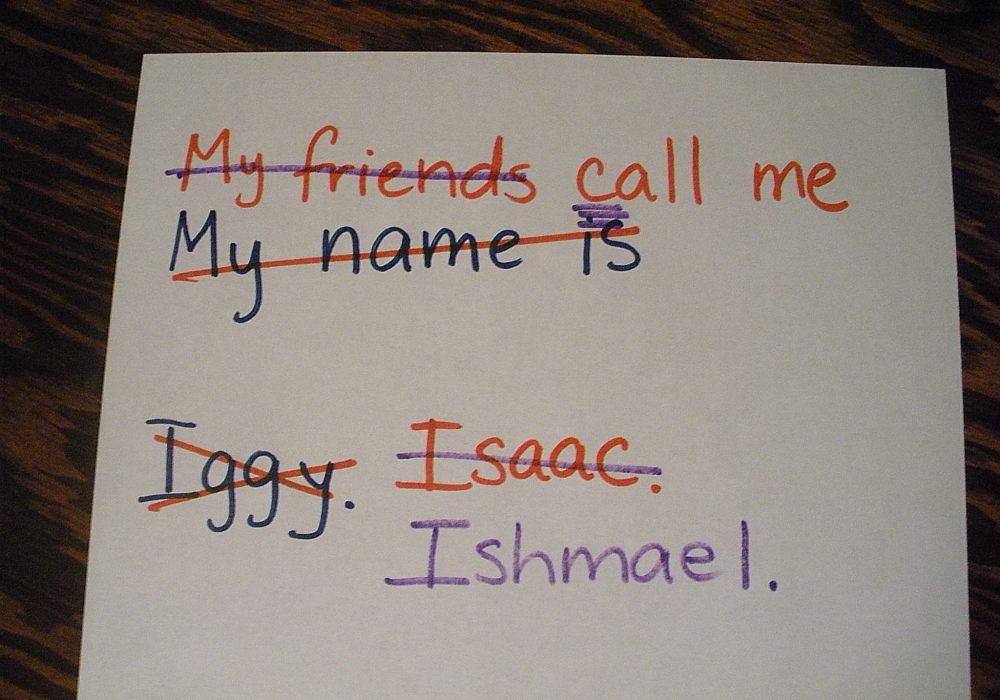
First Sentences in YA Lit

Here are 30 first sentences. Do you know the books they go to? If you know what I’ve been reading lately you’ll have an advantage, but I threw a few old favorites in just to keep you guessing. Um, obviously if the suspense is killing you it’s easy enough to find the answers online (which is why this isn’t a contest, just an excuse to use the information from my first-line notebook). I’ll post the authors & book titles on Monday.

The interesting part of this exercise is the discovery that some first lines are definite hooks. I know which ones I think are amazing, and I know which ones, well, aren’t. And there are a few that are not winning first sentences, but if you stick around for the rest of the paragraph–Wow (I’m thinking specifically of #17 when I write this).

Take a guess if you feel like it, or just enjoy!

1. We went to the moon to have fun, but the moon turned out to completely suck.

2. It was a dark and stormy night.

3. I remember lying in the snow, a small red spot of warm going cold, surrounded by wolves.

4. When I wake up, the other side of the bed is cold.

5. I don’t believe in ghosts.

6. The tree woman choked on poison, the slow sap of her blood burning.

7. Chauncey was with a farmer’s daughter on the grassy banks of the Loire River when the storm rolled in, and having let his gelding wander in the meadow, was left to his own two feet to carry him back to the chateau.

8. Blood fills my mouth.

9. In these dungeons the darkness was complete, but Katsa had a map in her mind.

10. Her parents were going to kill her for this.

11. Just when I thought my day couldn’t get any worse I saw the dead guy standing next to my locker.

12. On the day Claire became a member of the Glass House, somebody stole her laundry.

13. Mommy forgot to warn the new babysitter about the basement.

14. Janie Hannagan’s math book slips from her fingers.

15. Mr. and Mrs. Dursley, of number four, Privet Drive, were proud to say that they were perfectly normal, thank you very much.

16. “Please tell me that’s not going to be part of my birthday dinner this evening.”

17. There were only two kinds of people in our town.

18. Around midnight, her eyes at last took shape.

19. Torrential rain was pouring the afternoon Rebecca Brown arrived in New Orleans.

20. Dad had Uncle Eddie round, so naturally they had to come and see what I was up to.

21. It didn’t take Phoebe long to figure out Jeremy wasn’t coming back for her.

22. “Guess who?”

23. Someone was looking at me, a disturbing sensation if you’re dead. 

24. Some things start before other things.

25. Flames shot high, turning the night lurid with carnival light.

26. Everyone’s seen my mother naked. 

27. Jason was going to Brain Camp. 

28. I’d never given much thought to how I would die – though I’d had reason enough in the last few months – but even if I had, I would not have imagined it like this.

29. My mother used to tell me about the ocean. 

30. There are these bizarre people who actually like physical education class.

Author Friends: I’d love to read your first sentences, too! Post them below.

Prologue Problems

A Friday Free-for-All [in which our heroine obsesses about writerly things]

I’ve been reading literary agent Mary Kole’s blog, kidlit.com. Right now she’s doing a series of critiques on story beginnings and her first critique post caught me by surprise. The author wrote one word: Preface, and Kole stopped immediately to comment “Ah, our first problem! Just kidding. Sort of. I think, in a lot of instances, a preface or a prologue is a crutch. It’s the author’s way of showing the reader something gripping in the hopes that the reader will then read through some less exciting backstory…” To me, this is very bad news. I love prologues, and I especially love writing them.

A brief history of my prologues:

House Red: The prologue is a total crutch, but c’mon, it’s my first novel. In this case, Mary Kole is right.

Savage Autumn: The prologue is not so much a crutch per se…but I’ll admit Chapter One starts off more slowly than what is currently popular in contemporary fantasy YA fiction. The prologue’s there because someone had to die before the story begins, so the reader can believe the antagonist is capable of killing.

The Black City: Brand new prologue, I fell in love with it immediately (which is a sure sign that something is very wrong). Buoyed by my success with the prologue, I started the first chapter. And it’s terrible. It’s really, absolutely terrible. It starts off slowly, with too much explanation and even more backstory, as well as very dull description of the world. So in this case, my prologue didn’t start off as a crutch, but I used that beginning as an excuse to let everything fall to poo-ness.

Granted, this is my very first draft for The Black City, and there will be plenty of time to fix those issues later on. Thank heavens.

Prologues aren’t always terrible, right? I mean, I’ve read plenty of  novels where they work beautifully. I find them all the time in my favorite mysteries and contemporary fantasies. A couple of fantasy examples I can come up with off the top of my head are: Fallen by Lauren Kate, Frostbitten, and Stolen, both by Kelley Armstrong. Hmm, looking at this short list, I realize that in order for a prologue to be successful, the novel’s title must end in “en.”

That’s easily remedied. Savage Autumnen. The Black Cityen.

All better!

Seriously, though, I will go back to my Chapter Ones and pretend the prologues don’t exist. Tighten up the chapters, bring in tension and whatever else is needed. Fireworks. Amorous alligators. Really angry toddlers with kicky feet.

A Certain Slant of Light by Laura Whitcomb

A Monday Book Review

“Except for the librarian and a couple of mice, I spent more time in the school library than anyone” (40). Oh dear. Not another YA novel where the main character loves the library. But I’ve ranted about this before, so I’ll resist the impulse to do it again.

Because the majority of this book review is spent on a total tangent, I will say here that A Certain Slant of Light is an enjoyable read. The idea of two ghosts borrowing the bodies of two troubled teens and falling in love is the sort of plot hook that allows me to forgive the library-loving protagonist issue. The writing is quite beautiful in places and…I cried at the end. A Certain Slant of Light has more poetic prose than a typical commercial fantasy novel, which was pleasantly surprising.

That said, I can now jump into my rant. (Not about libraries.)

I am quite baffled as to why this novel is marketed as YA fiction. The two main characters are adults, although ghosts. Helen was 27 when she died, and has been a ghost for 130 years. James was 29 and has been a ghost for 85 years. That gives each character over a century of experience in the world! Just because they are “borrowing” two teenagers’ bodies does not make them teenagers, and some of their actions, as well as the main character’s thought processes and (prior) life experiences, place this book completely in the realm of general (adult) fiction. I wonder if young adults were the original audience Whitcomb had in mind.

But perhaps I approach this in the wrong way. Young adult fiction doesn’t have to feature teenagers as the main characters…although honestly I’m having a hard time coming up with examples which do not feature teenagers. Anything with animals? I would argue that  The Warriors series by Erin Hunter (starring cats) and The Underneath by Kathi Appelt (populated with all manner of animal characters) are more middle-grade fiction.

YA literature has to be something young adults want to read. But now I’m puzzling over the distinction, because some teens love “adult” books too. And with the YA market attracting more and more adults (for the LA Times article about this, click here), the distinction is problematic.

Can anyone come up with examples of YA books that do not feature a teen as the main character? Extra points if you think of one that features a main character over the age of 20.

For more information on Laura Whitcomb and her writing, you can visit her website by clicking here.

The Wee Free Men by Terry Pratchett

A Monday Book Review

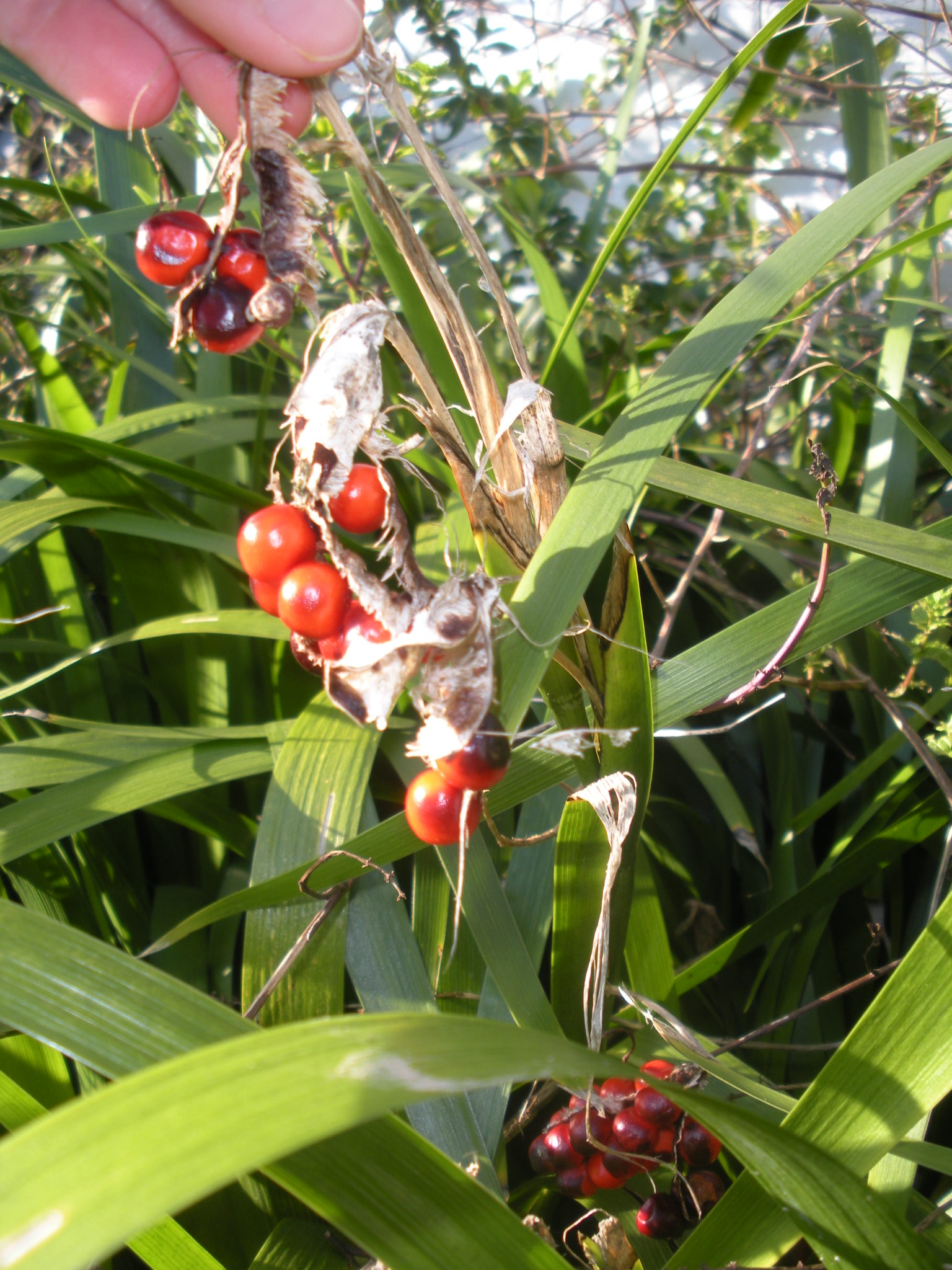
“Nae king! Nae quin! Nae laird! Nae master!” This is part of the refrain of the Wee Free Men, the little pictsies who help Tiffany Aching along on her quest to find her kidnapped brat-of-a-brother Wentworth. It’s also what I imagine the stinking* irises are shouting at me as I scold them into submission before ripping them from the ground.

Iris Foetidissima

Stinking Irises

But, oh yes, Pratchett’s book. It was quite funny! I love a book that makes me laugh, and there’s something inherently funny about picsties (six-inch blue men with red hair) who love fighting, stealing, and drinking. Plus what’s not to love about a girl who will use her little brother as bait so she can bash a monster over the head with a frying pan?

*possible spoilers in here*

But when Tiffany finds out the fairy queen kidnapped Wentworth, she follows them to a fairy kingdom to retrieve him, the Wee Free Men tagging along to help her out. And that’s where I stopped having as much fun with the book.

Let me be clear: Terry Pratchett really is a genius, and I could not write his books better. The following is a matter of personal taste, not an attack on his skill as an author.

Basically, I don’t have much patience for fairy kingdoms or alternate worlds (exception to this rule: Graceling by Kristin Cashore). Not my thing. Someday I might have a great idea and go with it for a book of my own, but I sort of doubt it. When the rules change, and when dreams are involved and the rules change rapidly, my ability to suspend disbelief is…suspended. Not only that, but when the dreams are controlled by a character, and then that control is wrested away by another character, and so on? Nope. I’m not buying it.

Plus I’m trying to read fast because Z is running around tackling me and trying to swipe my book away, and then there’s like this never-ending ending, the climax of the story going on forever.

The book was good. I’m glad I read it. And when I need some funny little blue people to bring some laughter into my day, I’ll pick up another of Pratchett’s books. Or I can paint Z blue, dye her hair red, and dress her in a kilt. Teach her to talk with a Scottish accent.

*Note: “Stinking” here is not an adjective, but part of a compound noun. That’s really the name of the irises, iris foetidissima. While getting rid of the tempting red poisonous berry seeds is one reason I’m pulling them up, the other reason is I resent their very stubborn presence. Husband says it’s because they are as stubborn as I am. I was a little resentful of his presence too, when he said that.