Keeping Ahead of Trends in YA Lit

Weekend Writing Special

You’ve finished the first draft of your young adult manuscript. It’s new! It’s got a great hook! Nobody has done anything like this before! It’s a reality-television-show-to-the-death featuring vampire-esque aliens. You imagine literary agents begging, no, clamoring, for your manuscript. Your idea is The Newest Thing.

Until, a few weeks later as you’re hard at work on revisions, all of a sudden everyone has done this. And their books are being published Right Now. That author of Twilight (whose name I keep forgetting) does a horror reality television show novel. Suzanne Collins has something with alien-vampires. J. K. Rowling creates a Harry Potter spin-off featuring vampires who run a television series about aliens.

My personal experience with this is not nearly as extreme or ridiculous. I had this idea for a future, post-apocalyptic setting for a novel, and I dove (dived?) right in. Minutes later, I read The Hunger Games. Then The Forest of Hands and Teeth. Then, while reading Publishers Lunch from Publishers Marketplace, I found two other post-apocalyptic YA trilogies due out in a year. How can I compete with that?

I can’t. Not as far as the general idea goes. No one can. In a lot of ways, we are all tuned into the collective unconscious. We read many of the same books, watch the same movies and television shows, hear the same news stories, and on and on. My hook has to be more than “post-apocalyptic” etcetera and so forth. An intriguing story idea can do a lot…

…but an awesome character does so much more.

An author friend of mine was worried about this a few months ago, as was I. We’d just finished revisions on our manuscripts (we thought) and we were ready to embark on our new projects. “I’m thinking vampires,” she said. “But it’s been done, you know?”

I did know. I wrote one. And then I told her something I should pay attention to myself: if the characters are memorable and compelling, it doesn’t matter what the setting is, or what creatures they are. Vampires, werewolves, telepathic fairy-kin, selkies, were-amoebas. After all, we’ve read contemporary fiction featuring regular old humans for…hmmm…just about forever. Humans? Regular people? In a regular setting? How boring…not. Most of Sarah Dessen’s books feature teenage girls in the same little town in North Carolina. I’ve read every single one of them because her characters are fabulous.

So it’s not just another vampire book, or another post-apocalyptic zombie book, or another (sigh) werewolf book. It’s a real story featuring a compelling character who deals with an intriguing, gripping conflict. You don’t need to keep ahead of trends, or even worry about them, if you’re writing what you love and focusing on your own unique characters.

First NiFtY Author Interview: Seven N. Blue

For my very first NiFtY (Not Famous…Yet!) Author Interview, I give you Seven N. Blue. I met Seven through the Sacramento Writer’s Group and we clicked immediately. Not only are we both highly intelligent, creative writer mamas, but we have written our young adult fantasy manuscripts in tandem. Seven has incredibly fascinating ideas as well as the ability to construct convincing and endearing characters. Without further introduction, here…she…is!
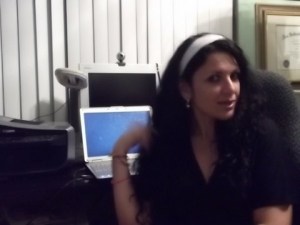
BH: Where do you get most of your ideas and inspiration?

SB: From music, music videos, and artwork. Sometimes video games.  I don’t really play them, but there are some gorgeous video games out there (Still Life, Silent Hill) those are two of my favorite aesthetically speaking – I played Silent Hill just to watch the scenery. And music.  I love music of almost any era. I consider music a time machine and a doorway to the imaginary world I spend a lot of time at.

BH: Do you have a set writing schedule, or are you more of a “when the mood hits” kind of girl?

SB: Must have a writing schedule. I have a toddler!

BH: Can you compare Myla, the main character in The Innocents, to anyone you know in real life?

SB: There is a little of me in Myla, but then again, there is a little of me in almost every character I write. I had an interesting teen life. I did things that, well, most teens would not.  Like getting married at 16, for example.

BH: Wow, 16! I never knew that about you. Are you willing to share anything about that?

SB: Yeah, it lasted 11 months! I was divorced  living on my own by the time I was seventeen.

BH: Can you share any details about your current WIP (work in progress)?

SB: Oohhh! That is top secret! At least right now!

BH: (Well, without spilling anything to the audience, I will whisper: I know a little bit about it, and trust me, it’s gonna be great.)

What does your writing workspace look like?

SB: This is funny.  Right now I am sort of “in the hallway” of life.  In “between places”.  My Red Dell Laptop on a very cluttered desk (the desk is not mine, but the laptop is!).

BH: You’ve just finished a young adult (YA) novel, and your WIP is a YA novel. Any plans to write for other age groups?

SB: I don’t know.  It’s hard to say. I feel like I will always be seventeen inside. Maybe I can do early twenties, like in five years…when I emotionally grow up!

BH: What is your favorite YA novel of all time?

SB: I am going to have to say two authors here, because they both blew me away.  Definitely The Hunger Games by Suzanne Collins. That book was amazing.  Not just the story line but how incredible Collins was at juxtaposing the feelings in her characters.  For example, the main character really liked her partner…a lot…he saved her life…but she had to kill him. I also love love love Holly Black and her bad girl protagonists.  Valiant is one of my favorite books ever because of her unforgettable characters like Sketchy Dave and Lollipop and a plot where injecting fairy dust can make mortals perform magic – think of the possibilities for story with that plot!

BH: When did you first realize you wanted to be a writer?

SB: When I was six and my father raved about a short story I wrote.  I won every writing contest in elementary and junior high (I still have the trophies! Well, they’re in storage now while I am in the “hallway” of life).

BH: Are you currently seeking an agent’s representation? What are you looking for in an agent?

SB: I am looking for agent representation.  I just want a good agent who will do what they say, and I hope we both can have a lot of fun, be productive, and achieve our dreams together.

BH: What is the best advice anyone has given you with regards to your writing?

SB: Grow a thick skin, believe in your dreams and keep on writing.  Don’t wait for inspiration, sit your butt in the chair and believe in the process of writing. It will develop, the ideas will come and they will amaze you.

BH: You’ve always struck me as a very positive, upbeat person when it comes to your writing. I think all aspiring novelists can use a bit of the positive in their lives–any tips on how to keep the hope alive, even when the query rejections try to smother it?

SB: This is funny, I am there right now.  I think I have received about thirty rejections so far, along with some great feedback from the ABNA reviewers (The Innocents made it to the top 5% Quarterfinals for 2010) to alleviate the pain.  I also have a partial out right now and I am waiting for feedback.  My advice would be to realize that it is a power greater than yourself who is writing through you, and you must keep going.  You will be tested to see how badly you want it, and you must persevere.  It is all part of the process – growing a thick skin through rejection letters is what prepares us for when we are published and half the folks love us while the other half hates us.  I think rejections are all part of the process of becoming a professional published writer.  We all have to go through it and we should welcome them with open arms because all they is that we are that much closer to our dream agent, and our book deal.

BH: What is your experience like, balancing writing and motherhood?

SB: Wow.  Yeah, not easy.  I have a writing schedule I abide by.  I write no matter what during the allotted time.  When I am supposed to be spending time with my son, then I spend time with him wholeheartedly and not worry about my writing because I know I have a schedule.  A schedule is the only way I can function!

There you have them: wise words from my pal and critique “pardner” Seven. She might not be famous…YET, but with her talent and dedication, it won’t be long. Special thanks to Seven for being my very first interviewee!

On Seven’s website you can read everything from book reviews, to advice on writing, to musings about family and motherhood. And today, as an added bonus, she has interviewed me as well!
Writer Quiz

Dreamer? Wisher? Hoper? Player? [A Friday Free-for-All Entry]

1. Do you have at least seven titles but no salable manuscript?

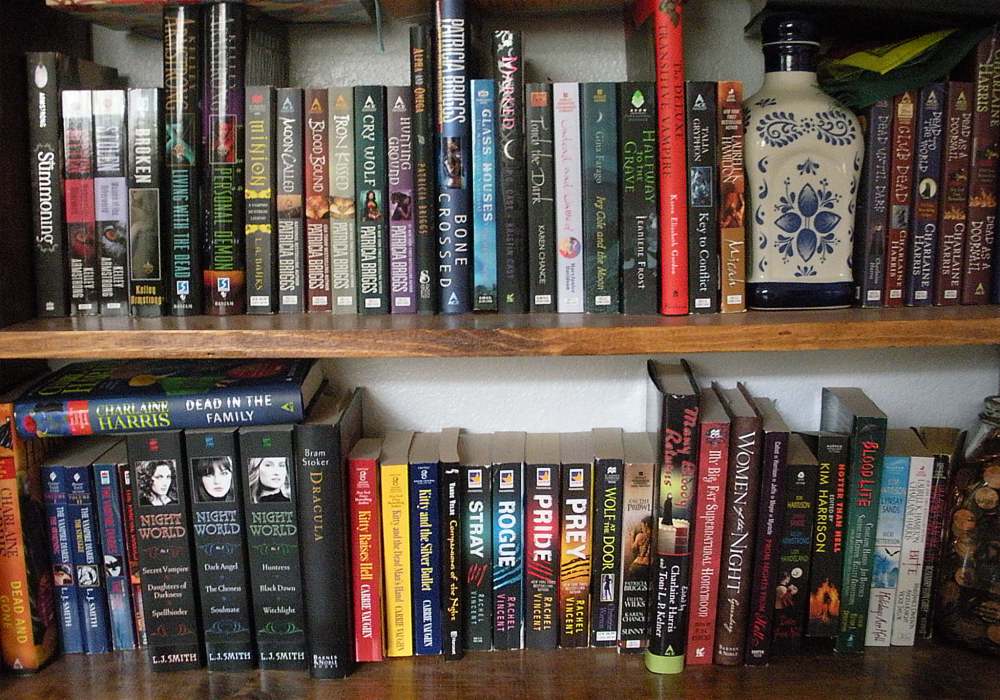
2. Have you spent over two hours finessing your writing space (on purpose–not just cumulatively over the years)?

3. Is your Acknowledgments page already drafted (if even in your head)?

4. Do you read five or more different writer blogs?

5. Can you hear your friends groaning when you ask them to read your manuscript (again)? Even if you’re asking in an email?

6. How many times have you checked the query success pie charts on an authors website like authoradvance.com?

7. Have you ever used your blog as an excuse to put off revising your manuscript?

8. Have you ever used dirty dishes as an excuse to put off revising your manuscript?

9. Is your manuscript…
a) halfway through the first draft
b) finished after only a few months
c) halfway through a rewrite after it was supposedly finished?

10. If someone asked you to describe your writing routine, would your answer be among the following?
a) when inspiration hits
b) when my child takes her nap
c) when the moon is full and I’ve just finished a Laurell K. Hamilton book for inspiration

11. How many drinks does it take for you to think your writing is “really great?” Is it the same number it takes to make you think you’re speaking fluently in a foreign language?

12. Do you indulge in fantasies where Stephenie Meyer greets you with the words, “Dang, I wish I had thought of that idea”?

13. Do you indulge in fantasies where Seth Green bites your neck (as he did Stephenie Meyer’s) at the premier of your book-made-into-a-film? Have you lost 15 pounds in said fantasy?

14. Do you feel just a tad bit queasy posting this blog entry, knowing that it’s sort of a confession but put into the form of a survey?

If you answered yes to any of these questions, wow. Get thee to a writer’s conference.

Yes, yes. I’m going. Tomorrow.

Reno, bay-bee!

Prologue Problems

A Friday Free-for-All [in which our heroine obsesses about writerly things]

I’ve been reading literary agent Mary Kole’s blog, kidlit.com. Right now she’s doing a series of critiques on story beginnings and her first critique post caught me by surprise. The author wrote one word: Preface, and Kole stopped immediately to comment “Ah, our first problem! Just kidding. Sort of. I think, in a lot of instances, a preface or a prologue is a crutch. It’s the author’s way of showing the reader something gripping in the hopes that the reader will then read through some less exciting backstory…” To me, this is very bad news. I love prologues, and I especially love writing them.

A brief history of my prologues:

House Red: The prologue is a total crutch, but c’mon, it’s my first novel. In this case, Mary Kole is right.

Savage Autumn: The prologue is not so much a crutch per se…but I’ll admit Chapter One starts off more slowly than what is currently popular in contemporary fantasy YA fiction. The prologue’s there because someone had to die before the story begins, so the reader can believe the antagonist is capable of killing.

The Black City: Brand new prologue, I fell in love with it immediately (which is a sure sign that something is very wrong). Buoyed by my success with the prologue, I started the first chapter. And it’s terrible. It’s really, absolutely terrible. It starts off slowly, with too much explanation and even more backstory, as well as very dull description of the world. So in this case, my prologue didn’t start off as a crutch, but I used that beginning as an excuse to let everything fall to poo-ness.

Granted, this is my very first draft for The Black City, and there will be plenty of time to fix those issues later on. Thank heavens.

Prologues aren’t always terrible, right? I mean, I’ve read plenty of  novels where they work beautifully. I find them all the time in my favorite mysteries and contemporary fantasies. A couple of fantasy examples I can come up with off the top of my head are: Fallen by Lauren Kate, Frostbitten, and Stolen, both by Kelley Armstrong. Hmm, looking at this short list, I realize that in order for a prologue to be successful, the novel’s title must end in “en.”

That’s easily remedied. Savage Autumnen. The Black Cityen.

All better!

Seriously, though, I will go back to my Chapter Ones and pretend the prologues don’t exist. Tighten up the chapters, bring in tension and whatever else is needed. Fireworks. Amorous alligators. Really angry toddlers with kicky feet.

A Certain Slant of Light by Laura Whitcomb

A Monday Book Review

“Except for the librarian and a couple of mice, I spent more time in the school library than anyone” (40). Oh dear. Not another YA novel where the main character loves the library. But I’ve ranted about this before, so I’ll resist the impulse to do it again.

Because the majority of this book review is spent on a total tangent, I will say here that A Certain Slant of Light is an enjoyable read. The idea of two ghosts borrowing the bodies of two troubled teens and falling in love is the sort of plot hook that allows me to forgive the library-loving protagonist issue. The writing is quite beautiful in places and…I cried at the end. A Certain Slant of Light has more poetic prose than a typical commercial fantasy novel, which was pleasantly surprising.

That said, I can now jump into my rant. (Not about libraries.)

I am quite baffled as to why this novel is marketed as YA fiction. The two main characters are adults, although ghosts. Helen was 27 when she died, and has been a ghost for 130 years. James was 29 and has been a ghost for 85 years. That gives each character over a century of experience in the world! Just because they are “borrowing” two teenagers’ bodies does not make them teenagers, and some of their actions, as well as the main character’s thought processes and (prior) life experiences, place this book completely in the realm of general (adult) fiction. I wonder if young adults were the original audience Whitcomb had in mind.

But perhaps I approach this in the wrong way. Young adult fiction doesn’t have to feature teenagers as the main characters…although honestly I’m having a hard time coming up with examples which do not feature teenagers. Anything with animals? I would argue that  The Warriors series by Erin Hunter (starring cats) and The Underneath by Kathi Appelt (populated with all manner of animal characters) are more middle-grade fiction.

YA literature has to be something young adults want to read. But now I’m puzzling over the distinction, because some teens love “adult” books too. And with the YA market attracting more and more adults (for the LA Times article about this, click here), the distinction is problematic.

Can anyone come up with examples of YA books that do not feature a teen as the main character? Extra points if you think of one that features a main character over the age of 20.

For more information on Laura Whitcomb and her writing, you can visit her website by clicking here.