The Seven Stages of Receiving Critique on a Manuscript

1. Shock & denial – Did they even read my brilliant manuscript? Or did they just vomit red ink all over it? I’m seriously doubting the collective mental capacity of  my critique group.

2. Pain & guilt – How could I have given them this drivel? No wonder they didn’t get it. It isn’t that they don’t know how to read…I just don’t know how to write.

3. Anger & bargaining – You know what? FINE. If my critique group obviously has such a problem with this stupid story, maybe I should just shelve it. It can join the other stupid manuscripts in their dusty old binders. And if I do that, the next one will be better. It has to be. It’s like, the Law of Writing.

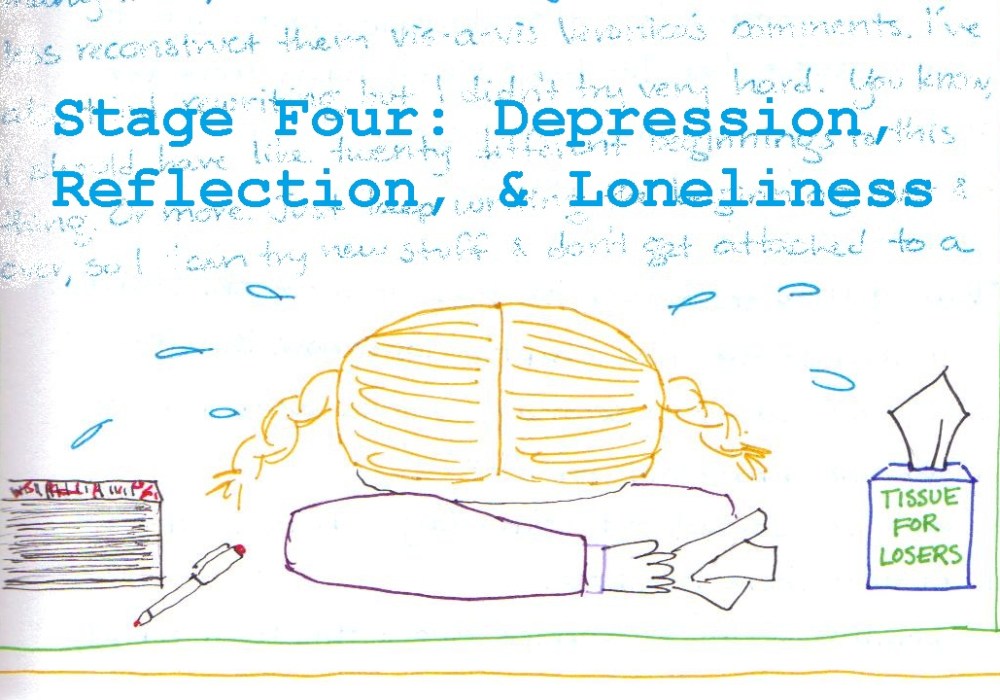
4. Depression, reflection, & loneliness – Whyyyyyy? Why do I even write? This is the stupidest “passion” a person could have. It only brings me pain. Nobody can understand what I’m going through. Nobody. Nobody. Nobody.

5. The upward turn – Even I’m getting tired of my whining. The only person who’s going to fix the (obvious, gaping) plot holes in this story is ME. So I better just cowgirl up and do it.

6. Reconstruction & working through – So if I can revisit these comments without slitting my throat, maybe I’ll find the very useful suggestions my esteemed critique group gave me.

7. Acceptance & hope – They’re right. My critique group is right. It doesn’t make sense for X, Y, and Z to happen in light of the fact that my main character is obviously B. Crap. But I can fix it. This happens with every manuscript – I think it’s unfixable, and then, I work through it. I can do this, and I will, and it’s going to be smashing, baby. Smashing.

The Love Shack

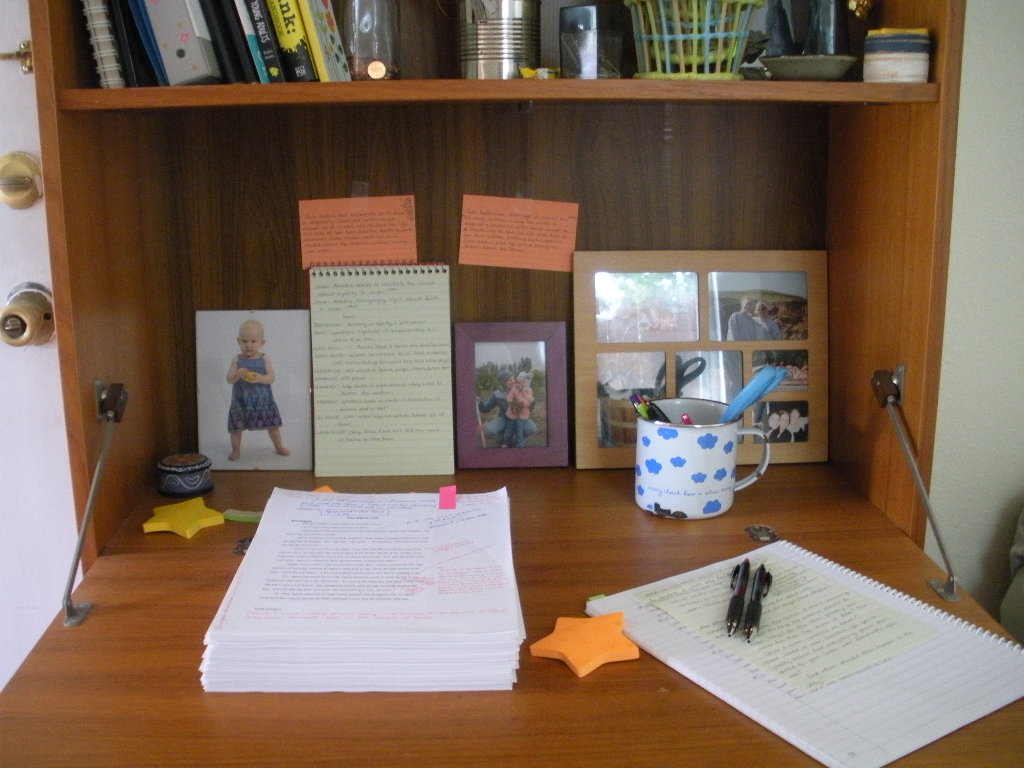
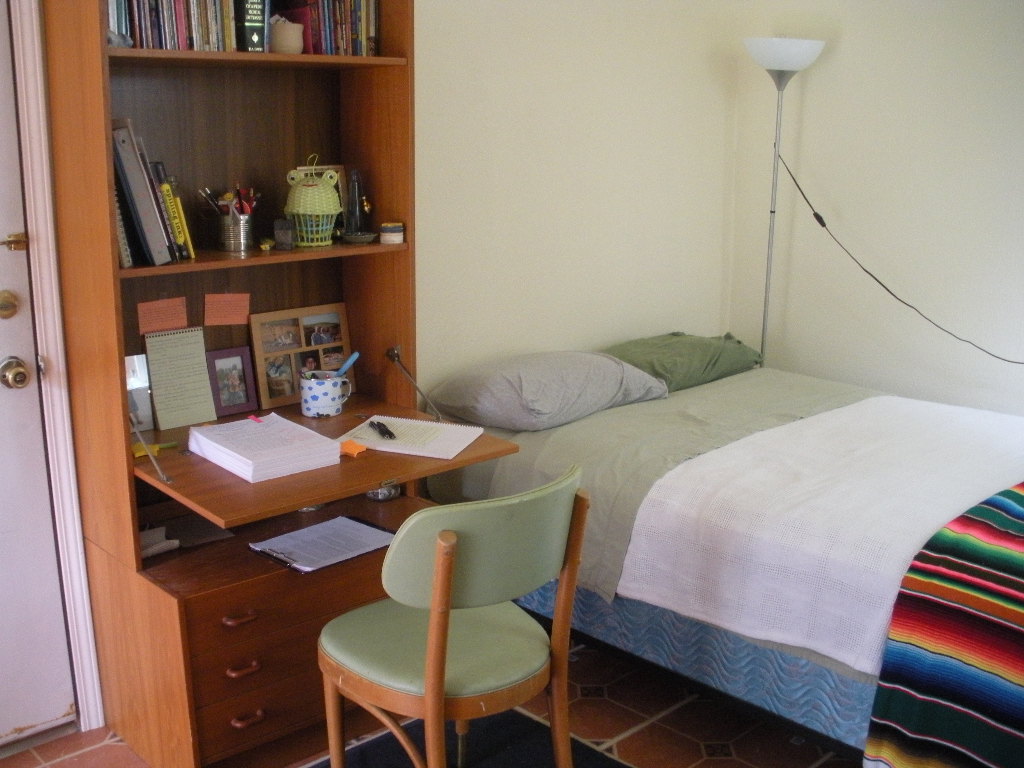
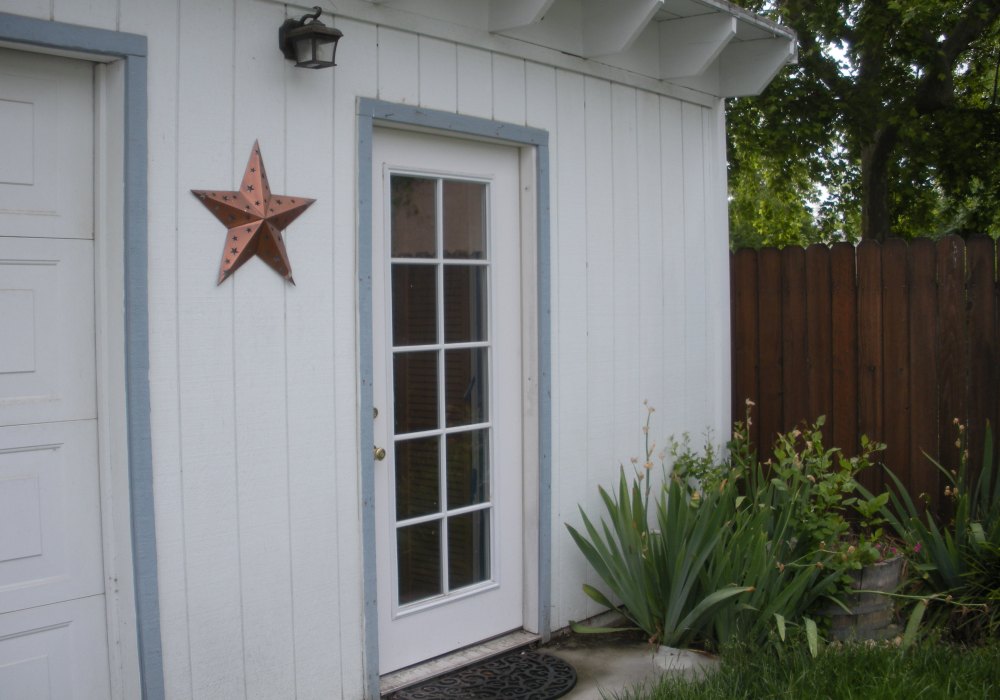
This post is long overdue. You see, friends, I have been working on a Secret Project of Joy (in addition to conspiring to send my daughter away to military camp, aka Preschool). My Secret Project of Joy is transforming our garage guest room, the “Love Shack” as we like to call it, into a place I can actually work.

The first step was covering up the orange paint.

I am anything but a designer. Like most people, I enjoy being surrounded by beauty. When I get tired of standing in front of the mirror, I am left to find beauty in my environment. Husband and I picked out this great tile to go in the Love Shack, a terra cotta with blue designs on it (click here to see it up close). (By the way, I don’t recommend this tile unless you enjoy scraping bar codes off the floor. Some genius decided to put the bar codes on the TOP of each tile. As we are a lazy/busy family, there are still tiles with bar codes on them. In fact, the only ones without bar codes are a gift of my mother’s hard work. Thanks, Mom.)

As I was saying…I tried to match the terra cotta tile. And do an accent wall. Thankfully, I can’t find any photos of the old Love Shack, because although people were nice enough about it, it was Ugly. A few months ago I went out there to write, and as I sat on the bed, looking around (not writing), I couldn’t help but notice the pleasing sandy color I’d chosen was orange. Orange!

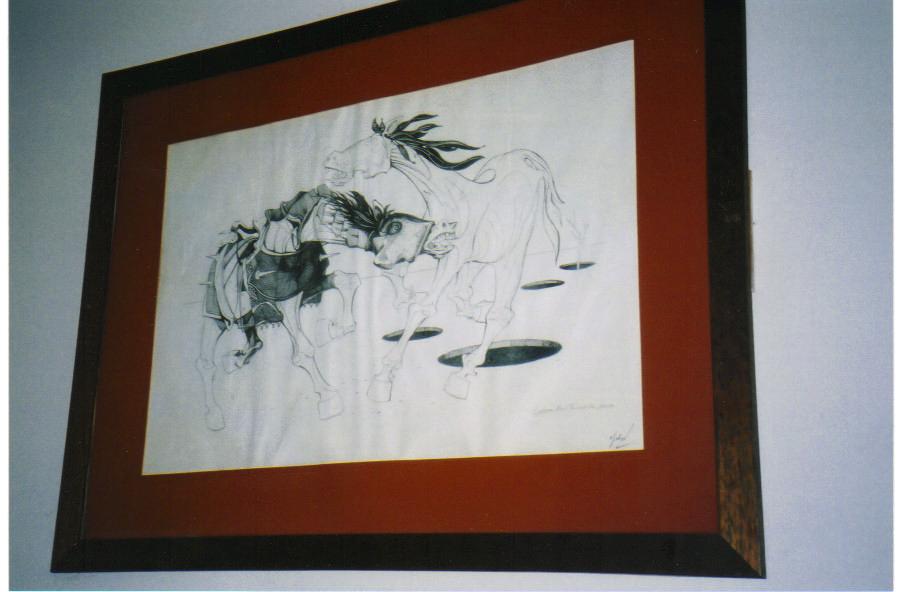
So on Mother’s Day, I painted the heck out of those walls, to a nice soft Informal Ivory. Now it’s Very Boring, which is better than orange, and I can always kick up the color a bit with the trim. And paint some poems on the walls, maybe some birds and stars. It’s MY ROOM. Yeah, guests sometimes sleep in it, so I don’t want to put anything disturbing on the walls, like these prints we got to enjoy when staying in a hotel room in Nasca, Peru:

Sweet dreams!

Don't let the bed bugs (er, horses) bite!

We weren’t sure which one we liked more, but we think the execution scene really sets the mood for peaceful slumber.

It’s clean and cozy, there’s a full bathroom, and even better: I can get work done in there. I’ve got lots of plans for the room, and the only challenge to my writing will be that I need to sit still and write, not putter about fixing up the place. In the meantime, it’s  a workable writer’s studio. I like to call it my “sink paceuary” (taken from “peace sanctuary” when I was doing the Hypnobirthing CD – don’t laugh).

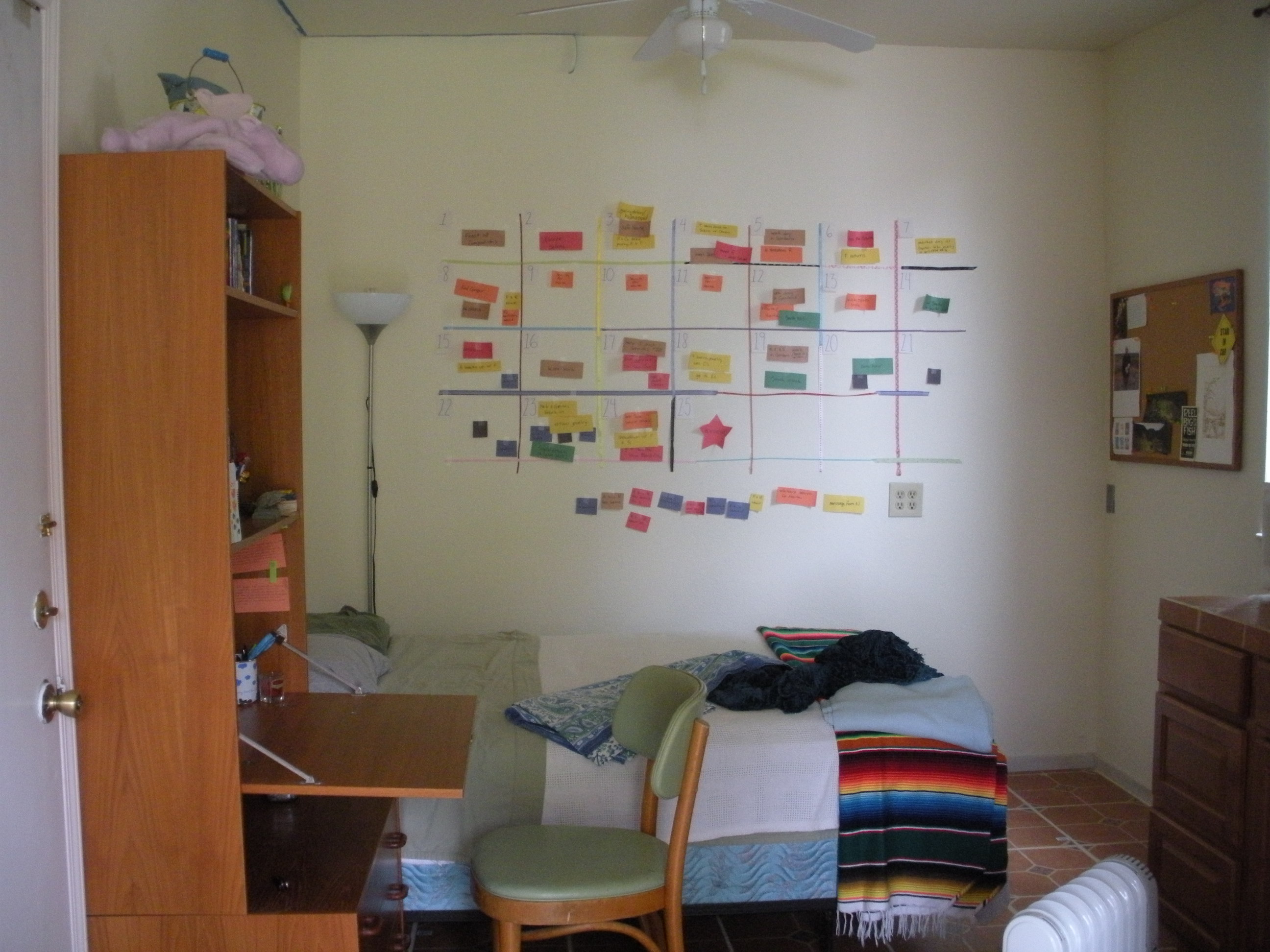
Finally moved my story board from the bedroom wall to the Love Shack.

“All I could do was to offer you an opinion upon one minor point — a woman must have money and a room of her own if she is to write fiction,” Virginia Woolf so famously said. Actually, I’d forgotten about the money part until I looked it up, and I now wish I had left the quote to memory. Anyway. I at least have the room of my own. It’s enough.

ETA: I was inspired to write about the Love Shack after doing Erin Bow’s interview. Her fantastic digs (located in a pole dancing studio!) make the Love Shack look tame by comparison.

NiFtY Author Erin Bow

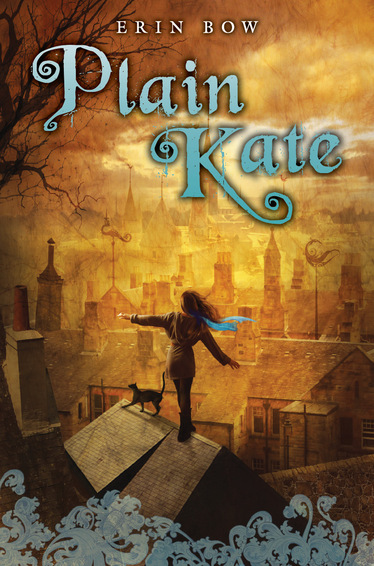
Erin Bow first grabbed my attention when someone handed me a copy of Plain Kate (click here to read my review). I picked it up and could not stop. Her writing is so beautiful and…. oh, sorry. I just woke up from a fangirl swoon. Here’s our interview! Check out her pole-dancing writing studio! Exclamation points are a side-effect of fangirl-dom!

BH: You have been BUSY since I last visited your website. What are all these projects you have going? Wait, that would take forever. Could you choose one new project to describe in a paragraph for us here?

EB: Hmm, it’s hard to pick!  I guess most of my time is going into the first draft of my third novel, a dystopian for young adults called Children of Peace.  Here’s the pitch:

A world battered by climate shift and war turns to an ancient method of keeping peace: the exchange of hostages.   The Children of Peace – sons and daughters of kings and presidents and generals – are raised together in small, isolated schools called Prefectures.  Under the tutelage of gentle, monkish artificial intelligences, they learn history and political theory, and are taught to gracefully accept what may well be their fate: to die if their countries declare war.

Greta Gustafsen Stuart, Duchess of Halifax and Crown Princess of the Pan-Polar Confederation, is the pride of Prefecture Four.  Learned and disciplined, Greta is proud of her role in keeping the global peace — even though, with her country controlling two-thirds of the world’s most war-worthy resource — water —  she has little chance of reaching adulthood alive.

BH: Okay, yeah, I want to read it. You probably don’t need a beta reader, but if you do… Moving on. Tell us a little about your path to publication.

EB: Oh, dear.  The story of my path to publication makes people hate me, because I got so lucky.
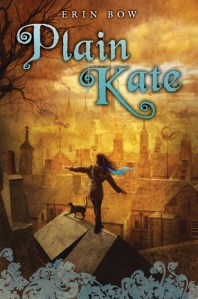
I put a lot of research into agents, and landed the first one I queried, the one at the very tippy top of my list.  She worked with me for a couple of years on Plain Kate (it took some time, but in my defense I had two babies in there) and then sent it out to this amazing list of editors, seven of them, I think.  I not only got an offer right away, I got a bunch of offers (told you my agent was amazing), which ended up in an auction.  I was and still am thrilled to be with Arthur Levine, of Arthur A. Levine Books at Scholastic.  He’s a genius editor and a great cheerleader for the books he loves.

BH: I wouldn’t say your story makes me hate you. Much.

It has been months since I read Plain Kate, and I still keep going back to it when I want some inspiration for creating a great setting and mood combination. Did that mood come naturally to the writing of the book, or did you have to work at it? Please tell me you had to work at it.

EB: That mood comes courtesy of this 800-page volume of Russian fairytales I read just before starting Plain Kate.  I soaked them in and they took me over, and the mood just came tumbling out.

But of course there’s work.  A pet peeve of mine is historical fantasies where the world seems just a few inches deep, like a stage set.  Pretty: but not workable.  I think to really get a setting to work you have to know really nitty-gritty practical things.  What the people eat, and where they get it?  What do the tools of their trade look like?  What are they afraid of when the lights go out?  A good fantasy world needs an economy, an ecology, and a mythology.

Some of the things I needed to know for Plain Kate:  How do you polish a carving without sand paper?  How do you catch a chicken?   Keep your feet dry in rainy weather?  The research was truly endless, and I still feel as if it’s thin in places.

BH: You write both fiction and poetry, and some pretty great personal essays, too. How do you balance your different projects and the different parts of your brain that you get to tap into?

EB:  I try to set aside blocks of time.  Sometimes I, say, edit one book in the mornings and draft another in the afternoons.  Sometimes I give myself three weeks or a month to finish such and such a chunk, and do little else.  I try really hard not to switch back and forth between things.  Starting is always the hardest part, and starting over and over again is frustration and a waste of energy.  (And I do it all the time.  I have the attention span of a goldfish that’s off its meds.)

I also try to keep writing business out of my office: I do submissions and interviews and blogs and things  after the kids go to bed.  My office is dedicated to the writing part of writing.  I don’t have a phone or wifi.  (Recently some wifi has started leaking in.  I’m considering copper mesh.  See: goldfish, meds.)  When I’m in my office, I write.  When I’m not, I don’t.

BH: What does your workspace look like?

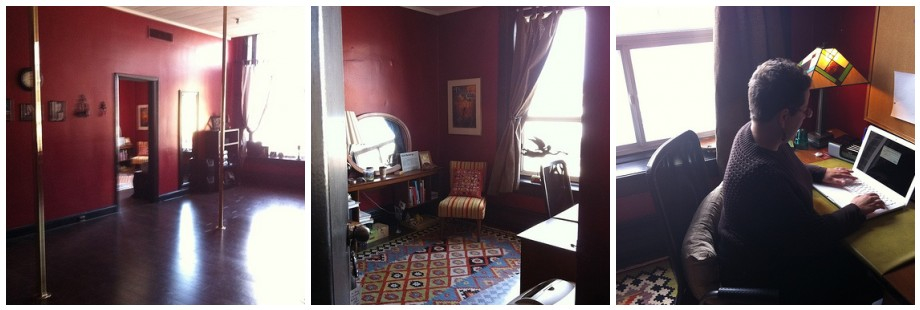
EB: I rented an office half a year ago – and with the exception of marrying my husband, it is the best choice I ever made.  The space is somewhat .. unusual. (Note: if the photos aren’t visible, you can click here to see Erin’s Office on Flickr.)

(Click on the images to make them bigger; enlarging them here was making them too blurry.)

People think I’m kidding when I say I work in a pole dancing studio, but I’m not.  My office is their spare room.  It can only be reached by crossing the dance floor — check those poles!  It’s cheap because I can’t use it at night, when the dance floor is, um, busy.  And it’s fun because when I need to clear my head I can swing around a little.


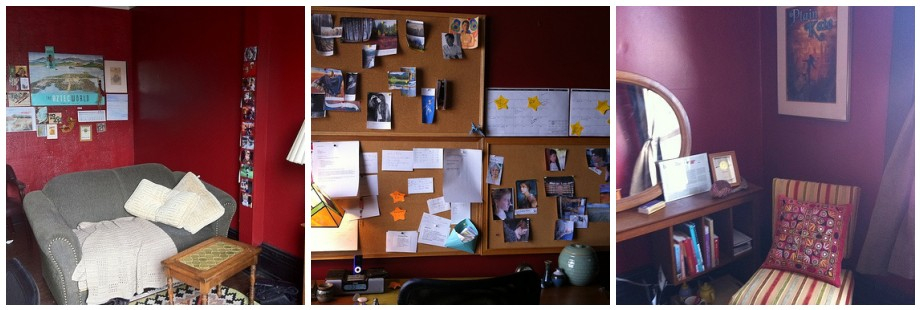
I furnished my office with a  hodgepodge of things that were either free or cheap – but it doesn’t feel makeshift.  It feels cozy and practical, like a yurt.  In this picture you can see the little loveseat (curbsourced) for curling up, a chair (Salvation army, recovered) handy for pulling up to the loveseat for coffee with friends, and of course a big desk (Goodwill) with lots of room for bulletin boards. You can see the picture boards here for Sorrow’s Knot (upper left) and Children of Peace (lower right).

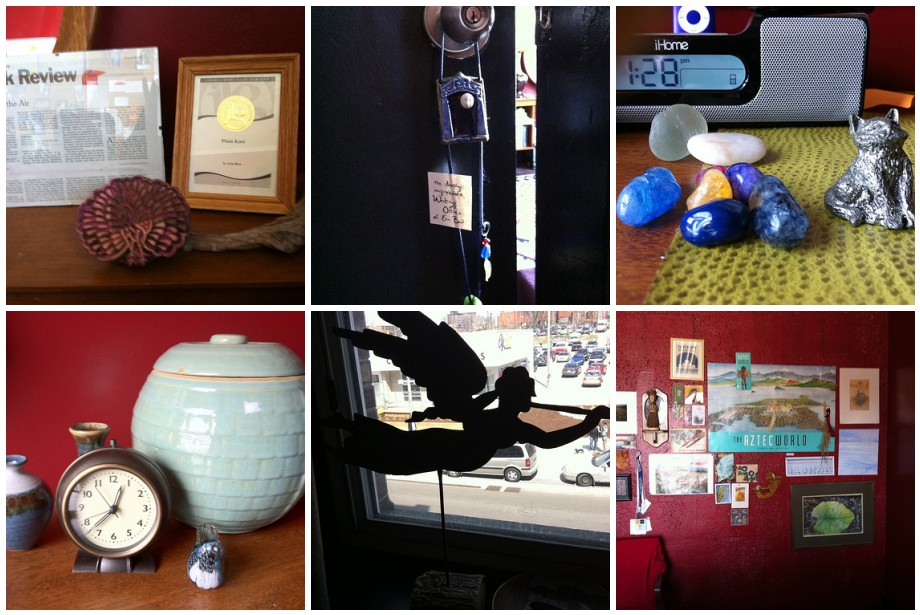
My office is a highly ritualized space – and I refuse to feel silly about that.  I often find one needs to coax oneself closer to inspiration, the way a church coaxes one closer to God.  So my office is furnished with ritual objects and relics.
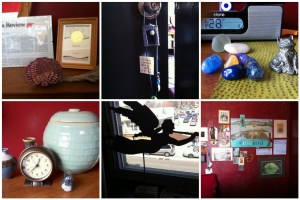

Here, you can see the objarka my editor sent me when bidding on Plain Kate, beside Plain Kate’s NYT review; a doorway shrine; a hand-cast pewter cat given by a good friend and some fiddly stones; the timer of short naps and the glass bird of holding when you want to start over; the tin angel celebrating the finish of my second novel, Sorrow’s Knot; the wall of things that mean stuff to me, including the porcelain birds that were my great grandmother’s, a map of Tenochtitlan, a bundle of grass from the monastery where I wrote my first book of poetry, a 1942 advertisement for a Waterman “Commando” fountain pen, and a reproduction of the original cover of A Room of One’s Own.

BH: Your office has inspired me. I am now working on converting our converted garage guest room into my writing studio. Must find a great big pole.

What is your favorite book on the craft of writing?

EB: Mary Oliver’s Rules for the Dance, on meter in poetry.  It is basic – you don’t have to go into being able to scan, which is good, because I have dreadful trouble with scanning.  But it is also bottomlessly good, and I could read it over and over, just to soak it up.  I read that book, and Heaney’s Beowulf, and somehow decided that what the world really needed was a children’s version of Sir Gawaine and the Green Knight in 200 rhymed quatrains, beginning with a beheading and turning on an illicit kiss.  I can’t imagine why I can’t get that published.

BH: (I have difficulty with scanning, too. Glad to hear I’m not alone in this.) What is the best writing advice anyone has given you?

EB: Ribe Tuchus – keep your butt in the chair.  Sit still.

My biggest enemy, as you’ve probably guessed by now, is inertia: the reistance to starting.  But if I promise myself I’ll just Ribe Tuchus for ten minutes, keep my hand moving across the page – often that’s all it takes to stop hating myself and wanting to get a job in a bank.

Every day I have to figure that out again.  (Goldfish.)  Ribe Tuchus, Ribe Tuchus, Ribe Tuchus.

BH: Thank you, Erin, for taking the time! For more on Erin and her writing, you can visit her (very awesome website) at erinbow.com She’s also on twitter as @erinbowbooks
NiFtY Author Heidi Ayarbe AND GIVEAWAY!

Heidi Ayarbe is the author of three young adult novels: Freeze Frame, Compromised, and Compulsion. I can say with authority that Compromised and Compulsion are both awesome, and Freeze Frame is on my To Read list. Compulsion just came out on Tuesday, and it’s freaking great, and at the end of this interview you can comment for a chance to win an advance reader’s copy of Compulsion.

BH: What’s your one-paragraph pitch for Compulsion?

HA: Compulsion happens over a period of five days in the life of Jake Martin. Jake’s the star of the soccer team, ready to lead his high school team to their third state championship in a row this Saturday. This Saturday means everything because this Saturday, if he plays perfect, he will be released him from the spiders – the numbers – and the other obsessions that rule his life. Saturday, the primes converge and Jake believes that if he does everything right, Saturday will be the day Jake gets to be normal. He’s tired of hiding, tired of living with OCD.

BH: What compelled you (haha) to write Compulsion?

HA: I had a few panic attacks a few years ago. I don’t know why – out of the blue – I became literally panicked over small spaces and being closed in. I figured out how to keep from panicking in elevators and on airplanes, buses and closed-in spaces – some tricks to keep me okay. Each attack lasted just a few minutes but felt like an eternity. I got to thinking about people who live with anxiety – the real deal – every day and how that feeling never goes away. I wanted to write that story because I’m aware that over 40 million people are diagnosed with some kind of anxiety disorder … But I can bet that so many of those 40 million feel pretty alone. I hope Compulsion, somehow, can reach out to those who suffer – give them a voice.

BH: I read Compromised, loved it, and reviewed it awhile back. (HA: Thank you!) How was your experience different when writing the two different books? How was it the same?

HA: Every book is so different. But, I think, there’s nothing as daunting and terrifying as a second novel. (Compromised was my second novel). Once I wrote Freeze Frame, my first novel, revised it, and gone through the grueling process from getting an agent through to copy edits, it felt so … done. And then I was given the chance to write a second novel, Compromised, and everything changed. There were expectations and deadlines – different ones – and reviews to compare to FF reviews. And THE DREADED FIRST DRAFT. I’d totally forgotten how abysmal my first drafts ARE (and continue to be). So seeing Compromised through the published-eye lens was ghastly! All I saw was drivel, having forgotten that I’d get a chance to make it work. I didn’t really enjoy the process as much because I was horrified. So Compulsion was pure joy. I knew I could do it. I made it through novel #2 (which I happen to love, but it was really tough) and Compulsion’s first draft, as expected, was a mess, but I got the structure down and a chance to make it into a novel I love. So, BIG difference in perspective. Same process.

BH: Is it hard to write from a male perspective? Do you have any tips for authors who wish to write from the perspective of the opposite sex?

HA: I think it’s the same tip for writing anything: OBSERVATION. Take the time to watch how people act in public, at restaurants. Watch out for clichés! Writing is about creating believable characters. So watch how males talk compared to females. Listen to them. Think of a male reacting to something and how would a female react to it (typically), then switch it up and give the male the “cliché” female reaction but make it a real guy thing. It’s mostly about creating wonderful, believable people and making them people we can relate to.

BH: What does your workspace look like?

HA: Cramped, overflowing with papers, books, receipts from milk I purchased years ago and other useless things … MESSY!

BH: What is your favorite book on the craft of writing?

HA: I LOVE Anne Lamott’s Bird by Bird. It makes me feel reassured that I’m not alone in my neurosis and insecurities and fear of failure and more. What I LOVE most is how she says, SPILL IT OUT ON THE PAGE, EVERY PAGE, EVERY NOVEL. I love that advice.  See below!

BH: What is the best writing advice anyone has given you?

HA: See above … though technically she didn’t give it to me personally. But GREAT advice.

BH: Thank you for the interview, Heidi, and thanks for the great reads!

And didn’t I say something about a contest? A big thank you to Heidi for making it possible. So, the rules are simple. The giveaway is limited to the continental United States (sorry, overseas people…unless you have an address here you’d like the book shipped to!). To enter, leave a comment at the end of this post. (Email address required to comment, but your email address isn’t published or shared with anyone, ever!)

If you tweet about the contest & share this link, you can get an extra entry (limit one extra). Just comment with the link to your tweet so I can verify that everything’s on the up & up.

The winner will be picked out of a hat at random. Well, his or her name will be picked out of a hat…not the winner in person, which would be too strange.

Deadline: Next Thursday, 5/12/2011, 11:59 p.m. PST. Winner announced sometime on Friday.

For more on Heidi and her books, check out the sites below:

Heidi’s Website:  www.heidiayarbe.com

HarperCollins Website: www.harperteen.com

Heidi’s blog: http://heidiayarbe.blogspot.com/

IndieBound Link to COMPULSION: http://www.indiebound.org/hybrid?filter0=compulsion+by+heidi+ayarbe&x=0&y=0

Compulsion by Heidi Ayarbe

The set-up: The set-up: High school soccer star Jake has to use his magic numbers to get through the week before the final soccer game of the year – the state championship.

Main character’s goals: Jake wants, no needs to win Saturday’s soccer game, because he believes if he does, he won’t need “the numbers” anymore.

My reaction: The whole time I was reading, I was worried. Would Jake help his team win the match? Would he beat the numbers? Would his secret come roaring out at the worst possible moment?

My other reaction: I used to make up equations (usually very simple) ones, for the numbers on digital clocks. Example: 11:24. 1 + 1 + 2 = 4. It would bother me if I couldn’t get them to work, and I’d toy with them, trying to square things if there was a 2, or do division or combine digits…luckily, my being “bothered” if it didn’t work didn’t translate into freaking out.

Of interest to writers: Study this for keeping the tension up in your writing. Look at how sections and chapters are ended, how there’s always something to worry about. I’m feeling tense just remembering Jake’s story. Study the first pages – that right there was tense. Even if I’d wanted to put the book aside to do something else, I couldn’t have.

Bottom line: Clear a day to read this one, you won’t want to put it down. You’ve gotta wait until tomorrow, May 3rd, though – that’s when it’s available for sale.

INTERVIEW WITH HEIDI AYARBE AND COMPULSION GIVE-AWAY COMING UP!!! This Friday or next! Stay tuned! Exciting! Lots of exclamation points!!!

To visit Heidi Ayarbe’s website, click here. To read my review of her previous book, Compromised, click here.

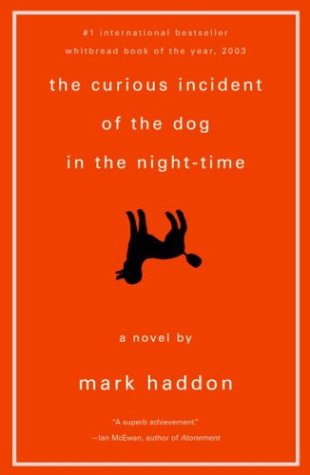
Reminds me of: The Curious Incident of the Dog in the Night-time by Mark Haddon. I’m going for the obvious connection, here. Boy protagonist, a little numbers-obsessed.