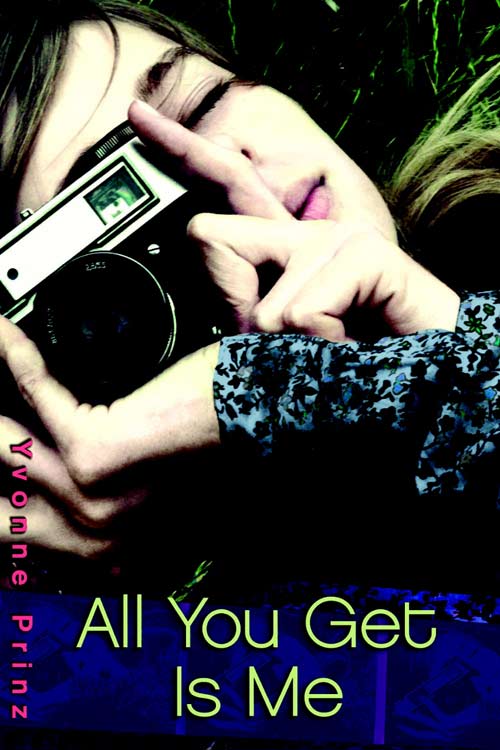
All You Get Is Me by Yvonne Prinz

Set-up: Aurora (“Roar”) lives on an organic farm in a small town with her father. She misses city life and misses her mother, but she finds solace in her photography, snapping photos and developing them in her own garden shed-turned darkroom.

Main character’s goal: Roar’s goal isn’t simple like “run away to find missing aunt” or “defeat the scariest wizard of all time and save the world.” This is more of a coming-of-age story. Roar just wants to take photographs and be happy, at first. Then she witnesses a car accident that sets off a chain of events threatening not only her way of life, but the entire practice of hiring immigrant farmworkers in California. Roar also meets a boy named Forest, and her goals start to change.

My reaction: Something has gotta be said for reading a summer-set romance in November. I may have thawed out a little. Get this: “The first apricot I pluck off the tree smells of roses and sits heavy in my hand” (p 34). Ahhh.

Also, I can’t help but be in awe of an author who moved from a record-obsessed girl in Berkeley, to an organic farmer’s daughter who is watching – and participating – in a setting that involves and revolves around contemporary immigration issues. Talk about high stakes, with the balance of farming practices, the justice system, and the scorching anger of some small-town, small-minded farmers (Note: small-town and small-minded are not always the same thing!).

Of interest to writers: (With very mild spoiler!) The romance angle was handled in a way that surprised me – namely, there wasn’t a lot of conflict. I kept waiting for a fight, or a shameful secret, or some kind of revelation that put everything into question, and…no. Yet there is still tension, even without that conflict. How is it done? I’ll leave that for you to discover, as I’m worried I gave away too much as it is.

As with The Vinyl Princess, this one has a rather lengthy resolution. I was not bothered in the slightest because it was such a pleasant world to be in! Sometimes we’re rushed through resolutions, when maybe we could slow down a little and enjoy them, like fine desserts.

Mmm. Dessert.

Back to the book review!

Bottom line: This book was a great place to hang out in, and Roar’s point of view was engaging. I feel like I made some friends in this book. It’s definitely worth a visit.

Note: the scheduled release is December 21st, so you’ve got something to look forward to – put it on your wish lists!

For Prinz’s site on All You Get Is Me, click here.

You can also visit Yvonne Prinz’s Vinyl Princess website by clicking here.

NiFtY Author: Geraldine Evans

Geraldine Evans is the author of seventeen books, thirteen of which belong to her popular Rafferty & Llewellyn mystery series. Below she shares her books and her thoughts on writing.
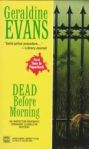
BH: Dead Before Morning is your first book in your Rafferty & Llewellyn series. Could you tell us a little about it?

GE: It was published in hb the US in 1994 by St Martin’s Press. It’s almost ready for publishing as an ebook on kindle, iPad, iPhone, nook, kibo, android, etc. It introduces DI Joseph Aloysius Rafferty, some of his rumbustious family and DS Dafyd Llewellyn, his straightlaced sidekick. In this book, a naked girl is found murdered in a private psychiatric hospital, her face horribly mutilated. Rafferty has to solve the crime as well as get one of his many cousins out of jail. And it is only when he does his good deed for the day with regard to the latter, that the fates help him solve the murder.

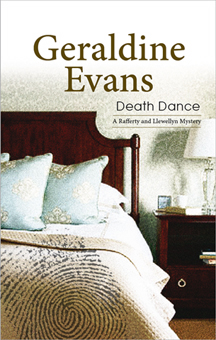
BH: How about your most recent installment in the series, Death Dance?
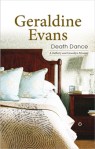
GE: Detective Inspector Joseph Rafferty is getting married; the last thing he needs is another murder that puts his plans in jeopardy. Adrienne Staveley was strangled, and is soon revealed as a woman with several lovers, a stepson who hated her and a husband who tramped the streets rather than spend time in her company. Altogether, there are a number of suspects who could have reason to kill her. Another possible disruption to Rafferty’s plans and his heart occur when some of the fingerprints in the Staveleys’ home are revealed to be those of his fiancee, Abra. She’d never mentioned knowing the dead woman, moreover, her prints had been found in John Staveley’s bedroom. Was Abra cheating on him even before they married? Or was she a possible murderer? His mind in turmoil, he wasn’t sure which option he preferred. But, somehow, he must put his problems aside and find the murderer.

BH: Which character do you feel is most like you? Did the similarities make it easier or more difficult to write the character?

GE: Definitely Joe Rafferty. He is me – the me I would be if I were a man and a cop. The similarities made it a lot easier to write about him. He’s a bit more of a rule-breaker than I am, but our sense of humour is the same. There’s something of my mother in Ma Rafferty, as well as a bit pinched from the various ladies I used to know when we went to Dublin for the summer holidays when I was a kid. But having said that, there’s a little of me in Llewellyn as well, as I’m quite a studious type.

BH: Which book in the series would you encourage new fans to begin with? Should they start with the first book, or can they pick up somewhere in the middle?

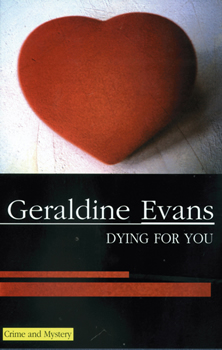
GE: It’s not necessary to start at book one as each book can be read as a standalone. But I suppose all authors prefer readers to start from the beginning and learn about the characters gradually. But if they would like to start with my favourite book, I still think I like Dying For You best as it’s the one where I get my poor old Rafferty deep inthe mire. It’s number six in the series and came out in, I think, 2005 in the US.

BH: Is it hard to write from a male perspective? Do you have any tips for authors who wish to write from the perspective of the opposite sex?

GE: I don’t find it hard, but then I’m not a very girly woman; I  was never very fond of pink, for instance, even when I was a little girl. Tips. Hmm. I would say try not to make them too tough. All men have their feminine side, even the most macho types. I’m not saying have them spend hours prinking and preening, but make them rounded, rather than a stereotype. Think about the men in your own life – they will all have their weaknesses and emotional times; maybe use them to help you build your characters.

BH: Tell us a little about your path to publication.

GE: It was a long one! I started writing in my early twenties, but I never finished anything. It was only when I hit the milestone age of thirty that I really got down to it. I wrote a novel a year for six years, only the last of which was published. That was Land of Dreams, a romance set in the Canadian Arctic (don’t ask!). When my next romance was also rejected, I turned to crime and – apart from one historical novel Reluctant Queen, about Henry VIII’s little sister, which was written under the name Geraldine Hartnett – I have written crime novels ever since. All during the years I was rejected, I had also written articles on subjects like historical biography, writing and New Age and these were published, not just in the UK, but in foreign magazines also.

BH: What is your writing schedule like?

GE:  I’m not an early riser. I generally start writing around 10.00 a m and carry on till around 6.30 or 7.00 p m. I’ll often continue to write later in the evening as well, though nowadays, I tend to give myself the weekends off (if I don’t, my husband moans! Quite rightly, really. He married me because he likes my company, after all).

Of course, as with other writers, I have other calls on my time. I’ve just finished proofreading my latest Rafferty novel, Deadly Reunion, which is out in the UK at the end of February 2011 (out in the US a few months later). Next, I have to do the final proofread of the ebook version of Dead Before Morning, after which I’ll have to get myself in gear to get the next out of print Rafferty novel, Death Line, ready for epubbing. I give talks and interviews. I do all my own marketing and produce flyers, bookmarks, news releases and postcards.. I also interview other writers for my blog, which I started recently. I use facebook, I tweet and belong to various Author websites, where I post and which I regularly update. So altogether, I keep quite busy.

BH: What does your workspace look like?
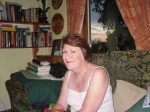
GE: I do most of my work downstairs in the living room by the fire (nearer the kettle for tea!). It’s quite a small room and is not very tidy (no Domestic Goddess, me!). I used to work all the time in my study upstairs, a small boxroom as we call them in the UK, but since Mark, my stepson, gave me one of his spare laptops, it’s been wonderful to have the freedom to work anywhere. I’ll get my husband to take a picture. The living room’s a bit of a shambles at the moment because I was busy yesterday evening wrapping Christmas presents for my family (nearly done. Only four more to get, though we also have four December birthdays and three in January L). Wish my lot went in for a bit of family planning!

BH: What is your favorite book on the craft of writing?

GE: I like the one by Lawrence Block. I can’t find it at the moment and I can’t quite remember the title (From Plot to Print?), but I’ve read that from cover to cover many times. I love his humour. Some writers who try to teach about writing get a bit too precious, but I’d definitely recommend his book.

BH: Any words on advice to aspiring writers for keeping the hope alive?

GE: I know it’s difficult. I’ve been rejected many times. Have a cry, then dry your eyes, grit your teeth and say: ‘I’ll show ‘em’! Try something different and shorter, like an article, something you don’t need to put your heart and soul into Anyone can research facts for a non-fiction piece and put them in order with a bit of flair. Don’t forget to do your research on your intended market, too, regarding what their requirements are (word length, subject matters covered, etc). As I mention on the Advice Page on my website (www.geraldineevans.com), this will, hopefully, give you something, maybe several somethings, to put on your writer’s CV, which should lead editors to at least consider you a professional. Getting non-fiction published is a lot easier than trying to place a novel. But with regard to your novel, please don’t follow the herd with the latest hot ticket. All would-be writers do that. Do your own thing and write what matters to you: that way, you’ll stand out from the crowd.

BH: Thank you, Geraldine, for the interview and for your thoughts on writing and publishing! For more of Geraldine, you can visit her in various places on the internet:

Website: http://www.geraldineevans.com Here you can visit Geraldine’s blog, find links to her books on Amazon, and read all sorts of writerly advice.

Blog: http://wwwgeraldineevanscom.blogspot.com (If this link doesn’t work, try going from Geraldine’s website.)

Twitter: Geraldine_Evans

Facebook Fan Page:
http://www.facebook.com/search.php?q=www.blogger.com&type=users#!/pages/Geraldine-Evans-Crime-Author/134541119922978

Crimespace: http://crimespace.ning.com/profile/GeraldineEvans
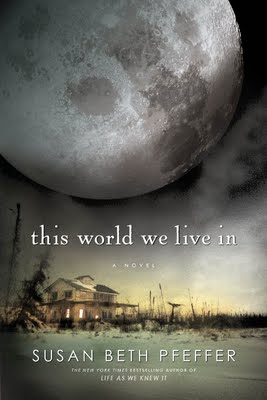
This World We Live In by Susan Beth Pfeffer

Another random library shelf selection! Another success!

Set-up: This story takes place almost one year after an asteroid hits the moon, knocking it closer to earth, which causes all kinds of messes: earthquakes, volcanic eruptions, and a layer of ash that blocks the sun from view. Miranda’s family is just getting by, living in the sunroom of their home, with barely-there sustenance in the form of canned goods doled out by a city official.

Main character’s goals: Miranda’s biggest wish is for everything to go back to the way it was before the asteroid hit the moon. She wants a normal life. If she can’t have that, she at least relishes privacy whenever she can get it.

My reaction: I liked this book, although I wasn’t entirely happy with the ending. That’s more of a personal preference thing rather than a failing in the writing. I wanted something a little more concrete. Without giving anything more away, I will say that the ending fit well with the setting – the future is an uncertain place, especially in the world Miranda lives in.

I was totally into the raids they make on abandoned houses, scavenging for food, medicine, and toilet paper. Maybe because I’m always curious about what’s inside all the houses I pass on the street, maybe because I’m a scavenger by nature. Who knows. But it was fun to vicariously break in along with Miranda.

Also, I’m a little disappointed to find that post-apocalyptic fiction for young adults seems to be the new trend, now that sparkly vampires have fallen out of favor. That said, I really like post-apocalyptic stories, and I’ve liked them ever since reading George Stewart’s Earth Abides. So I guess I’m in luck with the wealth of post-apocalyptic fiction. Except that’s the genre I’m writing in right now, and I’d rather be creating a trend than trying to publish in an already-established one. But that is a rant for another time.

Of interest to writers: The diary format isn’t something I’ve seen in awhile…I haven’t even read an epistolary novel in a long time. Pfeffer does a good job of catching Miranda’s voice and making the diary believable.

I got total creepy vibes from one of the new additions to the family, and I felt Pfeffer could have developed that tension and conflict a little more than she did. This would have taken the story in a completely different direction, which is probably why she didn’t expand on that. If it had been my story….

Bottom line: This World We Live In is the third book in a series. (One of the downsides to random library selections is you sometimes jump into the middle – or end – of things.) I have already requested the first book from the library, because I want more from this author! I especially want to see how she handles the “beginning” of the end of the world.

NiFtY Author: Erica Perl AND Contest!

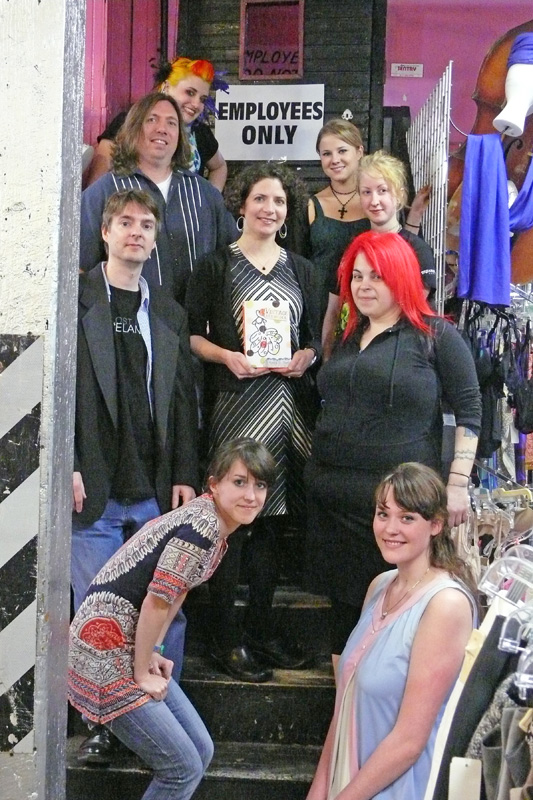
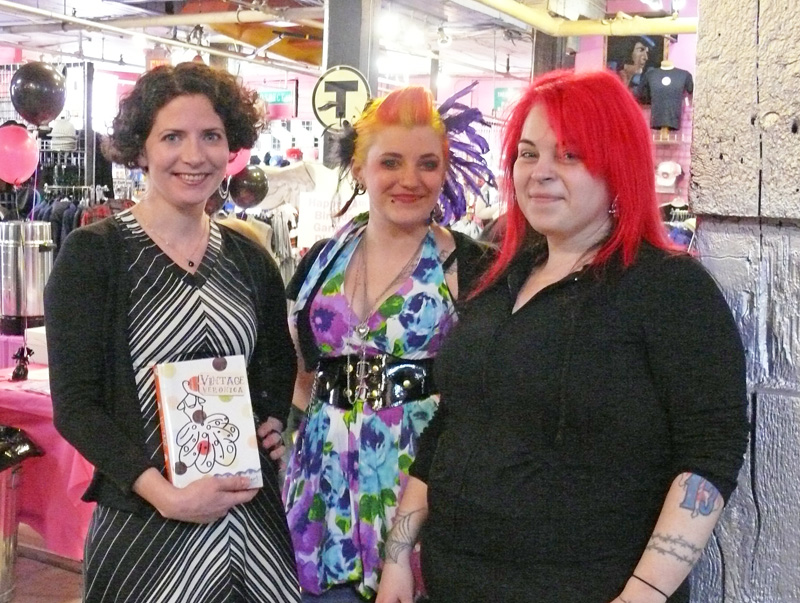
Erica Perl and employees of The Garment District, the store that inspired the Clothing Bonanza

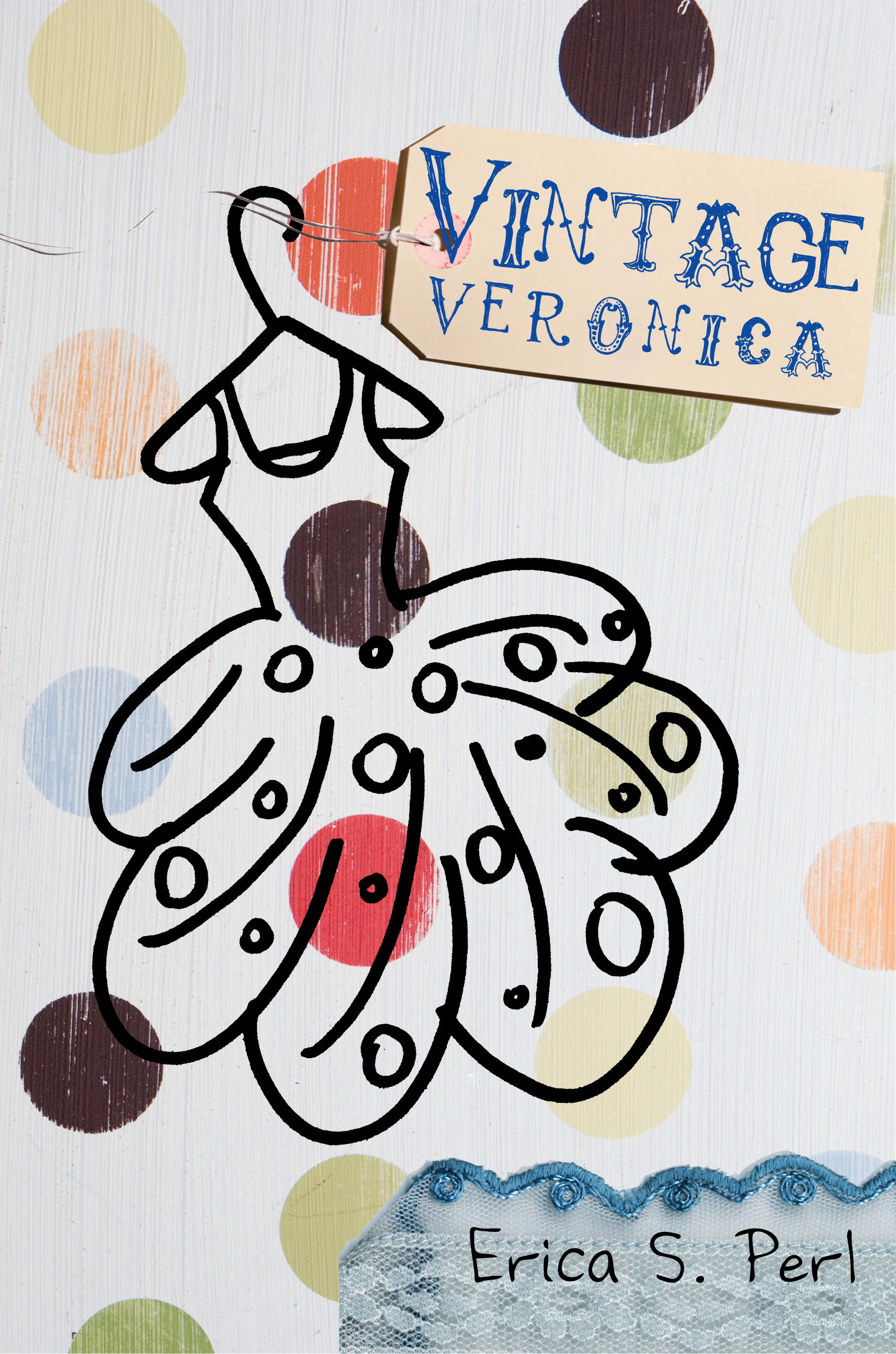
Exciting times, amigas, amigos, y rivales! This is the second week in a row I’ve had the privilege of interviewing an author whose book I randomly plucked from the shelf AND WAS SO GLAD I DID. Erica Perl wrote Vintage Veronica, (you can click here to read my review), and now she’s agreed to answer some questions about her book and her writing. She’s also agreed to give away a signed copy of her book!

BH: What’s your one-paragraph pitch for Vintage Veronica?

EP:  Veronica Walsh is 15, fashion-minded, fat, and friendless so her summer job at a vintage clothing mecca is a dream come true. There Veronica can spend her days separating the one-of-a-kind gem garments from the Dollar-a-Pound duds without having to deal with people. But when two outrageous yet charismatic salesgirls befriend her and urge her to spy on and follow a mysterious and awkward stock boy, Veronica’s summer takes a turn for the weird. Suddenly, what began as a prank turns into something else entirely. Which means Veronica may have to come out of hiding and follow something even riskier for the first time: her heart.

I also think you can get the flavor of the book via my book trailer.  Here’s the link:

http://www.ericaperl.com/vintage-veronica-video/

and here it is on youtube:

http://www.youtube.com/watch?v=udRBvaJvT_M

BH: Veronica has a wonderful voice. Can you share with us some of the joys (and challenges) of writing such an engaging character?

EP:  Thanks!  The joys were many, since Veronica has a lot of attitude, so I had fun letting her give voice to many things that I wouldn’t necessarily say.  For example, she’s snarky to Bill, her co-worker at The Clothing Bonanza, at a point where he’s pretty much her only friend.  I think the challenge was making it clear that she’s pushing people away because she’s scared of being rejected (again) herself.

BH: Where did you get the inspiration for the Clothing Bonanza? Have you been to a place like it? If so, where is this magical store?

EP:  The store that inspired the Clothing Bonanza is The Garment District, which is located just outside of Boston in Cambridge, Massachusetts.  I researched the book there and many aspects of the store and its long history made it into the book (the Yellow Brick road, at one time, existed as did the store cats, including Rags).  Here’s the store’s website, which also contains some fabulous archival photos as well as current store info.  It is very much worth a trip.  And the store was phenomenally supportive of the book, welcoming me while I researched and wrote it, and then hosting a launch party for it when it came out!

Erica Perl (on left) at The Garment District for the Vintage Veronica book launch

BH: So, Veronica does some things that a conservative readership might find offensive. (I’ve been thinking about this a lot since October’s Banned Book Week.) Have you had any negative experiences because of this?

EP:  So far so good.  I occasionally wonder if I should have toned down the language, since I feel like the younger segment of my readership (11-13 year olds) might not get their hands on the book in more conservative areas.  But I really wanted the dialog to feel real so I tried to reflect the way 15-19 year olds actually talk.

I also wanted to use Zoe and Ginger’s coarser commentary as a means of showing that they are older and more confident than Veronica.  She’s a little shocked by them, but also enthralled.  I feel like there’s room for good adult/teen conversations in this, since it is a common situation for younger girls to find themselves in.  So I’m glad to hear that many librarians have been championing Vintage Veronica as a book that battles bullying (and offers a positive depiction of a plus-size girl who doesn’t have to lose weight to find happiness) rather than getting stuck on the fact that the language is a little edgy.

BH: Tell us about your path to publication.

EP:  If it was an ice cream flavor, it would have been rocky road.  I actually sold the book twice – along with my second novel, WHEN LIFE GIVES YOU O.J., which is a middle grade novel that will come out in June, 2011 – because of publishing industry ups and downs.  However, after a long and bumpy journey, the happy ending was landing at Knopf with my wonderful editor, Erin Clarke.

BH: What does your workspace look like?

EP:  Well, it is clean and well-lit and there’s great – if somewhat expensive – coffee.  In addition to Starbucks, I write in a room the size of a postage stamp that has not one but three desks in it.  Yes, I share my office with my two daughters.  We call it The Drawing Room, which sounds very sophisticated but really it’s just because we all like to draw.  And write.

BH: What is your favorite book on the craft of writing?

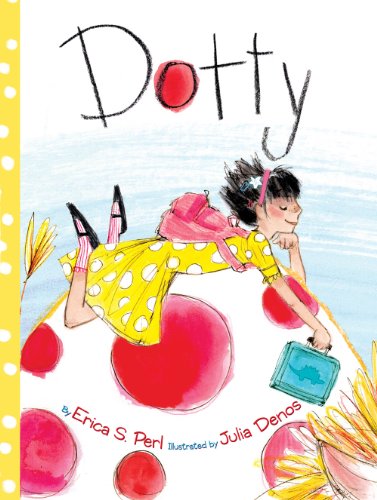
EP:  I love Leonard Marcus’ Ways of Telling, which I think is out of print.  It is interviews with picture book creators about craft (I write picture books in addition to novels.  My most recent is DOTTY, illustrated by Julia Denos.  I am also the author of CHICKEN BUTT!, illustrated by Henry Cole.  There’s now a CHICKEN BUTT! doll and the sequel, CHICKEN BUTT’S BACK!, comes out in April, 2011).  I also like Bird by Bird by Anne Lamott, even though the birds in question are not chickens.

BH: There is a lot to like about putting the word “butt” into the title of a story. What is the best writing advice anyone has given you?

EP:  I think the best writing advice is that of Jane Yolen:  it all boils down to BIC (butt in chair).  In other words, put in the time writing and then figure out later whether you have anything to work with.

BH: Any words on advice to aspiring writers for keeping the hope alive?

EP:  It’s a corollary to write what you know: write what you love.  In other words, don’t write a book because you think it is the kind of book you “should” write.  Write about what you are passionate about, and work on it until it is as good as it can possibly be.  Vintage Veronica took eight years start to finish.  I hope that is inspirational and not discouraging!

BH: Erica, thank you for taking the time to visit and answer some questions for us. It was delightful!

You can visit Erica’s website by clicking here, or click here to buy her book on Amazon.

And didn’t I say something about a contest? It’s my first ever, and a big thank you to Erica for making it possible. So, the rules are simple. The giveaway is limited to the continental United States (sorry, overseas people…unless you have an address here you’d like the book shipped to!). To enter, leave a comment and do two things:

1) respond to something Erica says/writes in the interview, and

2) share who your favorite strong heroine is in YA literature (if you pick Bella Swan you better be prepared to explain your reasoning).

If you tweet about the contest & share this link, you can get an extra entry (limit one extra). Just comment with the link to your tweet so I can verify that everything’s on the up & up.

The winner will be picked out of a hat at random. Well, his or her name will be picked out of a hat…not the winner in person, which would be too strange.

Deadline: Sunday night, 11/14/2010, 11:59 p.m. PST. Winner announced sometime on Monday.

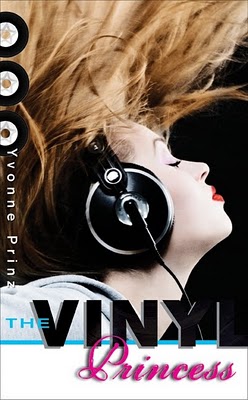
The Vinyl Princess by Yvonne Prinz

There are a few excellent books I’ve read recently, but I have to write about this one immediately. It was just that good.

Set-Up: Allie, the “Vinyl Princess” as she dubs herself for her blog, works at Bob & Bob Records, a place that her mom says smells “like an octogenarian’s attic” (p. 10), but to Allie is heaven on earth. She is obsessed with LPs. LP: an abbreviation for those ancient things called (long-playing) records that collect dust in your mother’s attic…or, to Allie, the truly righteous and best way of listening to music.

Main character’s goals: to lead a revolution against “corporate rock and downloading and digitizing and Clear Channel” (p. 12). She also wants some romance in her life.  She sets about accomplishing the first goal by starting up a blog and a zine, and she sets about finding romance by fantasizing about a Bob & Bob shopper she calls M (for “mystery guy”).

My reaction: Throughout the book I had a weird feeling. I kept struggling to recognize a name, any name, of a band or musician that I recognized. I often couldn’t, which made me feel sixteen shades of uncool. Then I realized: I wanted to impress Allie. That’s how cool she is – she made me want to impress a fictional character. Name-dropping usually doesn’t put a person on my good side, but it worked for Allie. When she listened to Dark Side of the Moon I might have cheered out loud because for once I knew what she was talking about.

Of interest to writers: the climactic action happens almost 100 pages before the end of the book. This premature climax (I’m sorry, I couldn’t help it) works, and I’m impressed. I’m impressed whenever a book goes slightly against the grain. It works for The Vinyl Princess, as there are still some unresolved issues (namely, the revolution and the romance) after the Big Action. Nobody could put it down at that point.

The goals are sort of mixed in with character introduction, background, all that stuff that everyone says shouldn’t happen in the beginning of a novel…well, Prinz makes it work because Allie’s voice is full of awesome attitude (not sarcastic, just cool).

Bottom Line: As soon as I can find a sucker to take care of my kid, I’m heading to the local INDEPENDENT record store to buy one of the albums Allie loves. I’m not sure which one yet. I can be sure of this: I’m not buying it as a record, as I have no turntable. But I’m not downloading it.

Also, I’m so so sorry, but I can’t resist: This book rocks. He he.

For more information on the book and the author, visit Prinz’s website by clicking here.