NiFtY Author: Cindy Sample
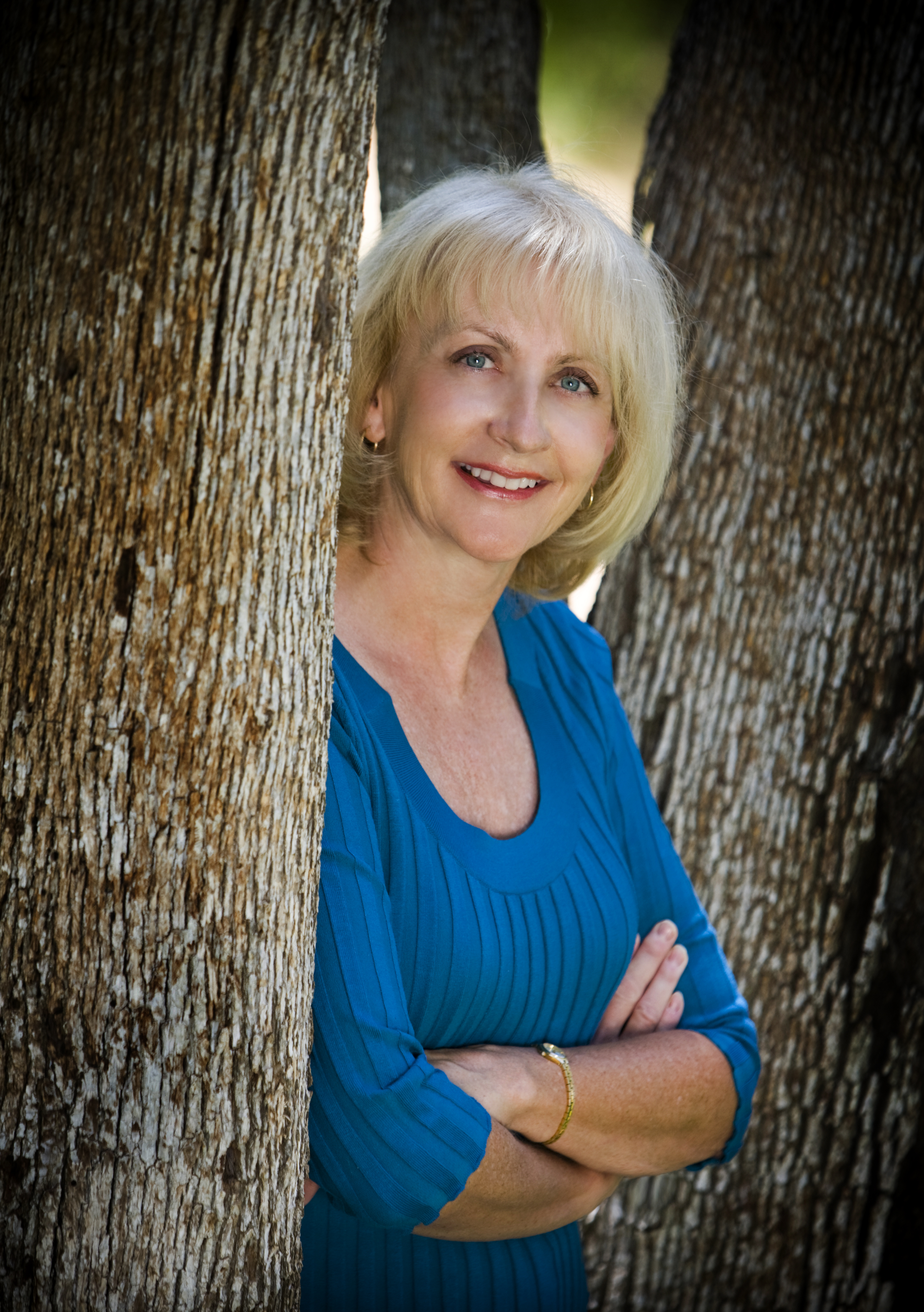
Cindy Sample doesn’t quite fit the mold for my typical, Not-Famous-Yet author interview. For one, she’s jumped ahead of the rest of us and actually published her book, and two, she’s a romance/mystery writer. She’s also funny – much funnier than I am – so without further blather, here’s the interview!

BH: So, published! How does it feel?

CS:  It feels wonderful.  Sort of like giving birth to my children.  It just took longer.

BH: Tell us a little about your book, Dying for a Date.

CS:  Dying for a Date is a humorous romantic mystery about a single mom who gets talked into joining a matchmaking service called “The Love Club,” the safe alternative to on-line dating. I discuss the trials of dating as a single mom, and throw in a few dead bodies just to keep it entertaining.

BH: Laurel McKay, the heroine in Dying for a Date, sounds funny, charming, and feisty. Is she based on anyone you know in real life?

CS:  There is a slight possibility that my protagonist is based on me twenty years ago.  I was 39 and a newly single working Mom as well.

BH: What was the greatest challenge in finishing Dying for a Date and getting it ready for publication?

CS:   The hardest part was letting it go and knowing I could never revise one more word again.

BH: Can you tell us a little about your path to publication? Did you get an agent first, or did you go directly to a publisher?

CS:  I did get an agent and we had great responses from NY publishers but February 2009 was not a great time to sell a mystery series from a debut author.  I ended up receiving offers from two smaller publishers.  I liked the feedback that I received from the other authors published with L&L Dreamspell and chose to go with them. It’s been a great experience working with my publisher. They did a great job of editing and I love the cover they designed.

BH: Where do you get most of your ideas and inspiration?

CS:  I seem to have an incredibly fertile imagination. Right now I have more plot concepts than I would ever have time to complete in this lifetime. An example would be one time when I was in a spa and they asked if I was allergic to shellfish.  Minutes later I had concocted a plot where I killed someone allergic to shellfish with a seaweed wrap.  Yes, I know I’m kind of strange but they say mystery authors are very well balanced because we just off the people who annoy us on paper.


BH: Are you currently working on another project, or are you focusing more on publicity for Dying for a Date, or something else entirely?

CS:  Right now I’m marketing and writing.  I’ve been planning events all over the 4 county area.  I’ll be visiting several local libraries in the area and giving presentations along with several other authors from Capitol Crimes, the Sacramento chapter of Sisters in Crime.  We’re a group of mystery writers (published and pre-published) as well as mystery fans. I’m also attempting to squeeze in time to complete the sequel, Dying for a Dance, a murder mystery that takes place in the glamorous world of competition ballroom dancing.

BH: Do you have a set writing schedule, or are you more of a “when the mood hits” kind of girl?

CS:  I am a very social person so the most difficult part of writing for me is to sit my butt down in my chair.  What I’ve discovered works best is to block out an entire week and just write.  On those weeks I can start at 8 AM and work until midnight almost every day.  One of my friends refers to my rather unusual technique as binge writing.

BH: Binge writing – I love it. What does your writing workspace look like?

CS:  I have a beautiful office overlooking Folsom Lake.  The walls are crammed with books and photos.  But where I write is usually in the kitchen just because it’s cozy.  Plus it’s closer to my coffeepot.

BH: You’re the first mystery writer I’ve interviewed. Can you share anything that’s unique to the mystery-writing process?

CS:  A friend of mine who has authored over 40 non-fiction books and is working on her first novel says mysteries are by far the most complex books to write. You have to ensure that your clues are subtle yet give the reader the ability to guess who the villain is, along with red herrings to lead them astray.

BH: Who is your favorite author?

CS:   Too many to choose from.  Of the greats I think Leon Uris and James Clavell.  In the mystery/thriller spectrum, I enjoy Michael Connolly, Lisa Scottoline, and Robert Crais. In Women’s fiction Jennifer Crusie, Claire Cook and Jennifer Weiner are my favorites.

BH: How about your favorite book on the writing craft?

CS:   I have two full shelves of books on the craft of writing, particularly mysteries.  I think my favorite is Writing the Breakout Novel by Donald Maass.

BH: I’m already drawing comparisons between your novel and Janet Evanovich’s writing. Have you read her books? What do you think of them?

CS:  I love her Stephanie Plum series, at least most of the books. When I was pitching my book I used the pitch that my protagonist, Laurel McKay, was like Stephanie Plum as a soccer mom.

BH: One of your strengths as a writer is your sense of humor. Do you have any tips for other writers on how to develop humor in their writing?

CS:  For some reason whatever can go wrong normally does go wrong in my life and I learned years ago that the most annoying mishaps can usually be turned into a wonderfully funny anecdote. It’s rare for anything to bother me because I know that it will become an entertaining story down the road. Many writers keep daily journals. If you’re interested in incorporating humor in your work, jot down those things that strike you as funny during the course of a normal day.  You’ll be surprised how much material you end up with.

BH: What is the best advice anyone has given you with regards to your writing?

CS:   The three P’s which are persistence, persistence, persistence. My first version of Dying for a Date was at best, mediocre.  But after taking classes and attending mystery conferences, reading every recommended book on fiction, reading and analyzing the work of my favorite authors, and being persistent with my own numerous revisions, I’m thrilled with the published version.  It is an enormous amount of work to publish a novel but the joy it brings is unparalleled. Follow your passion, be patient, and definitely be persistent.

It sounds like there are two alternate P’s there: passion and patience.

Thank you so much, Cindy, for joining me for an interview. Free t-shirts to the studio audience! (Um, there is no studio audience. And no t-shirts.)

For more information on Cindy and her writing, as well as Where To Buy Her Book (so cool!), you can visit her website.
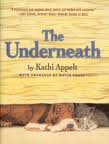
The Underneath by Kathi Appelt

Although I read this a couple of months ago, it has stayed with me. The Underneath is so beautifully written, how can it not stay with you? On the surface it is the story of a mother cat, her two kittens, and an old (abused) hound dog who is chained up to a porch in a Louisiana bayou. But it’s also about a mythical snake creature, a family of Native Americans living over a century ago, and the cruel man who is the undeserving owner of the hound.

The “underneath” is the space below the porch, the safe place the mother cat finds to raise her two kittens. Only one curious, adventurous kitten sets into a motion a heart-wrenching story of (a whole bunch of sad stuff) (but ultimately) (redeeming) love.

It’s another one of those books that makes me “feel.” And you know how I feel about those. Highest compliments and praise to the author, but then I need to read some blood-sucking vampire action (with a good dose of either humor or melodrama – both is best) to reaffirm my hope in the world. Sad, isn’t it?

Actually, no, that’s not really true, other than the highest compliments and praise to the author.

**very mild spoiler**

Because this story does reaffirm one’s hope in the world. Maybe not in the middle of the book. The middle has tears, and they are NOT tears of happiness. But hope and love come through in the end, which is more than I can say for Feed. Stupid [ed. Artistic, mind-blowing] book that it is.

But back to my book review. I highly recommend The Underneath. Beautiful, poetic prose and interwoven stories crossing time but all arriving at a single, redemptive space, make the story worth a few tears.

To learn more about Kathi Appelt, visit her website by clicking here.

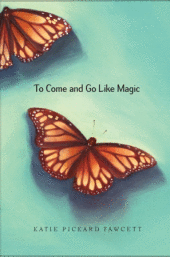
To Come and Go Like Magic by Katie Pickard Fawcett

So far so good on my contemporary-fantasy-fast. In the past two and a half weeks I’ve read To Come and Go Like Magic, Ida B, and I finally finished The Botany of Desire. [Like whoa on The Botany of Desire.]

Today I review, for your reading pleasure, To Come and Go Like Magic. If you’ve read The House on Mango Street by Sandra Cisneros, you’ll know what I mean when I say this: sparkling, poignant vignettes. [Um, I actually haven’t read Cisneros’s book in its entirety, just a couple of vignettes while doing classroom observations. But I plan to read it. Maybe soon.] To Come and Go Like Magic is an entire novel written in sweet, two-to-four page chapters. But they’re not really chapters because they do everything a novelist is not supposed to do when trying to create suspense and keep the reader turning the page. Each vignette has a beginning, middle, and (kiss of death for chapters) an end. There’s a sense of completion, which made each vignette feel like its own poem, its own work of art.

Beautiful writing and the main character’s voice add to the magic in this book. The setting is also unique: Chileda is twelve years old, growing up in the 1970s in a small town in the Appalachian mountains. Her thirst is to see the world, and this thirst conflicts with her micro-society’s expectation that you just don’t leave home.

A suspenseful novel this is not. Piercing, pretty, quiet – yes.

On a total sidenote, is there something about middle grade fiction that requires at least one scene of total and absolute unfair action towards the main character? I’m thinking of the scene here where Chili’s uncle does something so unfair I wanted to reach into the pages and strangle him. A similar thing happens in Ida B, and if you haven’t met the Dursleys in the Harry Potter books, you’re missing out on some prime injustice writing.

My guess is that one of the extremely irritating things about being a middle-grader (ages 9-12) is the discovery that the world isn’t fair, in so many startling ways. And perhaps these novels are working to address that universal, middle-grader issue.

But I need to conclude my actual book review, so: To Come and Go Like Magic is a quiet gem, and a huge turn from my vampire biting, werewolf howling, demon slaying contemporary fantasies. In one word: refreshing.

To read more about To Come and Go Like Magic, check out the Q & A session posted on Katie Pickard Fawcett’s blog.

The Object of My Fantasies

…or…On the Effects of Sleep Deprivation in Mothers of Toddlers.

I kept getting kicked in the head last night.

She’s really quite strong, my little Z.

And so, instead of a real blog post, I give you a quote from poet Maureen Owen:

…Some mornings it is cleansing
to lean from bed     lift the window     and scream     I HATE CHILDREN
into the lovely green yard.

Not My Daughter, You Bitch! (Swearing in YA Lit)

So I’m jumping on this subject bandwagon pretty late. I spoke with literary agent Mary Kole about this issue at a conference in April, and apparently it was a popular topic, because she wrote a blog about it. Because so many people feel strongly about this issue, I figure I may as well use my platform and voice my opinion. This is my website, after all. What would it be without a spewing forth of Beth’s Opinions?

When I think of “bad” words in young adult literature, so many things come to mind. There’s the famous line from the last Harry Potter book (see title above) that shocked Potter fans. In this case I think the word was so shocking because the series started out as a middle-grade series, and then matured along with the characters. Who would even imagine reading the word “bitch” in Harry Potter and the Sorcerer’s Stone? Another reason for the shock factor: Rowling’s books had so little profanity in even the later books, and this says something for her skill as a writer. Voldemort didn’t need to drop an F-bomb to cement his villainy because he was so evidently evil in reputation and action. Ron used the word “bloody” on occasion, but this barely registered with American readers. Uncle Vernon said something about “effing owls” once. So the “bitch” in the final book was so unexpected. It didn’t really fit. I can see why Mrs. Weasley would be driven to use it, but if I’d written the book, I’d be super-rich and would have invested some time in finding an alternative.

I don’t have a single problem with profanity in young adult literature. I wouldn’t necessarily let f-bombs explode all over the place in my own manuscript, but they didn’t stop me from reading Lisa McMann’s Wake series. Cursing sounds pretty natural amongst the young adult set. Not all of them, mind you. (Although I admit surprise to some of the things I saw on former students’ facebook posts. Not all are as innocent as they seem. Frightening for me, as a mother.)

My own manuscript had exactly four f-words for awhile, and they didn’t bother me spaced out and spoken by college-aged characters. When I did some snipping (okay, I lopped off the first 50 pages) and had to move some conversations around, all of a sudden three of those f-words appeared in the first chapter.

Not the sort of set-up I had in mind. I don’t expect every book to have universal appeal, but I knew that three f-words in the first chapter would turn a lot of people (parents especially, who often buy the books) off. With some ideas from a critique partner I was able to change two of them. The other one is just too natural to the character speaking, I am convinced no other word will do.

And that’s when a swear word belongs in your manuscript. When it’s true to the character and no other word will do.