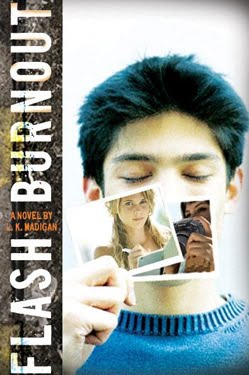
Flash Burnout by L. K. Madigan

Now, I’m not a teenaged boy, and I never will be. So my assessment of what a “valid” or “true-to-life” male teenager’s voice sounds like might not be one hundred percent accurate. But Blake’s voice in Flash Burnout is convincing enough for me.

The whole sarcastic/funny teenager can be overdone in YA literature. And writing from an adolescent male’s voice is undoubtedly tricky (click here to read the simultaneously scathing and encouraging gauntlet author Hannah Moskowitz throws down on writing books geared toward YA males). Blake’s voice is humorous and poignant, and not in the way that sounds like the author is breathing “look how funny I am” from the white space between the words.

I enjoyed this book. The humor worked, the male point-of-view worked, and without Blake appealing to me-as-a-woman because he was so unbelievably romantic and tragic and sparkly, but instead because he sounds like a real guy experiencing real problems. There wasn’t anything sparkly about the romance here…I don’t even think I want to call it romance, at least not in the traditional way everyone might think of it in literature.

Another interesting point in Flash Burnout: the parents are both present, and they are awesome. A few months ago Julie Just wrote an essay for the New York Times Sunday Book Review, discussing what’s going on with all the absentee/horrible parents in young adult literature. Madigan gives us something refreshing in Flash Burnout: I fell in love with both of Blake’s quirky, fun, and ultimately there and loving mom and dad. In fact, Blake’s family serves as a foil for the families of the two love interests, making the family excellence a double-whammy.

But really, the humor is what did it for me. I love funny books. This was effective, and still had a meaningful story. I’m very sorry to say it, but Louise Rennison’s Georgia Nicolson books are a bit lacking in the poignant, life-changing drama department (click here to read my review of those lovely tomes). Georgia is hilariously funny, but a well-curved character arc is not something she can boast about.

Blake, in Flash Burnout, isn’t a heart-throb. He’s a normal guy, and a funny one at that. His story is worth your time.

To read more about L. K. Madigan and her fiction, you can visit her website by clicking here.

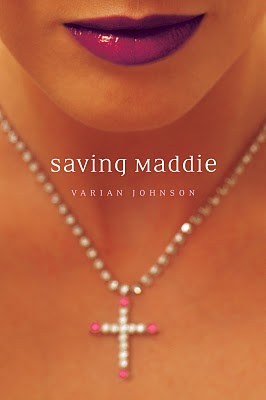
Saving Maddie by Varian Johnson

Every now and then it’s healthy to go to the library and grab a random book off the shelf.

Okay, my search wasn’t entirely random. I desperately wanted something with no supernatural elements (yes, you read that right). Quick explanation: I’m tired of paranormal books, mostly because I’ve been revising my own for far too long.

So after a brief jacket check to make sure Saving Maddie had no vampires or were-amoebas in it, I brought it home and, one afternoon, I read it. The story is told in first-person point of view by Joshua Wynn, the seventeen-year-old son of a preacher. His childhood best friend, Maddie, returns to town and she’s no longer the young, innocent(ish) girl he’d known. Not only does Joshua battle with conflicting directives from his parents (help Maddie/stay away from that girl), but he’s also battling conflicting desires (be a good boy/have fun).

Joshua’s conflict was well-written. The pacing and tension alone kept me going, as well as the mystery as to why Maddie turned out to be such a “bad girl.” The prose itself, though, was sensual and sensuous. This paragraph illustrates this nicely:

She closed her eyes and I closed mine. I took in her scent again – I didn’t think I’d ever eat another scoop of vanilla ice cream without dreaming about her.

I’m a huge fan of sensory description, and Johnson does this all over the place (honestly, I just picked a page at random and found that paragraph).

Another interesting point: Johnson took a young adult male protagonist and added tons of girl appeal (a phrase I read in Mary Kole’s blog entry Boy Protagonists in YA). The “girl appeal” reminded me a lot of Beautiful Creatures (which I reviewed awhile ago), and strangely enough, The Virgin Suicides (which I read a long time ago). Which brings me to a total sideways thought: does “girl appeal” mean that the male protagonist has to be totally smitten with a girl character, in order to appeal to female readers? Based on Kole’s post, and my own reading, this might be the case.

But now it’s time to wrap up my review.

Saving Maddie was a refreshing trip back into a time when the end of the world seemed to balance on adolescent moral dilemmas, and everything felt so real, so crucial, and so brand-new.

You can visit Varian Johnson’s website here.

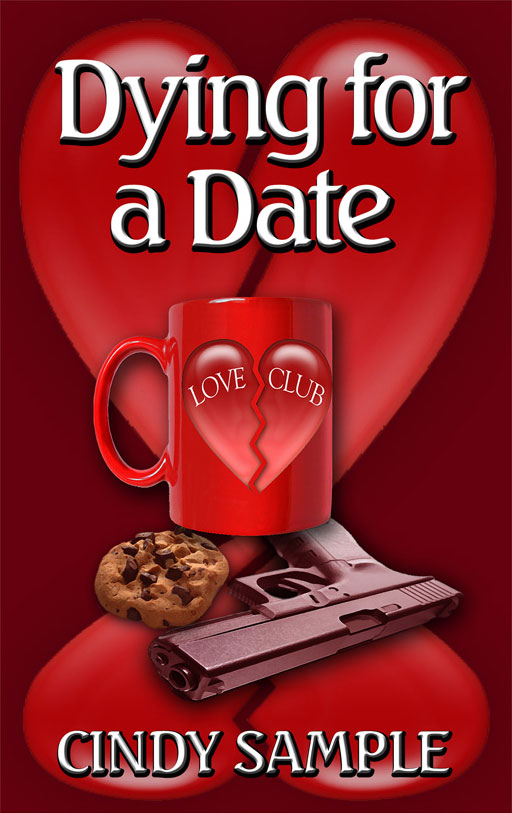
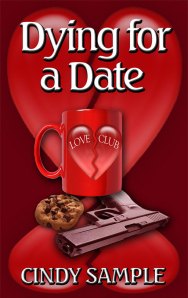
Dying for a Date by Cindy Sample

In this post, literary agent Nathan Bransford urges (begs, actually) authors not to ask whether or not we like a book, but to answer this question: did the author accomplish what she or he set out to do with her or his book?

So. Did Cindy Sample succeed in creating a gripping, humorous, and romantic mystery? The short answer: yes. I laughed, I didn’t want to put the book down, and I thoroughly enjoyed myself while reading it (even without an air conditioner. More on that later).

The long answer: there were two small problems. And I’m being extremely nitpicky here. My first issue was with the details, and this is a personal preference. In a few places, Sample provided details that I didn’t care to know. Remember I’m nitpicking here, so my example is this: the color of the daughter’s backpack. It really made me pause and ask myself: Is this relevant? Answer: Not really. But this happened maybe five or six times in the whole book, and some readers feast on those kinds of details, anyway. Nitpicking. Personal preference.

The second issue was I found it hard to believe the hottie detective (who I really liked, by the way), would put his career in jeopardy to pursue a romance with a murder suspect (i.e. the main character). However, Joe Morelli constantly does the same thing with Stephanie Plum, and Janet Evanovich’s readers don’t complain. And really, so much else is moving the plot along that I didn’t have time to worry about this until after I read the book.

More on what I liked: the main character. Laurel McKay is funny and real. I could identify with her and loved her voice, her sense of humor, and the hilarious antics she gets herself into. Sample is dead on when she describes Laurel as Stephanie Plum as a soccer mom. There’s a great scene involving a clown suit and that’s all I’ll say here.

The best thing about the book: I literally couldn’t stop reading. Even when our car’s air conditioner disintegrated in eastern Nevada at 3 p.m. on our way to Colorado and I was so bitchy and uncomfortable I would have tossed any entertainment aside in favor of napping – I read on. Great, gripping reads stand the test of a disintegrated AC.

I’m looking forward to the next book, Dying for a Dance, because I want to see more of the minor characters too: the poker-playing daughter (without her green backpack), the best friend, and some others. Oh, and especially Detective Hottie. I mean, Detective Hunter.

So, did Sample accomplish what she set out to do with Dying for a Date? Most definitely. And hey, guess what: I liked it, too.

Feel free to check out my interview with Cindy, if you haven’t already.

Update: Cindy alerted me to a total review faux-pas in how I hinted something about the ending. If you read an earlier version of this review, I apologize! And apologies to Cindy as well.

NiFtY Author: Cindy Sample

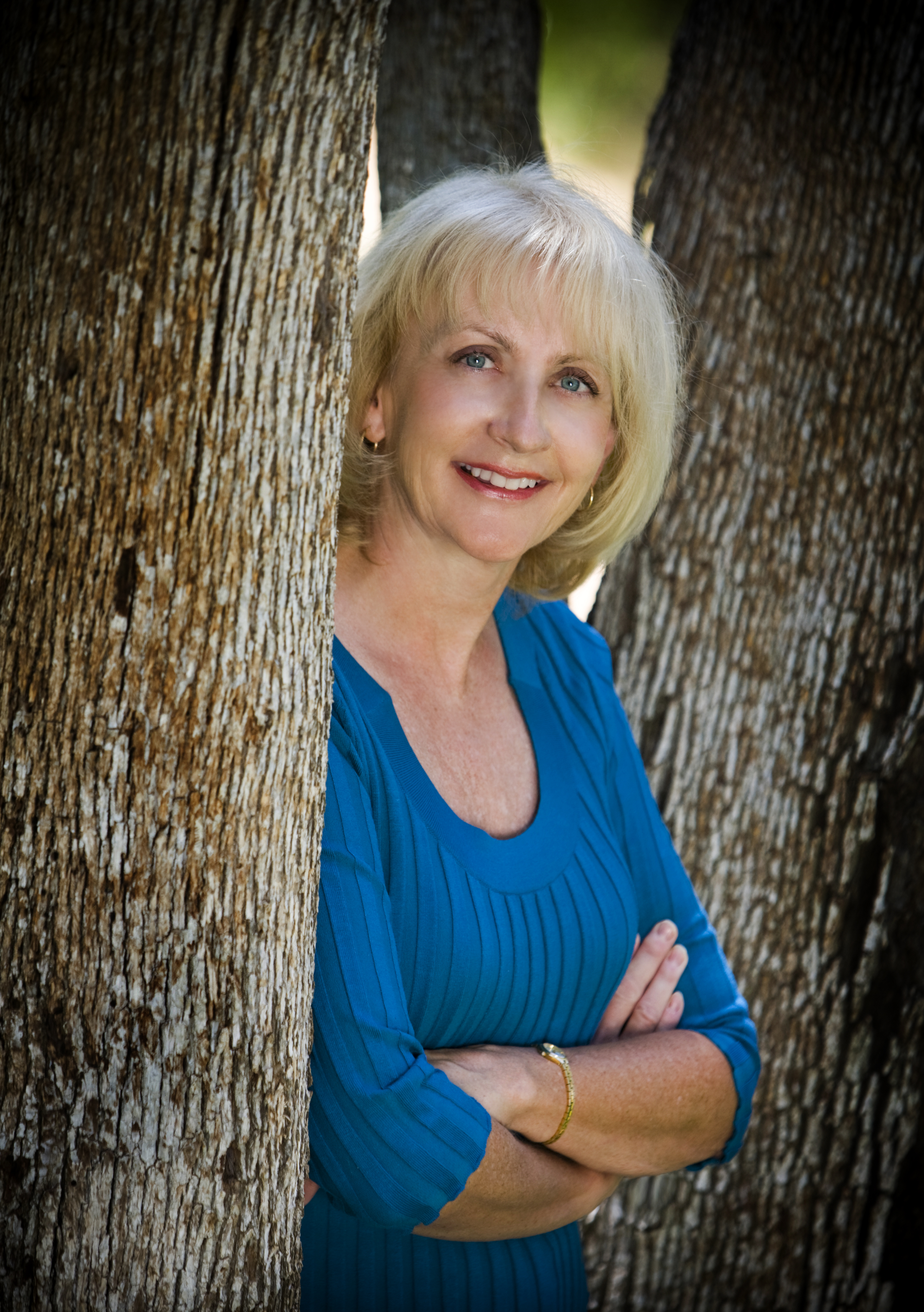
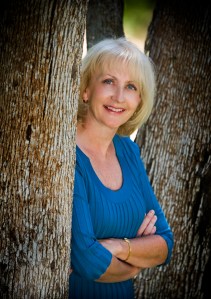
Cindy Sample doesn’t quite fit the mold for my typical, Not-Famous-Yet author interview. For one, she’s jumped ahead of the rest of us and actually published her book, and two, she’s a romance/mystery writer. She’s also funny – much funnier than I am – so without further blather, here’s the interview!

BH: So, published! How does it feel?

CS:  It feels wonderful.  Sort of like giving birth to my children.  It just took longer.

BH: Tell us a little about your book, Dying for a Date.

CS:  Dying for a Date is a humorous romantic mystery about a single mom who gets talked into joining a matchmaking service called “The Love Club,” the safe alternative to on-line dating. I discuss the trials of dating as a single mom, and throw in a few dead bodies just to keep it entertaining.

BH: Laurel McKay, the heroine in Dying for a Date, sounds funny, charming, and feisty. Is she based on anyone you know in real life?

CS:  There is a slight possibility that my protagonist is based on me twenty years ago.  I was 39 and a newly single working Mom as well.

BH: What was the greatest challenge in finishing Dying for a Date and getting it ready for publication?

CS:   The hardest part was letting it go and knowing I could never revise one more word again.

BH: Can you tell us a little about your path to publication? Did you get an agent first, or did you go directly to a publisher?

CS:  I did get an agent and we had great responses from NY publishers but February 2009 was not a great time to sell a mystery series from a debut author.  I ended up receiving offers from two smaller publishers.  I liked the feedback that I received from the other authors published with L&L Dreamspell and chose to go with them. It’s been a great experience working with my publisher. They did a great job of editing and I love the cover they designed.

BH: Where do you get most of your ideas and inspiration?

CS:  I seem to have an incredibly fertile imagination. Right now I have more plot concepts than I would ever have time to complete in this lifetime. An example would be one time when I was in a spa and they asked if I was allergic to shellfish.  Minutes later I had concocted a plot where I killed someone allergic to shellfish with a seaweed wrap.  Yes, I know I’m kind of strange but they say mystery authors are very well balanced because we just off the people who annoy us on paper.

BH: Are you currently working on another project, or are you focusing more on publicity for Dying for a Date, or something else entirely?

CS:  Right now I’m marketing and writing.  I’ve been planning events all over the 4 county area.  I’ll be visiting several local libraries in the area and giving presentations along with several other authors from Capitol Crimes, the Sacramento chapter of Sisters in Crime.  We’re a group of mystery writers (published and pre-published) as well as mystery fans. I’m also attempting to squeeze in time to complete the sequel, Dying for a Dance, a murder mystery that takes place in the glamorous world of competition ballroom dancing.

BH: Do you have a set writing schedule, or are you more of a “when the mood hits” kind of girl?

CS:  I am a very social person so the most difficult part of writing for me is to sit my butt down in my chair.  What I’ve discovered works best is to block out an entire week and just write.  On those weeks I can start at 8 AM and work until midnight almost every day.  One of my friends refers to my rather unusual technique as binge writing.

BH: Binge writing – I love it. What does your writing workspace look like?

CS:  I have a beautiful office overlooking Folsom Lake.  The walls are crammed with books and photos.  But where I write is usually in the kitchen just because it’s cozy.  Plus it’s closer to my coffeepot.

BH: You’re the first mystery writer I’ve interviewed. Can you share anything that’s unique to the mystery-writing process?

CS:  A friend of mine who has authored over 40 non-fiction books and is working on her first novel says mysteries are by far the most complex books to write. You have to ensure that your clues are subtle yet give the reader the ability to guess who the villain is, along with red herrings to lead them astray.

BH: Who is your favorite author?

CS:   Too many to choose from.  Of the greats I think Leon Uris and James Clavell.  In the mystery/thriller spectrum, I enjoy Michael Connolly, Lisa Scottoline, and Robert Crais. In Women’s fiction Jennifer Crusie, Claire Cook and Jennifer Weiner are my favorites.

BH: How about your favorite book on the writing craft?

CS:   I have two full shelves of books on the craft of writing, particularly mysteries.  I think my favorite is Writing the Breakout Novel by Donald Maass.

BH: I’m already drawing comparisons between your novel and Janet Evanovich’s writing. Have you read her books? What do you think of them?

CS:  I love her Stephanie Plum series, at least most of the books. When I was pitching my book I used the pitch that my protagonist, Laurel McKay, was like Stephanie Plum as a soccer mom.

BH: One of your strengths as a writer is your sense of humor. Do you have any tips for other writers on how to develop humor in their writing?

CS:  For some reason whatever can go wrong normally does go wrong in my life and I learned years ago that the most annoying mishaps can usually be turned into a wonderfully funny anecdote. It’s rare for anything to bother me because I know that it will become an entertaining story down the road. Many writers keep daily journals. If you’re interested in incorporating humor in your work, jot down those things that strike you as funny during the course of a normal day.  You’ll be surprised how much material you end up with.

BH: What is the best advice anyone has given you with regards to your writing?

CS:   The three P’s which are persistence, persistence, persistence. My first version of Dying for a Date was at best, mediocre.  But after taking classes and attending mystery conferences, reading every recommended book on fiction, reading and analyzing the work of my favorite authors, and being persistent with my own numerous revisions, I’m thrilled with the published version.  It is an enormous amount of work to publish a novel but the joy it brings is unparalleled. Follow your passion, be patient, and definitely be persistent.

It sounds like there are two alternate P’s there: passion and patience.

Thank you so much, Cindy, for joining me for an interview. Free t-shirts to the studio audience! (Um, there is no studio audience. And no t-shirts.)

For more information on Cindy and her writing, as well as Where To Buy Her Book (so cool!), you can visit her website.
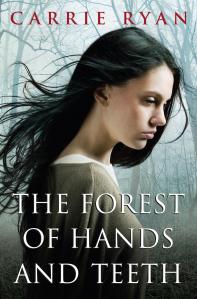
The Forest of Hands and Teeth by Carrie Ryan

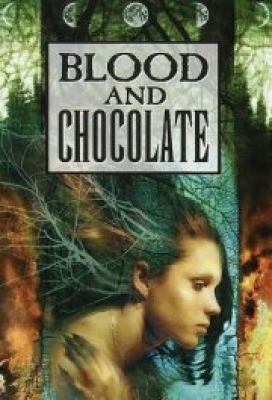
It sounded like a werewolf story to me. And something about the cover art reminded me of Annette Curtis Klause’s Blood and Chocolate:

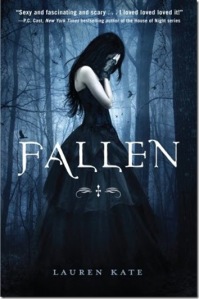
Hmm, now that I look at it, why don’t we throw Fallen (Lauren Kate) up here?

Lots of unhappy girls’ profiles.

A likeness of my main character will be grinning like a cheesy idiot from the cover of my book if/when it’s published. Because I hear authors totally get their say in cover art.

Yes, yes, this is actually a book review. You know I get side-tracked. By my own brain.

As I was saying, I thought this would be (another) werewolf novel, but no! It’s a post-apocalyptic zombie story! Way cool. A risk with zombies is they end up totally ridiculous (brain flashes to Shaun of the Dead). However, I was pleasantly surprised. Mary, the main character, begins her story with the statement, “My mother used to tell me about the ocean.” Mary has lived her entire life in a fenced village surrounded by wilderness inhabited by zombies, or, as the Sisters (the ruling religious sect of her village) call them, “the Unconsecrated.”

Right away I started making connections to M. Night Shyamalin’s film The Village. While there are a striking number of similarities, I was able to forget them as the novel progressed, because as Mary’s story developed it moved further and further away from The Village.

Besides, Mary’s character is so fascinating I sometimes paid more attention to her than to the plot. I mean, here is a character who has some pretty distinguishing personality flaws, yet I can’t help but love her anyway. She is selfish, obsessive, and utterly winning. The sequel to The Forest of Hands and Teeth doesn’t feature Mary as a protagonist, but I hope she plays a major role.

Not only was the heroine awesome, the writing was lovely! Who knew a zombie story could be so beautiful? The language in this book is so lyrical, the voice so dark, so perfect for the story. I am a sucker for lyrical prose (Roy’s The God of Small Things and Ondaatje’s The English Patient are forever-favorites of mine because of their language, even though the stories are dead depressing and rival Nicholas Sparks’s sob stories for potential in creating tear-filled oceans. But I digress). This novel was not a gory romance teeming with the walking dead. Okay, so it was. But it was so much more than that because of the poetic flow of the language.

Like Maggie Stiefvater’s Shiver, The Forest of Hands and Teeth proves that a romance-driven horror story can go beyond the romance and horror if it has memorable characters and simply beautiful prose.

That said, I’m taking a break from YA literature with fantastical elements. I am so saturated in this genre that I’ve started to get pruny, and it’s time for some fresh bathwater. I read a couple of middle-grade books last week, so maybe I’ll review one of those next.