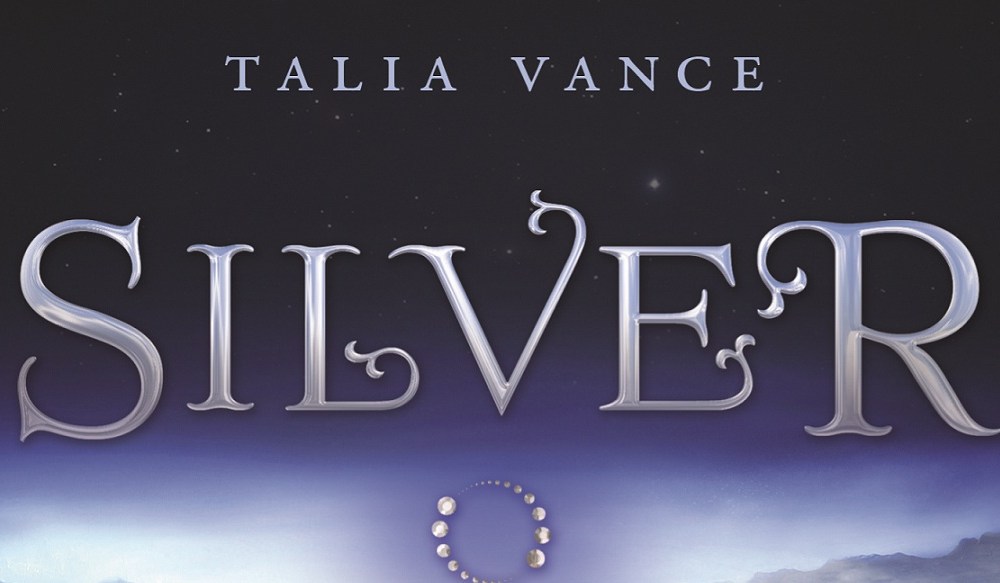
Silver by Talia Vance

Disclaimer: Yes, I am friends with the author. Guess what – it’s still an awesome book!

The set-up: Brianna has always been invisible and has a pretty compelling scientific theory as to why: bum pheromones. She tests this theory on her crush, Blake, who has been introduced to her at least six times and never remembers her.

Main character’s goals: At first, Brianna just wants to be seen. Then, as her heritage is slowly revealed to her, she wouldn’t mind going back to hiding. That wouldn’t make for a very good story, though – Brianna  is way too cool to sit back and let things go on without her. She – and Blake – are in the middle of a centuries-old feud, and when you toss in immortals with medieval weaponry, I’d say survival is her main goal.

My reaction: Sexy. This is the best kind of paranormal romance – a unique, killer concept mixed with the kind of love (and make-out sessions) that sweep you off your feet.

Also, the dialogue and the action just…flow. It’s fast-paced, and hilariously funny at times, and has tons of heart.

Of interest to writers: The tension! Silver‘s got it. Even my second time reading this book, it was still a page-turner. Also, study those one-liners – both the ones in dialogue, and in Brianna’s thoughts. Donald Maass advises writers to have their characters say things we wish we could say, and I totally wish I had Brianna’s wit. Great lines…I’m not sure if I can improve my own one-liners by studying Talia’s, but at least I smile while I’m studying.

And next time I need to write an action scene? I’m looking to this book for some good models.

Bottom line: Refreshing yet hot at the same time.

To visit Talia Vance’s website, click here.

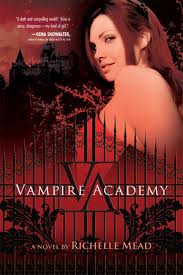
Reminds me of: Vampire Academy by Richelle Mead. Spunky, powerful heroine and awesome action.


Pitch Tips

After judging entries in the fabulous Deana Barnhart‘s Gearing Up to Get an Agent Contest, I came away with some strong ideas on what I think makes a successful pitch. This is not a comprehensive list, just a few things I thought about as I was reading/judging.

Voice: While writing the pitch from your character’s point of view is considered a no-no, I enjoyed the pitches that gave me a sense of the character’s voice. Think word choice and careful descriptive details. Too much voice in the pitch can sound gimmicky and annoying, so write with care.

Stakes: I loved the pitches that included not only the character’s goal, but what might happen if he failed. It didn’t have to be specific, but if it was, all the better. Here’s an example from my own pitch: “…Amalia has one month to restore the powerful twin magic fueled only by their connection. If she fails they will not only lose their powers, but their freedom, and ultimately, their lives.”

Character: The pitches that really stood out gave a strong sense of the character. What is the character like, and how might she change, given the high stakes she faces?

Length: Remember it’s a pitch, not a synopsis. I heard people bandying about the “rule” that a pitch should only cover the first fifty pages. It might be a good guideline, to cover the set up through that first doorway. It often seemed like pitches that tried to cover too much more of the story grew cumbersome and confusing because subplots started getting in the way.

Some things that concerned me: Typos, grammar/spelling errors, and sentence fragments. A pitch, whether it’s going straight to an agent or making stops on blog contests, should be proofread multiple times, preferably by more than one person. While we all fall victim to typos, and I doubt one in a query would kill chances with an agent, I don’t know…I think we should try really really hard to get our pitches as perfect as possible.

Or: You could, you know, skip the querying altogether and enter Miss Snark’s First Victim’s 2012 Baker’s Dozen Agent Auction. Authoress just listed the agent line up here! I participated last year. It was a blast, although, yes, there was all kinds of anxiety and nervousness. But I met some great writer friends and got excellent feedback on my log line and first 250 words.

NiFtY Author Donna Cooner

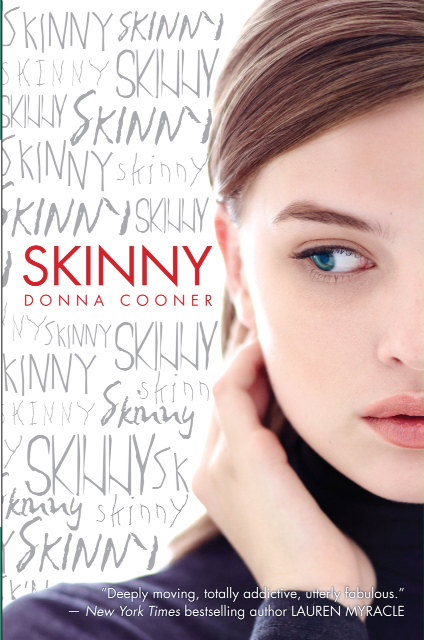
I met Donna at Katherine Longshore’s book launch, after I’d been stalking following her and her fellow muses via the YA Muses blog. Her debut young adult novel, SKINNY, will be released this coming Tuesday, October 1st, and I’m thrilled for her, and can’t wait to get my hands on that book!

BH: Welcome, Donna! I am so looking forward to reading SKINNY. What was the biggest joy of writing the book? What was the biggest challenge?

DC: My biggest joy in writing this book has been the personal connections people seem to have with the story.  Readers have shared some amazing struggles with self image and many of them have nothing to do with weight.  I love the fact people are able to relate to the story in so many different ways.  The biggest challenge for me was just completing the story.  My full time job as a  university administrator is hectic and time consuming, so finding time to write is always difficult.
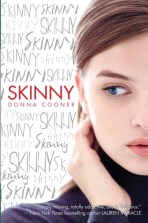
BH: I heard from a little bird (or two birds) that SKINNY wasn’t your first choice of a book to work on. Can you share why it was more difficult to commit to this one than the other ideas you had?

DC: This book is incredibly personal.  In many ways, that made it a difficult choice to write.  I’ve tried to avoid the topic of obesity all my life.  The thought that I was actually going to write about it for the whole world to see was terrifying.  It probably would have been much easier to work on something that wasn’t so close to my heart, but I also think that’s the very reason it connected with readers.

BH: If you had a daughter, which of Ever’s attributes do you wish she shared? Which ones would you never want to see her display?

DC:  Ever is a talented singer. I would definitely hope any child of mine would be involved in the performing arts in some way.  Singing solos in church and performing in school musicals as a choir member gave me the self-confidence to be in front of people.  I learned to prepare well, practice, and perform under pressure.   As an adult, I still draw on those skills today when teaching and speaking to groups.

Ever is so extremely self-absorbed and self-critical that she almost misses out on some fantastic opportunities and potential friendships. Her journey is all about learning that lesson and coming to some positive realizations about herself.  I would hope my daughter wouldn’t have that same, so so difficult, struggle.  Reflection and introspection might be good for writers, but there definitely needs to be a healthy balance.  Especially when you are a young adult.

BH: Do you have a new project in the works you can tell us a little about?

DC:  It’s a little too early to talk about yet, but there is definitely a book two in the works.    It’s not a sequel to SKINNY, but will be set in the same Texas town.  You might even get to see Ever and Rat again.

BH: What does your workspace look like?

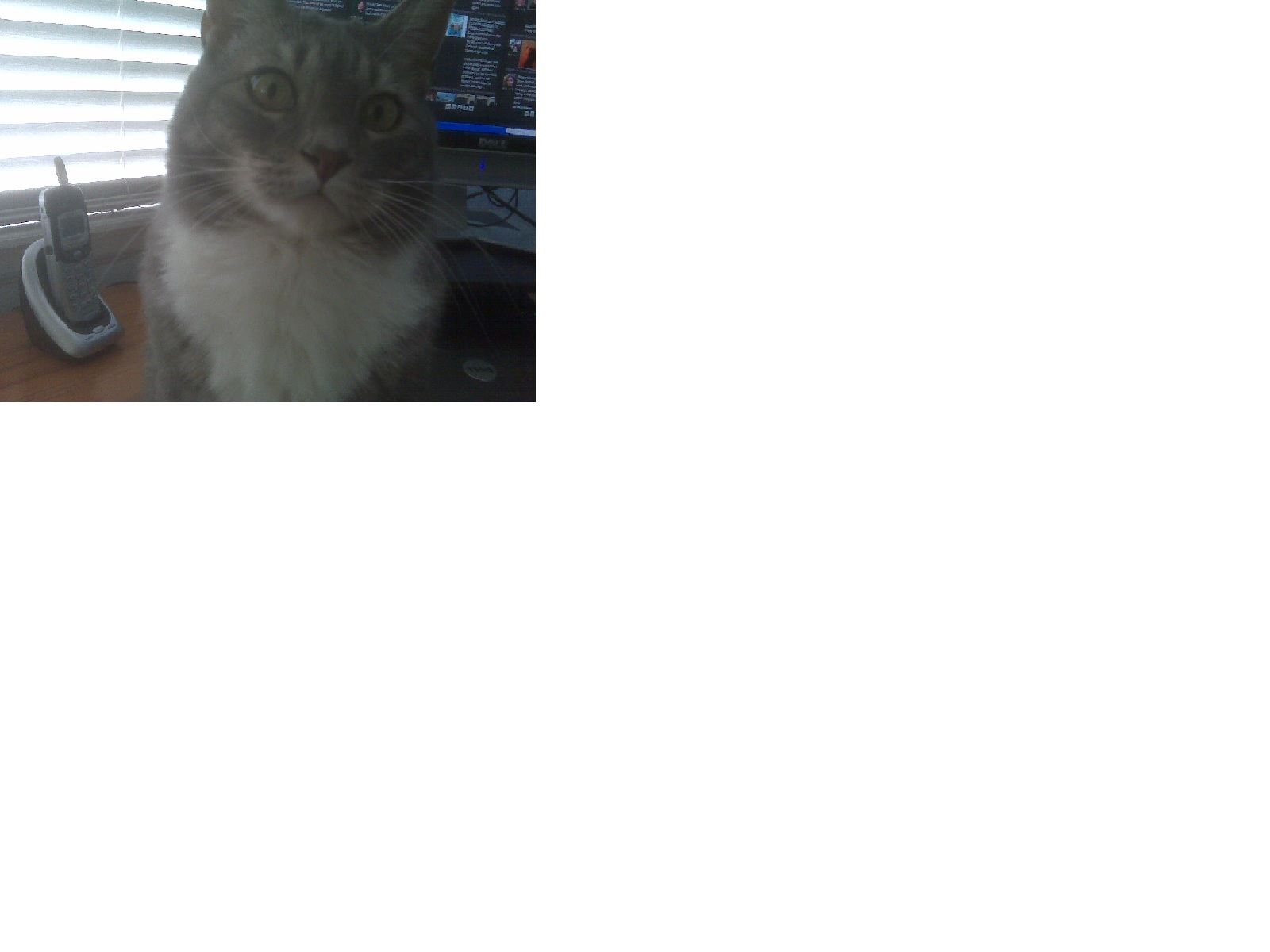
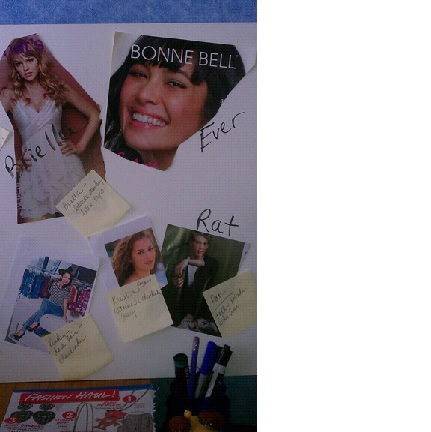
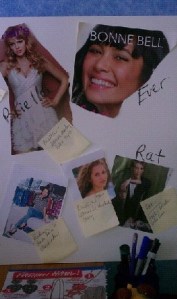
DC:  I have a second floor loft in my house that is my study.  My cat, Stu, tries his best to get in between me and the computer screen (see picture).  Roxanne and Cassidy, my chocolate labs, are usually lying on the floor near my feet.  The wall is adorned with notes and scene cards for my next project.  I also tack up pictures from teen magazines to represent what I think my current characters might look like.

BH: What is your favorite book on the craft of writing?

DC:  Bird by Bird by Anne Lamott.
BH: Any words on advice to aspiring writers for keeping the hope alive?

DC: SKINNY is my third completed novel.  If anyone had reasons for giving up, and not writing book three, it was me.  But the story was there.  Waiting.  And so was this amazing journey.   I’m just so grateful for good writing friends who encouraged me when I most needed it or I would have missed it all.  Don’t give up.  Write your stories and keep writing your stories.  You never know what might be waiting for you just around the bend from your next “The End.”

BH: Thank you, Donna, for visiting and sharing about SKINNY and your writing adventures. For more on Donna and her writing, you can visit her website by clicking here. You can read the first chapter of SKINNY by visiting the YA Muses Blog here…and you can buy it on Tuesday!
Adventures in Outlining!

I’m a total plotter. In the end, I might stray from my bulleted plot outline. New characters pop up like gophers from their little hidey holes in the ground. But I like knowing where I’m going. And what I’ve been using most lately is Blake Snyder’s Beat Sheet. It’s a ton of fun, and great practice for plotting story. I like to fill one out for Shiny New Ideas that may or may not go anywhere, because, like writing the pitch ahead of time, it’s great practice.

For some writers, this Beat Sheet thing is old news – but a few months ago I’d never heard of it, so I’ll share it here in case there’s someone else who hasn’t heard of it. Basically, screenwriter Blake Snyder evaluated gazillions of films and came up with a “formula” or road map, or, uh, beat sheet that outlines the common scenes, or beats, of a screenplay. Movies and books both are fundamentally stories, so these beats can be adapted very easily to novels. And it is A BLAST not only applying these beats to my own brainstorming, but evaluating some of the crappy movies we find on Netflix streaming (we’ve watched all the good ones that appeal to us). I’m starting to (starting to?) annoy Homes with comments like, “It’s been fifteen minutes and we haven’t even left the Ordinary World!” or “Ah, yes, the false high midpoint. I know these.”

The beauty of the whole beat sheet is I can overlay it with Christopher Vogler’s The Hero’s Journey (an abbreviated, simpified Wikipedia version can be reached here), and it still works. Because story is, for the most part, universal.

You can download Blake Snyder’s Beat Sheet for free, here. Really, though, a look at the book is recommended. He shares many great ideas about story and market and even genre.

There’s your unsolicited advice for the day! It’s good for you. Like vitamins.