5 Rules for Getting It Written

I wrote the first draft of my work-in-progress (nicknamed le manuscript) in a little over two months. I’m sure it’s not the fastest record on time, but it’s much better than my first manuscript (over a year to complete) and my second (clocking somewhere around eight or nine months). Experience has something to do with it, but for me, it helps to have some rules.

You can do something with assigning word counts to different stages of the plot, like Anne Greenwood Brown describes in her blog post that inspired this one, “Kicking Out a Fast First Draft.” What I did was a slightly-less-insane version of NaNoWriMo, a goal of 1200 words per day. My friend Seven organized it, and we and a few other writers encouraged each other to go, go go!

Not all of us finished our drafts. Part of what helped me was I was already somewhere around 15,000 words ahead, because I’d started drafting le manuscript in February, then gave it up in March when I realized Manuscript Numero Dos needed some serious help (it still does). But I got le manuscript done, and will now be revising it for the next 86.92 years.

Here are some rules that helped me reach my goal:

1. A Writing Schedule Is Your New Best Friend. This was easy at the time, because Z was still taking her naps (this is a blog post for a different day). The rule was: I pick up my blank book and work on that draft, as soon as she goes down for her nap.

2. A Back-Up Writing Schedule Is Your Second Best Friend. If, for some reason, I got distracted by the scrub jays in the back yard, or the way my pinky fingernail desperately needed filing, or how that spot on the wall kinda-sorta resembles an ex-boyfriend’s nose… If I didn’t make 1200 words during Z’s nap, I had to finish them up after she went to sleep that night.

3. Clean Houses Are For People Who Don’t Write. Or who write, and have maids. Or who write, and have older children they can make into their chore slaves. I did whatever household chores I could while Z was awake. She really loves to “help.” That’s right, Z, washing dishes is FUN. Never forget it, ’cause this is just the beginning, baby.

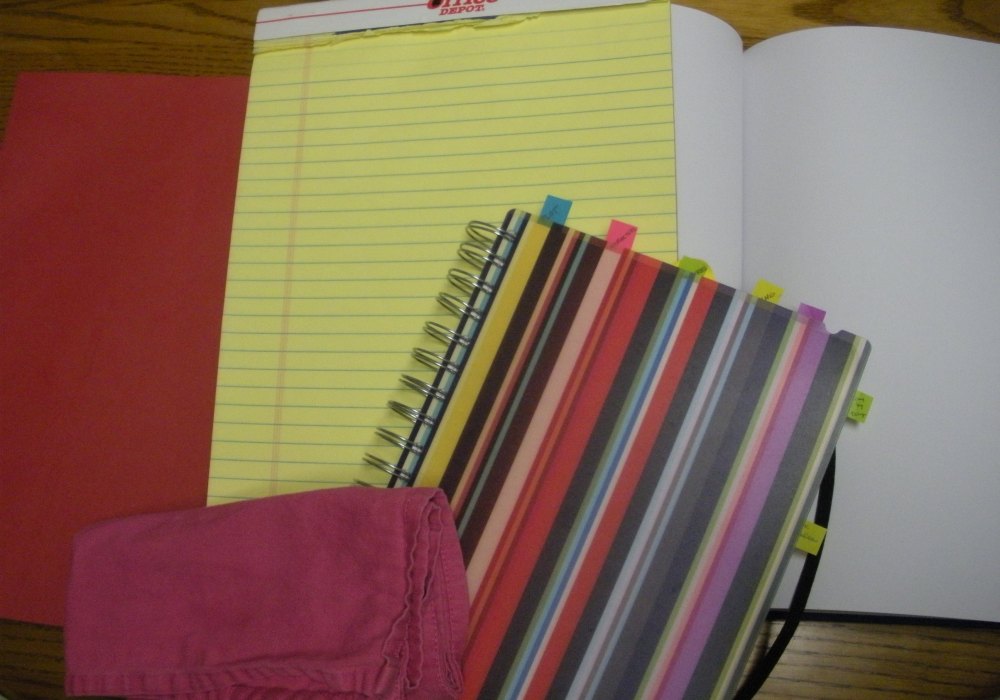
4. Do It On Paper. My Paperblanks journals are the bestest ever. You know why? No wireless internet. No Mahjong Titans or other tempting solitaire games. No wireless internet. No lights to irritate the eyes after prolonged exposure. No wireless internet. I recently read a blog post, How to Get More Done by Pretending You’re on an Airplane. It’s true. The most writing is done distraction -free. Twitter, lately, has been hearkening to me like a sadistic siren, and I don’t even like Twitter. I don’t. There. I said it. Now every time I try to log on they’ll tell me Oops! they’re over capacity.

5. Outline It. I’m way too much of a control freak to just start writing. I also adore lists and bullet points. So I come up with a rough idea of where I want the story to go and how I want it to get there. This doesn’t mean that I know all the major players right away. This doesn’t mean I ignore tempting paths – I take them. Having an outline keeps me going because I don’t have to chew thoughtfully on my pen while deciding what should happen next. One of my critique partners, Jo, has a good post on creating an outline (click here for that), although I get by with a bullet-point synopsis.

Like Anne Greenwood Brown says at the end of her post, there’s no way she’d share her first draft with anyone, not even her mother. I agree. The first one is total trash. If anyone has tips on how to revise a novel in two months, do share. As things are going, I only have about 86.33 years left of revising le manuscript.

There’s probably more, but I’m off to the woods for some mosquito-slapping, bear-dodging, holing-up-in-my-cabin-and-writing adventure. See you Wednesday.

Writing Prompt: Found Letter

Recently I started following the YA Muses blog, after I met Katy Longshore at a local get-together. The prompt is this: “At a used book sale, you purchase a leather-bound volume. At home, you thumb through the pages and an old letter tumbles out. What does it say? Write the letter.”

Here’s my response to the prompt.

*

I knew you would find this letter if I hid it here, among the books you call friends. You can’t look at a book without picking it up, thumbing through it, getting pulled into story.

You call these books “friends” and I imagine your surprise when one of them betrays you with this note.

Because the stories are the problem. A woman obsessed, you cannot stop. You paused briefly to give birth, but before your daughter was even weaned, already the pen, the paper, and the book were there, open before you while she slept at your breast.

No one needs to tell you these years are fleeting. You watch them scream past, measuring them in unsellable manuscripts, pausing to breathe and scream back only if something, or some little person, dares to disrupt your solitude, silence, sanctuary.

The guilt of the time you take for your failings is heavy indeed. No wonder you take photographs, evidence of what time you do spend with her, hoping that those frozen memories will be enough to convince her, when she’s older, that everything you did, you did for her. That it was always about her, never you.

Let me tell you a secret: the dedication at the beginning of your manuscript – published, unpublished – will never be a substitute for you.

Put down the pen, and play with your daughter.

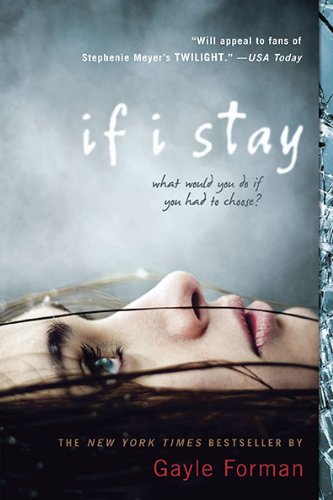
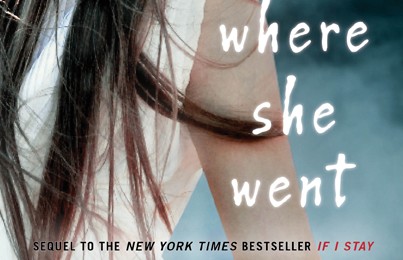
Where She Went by Gayle Forman

The set-up: Adam’s got his rock star career, celebrity girlfriend, a world of fans – everything he ever dreamed of…except Mia.

Main character’s goals: Although Adam’s ultimate goal would be to have Mia back, what he seems to be reaching for is closure, because he doesn’t believe it’s possible to get back together with Mia. Also, his goals have a lot to do with avoiding the other members of his band, with whom he used to be very close and now, not so much.

My reaction: Okay, I’m going to take off my nice gloves here, and say that I really would have preferred the story from Mia’s point of view. I fell in love with her in If I Stay, and was less than thrilled to start reading Adam’s voice all of a sudden (I try not to read the blurbs before I start a book). However, if the book were told from Mia’s point of view, it would no longer be Adam’s story, it would be hers, and it wouldn’t be the same story at all.

I will say, for what the story is (i.e. Adam’s, not Mia’s), it was done well, with all the emotional resonance and rockstar anguish you could hope for.

Of interest to writers: Is everyone else disappointed when a sequel is told from a new perspective? I can think of a few where I was disappointed. Are you ever tempted to write a sequel from a different character’s POV? Although I’m not ready to draft the sequel to my current work-in-progress, I’m thinking about it, and one side character in particular is shouting that she wants a starring role.

Bottom line: Not Mia’s story.

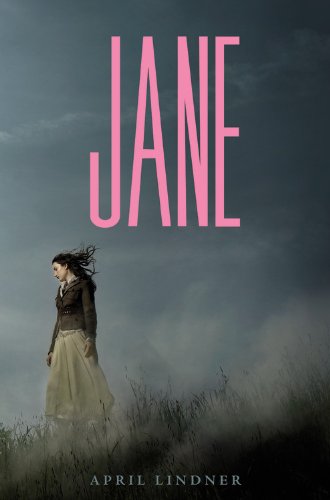
Reminds me of: Jane by April Lindner


To My Graduating Students*

*and to my students who graduated last year – I’m sorry I didn’t think to do this for you then, so now everybody’s included in this commencement address.

First: I am so proud of you.

Second: I don’t know where this blog post is going, so just hang out for a couple of minutes. It might meander like our discussions on Of Mice and Men or The Cask of Amontillado.

Whether you go to a four-year college, a junior college, a technical school, or no school at all, you will be making choices every single day. Sometimes these choices won’t be important, like, “Do I ask the dude making my sandwich to put mayo on both sides, or just one?” or “Do I straighten my hair today or let it go curly?” or “Do I call my girlfriend now or wait until after I finish this episode of [whatever show is popular at the moment]?”

Sometimes the choices will be very important, like, “Do I blow off writing this paper and just copy it from the internet?” [If you were truly a student of mine, this answer would be, “No, I will write this paper and learn while I’m doing it!”] Other important choices might be, “Do I get into the car with this dude I just met at the club?” or “Do I sample the mystery substance everyone seems to be having so much fun with at the party, or do I amuse myself taking photos of them to post on Facebook later, and make sure none of them die from whatever side effects the mystery substance has?”

The point is: the future is filled with choices, and you are responsible for making the choices. It might be overwhelming, as it often was to me in college. The sheer mountain of choices scared the crap out of me. And sometimes you’re going to shine, and other times you’re going to fail. You will fail. It will happen. (I think J. K. Rowling covered this point in her address to Harvard graduates in 2008. Click here to read that.)

Failing can bring you to surprising new places. It can be an opportunity. I’m not saying it doesn’t suck, because it does. But take some responsibility for it. You get to make the choices, from here until forever.

I hope you choose:

  • to not get into the car with strange men
  • to make wise choices about sex
  • to pass on the drugs but still have fun with your friends
  • to work your asses off on school work. You’re choosing, paying to be in school now. No one’s making you. Work for your dreams.
  • to always be kind and gentle with every single person you meet. Even if they cut you off in traffic or steal your umbrella or cheat on you or sit on your iPhone and crush it into a million bits
  • to surround yourselves with people who make you smile
  • to remember your home. Your home. Full of people who care about you and are cheering for you. This is where you come from, and even if it might seem like a small nothing town after you’ve moved away to Way Cool City Full of Beautiful People, this is your home, and we love you
  • to write letters and postcards – not only emails and texts – to your friends and family
  • to reward yourself with a trip to the beach or a hike or somewhere outdoors when the daily grind gets to be too much
  • to vote for leaders you believe in
  • to form relationships  with surprising and interesting people
  • to put your money on what’s really important. Think about where you want your life to go; spend accordingly
  • to fall in love
  • to let people go when it is time (and to trust your instincts of when that time is right)
  • to avoid worrying about what other people might think of your path in life. It’s yours; own it and be happy. If you can’t be happy, change it by making new choices
  • to learn and practice the art of making conversation with adults. You are an adult now. Talk to your professors, your bosses, and other adults
  • to be the change you wish to see in the world (Mahatma Gandhi)

I love you all. If you think I’ve forgotten about you for one day since I quit teaching to raise Z, you’re wrong. I taught you English, but you taught me so much more. I delight in memories of being your teacher. I delight in the choices you make, especially when those choices are conscious, purposeful, and full of intent to make your lives, and the world, delightful, fanciful, creative, kind, gentle, and peaceful.

Thank you for being who you are. Never stop.