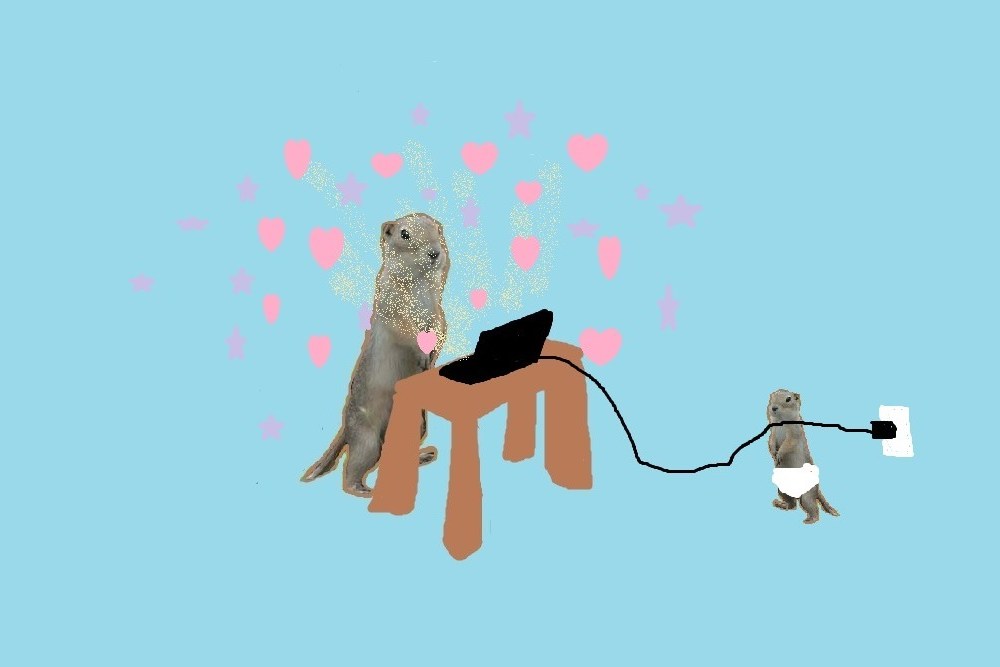
7 Things Your Writer Needs to Hear

Hi! Colonel Shifty here, reporting with another list of tips for the people who care for writers.

Maybe your writer is shy, or passive aggressive, or just so darn busy drafting Book 3 in her series that she can’t manage to tell you what she needs to hear. Granted, some of these things she needs to hear from people in the publishing business (agents, editors, whatevs), but even if they come from you, a person who cares for her, they’ll still make her feel better/keep her from throwing her manuscript into the fireplace. (Throwing her book into the fireplace just might be the best thing for her…but she has to figure that out on her own.)

1. “Your turn will come.” Your writer may have friends who have published a book. Or books. Or maybe your writer has friends with literary agents, and he’s been desperately trying to find an agent to represent his work, and he’s having a really tough time hearing about how each of those friends had multiple agents fighting over him, and he’s happy for them, he really is. But he’s also feeling a little frustrated about his own place in the process. What your writer needs now is some cheerleading in the form of, “You will have your turn, and it will be glorious.” Because he will have his turn! And it will be glorious! (Please do not mention the possibility that his turn could be, oh, fifteen years away. Or more. He doesn’t need to hear that.)

2. “Take your time.” There’s no rush. I mean, obviously, your writer shouldn’t be dominating the Twitter feeds of her six followers, but she can spend some time taking a head-clearing walk or diving into book-related research. Maybe there’s a ticking clock of needing to get a “real” job once her baby starts school. That’s okay. She can still write. And rushing through a book doesn’t help anyone. She should enjoy it – otherwise what’s the point?

3. “Write the book you need to write.” Does your writer want to tell weird stories? Or super sad stories? Or historical fiction or paranormal romance about vampires? Is he drawn to something that might not exactly be marketable? Tell your writer it’s okay. If that’s the book he needs to write, he should write it. If he’s passionate about it, that passion will shine through. And maybe it won’t be publishable, but he’ll never know unless he writes the darn thing.

4. “Define your own success.” Publication isn’t the only way. Tell your writer that. If she’s writing, and she’s happy, that is a GOOD thing. Maybe her success shouldn’t be measured by things she can’t control, like the publishing industry. Maybe it should instead be measured by the progress she CAN control, like finishing a book, or learning more about a certain format (cough*verse*cough), or getting out there and attending a workshop. Some days this one writer I know defines success by whether or not she makes the time to sit her bootie down to write.

5. “Chocolate doesn’t have calories. Nope, none. Not a single calorie. Eat as much as you want.” No explanation necessary.

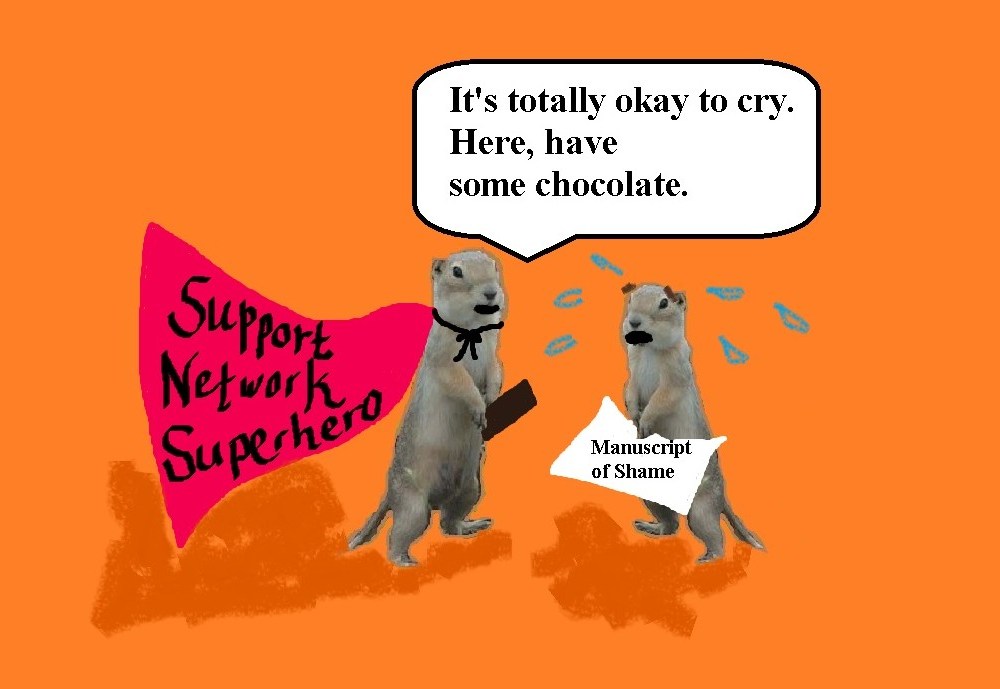
6. “It’s okay to cry.” Even if your writer is defining his own success and writing the book he needs to write and taking his time…rejection can still sting. A lot. Give him a day or two to get over it. Crying’s okay, as long as he isn’t short-circuiting his laptop keyboard with the tears.

7. “You want to leave me with our two young children for how many days while you attend a conference? Okay!” I’m sure you’re already supportive in this regard, in which case you may pat yourself on the back and help yourself to one of your writer’s chocolates from her not-so-secret stash. Your writer is taking big risks putting words on the page. An even bigger risk might be attending a writing conference and putting herself out there, learning new things, and totally leaving her comfort zone. Huzzah and hooray to the support network personnel (aka YOU) who are willing to step out of your comfort zone and let her have at it!

And finally, you may kindly point your writer to next week’s Guest Post by Me, Colonel Shifty, in which I list a few of the things your writer can be saying to you, her support network.

New to being the Support Network for your writer? If you need a tutorial on lingo from the publishing world, you can visit my Handy Dandy Dictionary.

Ink by Amanda Sun

ink

Holy rats how did it get to be Friday?!

It’s been ages since I reviewed a book, but when NetGalley offered a YA by an author I met through Miss Snark’s First Victim, of course I had to snatch it up. Well, as much as one can “snatch up” an ebook. They’re not very, ya know, physically there. Still readable, though! And this one was. Very readable.

The set-up: After the death of her mother, Katie Greene goes to live with her aunt in Japan. She feels marginalized as a gaijin, or foreigner, because of her blond hair and clumsiness with the language and social norms. Much of that discomfort takes a back seat when she meets Tomohiro, the bad boy whose drawings are a little more than two-dimensional.

Main character’s goals: Throughout the first half of the book, Katie wants to get back to North America – a place where she knows the language and feels comfortable. Her more immediate goal, however, is figuring out Tomohiro and what causes his drawings to be so unique.

My reaction: I was insanely curious how the author would handle juggling the language. It’s an English book, but most of the dialogue happens in Japanese…but it’s in English. And it totally worked. Sun strategically placed Japanese phrases and exclamations so that I’d remember the speech was happening in Japanese…without having to read (or know) Japanese.

And hello! What a gorgey cover!

Of interest to writers: Setting. Setting setting setting. This relates to the dialogue in part – I was able to feel a part of things when I was included in the language, but even more engaging was the total immersion in another culture and place. Katie’s the perfect gateway character to the setting, because it’s new to her as well.

Bottom line: A unique & edgy paranormal with a sweet, believable romance. And blossoms raining down from cherry trees.

To visit Amanda Sun’s blog, click here.

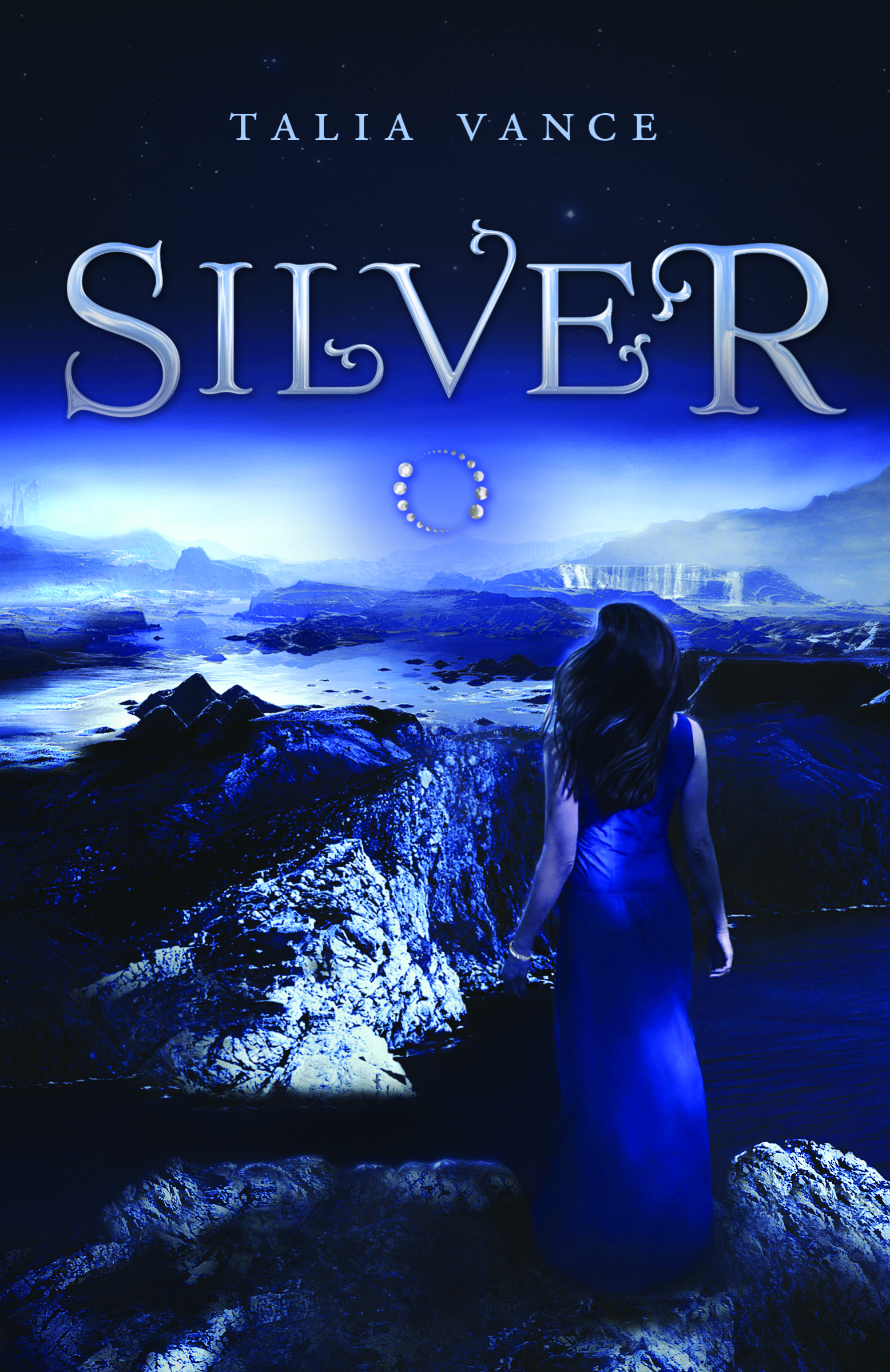
SilverReminds me of: Silver by Talia Vance, for its unique take on an old mythology.


8 Random Links

Some of the way-cool places I’ve visited in the past couple of weeks:

Clark Little Photography: some awesome photos of Hawaii sent to me by Pat Kahn.

Get Genrefied: Verse Novels: an introduction to verse novels, with some excellent recommendations both new and old. Pointed out by Helene Dunbar.

Legendary Surfer Woody “Spider” Brown: biography of a really interesting surfer, one of the big wave pioneers.

Conference Commandments: I plan on adapting this list of Veronica Rossi’s for when I go to the SCBWI Summer Conference.

YA Girl, Episode 1: Kristen Held‘s hysterically funny post on what happens when your characters really talk to you.

20 Awesome Examples of Literary Graffiti: I think I found this through a tweet by Scholastic, and I keep going back to look.

Manuscript Formatting and Prep Screencasts: an extremely useful formatting tutorial. I loved it, and realize this makes me look like more of a nerd than ever. Another one sent by Pat Kahn.

The Art of the Rewrite: Heather Anastasiu’s post at Adventures in Children’s and YA Publishing. I liked it so much I actually copied & pasted it into a Word document so I wouldn’t lose track of it (because my computer file system is so foolproof…ha).

Four New(ish) Books on Craft and Why You Might Need Them

Confession: I have started, but not finished, these books. They’re scattered around the house (had to round them up for this post) but now that I’m not in the middle of a book for my Best YA Challenge from readingisdelicious or my book club or critiques or betas, I’m going to choose one and read it. Whole thing. And do the exercises! (I’m ambitious; it’s a blessing and a curse.)

1. Wired for Story: The Writer’s Guide to Using Brain Science to Hook Readers from the Very First Sentence, by Lisa Cron – This book takes us through twelve cognitive secrets, describing each one and its application to writing fiction. Some of the lessons aren’t exactly “new,” but they are shown in a new and memorable way. For example, Chapter 2’s Cognitive Secret is: When the brain focuses its full attention on something, it filters out all unnecessary information, and the Story Secret is: To hold the brain’s attention, everything in a story must be there on a need-to-know basis. I think most writers know this story secret, but seeing why it works and how that relates to the brain, is pretty darn cool. This is great for the beginning writer, and an interesting and fresh take for the intermediate/advanced writer.

2. Writing Irresistible Kidlit: The Ultimate Guide to Crafting Fiction for Young Adult and Middle Grade Readers, by Mary Kole – I followed Mary Kole’s Kitlit blog for a long time, and still check in occasionally. What I like about her advice and instruction is that she often goes deeper into technique and explanation than other books and blogs tackling similar issues. For example, she talks about Telling versus Showing, and discusses when Telling is good, like with Interiority. Another great point in this book’s favor is her discussion of the differences between middle grade and young adult fiction, as well as the psychological/developmental differences of the tween and the teen.

3. Writing 21st Century Fiction: High Impact Techniques for Exceptional Storytelling, by Donald Maass – I own two of Maass’s other books (The Fire in Fiction and Writing the Breakout Novel Workbook) and I would’ve thought with all the information and seriously amazingly helpful exercises in those, that he wouldn’t have much more to add. That kind of thinking is completely wrong, because with this book, he goes even further into excavating emotions in plot, character, premise (and possibly more – I’m not through with it yet!) to make them even more compelling. My brain explodes on a regular basis when I read this, because I’m thinking of two different WIPs, two sets of characters, and I want to do the exercises immediately for both. Simultaneously. Anyway, amazing book. This is the one I’m going to devote myself to for the next month. I think everyone can work with this book, but it helps to have finished a draft to work with.

4. The Emotion Thesaurus: A Writer’s Guide to Character Expression, by Angela Ackerman & Becca Puglisi – This is less a book on craft and more a resource, but just as useful the other books featured here. Ackerman and Puglisi have compiled 75 different emotions (alphabetized!), defining each one, listing the physical signals, internal sensations, mental responses, cues of having that emotion long-term, and cues of suppressing that emotion. Each entry lists related emotions, so the writer can cross-reference signals and responses. I think this is the niftiest thesaurus ever, great for writers at any point in their journey.

April is the (Coolest) Month, a Friday Five

1. My writer pal Stacey Heather Lee (who I might get to meet in LA! – more on that later) interviewed me on her blog, on what I do when I’m not writing. You can see my favorite boots! My firstest book ever written (you can see that here, too, but Stacey’s background is gorgeous, so you should see it there also)! My bucket list! That I came up with at the last minute when I realized I didn’t have one! My secret! Well, it’s not really a secret, but…I’ve written a novel in verse.

2. I’ve written a novel in verse. More on this in a future post, but basically – the first few phrases I ever had for the book were in verse, and the emotion of them reached right out and sucker-punched me. Still I thought, no thanks. I am not a poet, and I know it. This is just aimless brainstorming in my diary, la la la. But I kept getting stuck while I was drafting the thing. Everything in prose paragraphs felt flat and lifeless, so I thought, Well, I’ll just write the stinker in verse and come back and redo it in prose once it’s all down. No biggie. Except I fell in love with the verse, and it just…works. I think it works. I hope it works.

3. My regional SCBWI chapter awarded me a $1,000 scholarship for the SCBWI Summer Conference in Los Angeles! I’ve been wanting to go for years, and have been saving birthday and Christmas money accordingly, and now I will finally get to go! Thank you, SCBWI California North/Central!

4. Maverick is going to be one year old next week! I have mixed feelings on this. He’s my last baby, and while part of me looks forward to him getting older so that he’s not so dependent on me, another part of me just wants to hold him and keep him this age forever. SIGH.

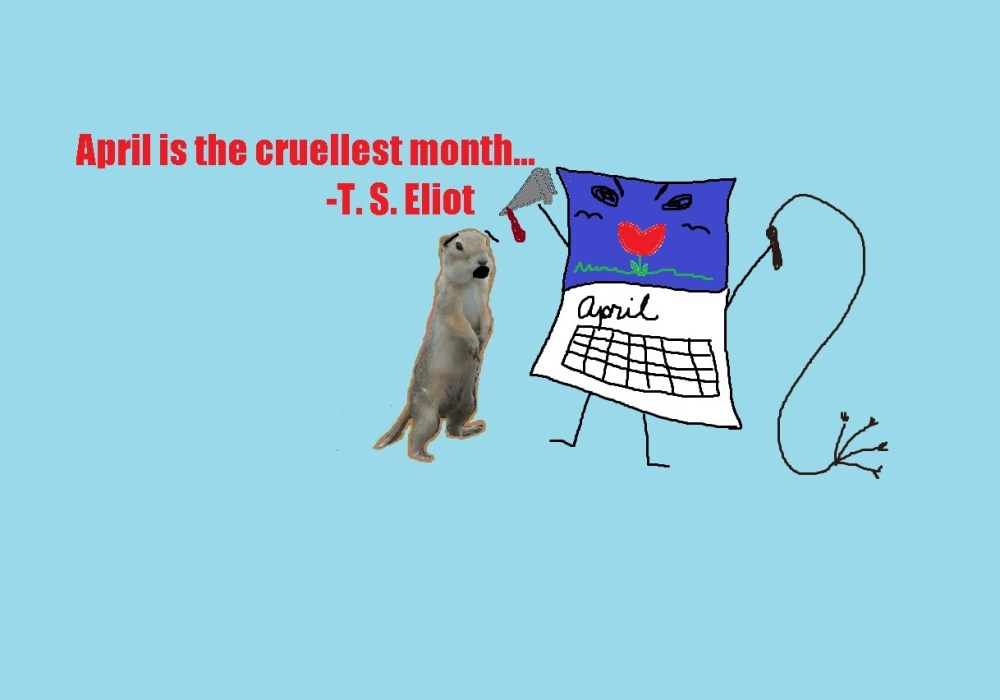
5. Somehow “The Lovesong of J. Alfred Prufrock” got stuck in my head a couple of weeks ago, and I’ve been trying to memorize it. I’ve gotten through the yellow fog stanza, and after that it’s sort of “Hmmm hmm, I have seen the eternal footman hold my coat and snicker…Hmm hmm hmm hmm, I grow old, I shall wear the bottoms of my trousers rolled…hmm hmmm hmmm…Til human voices wake us, and we drown. TA DA!” (Also, today’s Shifty “painting” isn’t from Prufrock, I know. But still. That April. She’s such a jerk.) (Maybe next Friday we’ll have another Eliot line that gets stuck in my head, “Now that lilacs are in bloom / she has a bowl of lilacs in her room…”)