How to Give Good Critique

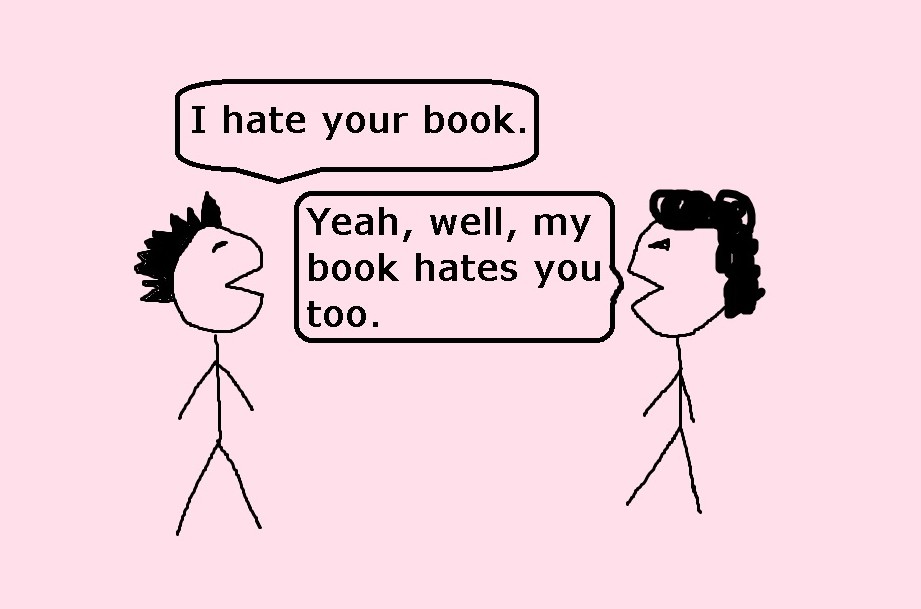
A friend and critique partner of mine (and she knows who she is, so this isn’t a series  of hints for other crit partners!) gave me some feedback on my story a few months ago. I was quiet for a bit, because while she had some great ideas for my story, some of them came off a bit harsh. We talked about it, and she asked me for some advice, because she’d had trouble with hurting crit partners’ feelings in the past. I went through her critique line by line, and came up with a list of suggestions. She told me they were helpful, and gave me permission to share them here.

Have a sandwich

Place negative/constructive criticism in between positive criticism. What I heard about “the sandwich method” is that it helps a critique-receiver feel relaxed at the beginning, instead of under attack. And then, after all the negative criticism, the writer’s ego is reassured with more positive. [NB: Be sincere and specific, otherwise the positive criticism will sound like token positive criticism, and we’re all smart enough to see that for what it is: BS. Being positive can sometimes take a little digging.]

Embrace brevity

State your point, and move on. When something’s repeated it can make the writer doubt the critic’s belief in her intelligence. Also when something’s repeated, it can sound angry.

Embrace neutrality

I try (but don’t always succeed) in making the critique more about characters and story and less about what the writer is or isn’t doing. Homes told me that in scientific manuscript critiques, they’re supposed to say, “This doesn’t work because…” When in doubt, I pretend I’m a scientist.

Be positive

Saying something like, “Your main character makes me want to shoot myself in the bleeping head” only makes a person feel crappy. It’s best to phrase things in the positive, or phrase them as questions, like, “If Amalia instead first learned how to defend herself, she’d be a lot more sympathetic to the reader,” or “What if Amalia were to learn self-defense? Do you think it would make her less passive, yet still feisty and a person we’d cheer for?”

Be positive II

I leave out the doom and gloom messages – and the long introduction. Every time the writer hears, “You’re going to hate me for saying this,” or “this might be hard to hear,” or other statements of that ilk, it makes her worry more. The longer the introduction and disclaimers go on, the more impatient and defensive she could get.

On taking the wheel

It’s okay for some critique partners to write out short bits of dialogue or sentences for each other. I actually enjoy it. It’s good to check, though, because not everyone will be okay with someone else putting words in their characters’ mouths.

On suggestions

I’ve heard different things about suggestions. Some people say that a good critique partner only points out where something is off, and allows the writer to come up with her own fixes. Personally, I enjoy suggestions, but you may want to make sure they don’t sound like orders.

On nitpicking

I generally don’t correct punctuation/grammar/typos unless the piece is, according to the author, ready for submission. On earlier drafts, if I catch something & it’s easy to fix, sometimes I do. If I see a recurring grammatical error, I will usually call the writer’s attention to it. But little nitpicks seem like a waste of time if the story might change dramatically – entire sentences, paragraphs, pages, and chapters can be replaced or deleted, and then I’ve spent time correcting punctuation on segments that are no longer even in the story! Some people, however, cannot resist editing for grammar etc. To each her own.

*

I’m looking at these tips as a list-in-progress, so please, chime in below if you have a tip I haven’t thought of, or if you think something in my list should be adjusted/clarified.

Also, while it’s super-important to “give good critique,” it’s equally important to be a good critique receiver. Maybe I’ll write about that later, so if you have an idea you want to share, let me know and I’ll give you credit in the post.

Recommended reading: The Writing & Critique Group Survival Guide by Becky Levine.

ETA 4/10/12: Author and former literary agent Nathan Bransford just published this post on the Ten Commandments for Editing Someone’s Work. Good suggestions, all.
Punctuation Station

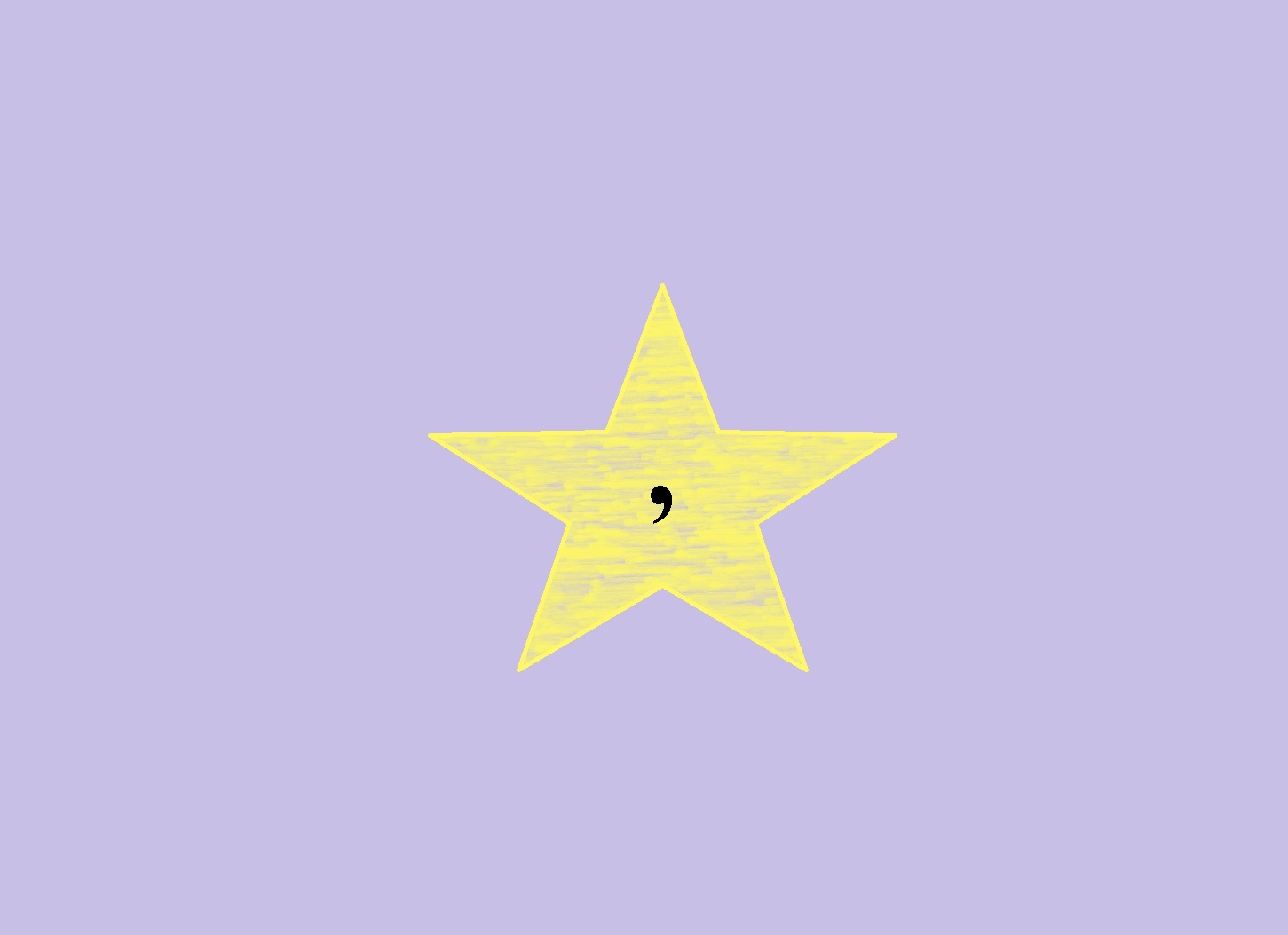
K. M. Weiland had a poll on her blog last week, asking readers to choose their favorite punctuation mark. Neither the ampersand nor the parenthesis was listed, so I had to choose “other” (and thankfully did not have to choose between the two). And I was thinking, you know, nobody really shows love to ampersands or parentheses, and they totally deserve it. Which got me to thinking also of the Oxford comma, which I will forever embrace until my dying breath.

Awhile ago, in my post Why I Write, my Reason #1 was that I love words. Well, I also love punctuation. I have my pets, and my tics, and so does everyone. For awhile I overused the semicolon (and perhaps I still do). I know I overuse em-dashes and parentheses. I don’t really feel the exclamation point. I mean, it’s okay, but if I overuse it, I’m making fun of overusing it, like this!!!!

Parentheses!!!!

In “public” writing, I usually (but not always, as you can see) try to restrain my use of parentheses. They are divine, especially for people like me who have ADD of the mouth and like to go off on tangents while talking/writing (would that be ADD of the typing, too?) (At any rate, I’m scattered sometimes, whether talking or writing). Parentheses don’t often show up in my fiction. Where you’ll mostly find them is in my emails and diary. Love these guys. How can you not? Their curvature, their symmetry, their absolute usefulness.

The Oxford Comma!!!!

There are some humorous examples of ambiguity resulting from the practice of not using the Oxford comma, also called the serial comma, and some humorous examples (less compelling to moi) of ambiguity arising from its use (see this Wikipedia entry for lots of information on the beloved Oxford comma). While I try not to be a prescriptivist, here I must say, I was taught to use the Oxford comma, and I like it, and I believe, in most cases, it can help eliminate ambiguity. Plus, it just sounds right. It’s fun, it’s practical, and it was part of my grammatical upbringing. (See how the second comma, the beautiful lovely industrious Oxford comma, is a natural part of the pause in the previous sentence? Yes, I think you do. You must.)

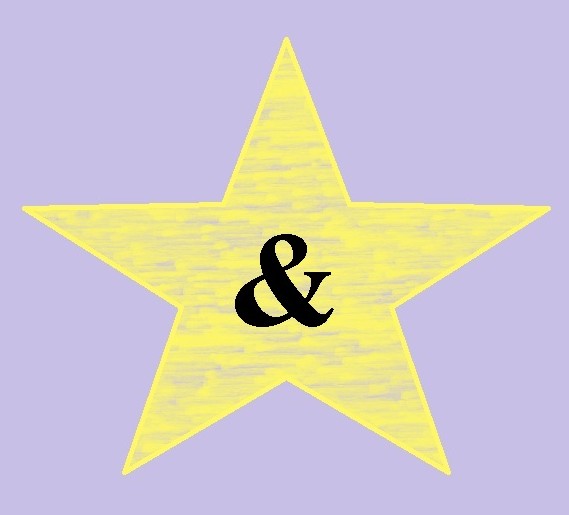
The Ampersand!!!!

I love this one so much, it gets an ode:

Ampersand
Curved S
Tilted backwards
Treble clef
One character
Meaning “and”
Curvy, quirky
Ampersand

Which punctuation marks do you tend to overuse? Which are your favorite? Have you ever written a love poem for a punctuation mark? Do share!!!!

“He Don’t Eat No Meat?”

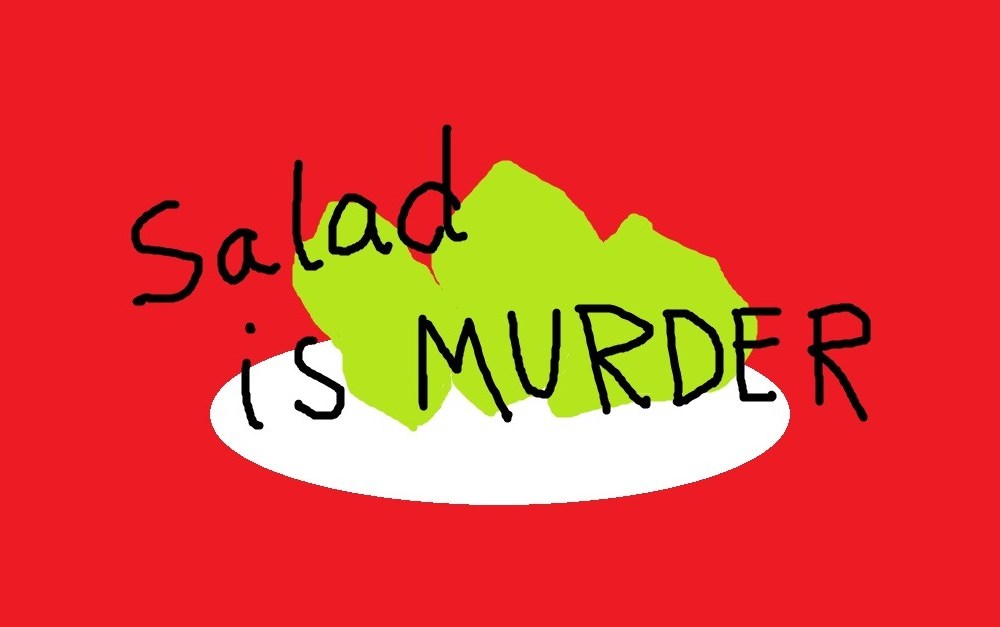
[I can’t take credit for the Salad is Murder thing – it was a postcard I purchased years ago in San Rafael. Unfortunately I can’t dig it up anywhere, so had to recreate it. Apologies to the original artist. Hers is WAY better.]

[Insert movie still from My Big Fat Greek Wedding here. Copyright paranoia, c’est moi.]

We eat meat. Not a whole bunch. Maybe two meals involve meat each week. We get a lot of protein from tofu, cheese, beans, and eggs. As a result, Z has never really had to think about where meat comes from, and we never really told her. “Hey kid, by the way, that’s Chicken Little you’re gobbling up right now.” Or, “Remember the cows in ‘Click Clack Moo’? Yum! That’ll teach ’em to go on strike!” Or, “Yup, that Olivia is a darling, and she makes FINE bacon!”

Not really the conversation we’ve been eager to have.

So the other day, we’re at the table, and I’m eating my DELICIOUS HAM AND CHEESE CROISSANT OH MY GOSH MUST GO BACK FOR MORE and somehow, it comes up. Meat. That it comes from animals.

And Z just giggling, and saying, “That isn’t right, that isn’t right!” and she means that we’re joking, we must be, because who would eat those cute little animals?

Well, we do, I guess. I’ve toyed with the idea of going vegetarian, or maybe restricting my meat consumption to fish. But nothing’s pushed me all the way in that direction…yet. Maybe Z will be the one to do it. (Fish as food doesn’t seem to bother Z at all – she has a Finding Nemo toy that did not make it into her stuffed friends drawer but went, instead, to her pretend food bin).

Because who wants to eat Olivia?! (Well, if Olivia’s in my ham and cheese croissant, the answer is: I do.)

Friday Five

The quick-and-dirty-I-just-had-a-life-changing-ham-and-cheese-croissant-version…

1. I just had a life-changing ham and cheese croissant. I got it at the Nugget and had it grilled, added mayonnaise and lettuce. Paired it with a vanilla cream soda. Bestlunchever.

2. Forever revising. Revising doesn’t end until I shelve it in a cruddy hand-me-down binder, or until it’s shelved at a bookstore (there is still hope).

3. Belly button update: still an Innie! But just barely.

4. Might go back to the Nugget for a dinnertime ham and cheese croissant.

5. So excited about having finished the first draft of my latest work-in-progress. It’s hard to step back and let it breathe, but thankfully (?!) I have these other revisions to distract me.

6. I’m such a cheater.

Why I Write

Friend and critique partner Jo Hart wrote a post on the Top 5 Reasons Why I Write, and it got me thinking about my own reasons.

1. I’m in love with words. Any language. Ever read a story, poem, or novel, and just hug the book to yourself afterward? And think, “Wow, I can only think ‘wow'”? And sometimes, finding the exact right word for what you mean feels like an adrenaline high? And Word-of-the-Day calendars are great & all, but they only give you 365 words, and that’s not quite enough?

2. Writing feels good. If I can string words together in what I think is a pleasing way, I read them over and over and feel really good. Sometimes it doesn’t even have to be a string of words (see above) – it can be one, e.g. “epiphany.”

epiphany.

(Yup, brilliant. Feels good, doesn’t it?)

3. I can’t not write. I’ve always written things down. The only times I’ve imagined a world in which I don’t write are times when I’ve been severely depressed. Which is, you know, not fun for anyone.

4. It’s cathartic. Depressed, bitchy, manic – it all goes into the diary at some point; it all goes into the stories.

5. I’m self-absorbed. If ever fiction fails me, I can fill up diary books (and, sorry, yes, blog posts) all about ME.

6. Sometimes I get an idea or have a dream that I have to write down (e.g. girls sneak out of beautiful city to explore ravaged city full of scary creatures)

7. I’m too in love with office supplies to stop. Notebooks, diaries, pens, markers, dry erase boards, index cards…writing is a great excuse to buy these things.

So, how about you?