Not My Daughter, You Bitch! (Swearing in YA Lit)

So I’m jumping on this subject bandwagon pretty late. I spoke with literary agent Mary Kole about this issue at a conference in April, and apparently it was a popular topic, because she wrote a blog about it. Because so many people feel strongly about this issue, I figure I may as well use my platform and voice my opinion. This is my website, after all. What would it be without a spewing forth of Beth’s Opinions?

When I think of “bad” words in young adult literature, so many things come to mind. There’s the famous line from the last Harry Potter book (see title above) that shocked Potter fans. In this case I think the word was so shocking because the series started out as a middle-grade series, and then matured along with the characters. Who would even imagine reading the word “bitch” in Harry Potter and the Sorcerer’s Stone? Another reason for the shock factor: Rowling’s books had so little profanity in even the later books, and this says something for her skill as a writer. Voldemort didn’t need to drop an F-bomb to cement his villainy because he was so evidently evil in reputation and action. Ron used the word “bloody” on occasion, but this barely registered with American readers. Uncle Vernon said something about “effing owls” once. So the “bitch” in the final book was so unexpected. It didn’t really fit. I can see why Mrs. Weasley would be driven to use it, but if I’d written the book, I’d be super-rich and would have invested some time in finding an alternative.

I don’t have a single problem with profanity in young adult literature. I wouldn’t necessarily let f-bombs explode all over the place in my own manuscript, but they didn’t stop me from reading Lisa McMann’s Wake series. Cursing sounds pretty natural amongst the young adult set. Not all of them, mind you. (Although I admit surprise to some of the things I saw on former students’ facebook posts. Not all are as innocent as they seem. Frightening for me, as a mother.)

My own manuscript had exactly four f-words for awhile, and they didn’t bother me spaced out and spoken by college-aged characters. When I did some snipping (okay, I lopped off the first 50 pages) and had to move some conversations around, all of a sudden three of those f-words appeared in the first chapter.

Not the sort of set-up I had in mind. I don’t expect every book to have universal appeal, but I knew that three f-words in the first chapter would turn a lot of people (parents especially, who often buy the books) off. With some ideas from a critique partner I was able to change two of them. The other one is just too natural to the character speaking, I am convinced no other word will do.

And that’s when a swear word belongs in your manuscript. When it’s true to the character and no other word will do.

E Tea

We like to pass our finer points on to our children. Our striking good looks, endless patience, witty sense of humor. Unless you’re me, and have none of those things (okay, I’ve got the good looks and the sense of humor. Yes, I do say so myself). At any rate, if you are like me, you can also pass on both your tendency to hoard things, and the things you hoarded.

See my Photographic Evidence below.

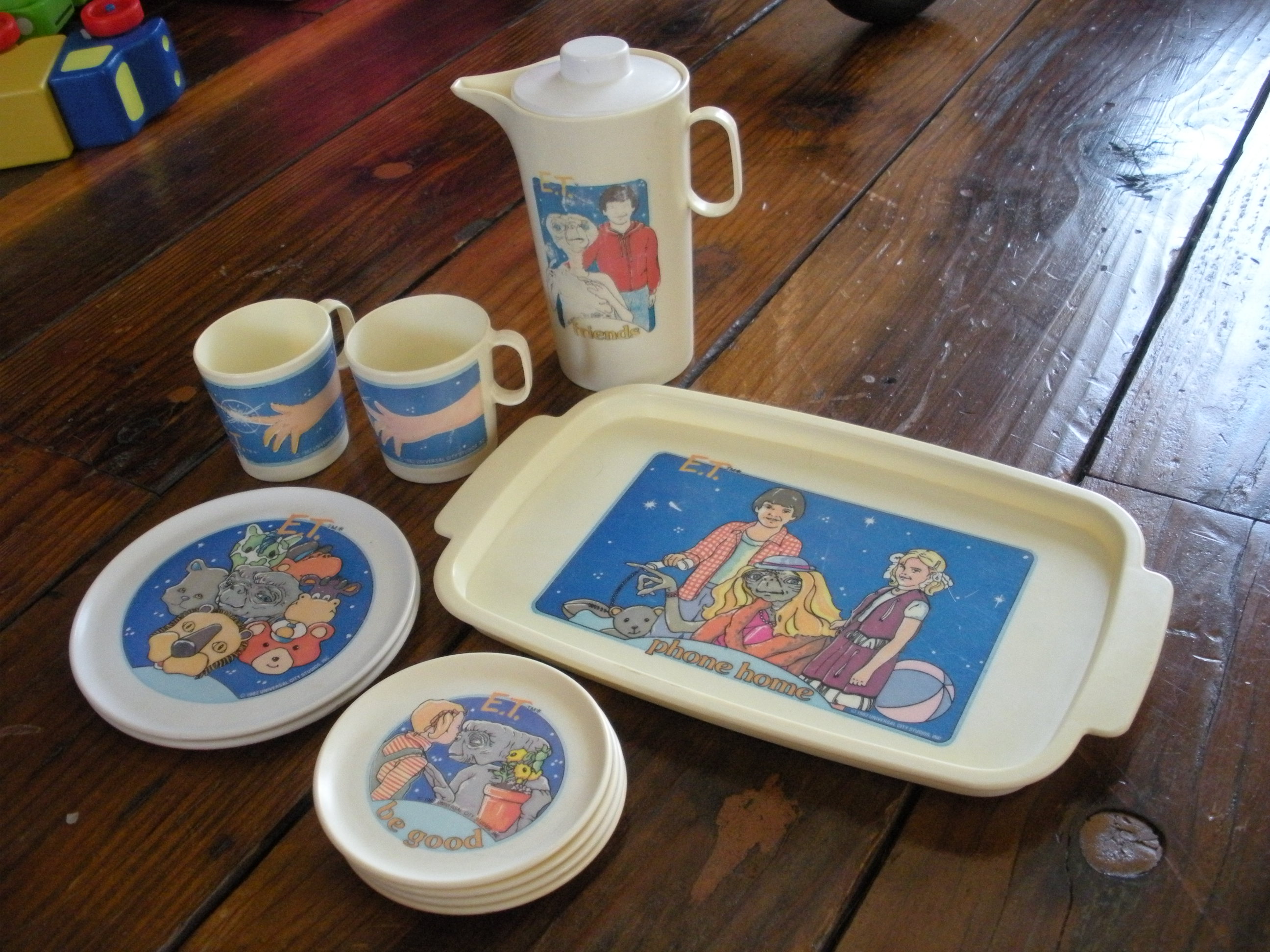
Photographic Evidence A

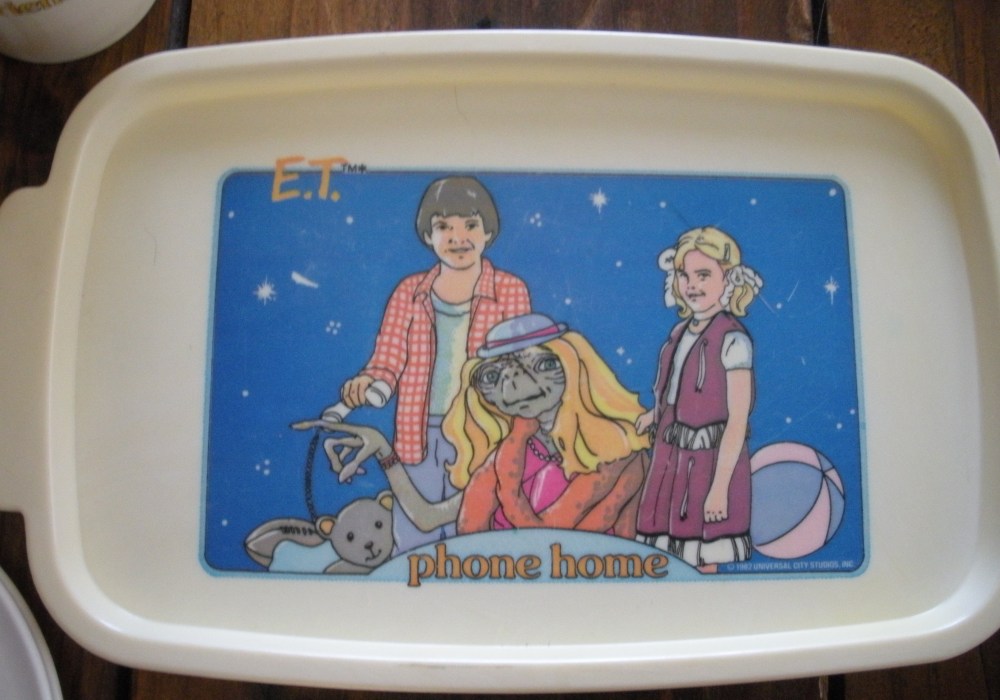
This is my E.T. Tea Set, circa 1982. Utterly fabulous. I had to battle TWO black widows to rescue it from the clutches of my doll closet. The doll closet is a whole other picture, but I’m not about to venture out to the Love Shack (garage/guest room) at night to take a photo.

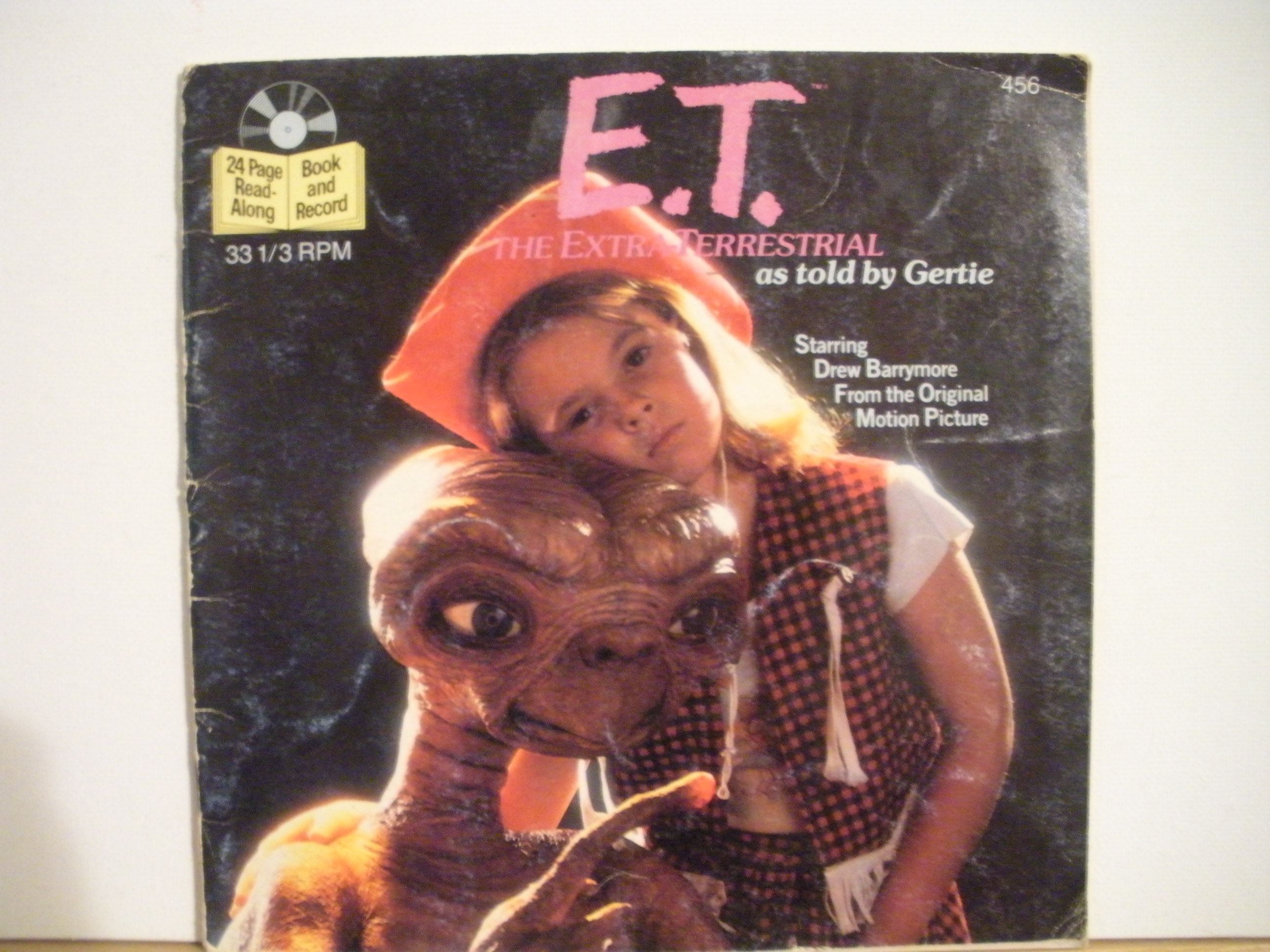
Photographic Evidence B

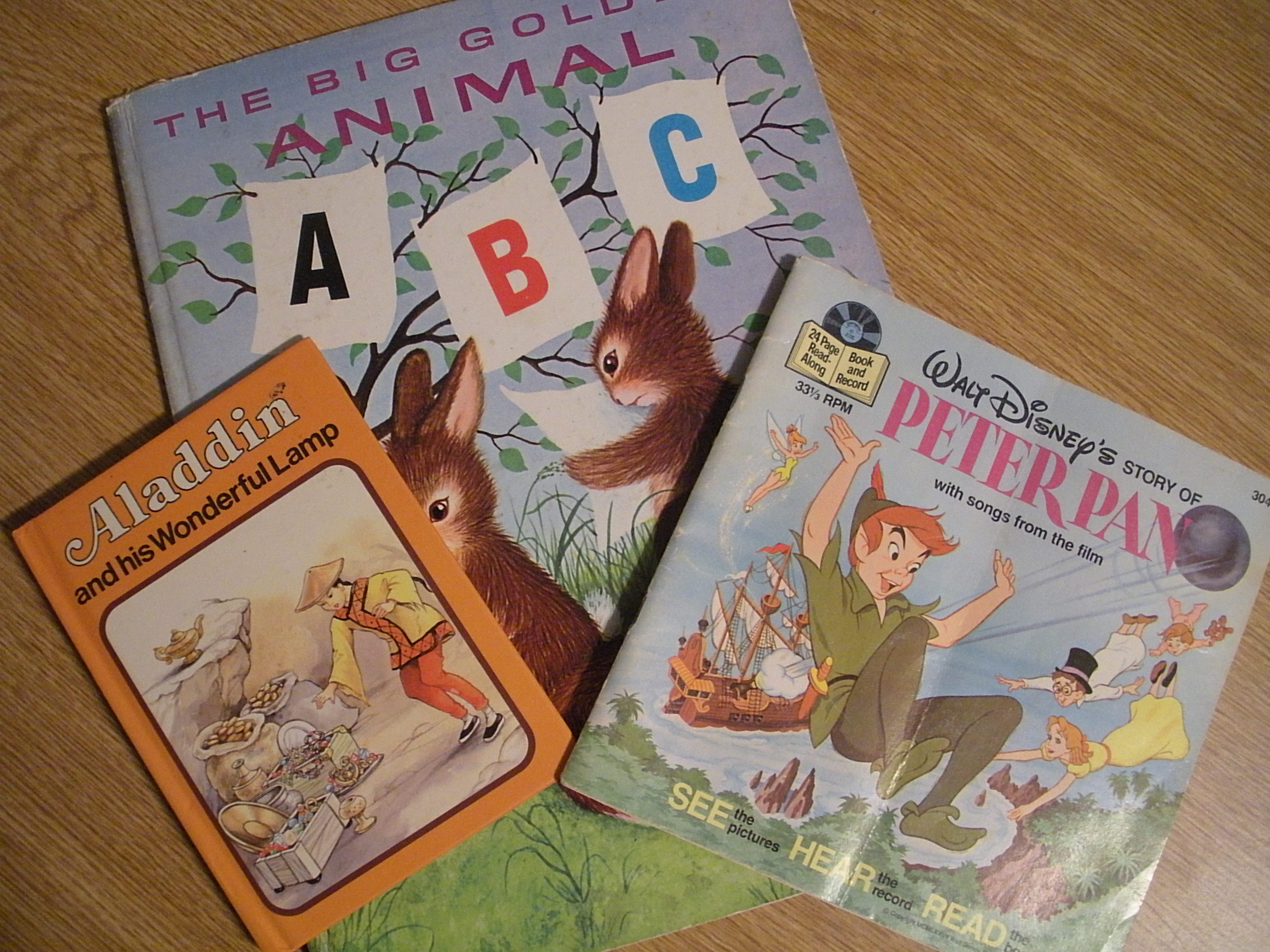
Here we have the companion to my tea set, a Read-Along Book & Record set. Not pictured are my “Gingerbread Man” and “Walt Disney’s Peter Pan” Book & Record sets.

Sadly, the records have disappeared. Not that I would know what to do with them if I had them. Z might use them for serving platters for her tea parties.

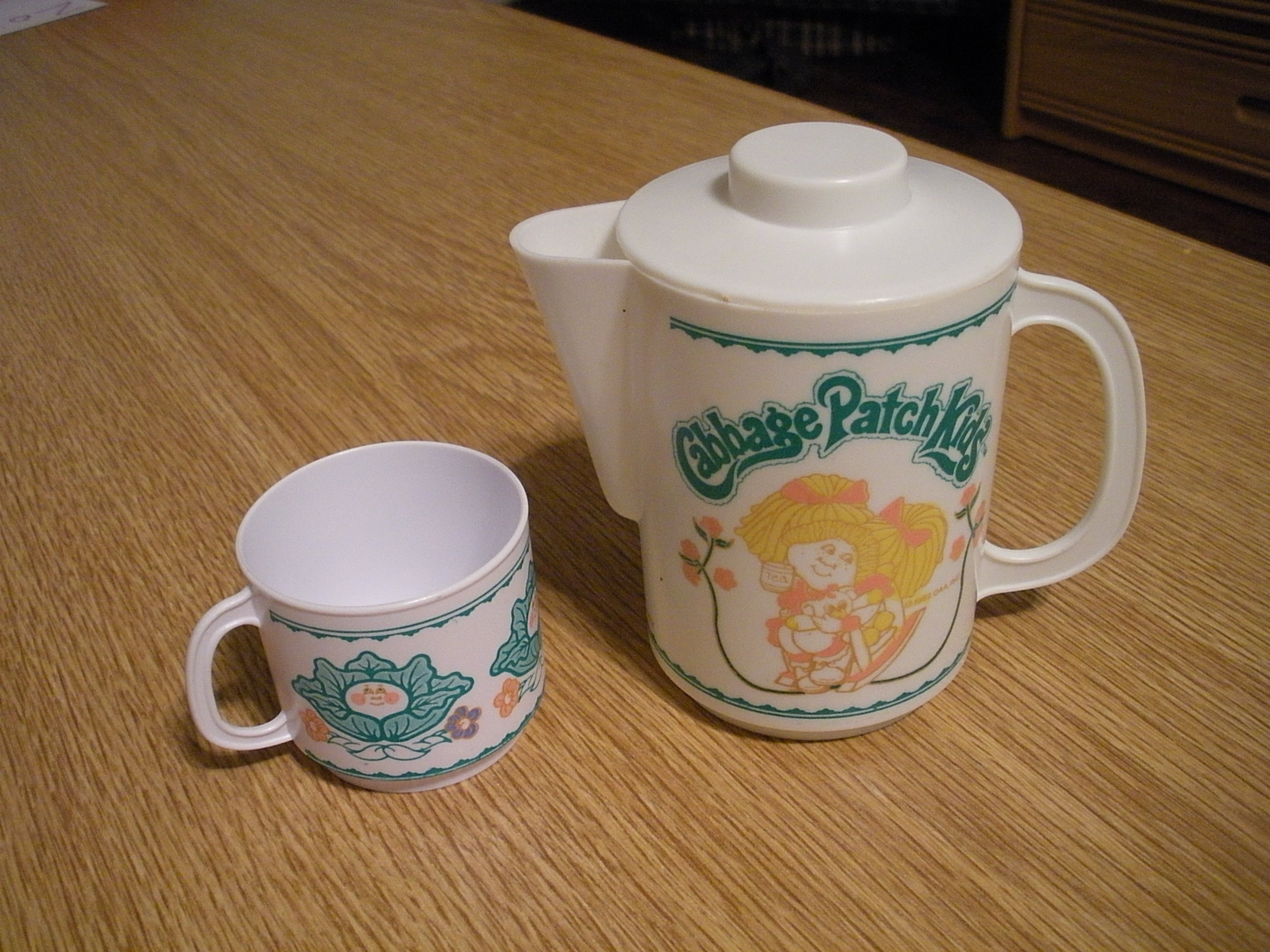
Photographic Evidence C

See the treasures I have unearthed! It’s The Cabbage Patch Kids! What joy!

Photographic Evidence...What Letter Am I On?

Vintage souvenir t-shirt from Great America (now Six Flags or something completely different. I’m hoping I never have to keep track).

Photographic Evidence Too Much

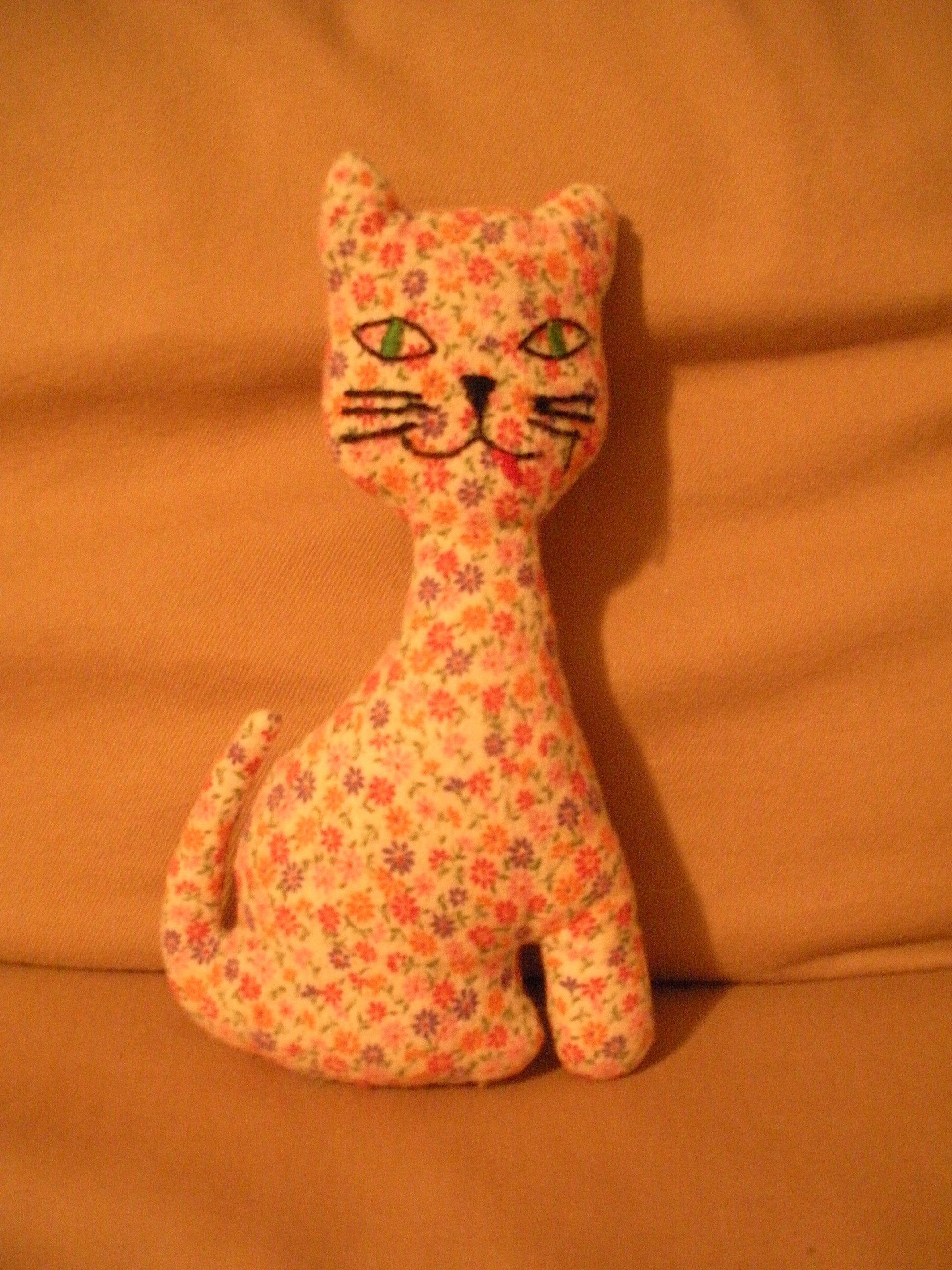
Is there no end to the wealth of wonders? This flowered cat is companion to…I kid you not…a flowered camel. Don’t ask me why.

I’m SOOOO glad I saved them though!

Photographic Evidence The End (Finally)

There are scores more books where these came from. [Hey look, it’s the Peter Pan book!] Her current favorite books include “Bedtime for Frances” (mine), “E.T. Read-Along” (mine), and “Peter Pan Read-Along” (also mine).

All of this, and more. As my parents will tell you, since they hauled it all to our garage as soon as we bought our house.

And these are just the things I found lying around. I didn’t have to search for them. There’s also the unicorn shirt which I desperately wanted a photo of, but Z happens to be sleeping in it right now. It screams 1980s.

If I can’t give my daughter good looks (like I need to; she’s beautiful on her own) or any of my other desirable qualities, at least I can give her lots of cool junk.

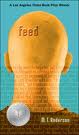
Feed by M. T. Anderson

That’s the problem with literary fiction. It makes you feel.

And that’s what Feed did to me, and I actually sort of hate it for that. I don’t like sad stuff. I don’t like it when the dog dies, and I don’t like waves of hopelessness crashing into the beaches of my brain.

So, thanks a whole effing lot, M. T. Anderson. [Don’t worry, the dog doesn’t die. There is no dog, because Feed takes place on an earth where animals can’t even live anymore. All the dogs probably died way before the story begins.]

Okay, in all seriousness: Feed was amazingly written. I already heard literary agents praise its voice, so I was totally paying attention to that. I’m also really big on unique idioms and slang for unique worlds. Apparently Anderson is really big on this too, because in a couple of places the slang was nearly indecipherable. In fact, I’m still unsure of whether a “youch” girl is good-looking or just the opposite.

*vague spoiler alert*

But did it have to be so bleak? I mean, come on. There was like the barest note of positive at the end—the smallest straw of positive—so small I could barely grasp it—and the entire time I’m reading I’m quoting T. S. Eliot in my head (which you know is a bad sign):

“This is the way the world ends
This is the way the world ends
Not with a bang but a whimper.”

Let me emphasize that my discomfort with this book is more about me than the book itself. As I said, the writing’s great, as is the story. It’s just my own preference is for something a little lighter that doesn’t have me reaching for the Prozac after the story ends.

The whole thing with the lesions: disgusting.

Funniest part: the beef farm. But I had to stop eating my breakfast while I read it.

Saddest bit: disposable table. Okay, that’s not really the saddest bit, but it was pretty sad. Just, the state of the world, that people not only dine on disposable dishes, but they throw their table away at the end of the meal.

Am I glad I read it? Yes. Will I buy the book to enjoy again? Not a chance. I prefer my happy endings, thank you.

Keeping Ahead of Trends in YA Lit

Weekend Writing Special

You’ve finished the first draft of your young adult manuscript. It’s new! It’s got a great hook! Nobody has done anything like this before! It’s a reality-television-show-to-the-death featuring vampire-esque aliens. You imagine literary agents begging, no, clamoring, for your manuscript. Your idea is The Newest Thing.

Until, a few weeks later as you’re hard at work on revisions, all of a sudden everyone has done this. And their books are being published Right Now. That author of Twilight (whose name I keep forgetting) does a horror reality television show novel. Suzanne Collins has something with alien-vampires. J. K. Rowling creates a Harry Potter spin-off featuring vampires who run a television series about aliens.

My personal experience with this is not nearly as extreme or ridiculous. I had this idea for a future, post-apocalyptic setting for a novel, and I dove (dived?) right in. Minutes later, I read The Hunger Games. Then The Forest of Hands and Teeth. Then, while reading Publishers Lunch from Publishers Marketplace, I found two other post-apocalyptic YA trilogies due out in a year. How can I compete with that?

I can’t. Not as far as the general idea goes. No one can. In a lot of ways, we are all tuned into the collective unconscious. We read many of the same books, watch the same movies and television shows, hear the same news stories, and on and on. My hook has to be more than “post-apocalyptic” etcetera and so forth. An intriguing story idea can do a lot…

…but an awesome character does so much more.

An author friend of mine was worried about this a few months ago, as was I. We’d just finished revisions on our manuscripts (we thought) and we were ready to embark on our new projects. “I’m thinking vampires,” she said. “But it’s been done, you know?”

I did know. I wrote one. And then I told her something I should pay attention to myself: if the characters are memorable and compelling, it doesn’t matter what the setting is, or what creatures they are. Vampires, werewolves, telepathic fairy-kin, selkies, were-amoebas. After all, we’ve read contemporary fiction featuring regular old humans for…hmmm…just about forever. Humans? Regular people? In a regular setting? How boring…not. Most of Sarah Dessen’s books feature teenage girls in the same little town in North Carolina. I’ve read every single one of them because her characters are fabulous.

So it’s not just another vampire book, or another post-apocalyptic zombie book, or another (sigh) werewolf book. It’s a real story featuring a compelling character who deals with an intriguing, gripping conflict. You don’t need to keep ahead of trends, or even worry about them, if you’re writing what you love and focusing on your own unique characters.

NiFtY Interview with Josh Fernandez

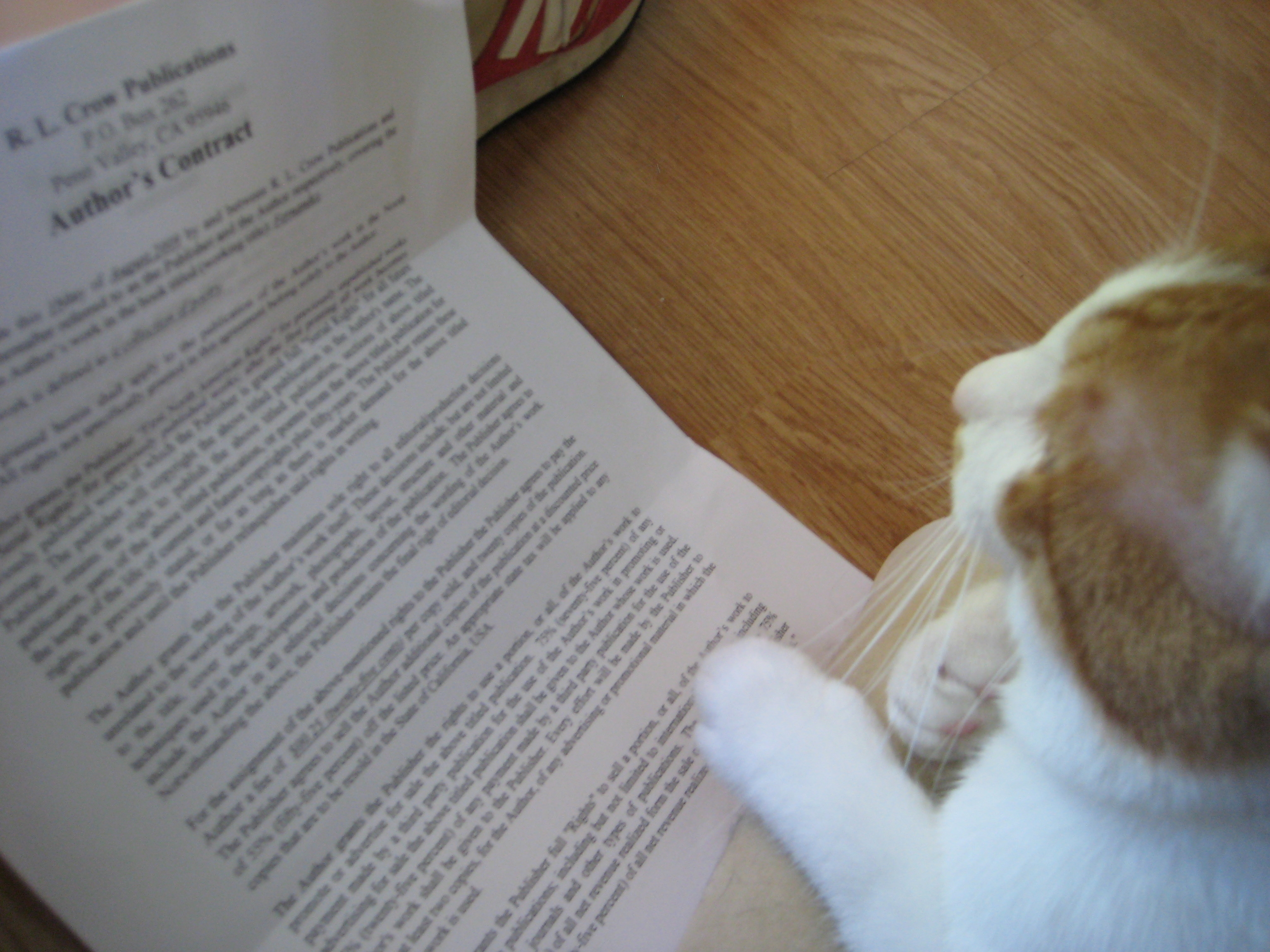
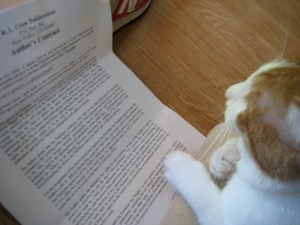
Kato Peruses an Author Contract (Oh if only my Clarkie could do the same!)

For my second-ever Not-Famous-Yet Author Interview, here is Josh Fernandez. He’s an amazing writer with a hilarious, irreverent voice, and he has a book of poetry coming out this fall. It seems I’ve snagged him for this interview just before his jump into fame. Okay, so publication does not equal instant fame. For instance, I, like many other people, still have no idea who wrote that weird Twilight book.

BH: What’s your one-paragraph pitch for Stickup Kid?
JF: Buy it or I’ll murder you! No, it’s an exciting little story about a small half-Mexican, half-Caucasian kid named Bear who lives with his mom in Brookline, a very Jewish suburb of Boston. One day Bear separates from his class while they’re on a field trip and he meets a man named Stoop. Bear runs away from home and finds Stoop, who takes him in and teaches the naïve boy about his Latin heritage, but he also teaches him the art of being a stickup kid—a purse-snatcher, a robber, a thief …

BH: You’re one of the few people I know who actually makes a living from his writing. What do you write to pay the bills?
JF: I write mostly arts and culture stories. I write for Spin.com, Sacramento News & Review, Boulder Weekly and some other papers that are scattered throughout our glorious country.

BH: How do you think your nonfiction writing influences your fiction, if at all?
JF: Non-fiction writing has helped me write fiction in a number of ways. It’s really helped me find a voice. My goal when writing for newspapers isn’t to be a solid journalist; my goal is to simply entertain the reader. I get a lot of hate mail. News writing has also helped me find the focus of whatever I’m writing. Nobody wants to read a long, blathering story, except for my grandpa. But he could barely read. And I think he was just pretending to read, trying to escape my grandma. RIP, gramps.

I also write poetry, which helps with everything except for money. Although, I just signed a contract with R.L. Crow press. They are going to publish my first full-length collection of poems, tentatively titled Dancing to Genocide. It should be out in the fall.

BH: What is your writing schedule like?
JF:  I’ve never really had one until I started writing Stickup Kid. I’d kind of just write when I felt like writing, which kind of ended up being all the time. But for the novel I got up every morning at 8, went to the coffee shop and wrote until 2 or 3. It was important that I did that because I have a tendency to stay in my underwear all day and watch YouTube videos of high school kids getting hit in the nuts with various objects.

BH: Voice is one of the aspects of Stickup Kid’s beginning that I admired the most. It’s also a quality all writers are after, and something which confuses many beginning writers. Do you have any tips to share on how to cultivate voice?
JF: I think basically you have to just have a voice. Sometimes I teach a writing class at Sacramento City College and I ask the students if they ever have thoughts that pass through their heads that they’d never tell anyone because they seem weird or sick. They always say “Yes.” Then I tell them to take those thoughts, write them down and then throw away everything else. And then they don’t say anything. Because they’re all asleep. Because I’m really boring. The point is, you just have to be unafraid to grab the core of who you are and put it down on a page. Nobody wants to read the outer part of you that’s been influenced by the outside world. That’s already been done. People need to read the inner you. That’s very new age. I learned that from Yanni.

BH: Your blog title “I Know, I Hate Blogs Too!” just begs me to ask what it is you hate about blogs. So, what do you hate about blogs?
JF: I don’t hate blogs. I just hate bloggers. Ha! I am a blogger, so what does that say? Really, it’s just the journalist in me that hates the idea of people who don’t get paid taking our jobs because they offer their blogging service for free. There’s so much bad journalism now because of this idea that “anyone can be a writer!” It’s the same with self-publishing. Anyone can say, “I’m a published author!” and then be a writer, while the rest of us who are actually trying to write stuff that people will read get left in the dust. Basically, I’m saying “Waaaaah!” But in more words.

BH: Since I started my own website/blog, I discovered roughly 167,738,744 other writer blogs and websites. Are you an island or do you frequent anyone else’s?
JF: Oh I read blogs all the time. I kind of just cruise around to see what other people are doing. I can’t really think of any off the top of my head, though.

BH: Can you compare Bear, the main character in Stickup Kid, to anyone you know in real life?
JF: I based a lot of Bear off my own life. And I took parts of friends from childhood and put them into his character. There are a lot of things that happened to me that also happened to Bear. All the good, heroic things were me. The horrible and twisted stuff was, um, my friends. Yeah.
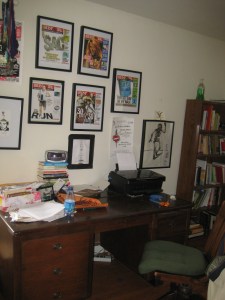
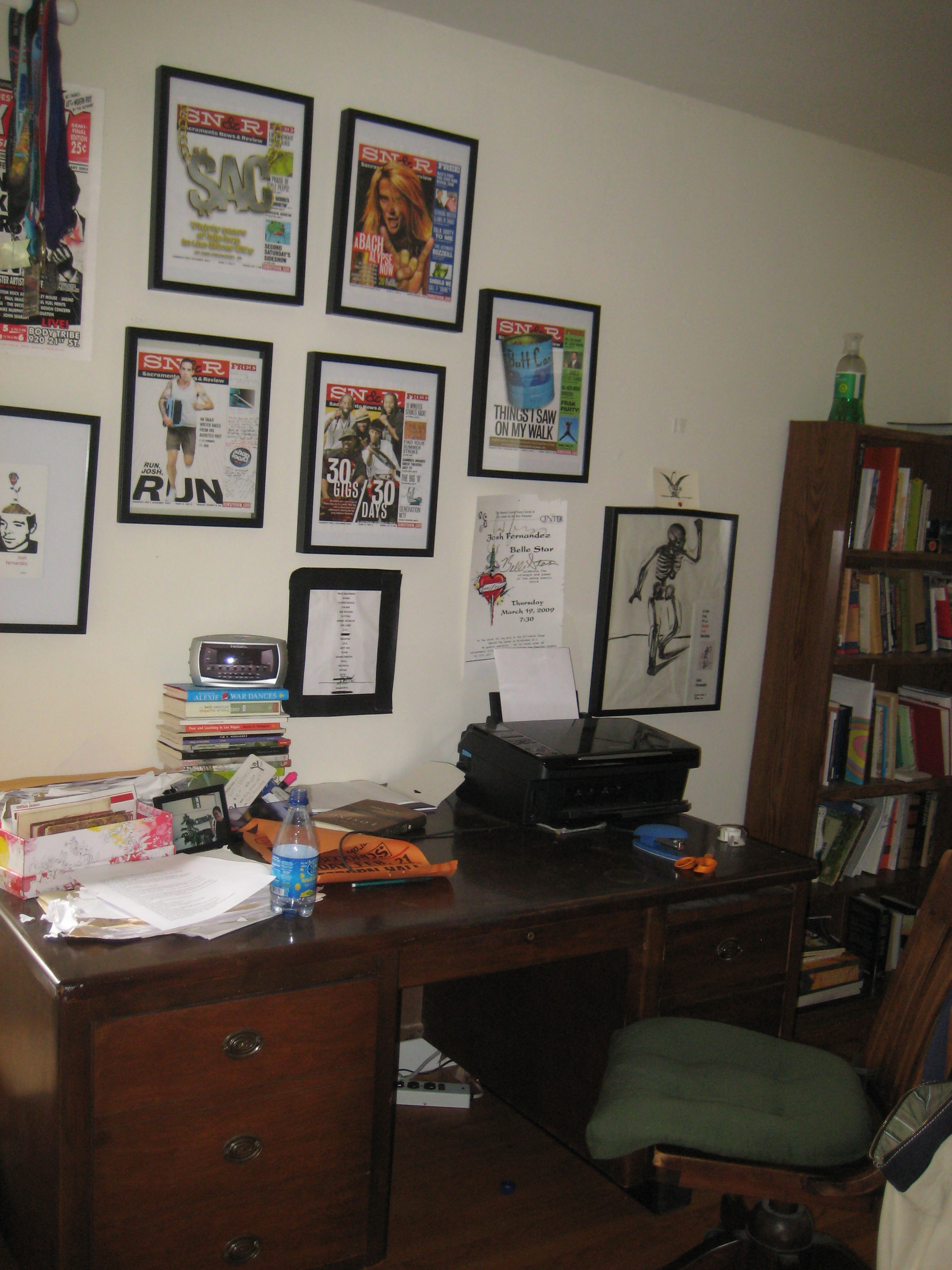
BH: What does your writing workspace look like?

JF: Pictures! We have a spare bedroom that we made into an office. It’s good to have an office without a TV. I’d never get anything done with the possibility of Judge Judy lurking nearby.

BH: What is your favorite book on the craft of writing?
JF: I really like Robert Pinsky’s The Sounds of Poetry. It allows you look at words in an entirely new perspective. The first time I read the book it made me a little insane. I had no idea words were that delicate.

BH: Last we spoke about it, you were revising Stickup Kid with an agent’s guidance. Where are you in the process? Have you signed a contract with that agent?
JF: I’m editing it right now. When I’m done I’ll hand it over. They want the cleanest copy I can make. After that, if they like it, which hopefully they will, actually, I don’t know what happens after that.

BH: How did you & the agent originally connect?
JF: Luck! I set up my website and one of their interns happened to click on it. He read the part that mentioned I was writing a book and he told me to send the first 20 pages. So I did.

BH: What is the best writing advice anyone has given you?
JF: It was something about a bow. It was like: make your paragraph like a bow, tight enough so that when you pluck it it will resonate with the perfect pitch. Crap, no, that wasn’t it. I get a lot of great writing advice, but then I forget everything. My mind is small.

BH: Do you “tweet”?
JF: Yes. I was totally against it, but then I realized that it was another way to get my stories out there so I’m getting used to twitter.

BH: Why do you want to be published?
JF: That’s a great question. It’s all a blur now. I’ve been mulling the story of Stickup Kid in my mind for so long that I just wanted to get it out. I really like the story and I honestly think that other people will like it. I like to write stuff that I like to read. I kind of want to see if other people like the same stuff that I do.
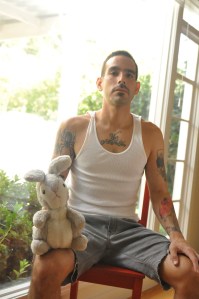
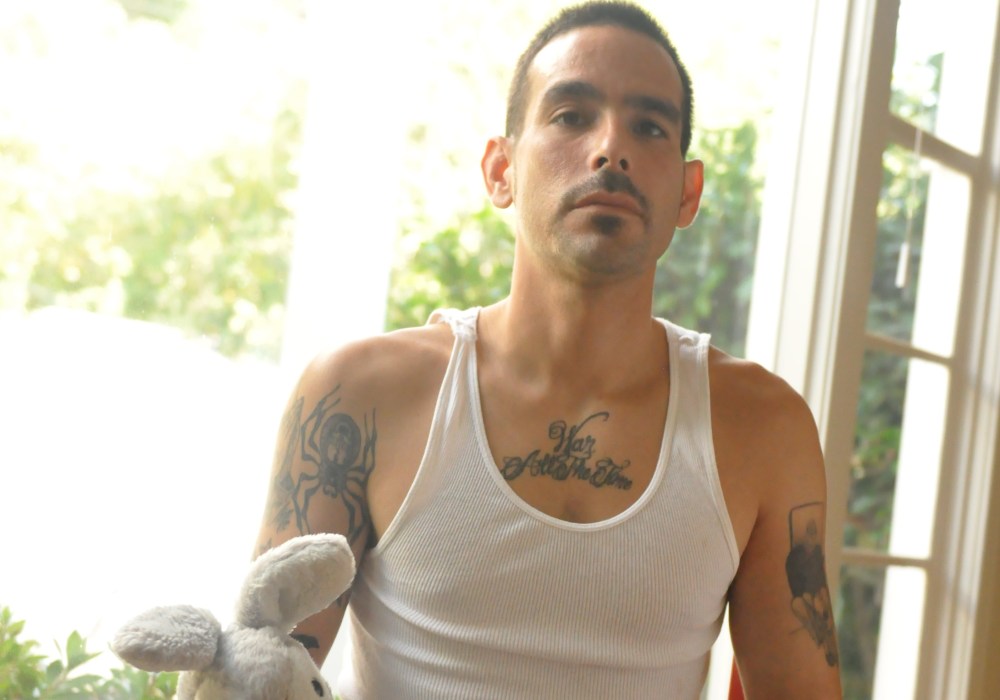
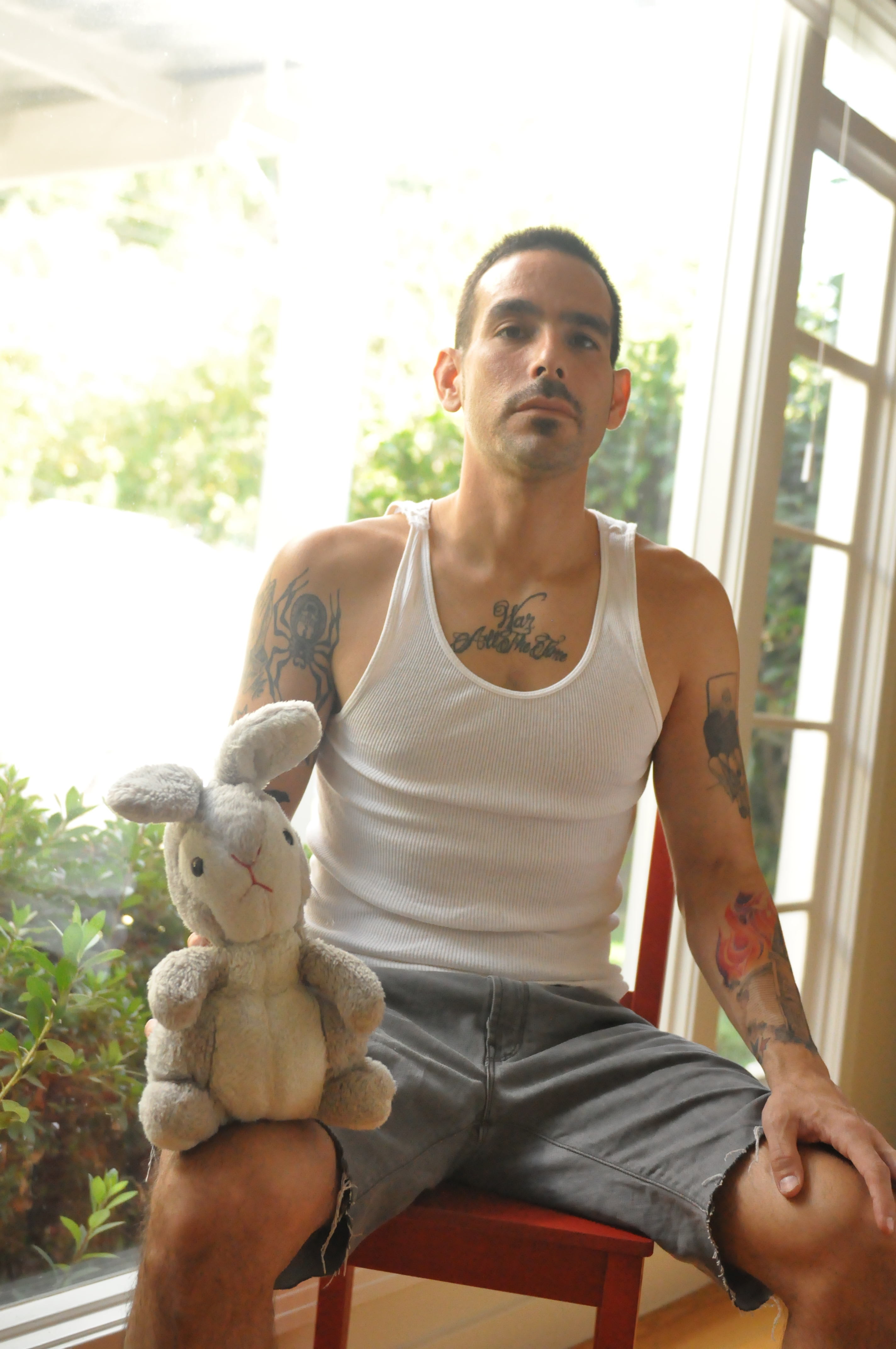
Here's the feature image without Josh's forehead cut off. I spent at least an hour trying to fix the feature image. Sorry, Josh. Love the bunny.

BH: Any words on advice to other writers for keeping the hope alive?
JF: Writing isn’t a very hopeful profession. I think it’s a great hobby, but there’s a lot of heartache and rejection in the world of writing. I am the kind of person who expects to be rejected, so when I’m not I feel like I’ve tricked someone. It’s great. Not all people are like that, though. A lot of people expect to be published and expect people to gush over their writing. And when they don’t get published they blame everyone else. It can’t be like that. You have to pay a ton of dues, and when you’re done paying dues, you have to stand there while people dangle pink slips in front of your face that say “We’re sorry, Mr. Fernandez, but we regret to inform you that your story isn’t what we were looking for …”.  Man, that was like the least hopeful thing I’ve ever said. Sorry. I’ll just say: Keep the hope alive!

There you have it, folks! Words from very-nearly-famous author Josh Fernandez. When he’s famous he’s promised to get us all book deals with his amazing influence. Not really. I’m promising that for him.

Thanks again, Josh, for the interview!

You can check out Josh’s website by clicking here.