NiFtY Author: Erica Perl AND Contest!

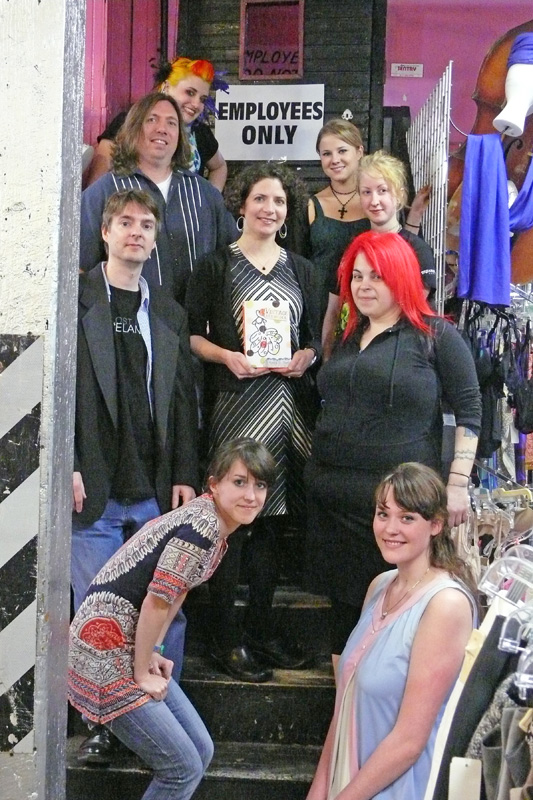
Erica Perl and employees of The Garment District, the store that inspired the Clothing Bonanza

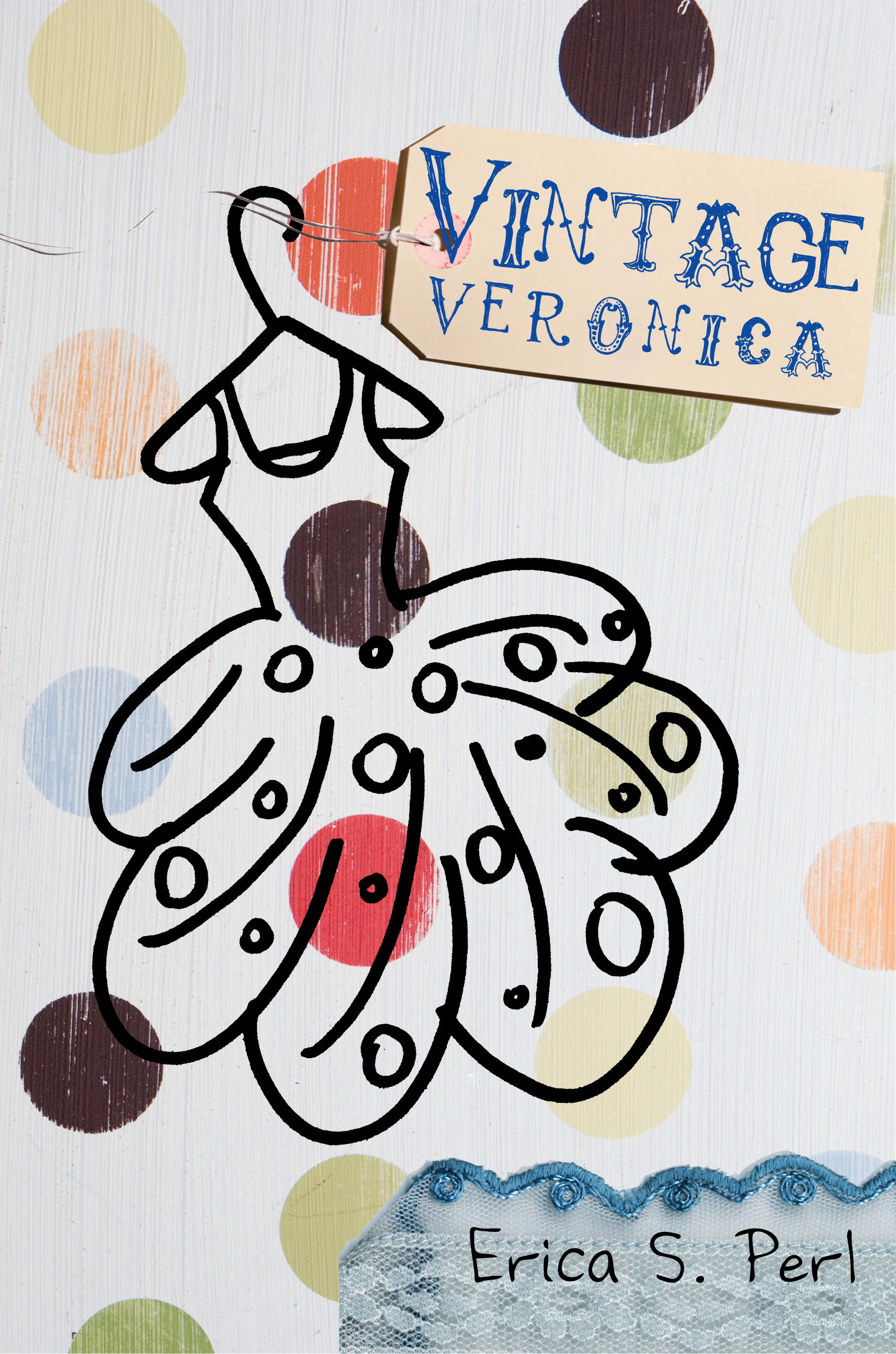
Exciting times, amigas, amigos, y rivales! This is the second week in a row I’ve had the privilege of interviewing an author whose book I randomly plucked from the shelf AND WAS SO GLAD I DID. Erica Perl wrote Vintage Veronica, (you can click here to read my review), and now she’s agreed to answer some questions about her book and her writing. She’s also agreed to give away a signed copy of her book!

BH: What’s your one-paragraph pitch for Vintage Veronica?

EP:  Veronica Walsh is 15, fashion-minded, fat, and friendless so her summer job at a vintage clothing mecca is a dream come true. There Veronica can spend her days separating the one-of-a-kind gem garments from the Dollar-a-Pound duds without having to deal with people. But when two outrageous yet charismatic salesgirls befriend her and urge her to spy on and follow a mysterious and awkward stock boy, Veronica’s summer takes a turn for the weird. Suddenly, what began as a prank turns into something else entirely. Which means Veronica may have to come out of hiding and follow something even riskier for the first time: her heart.

I also think you can get the flavor of the book via my book trailer.  Here’s the link:

http://www.ericaperl.com/vintage-veronica-video/

and here it is on youtube:

http://www.youtube.com/watch?v=udRBvaJvT_M
BH: Veronica has a wonderful voice. Can you share with us some of the joys (and challenges) of writing such an engaging character?

EP:  Thanks!  The joys were many, since Veronica has a lot of attitude, so I had fun letting her give voice to many things that I wouldn’t necessarily say.  For example, she’s snarky to Bill, her co-worker at The Clothing Bonanza, at a point where he’s pretty much her only friend.  I think the challenge was making it clear that she’s pushing people away because she’s scared of being rejected (again) herself.

BH: Where did you get the inspiration for the Clothing Bonanza? Have you been to a place like it? If so, where is this magical store?

EP:  The store that inspired the Clothing Bonanza is The Garment District, which is located just outside of Boston in Cambridge, Massachusetts.  I researched the book there and many aspects of the store and its long history made it into the book (the Yellow Brick road, at one time, existed as did the store cats, including Rags).  Here’s the store’s website, which also contains some fabulous archival photos as well as current store info.  It is very much worth a trip.  And the store was phenomenally supportive of the book, welcoming me while I researched and wrote it, and then hosting a launch party for it when it came out!
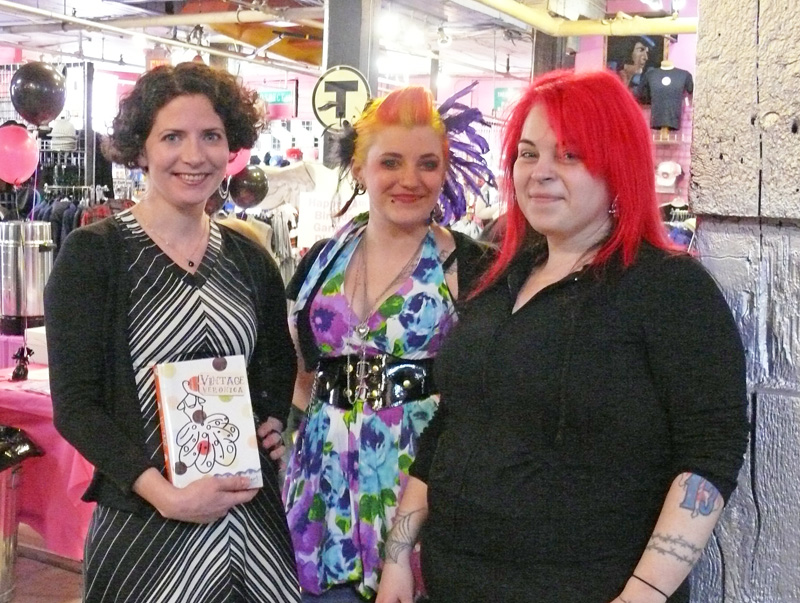
Erica Perl (on left) at The Garment District for the Vintage Veronica book launch

BH: So, Veronica does some things that a conservative readership might find offensive. (I’ve been thinking about this a lot since October’s Banned Book Week.) Have you had any negative experiences because of this?

EP:  So far so good.  I occasionally wonder if I should have toned down the language, since I feel like the younger segment of my readership (11-13 year olds) might not get their hands on the book in more conservative areas.  But I really wanted the dialog to feel real so I tried to reflect the way 15-19 year olds actually talk.

I also wanted to use Zoe and Ginger’s coarser commentary as a means of showing that they are older and more confident than Veronica.  She’s a little shocked by them, but also enthralled.  I feel like there’s room for good adult/teen conversations in this, since it is a common situation for younger girls to find themselves in.  So I’m glad to hear that many librarians have been championing Vintage Veronica as a book that battles bullying (and offers a positive depiction of a plus-size girl who doesn’t have to lose weight to find happiness) rather than getting stuck on the fact that the language is a little edgy.

BH: Tell us about your path to publication.

EP:  If it was an ice cream flavor, it would have been rocky road.  I actually sold the book twice – along with my second novel, WHEN LIFE GIVES YOU O.J., which is a middle grade novel that will come out in June, 2011 – because of publishing industry ups and downs.  However, after a long and bumpy journey, the happy ending was landing at Knopf with my wonderful editor, Erin Clarke.

BH: What does your workspace look like?

EP:  Well, it is clean and well-lit and there’s great – if somewhat expensive – coffee.  In addition to Starbucks, I write in a room the size of a postage stamp that has not one but three desks in it.  Yes, I share my office with my two daughters.  We call it The Drawing Room, which sounds very sophisticated but really it’s just because we all like to draw.  And write.

BH: What is your favorite book on the craft of writing?
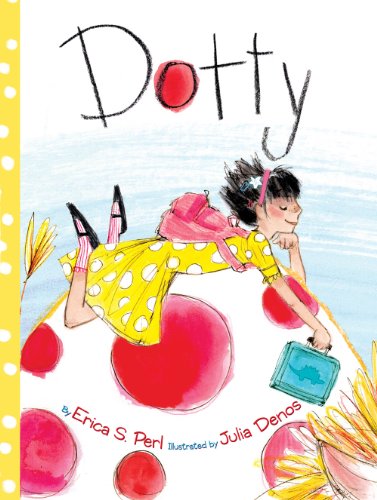
EP:  I love Leonard Marcus’ Ways of Telling, which I think is out of print.  It is interviews with picture book creators about craft (I write picture books in addition to novels.  My most recent is DOTTY, illustrated by Julia Denos.  I am also the author of CHICKEN BUTT!, illustrated by Henry Cole.  There’s now a CHICKEN BUTT! doll and the sequel, CHICKEN BUTT’S BACK!, comes out in April, 2011).  I also like Bird by Bird by Anne Lamott, even though the birds in question are not chickens.

BH: There is a lot to like about putting the word “butt” into the title of a story. What is the best writing advice anyone has given you?

EP:  I think the best writing advice is that of Jane Yolen:  it all boils down to BIC (butt in chair).  In other words, put in the time writing and then figure out later whether you have anything to work with.

BH: Any words on advice to aspiring writers for keeping the hope alive?

EP:  It’s a corollary to write what you know: write what you love.  In other words, don’t write a book because you think it is the kind of book you “should” write.  Write about what you are passionate about, and work on it until it is as good as it can possibly be.  Vintage Veronica took eight years start to finish.  I hope that is inspirational and not discouraging!

BH: Erica, thank you for taking the time to visit and answer some questions for us. It was delightful!

You can visit Erica’s website by clicking here, or click here to buy her book on Amazon.

And didn’t I say something about a contest? It’s my first ever, and a big thank you to Erica for making it possible. So, the rules are simple. The giveaway is limited to the continental United States (sorry, overseas people…unless you have an address here you’d like the book shipped to!). To enter, leave a comment and do two things:

1) respond to something Erica says/writes in the interview, and

2) share who your favorite strong heroine is in YA literature (if you pick Bella Swan you better be prepared to explain your reasoning).

If you tweet about the contest & share this link, you can get an extra entry (limit one extra). Just comment with the link to your tweet so I can verify that everything’s on the up & up.

The winner will be picked out of a hat at random. Well, his or her name will be picked out of a hat…not the winner in person, which would be too strange.

Deadline: Sunday night, 11/14/2010, 11:59 p.m. PST. Winner announced sometime on Monday.
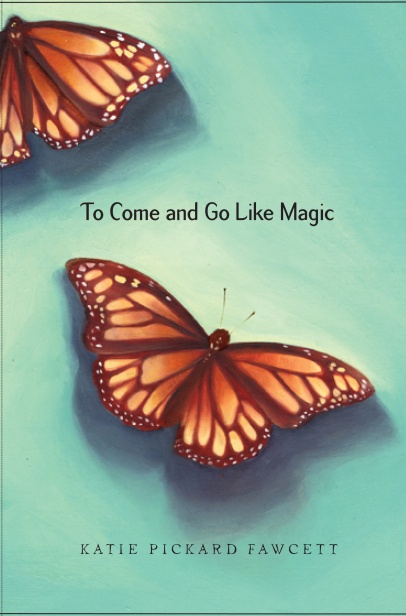
NiFtY Author: Katie Pickard Fawcett

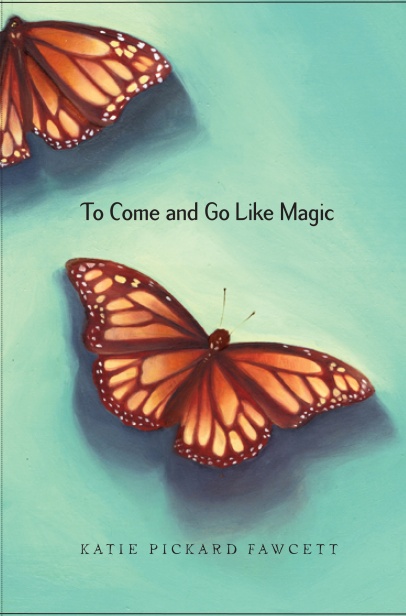
A few months ago I reviewed Katie Pickard Fawcett’s book To Come and Go Like Magic (click here for the review), and I was delighted when she agreed to an interview on my blog. So without further blather on my part…here’s a truly inspiring interview!

BH: I could be wrong, but To Come and Go Like Magic seems like one of those books that the author just had to write…like you couldn’t not write it. What inspired the story?

KF: My own childhood growing up in Appalachia was the inspiration for the setting, characters, and experiences.  Some years back I read The House on Mango Street by Sandra Cisneros and loved the way she told the story in vignettes.  I was excited to write a book about Appalachia in this style with glimpses into the lives of many different characters.

BH: Chili, the main character, longs to see the world. Then she befriends her teacher Miss Matlock, who has traveled extensively. Did you ever have a Miss Matlock in your life?

KF: No.  I didn’t have a teacher who had traveled the world and came back with stories to tell.  I did, however, have several wonderful teachers who read great books to us, encouraged me to write stories, and offered interesting classroom activities.  The trip to Mexico chapter in To Come and Go Like Magic was very similar to a geography activity we did in fifth grade.  Miss Matlock’s travels, her interest in the Monarch butterflies, in hiking in the Andes, and in the rainforests of Central America come from my own experiences.

BH: Another fantastic element of To Come and Go Like Magic is the setting. How much of the story’s setting is based on your imagination, and how much is based on your actual experiences in Appalachia?

KF:  I grew up in Eastern Kentucky so the setting is based entirely on the actual area and the environment, activities, problems, and concerns of the 1970s.  The characters, story, and most of the place names are fictitious.  I kept the name (Cumberland) of the real river.

BH: Your book is told in vignettes, and in some places these vignettes have such flowing language I think of them as prose poems. Was this your intent from the beginning, or did the format emerge as you told the story?

KF:  I love poetry and I enjoy writing “snapshot” pieces, so my writing tends toward the poetic.

BH: Can you tell us about your experience publishing To Come and Go Like Magic?

KF: I sent To Come and Go Like Magic to Random House and got a call and a contract within the month.  Sound too good to be true?  The complete story is a bit longer.  I worked for ten years in the publishing department of an international organization writing pieces for the house journal, summaries of development projects, and publicity pieces, and didn’t have much time to write fiction.  I was also a social worker in Kentucky, worked for a consulting firm in Washington, DC, and spent three years at various jobs at a university.  I majored in psychology, sociology, and education in college.  I also tutor and teach writing workshops and SAT prep on occasion.  I wrote a young adult book several years ago and sent it to Dutton.  They had me do two rewrites and then rejected it.  Ditto for Scholastic.  Then off to Random House.  After the second rewrite, my editor said she was willing to read it one more time.  I figured it wouldn’t fly.  So I asked if I could send her another manuscript I had lying around and she agreed.  That was To Come and Go Like Magic.  I spent about 6 years researching, writing, and revising the first book that got rejected by three big publishers over a period of 3 or 4 years.  I spent about 6 weeks writing To Come and Go. Just goes to show that “write what you know” makes sense.  Research was limited primarily to fact checking the dates for songs and foods and movies mentioned in the book.

BH: That is amazing, and heartening at the same time. I’m not surprised, though – I really get that “inspired” feeling from To Come and Go.

What does your workspace look like?

KF: My preference by far is to work outside and I love my laptop.  I enjoy the flowers and birds and furry critters that visit.  When it’s raining or too cold to be outside I work in my study.  I have a window that looks down to the front garden and three bird feeders – two for the squirrels and one that’s squirrel-proof.  A family of blue jays comes by almost every morning for peanuts.  They often respond to my whistle if they’re in the vicinity.  My study is filled with books and doo dads.  I have a hummingbird mobile above my desk, starfish on the window sill, green plants, and a CD player because I like music in the background while I’m working.

BH: What is your favorite book on the craft of writing?

KF: I have three books that I enjoy opening and reading a chapter or two when the mood strikes.  Reading Like a Writer: A Guide for People Who Love Books and for Those Who Want to Write Them by Francine Prose is entertaining and filled with great humor and wisdom and excerpts from some of the best writers past and present.  On Writing Well: The Classic Guide to Writing Nonfiction by William Zinsser has been around since the late 1970s and is still an excellent guide.  Many of these fundamental principles can be applied to fiction as well as nonfiction.   If I had to choose a favorite, however, it would be a little book published in 1996 titled Poemcrazy: Freeing Your Life With Words by Susan Goldsmith Wooldridge.  This is a marvelous little book filled with many inspiring exercises for getting the creative juices stirring.

BH: Any words on advice to aspiring writers for keeping the hope alive?

KF: I have been writing stories for almost as long as I can remember.  I passed stories around in elementary school and in high school study hall.  It seems that I have always needed to write and, although it can be physically tiring and mentally exhausting at times and rejection is always disappointing, it has never truly felt like work.  Publication is a big plus, but has never been a necessity for me.  The old saying that “it’s only work if you’d rather be doing something else” applies.  I love to write and it’s the passion, I believe, that keeps the hope alive.

BH: Thank you, Katie, for the great interview. I learned from this, and I appreciate your responses, insights, and inspiration.

Studio Audience! For more of Katie Fawcett, and where to order her book, check out the links below.

Links:

http://katiepickardfawcett.wordpress.com/ (On my blog I write about Kentucky, DC, Mexico, Costa Rica, Ecuador, the Caribbean, books, food, flowers, squirrels, and anything else that strikes me.)

Order from Amazon –

http://www.amazon.com/Come-Go-Like-Magic/dp/0375858466/ref=sr_1_1?ie=UTF8&s=books&qid=1287454169&sr=1-1

Order from Random House — http://www.randomhouse.com/kids/catalog/results.pperl?keyword=to+come+and+go+like+magic&submit.x=17&submit.y=10&submit=submit

To Come and Go Like Magic was a Parents’ Choice Award Winner in the fiction category for Spring 2010   http://www.parents-choice.org/award.cfm?thePage=books&p_code=p_boo&c_code=c_fic&orderby=award

Also nominated on October 9 for the Amelia Bloomer Project Award – an annual booklist of the best feminist books for young readers chosen by the Social Responsibilities Roundtable of the American Library Association  http://ameliabloomer.wordpress.com/

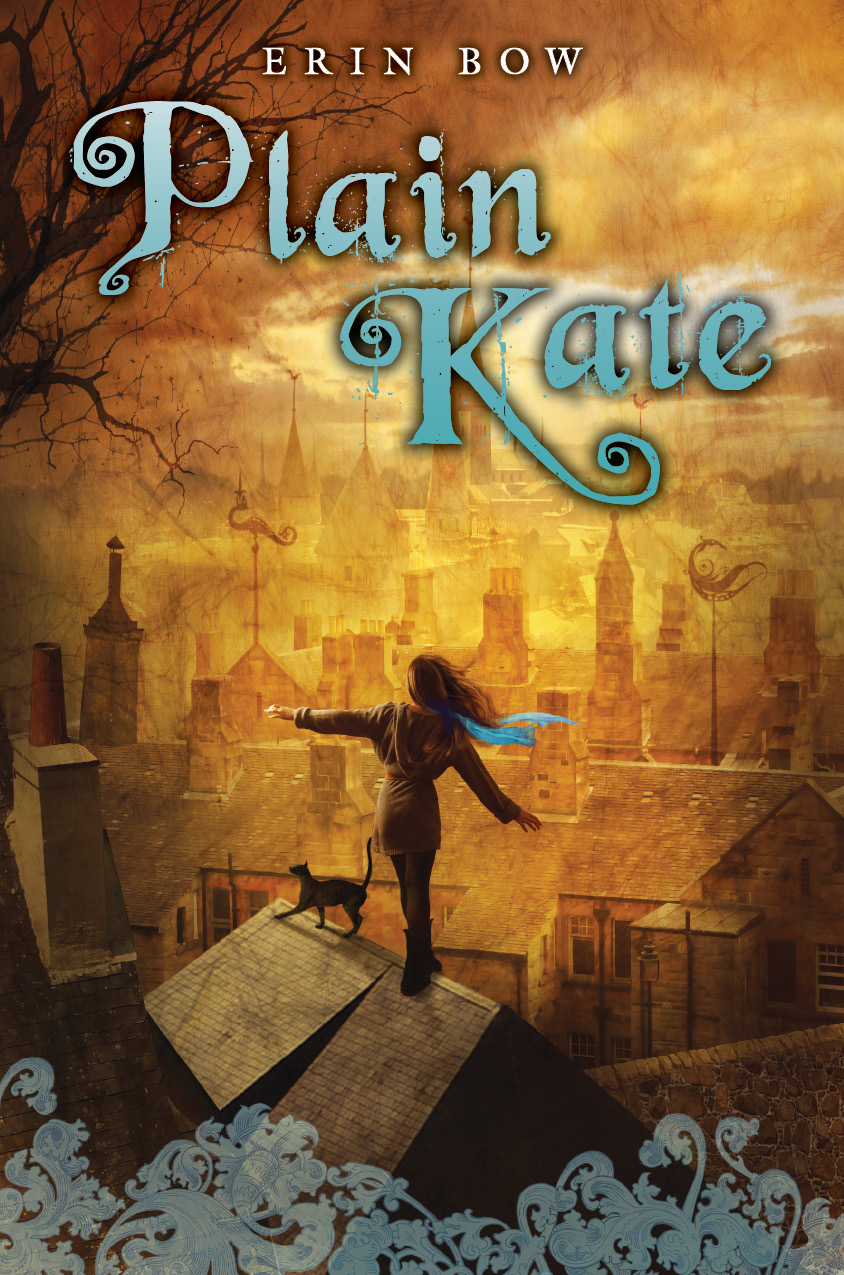
Plain Kate by Erin Bow

A copy of this book landed in my lap (thanks Mary!) and I devoured it.

Kate lives in (what sounds like) Russia in an era of magic and superstition. Her problem: her village has begun to think she is a witch. Yes, she is a carver (skill with a knife is a sign of a witch), she has different-colored eyes (ooh), and she has a cat friend who follows her everywhere (yup, definitely a witch). A mysterious man cruelly helps the witch rumors along, then convinces Kate to leave town, but not before trading her some survival necessities for…her shadow.

Beyond “did I like it?” (because I really, really did), do I think Plain Kate works? Overall, yes. Through the course of the novel I got to know Kate very well, from her love of wood-carving to her fears: of losing her shadow, of being kicked out of the Roamers’ caravan, of being alone. Knowing the character intimately is one of the best ways to get a reader to care.

As far as supporting cast – that is also very strong. My favorite supporting character was Kate’s sidekick, Taggle. A cat. I will say no more about him except you should read this book if for no other reason than to meet Taggle.

What worked best in the book, and what I will be re-reading this book to study, is how the setting and tone work together to create this beautiful, spooky mood. The lyrical prose (you know how I’m always raving about that) is also out of this world…unsurprising as Bow has also published a book of poems.

The beginning felt a little slow to me, but this could be because I was in such a rush to start reading that I didn’t give myself a good chunk of time to get immersed. Once I’d invested a half hour of reading time, I couldn’t put Plain Kate down.

To visit Erin Bow’s website, click here. If you visit, be prepared to forget whatever else you had planned. I found an absorbing essay on her “Odds and Ends” page and stayed up late to read the whole thing.

NiFtY Author: Elizabeth Kolodziej

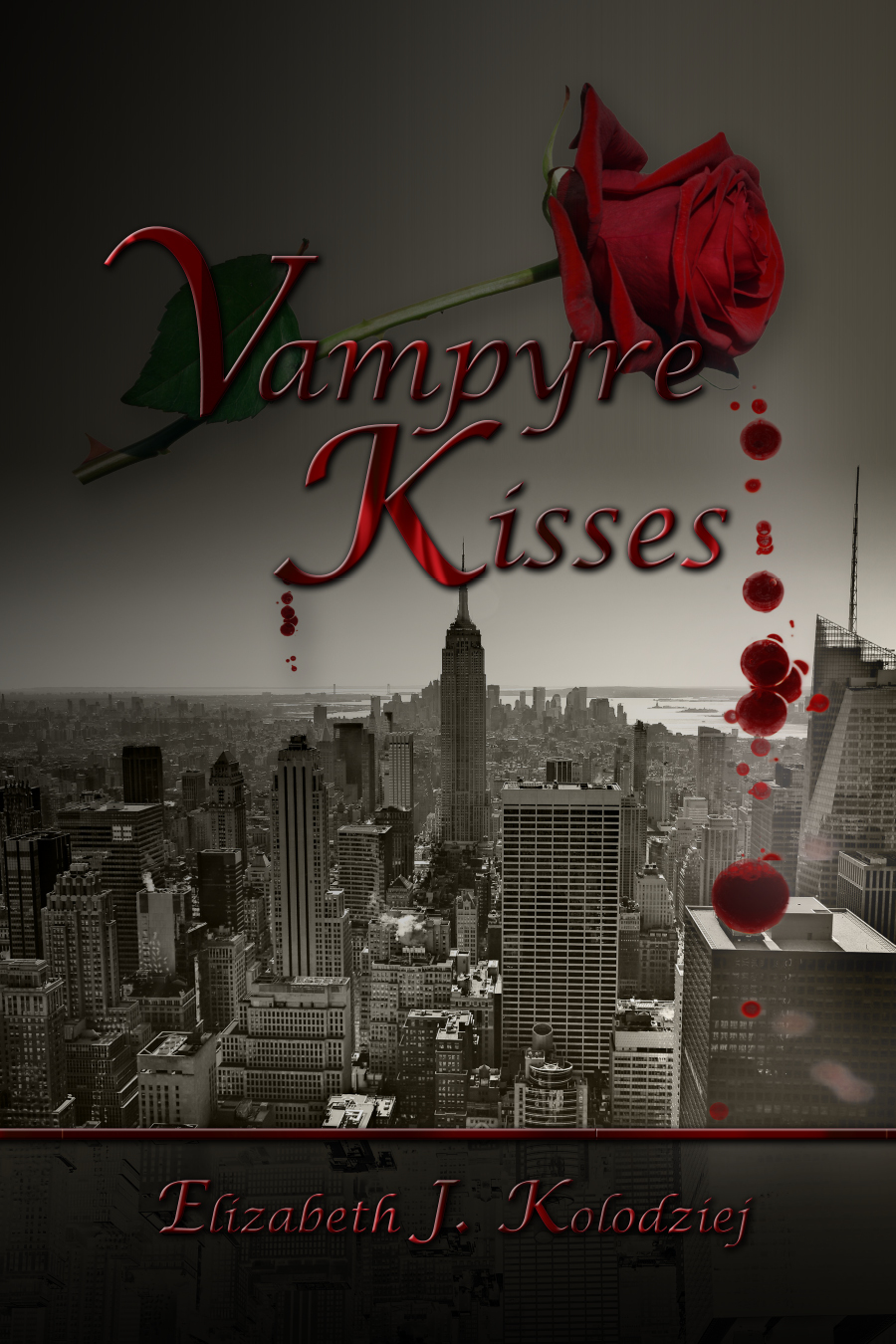
Gods, witches, werewolves, and…vampires! Timed just right for Halloween weekend, I give you a NiFtY Interview with Elizabeth Kolodziej, author of Vampyre Kisses.

BH: What’s your one-paragraph pitch for your novel, Vampyre Kisses?

EK: Vampyre Kisses is an enthralling story about a young woman, Faith, who meets a 400-year-old vampire named Trent. It isn’t long before Faith learns that she herself is a witch with a long family history. After finding out that Trent is a vampire along with being a terrific kisser he helps her find a way to take control of her powers. Soon powerful gems are stolen from the werewolf royalty and vampire master and they must be found. The reader will take a journey through a new kind of universe that is full of gods, vampires, witches and werewolves.

BH: Tell us a little about your path to publication.

EK: Well, I did try to go the traditional route, but I didn’t have any agents that wanted to take my story on. After awhile I decided to self publish my book. I truly believe that the book is great and with good marketing on my part I can get a wide range of people interested in it. I have readers all over the USA along with readers in the UK, Spain, and India. But I would warn anyone thinking of self-publishing that it is not easy. It takes you putting in your own money, lots of time, and being very open minded to do well.

BH: Okay, your bio saying that you’re a “young fiction writer” begs the rather rude question: how old are you? “Young” could be twelve or eighty-five, depending on perspective.

EK: hehe. I haven’t gotten this question yet! To be honest, I am a little over 90. Haha. J/K. Actually I am 25, which is young. I don’t care what anyone says!

BH: How long have you been writing fiction?

EK: I don’t remember the exact age I began, but I have been writing since I was around 8. I would read books on whales and then write research papers on them. I did this for fun; yes I was a nerd and still am. I wrote a few short stories when I was around 10 that were fiction. When I was 13 I began my first book but I never completed it though I was pretty much at the end of it.

I have always been the imaginative type though. I like to make up fantasies in my head. It actually really helps my writing because I can see the character in my head and the gestures that they make.

BH: I read on your website that Vampyre Kisses is the first in a planned series. How many books do you have planned? Have you outlined them all, or do you have a more general vision of the series?

EK: Right now I am almost half way through the second book. It is going to be called something like Lupine Secrets or Lupine Seductions. I haven’t decided yet. This book is outlines. For the third book I have an idea of what I want to do but nothing on paper yet. I think I could get a good five books or more out of this series. I have many ideas going on in my head when it comes to these characters.

BH: Faith is described as a girl who is mostly content but craves excitement. What sets her apart from the average young woman?

EK: Faith is a young adult in her early twenties and truthfully, I wanted Faith to be not average but just a regular person with a working job and dreams. When she finds out that she is a witch is when she starts having to learn and grow up quickly. What may make her unique is how she easily embraces the supernatural world she is thrust into. I find that it is easy for her because a part of her as been searching for where she belongs, for her witch side to be let out. I really hope that is apparent to readers in the book.

BH: The model wearing the Vampyre Kisses T-Shirt on your website is obviously not you. Any clues to the mystery man’s identity?

EK: I guess I can let that cat out of the bag. The mystery man is my muse. He is the one who would comfort me during my most depressing writers block and help me by letting me bounce ideas off of him. My number one cheerleader and someone who without, this book might not be written the way that is.

BH: What is your favorite book on the craft of writing?

EK: I would say one of my favs is the book, Book in a Month by Victoria Lynn Schmidt. I am very big on organization and this book offered me this. That book or The Art of War for Writers by James Scott Bell. I think that book is just fantastic in what it can teach you with such few words.

BH: What is the best writing advice anyone has given you?

EK: The best advice I ever got was from my professors at George Mason University who told me that to write a good book one must read many books, even the ones you don’t think you’ll like. This proved to be very correct. Even reading Milton’s Paradise Lost, which was the most difficult thing ever, really showed me other ways to make descriptions and connect with my own characters.

BH: Thank you, Elizabeth, for answering my questions and sharing your book, as well as your thoughts on the writing life!

Want more? You can visit Elizabeth on her website, as well as Facebook and Twitter (see below)…and if you’d like some vampire along with your Halloween, websites where you can purchase Vampyre Kisses are listed below as well.

Publisher’s Website: http://bit.ly/9aYtXo

Barnes and Noble: http://bit.ly/dpJsLC

Amazon: http://amzn.to/byci6O

Kindle: http://amzn.to/bMzSKN

Facebook.com/kweenkitten

Twitter.com/ejkolodziej

NiFtY Author: Jeri Westerson

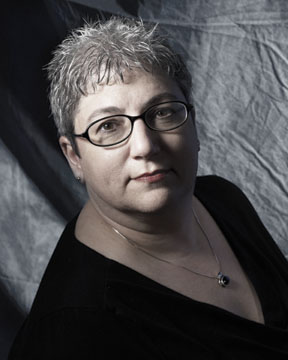
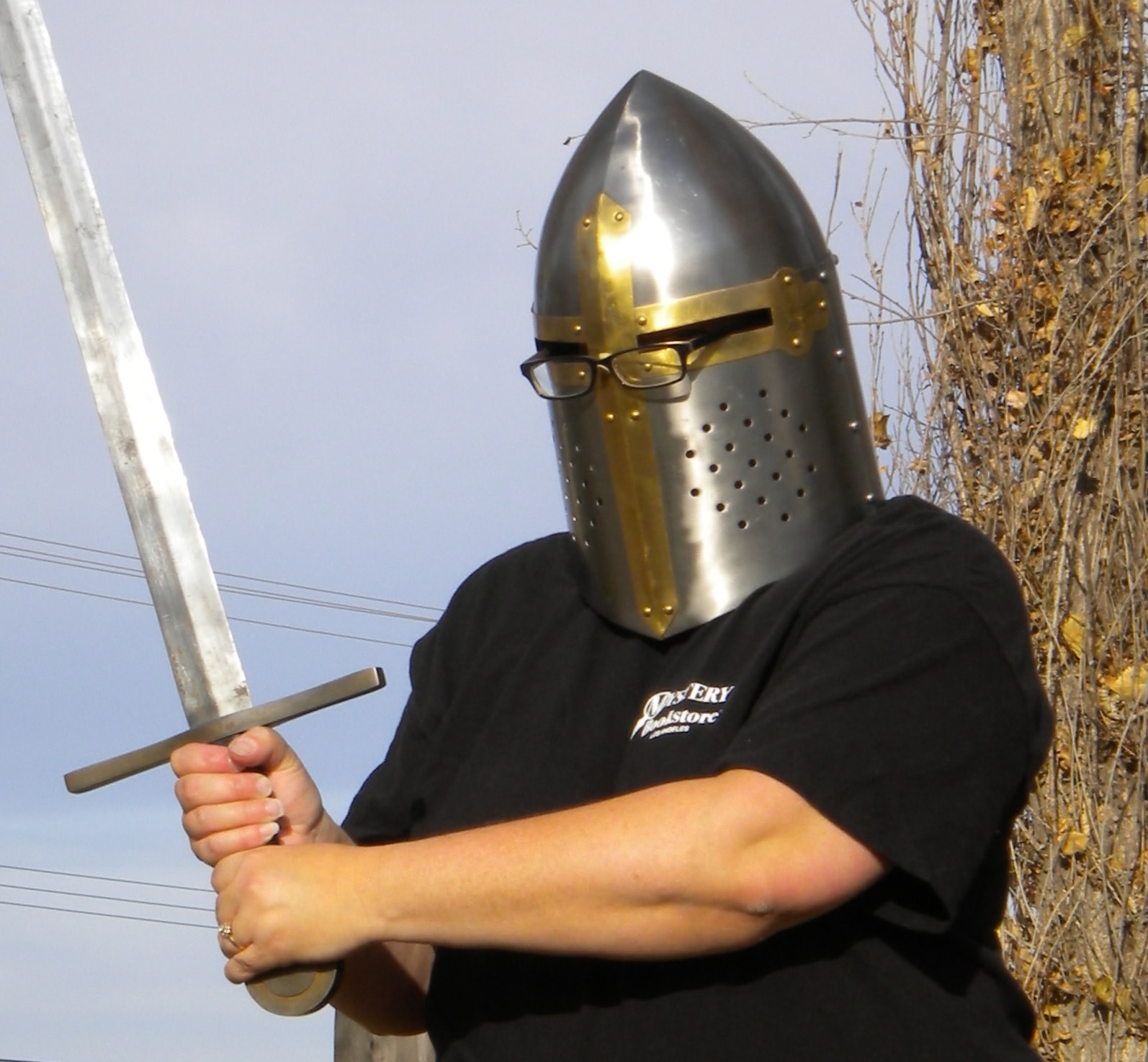
We’re taking a break from contemporary mysteries and moving back in time…far back in time. Try…the Middle Ages. Meet Jeri Westerson, author of the Crispin Guest medieval mystery series. In addition to writing great books, she’s not afraid to don a helmet and wield a sword (see photo below!).

BH: What’s your one-paragraph pitch for the latest novel in your Crispin Guest series?

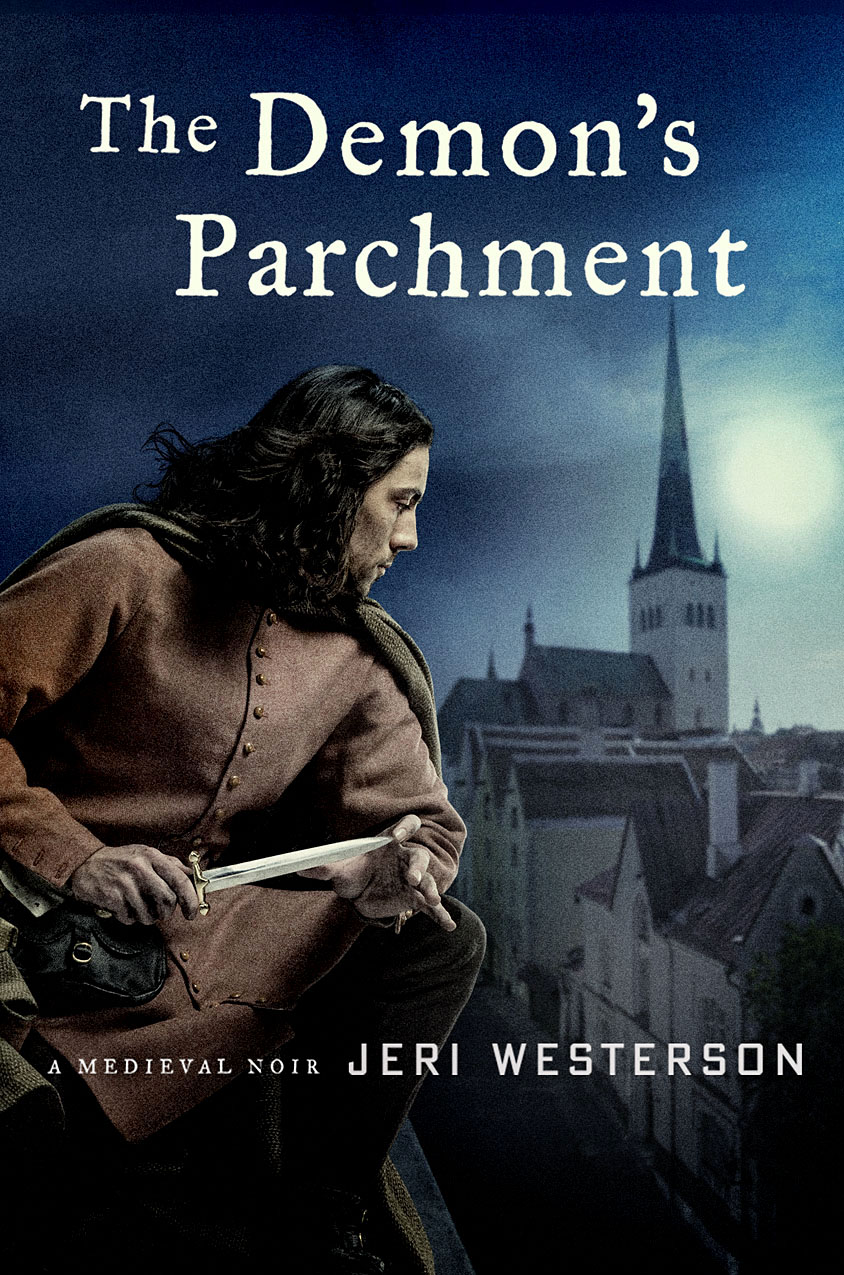
JW:  In THE DEMON’S PARCHMENT, Jacob of Provencal is a Jewish physician at the king’s court, even though all Jews were expelled from England nearly a century before. Jacob wants Crispin to find stolen parchments that might be behind the recent gruesome murders of young boys, parchments that someone might have used to summon a demon which now stalks the streets and alleys of London.

BH: The Demon’s Parchment, due out October 12, is the third book in this series. When you wrote the first novel, did you plan to create a series mystery?

JW: Yes, it was always designed that way. I had never written a series before so when I completed the first one I just jumped right into the next book, first to see if I could write a series and second because I really liked my character.

BH: What are some of the joys of writing a series character?

JW: Writing series fiction is wonderful because you can really have a chance to explore your character fully, and in my case, to see him age. His story arc can go on a long time. At least for as long as the publisher wants to publish the books. I hope that will be a long time because I have quite an extensive timeline for Crispin. I think that it’s a good idea to have some idea how the series will conclude and then all the background story arcs can lead inevitably to that conclusion. I really don’t know of any series that should go on forever. The stories can get too trite, too clichéd. Best to conclude them in a timely fashion. That being said, I’ve got some thirteen more novels in mind before I’m done with Crispin.

BH: Crispin Guest sounds intriguing: flawed, enigmatic, sexy…Where did you get the idea for this character?

JW: I wanted to write a medieval detective story, not like a Brother Cadfael with an amateur sleuth, but something more along the line of a medieval Sam Spade, a tough guy who’s hired specifically to do the dirty work. I thought that this Dashiell Hammett/Raymond Chandler kind of hard-boiled detective would translate well into the Middle Ages. No one else was doing it. As far as I could tell, authors were churning out the same old medieval mysteries they always had, and that was fine, but I wanted to write something a little different, with a little more action, a little more violence, and sex! They say you should write what you can’t find out there to read. The trope of the hard-boiled detective as a loner, someone who has a chip on their shoulder, who has run-ins with the cops is a familiar one. Raymond Chandler’s Philip Marlowe was designed as a white knight with his own code of honor, and so I thought that a real knight—disgraced or otherwise—would work as well. Everything is kept true to the time period, including Crispin’s feelings about honor, faith, and other cultural necessities. (And actually, all the sex is off screen so no worries for all the fan boys and girls out there, and there are quite a few young male readers.)

BH: And who’s the hottie posing as Crispin on your website header? I have some single friends who may want to get in touch with him.

JW: Mmm. Yes, he’s got quite the following now. He’s the fellow on all the book covers. All I know is that he is a model named Wes and probably lives in Oregon. Before we changed the covers from the rather static VEIL OF LIES hardcover, my editor showed me Wes’ model sheet and I said oh yes. He’ll do. The paperback division didn’t like the hardcover VEIL cover image and so St. Martin’s went back to the drawing board to come up with something else, something different. Something like I wanted in the first place! Since my novels are very character driven, I thought it would be better and more interesting to have a figure on the cover in a moody London background and they certainly delivered. It makes it look very different from your average medieval mystery. I love my book covers now. I think they are very cinematic. Hollywood, take note!

BH: Do you plan to stick with Crispin for awhile, or do you have other project ideas (or both)?

JW: I certainly have a lot of Crispin’s story to tell, but currently I am working on a second medieval mystery series, one that’s a little more light-hearted than Crispin’s tales. If that one doesn’t work out I’ll have to think of another one. It’s a good idea to have a few series out there, something else for fans to sink their teeth into. But I fully intend to continue with the Crispin novels. Number four, called TROUBLED BONES, comes out Fall 2011.

BH: Is it hard to write from a male perspective? Do you have any tips for authors who wish to write from the perspective of the opposite sex?

JW: I don’t find it hard at all. In fact, in all the novels I have written (some twenty-two) I’ve only written from the female perspective three times. I don’t enjoy that. I enjoy getting into the male mindset, all that uniquely male thinking. I find that whole “band of brothers” thing fascinating. There is no female equivalent. I was a tomboy growing up and I think I’m still a bit of a tomboy. I always gravitate toward the groups of men at parties…unless they’re talking about sports. Can’t get into that at all.

The only advice I have to offer on writing the opposite sex is observation. I hate reading a female character who does guy things or a male character who does girl things. You shouldn’t be able to tell whether the author is male or female either. It shouldn’t matter if the characters are well written.

BH: Do you write full-time?

JW: I have had the luxury of writing full time only since June but that won’t last. When the money runs out you might see me at your local McDonald’s behind the counter. If you think you are getting into writing novels for the money you are sadly mistaken. Even writing for a big publisher does not guarantee a living wage, at least not at first. They say that it takes till the fifth book for the author to make a profit. I have to pay my own way to mystery fan conventions, book touring, and something as innocuous as getting bookmarks printed. All my advances go back into promotion. So I do a lot of traveling and a lot of public speaking. It’s all about sales. So buy, buy, buy! Fortunately for readers of all stripes, my books are available in a few formats: hardcover, paperback, and e-books. (The SERPENT IN THE THORNS paperback was released September 28.) And readers should check out my series book trailer on my website. It gives you a good idea of what the series is all about. Very moody. Talk about cinematic. And you get to hear Crispin speak!

BH: What is your writing schedule like?

JW:  I do my writing business in the morning, answering emails, going on Facebook, Twitter, blogging (I have two blogs; mine called www.Getting-Medieval.com. It’s like a magazine of articles on history and mystery, and Crispin’s blog at www.CrispinGuest.com. It’s his Facebook page, by the way, so look for his name, not mine.) I do a little writing and/or research in the late morning, some reading during the middle of the day, then do more writing late afternoon and into the evening. I’m also trying to write some short stories and a barrel of blog posts for my fall blog tour.

BH: What does your workspace look like?

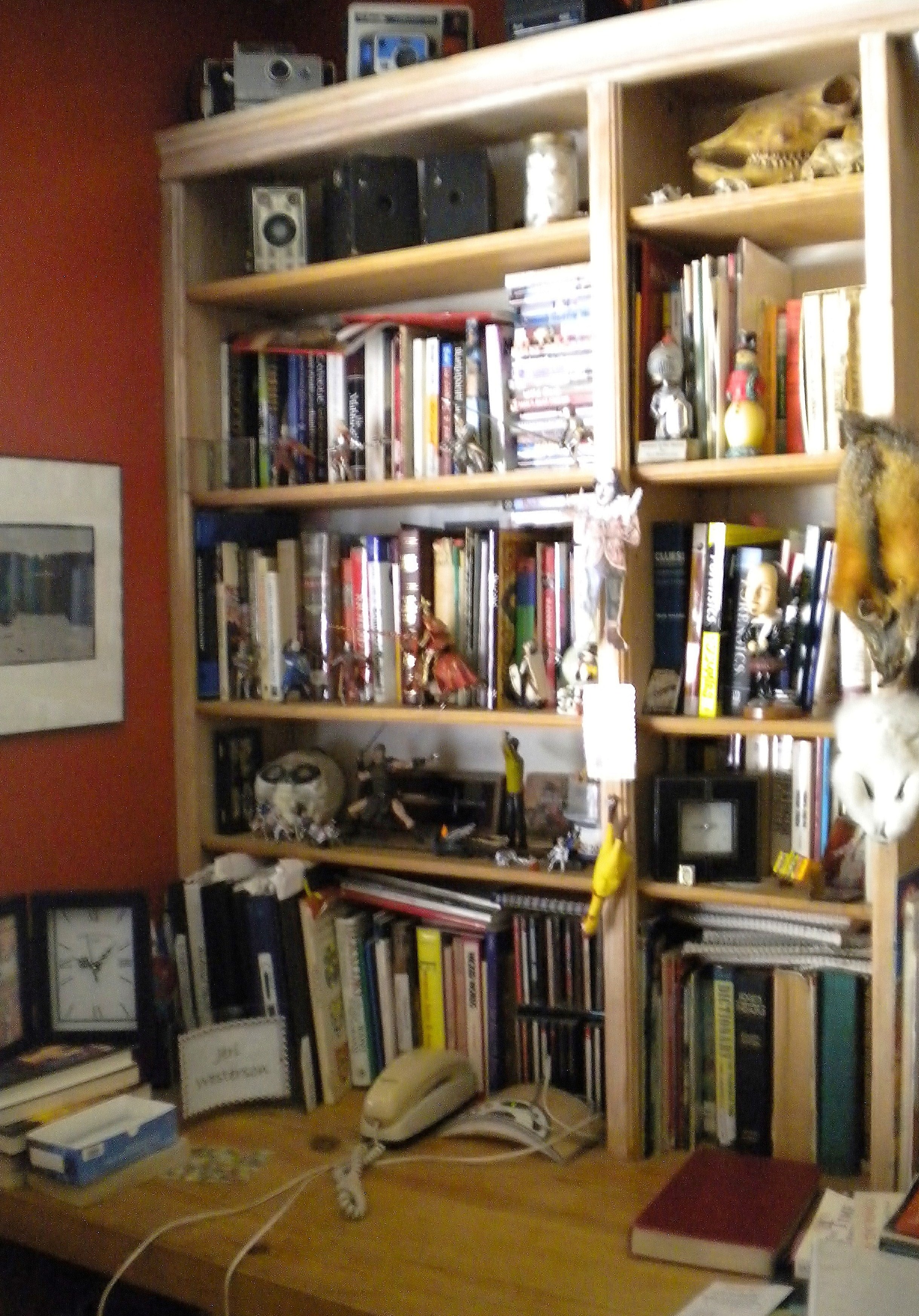
JW: I have a home office chock full of books, books, and more books. My desk is, in fact, specially built just for me (by me and my husband. We are truly Renaissance people with many hands-on skills) with a ten foot long flat surface (covered in papers and notes) with shelves above and behind me with another ten foot long surface mirroring my desk. I have a lot of research books about knighthood, everyday life in the Middle Ages, medieval words, cookbooks, commerce, religion, forensics, people, roads, maps, clothing, woodlands…you name it, I’ve got it. I also have a lot of toys, a lot of knights in battle all over the shelves; some Harry Potter stuff like a Time Turner; a couple of fox pelts hanging on the shelf; some assorted snowmen (because I collect them); a bunch of old cameras (because my photographer husband collects them); some skulls (a sheep, a goat, a cat, a rabbit, a mouse—all collected from our yard or surrounding area when it used to be more rural); a dagger I like to play with while I write; a small figurine of Death; a rubber chicken; a Shakespeare bobble head; two framed posters (one of a Klee the other a Kandinsky); a rather dashing picture of my hubby; a candy dish, empty; a figurine of a Golem; my “Box of Death” which I cart around to my speaking engagements which includes a helm and a bunch of medieval weapons; a coffee cup warmer; computers and printers (of course); and a comfy swivel chair that has seen better days. And two cats who are really not supposed to be in there, but they worm their way in with big soppy eyes and soft furry faces and type in my novels and leave hair absolutely everywhere.

BH: What is your favorite book on the craft of writing?

JW: The last really great novel I read.

BH: What is the best writing advice anyone has given you?

JW: Don’t give up. That would be from my long-suffering husband.

BH: Any words of advice to aspiring writers for keeping the hope alive?

JW: Learn the business. Don’t be an amateur, be a professional and learn your craft, research the industry before you start to ask questions. Then network with other authors. Keep on writing and reading. As you finish one novel, start writing the next. Don’t wait around for the first one to sell before you start another. The first one may never sell. Mine didn’t. Write the best darn books you can. Take the advice of professionals. Don’t dismiss it just because you don’t want to hear it. And don’t self publish just because you can’t place that one darling manuscript. Maybe there’s a reason for its being rejected over and over. Write the next book, and the next. Hone your craft.

Thank you, Jeri, for telling us about your books, sharing your insights about the writing life, and bringing us one step closer to Wes, your Crispin cover model.

For first chapters of Jeri’s novels, book discussion guides, and her fabulous series book trailer, go to her website at www.JeriWesterson.com.

Click the titles to view each book on Amazon.com:

The Demon’s Parchment (third in the series)

Serpent in the Thorns (second in the series)

Veil of Lies (first in the series)